
FDA Proposes Total Ban on Formaldehyde in Hair Straightening Products
After years of delays, the FDA has officially proposed a nationwide ban on formaldehyde and formaldehyde-releasing chemicals in hair straightening products. The move targets a well-documented carcinogen that disproportionately affects the health of salon workers and Black women.

- Public Health & Equity Advocates
- Prioritize the immediate removal of carcinogenic chemicals to protect vulnerable demographics.
- Salon Workers & Consumers
- Focus on workplace safety and the need for effective, non-toxic beauty alternatives.
- Cosmetic Industry & Chemists
- Emphasize the need for a manageable transition period to reformulate complex chemical products.
Why this matters
For decades, consumers and salon professionals have been exposed to toxic fumes during routine hair-smoothing treatments, leading to increased risks of hormone-related cancers and respiratory issues. This regulatory overhaul will force the beauty industry to adopt safer, non-toxic alternatives, fundamentally changing salon practices nationwide while addressing a major health equity gap.
Key points
- The FDA has officially proposed a ban on formaldehyde and formaldehyde-releasing chemicals in hair straightening products.
- The chemicals, which release toxic gas when heated, are linked to an increased risk of uterine cancer, ovarian cancer, and respiratory issues.
- The ban addresses a major health equity issue, as Black women are the primary users of chemical relaxers and face disproportionate health impacts.
- The proposal follows years of missed deadlines and intense lobbying from salon workers and public health advocates.
After years of bureaucratic delays and mounting pressure from public health advocates, the U.S. Food and Drug Administration (FDA) has officially proposed a nationwide ban on formaldehyde in hair straightening products.
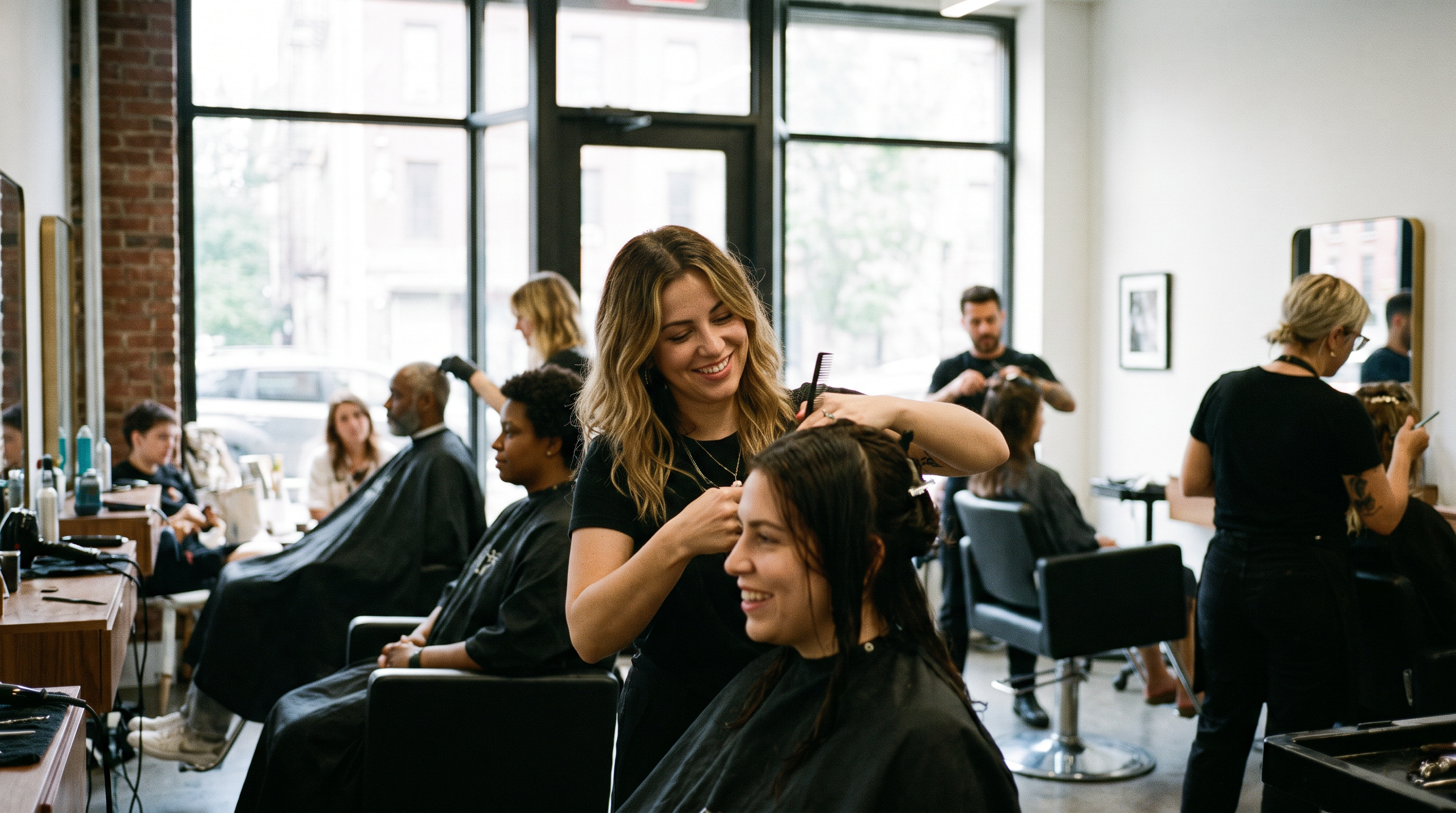
The regulatory action targets a class of highly popular cosmetic treatments—often marketed as "Brazilian blowouts" or chemical relaxers—that have long been a staple in salons across the country.
Under the proposed rule, manufacturers would be prohibited from using formaldehyde, as well as formaldehyde-releasing chemicals like methylene glycol, as active ingredients in any hair smoothing products marketed in the United States.
The mechanism of exposure is inherently tied to the salon process. These products are typically applied to the hair in a liquid form. When a stylist subsequently applies high heat using a blow dryer or flat iron to lock in the straight texture, the chemicals break down and release toxic formaldehyde gas directly into the surrounding air.
This aerosolization creates an immediate hazard for both the client in the chair and the salon professionals who handle the treatments daily. Short-term exposure to the fumes is known to cause severe respiratory distress, skin sensitization, eye irritation, and asthma attacks.[2]
However, it is the long-term epidemiological evidence that ultimately forced the agency's hand. The turning point for regulatory action was a growing body of research linking the chemicals to severe, life-threatening health outcomes.[1]
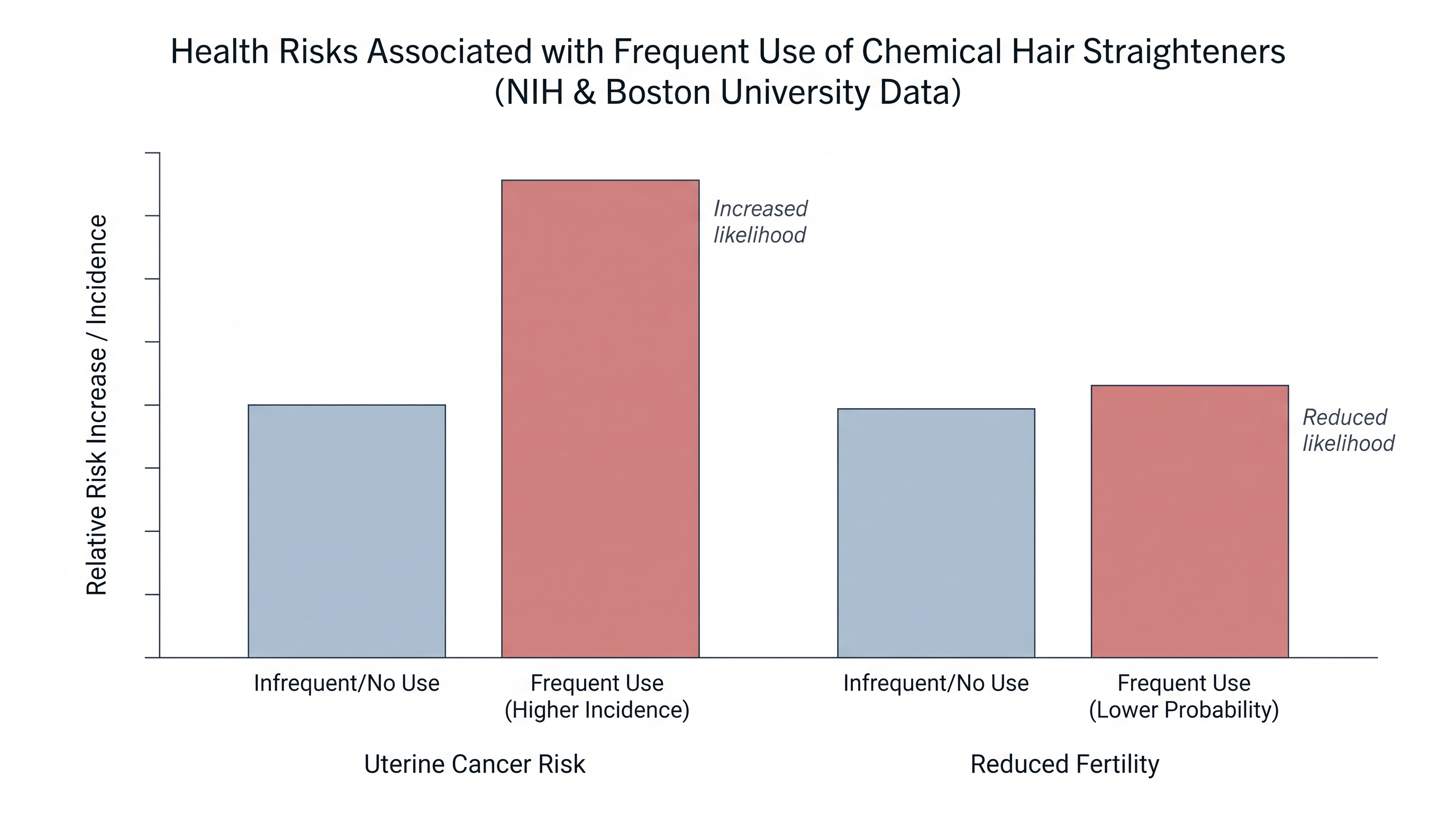
A landmark 2022 study conducted by the National Institutes of Health (NIH) found that frequent users of chemical hair straighteners—defined as those using the products more than four times a year—had a significantly higher risk of developing uterine cancer compared to non-users.[1]
Subsequent research reinforced these alarming findings. Studies published by Boston University researchers in 2023 and 2025 linked the prolonged use of these specific hair relaxers to an increased risk of ovarian cancer, uterine fibroids, and reduced fertility, particularly among postmenopausal women.
Beyond consumer safety, the ban addresses a profound issue of health equity. Driven by decades of societal pressure and Eurocentric beauty standards, Black women have historically been the primary consumers of chemical hair relaxers.
Beyond consumer safety, the ban addresses a profound issue of health equity.
Consequently, Black women have borne the brunt of the toxic exposure, suffering disproportionately from the associated hormone-related cancers and reproductive health challenges documented in the clinical studies.[1]
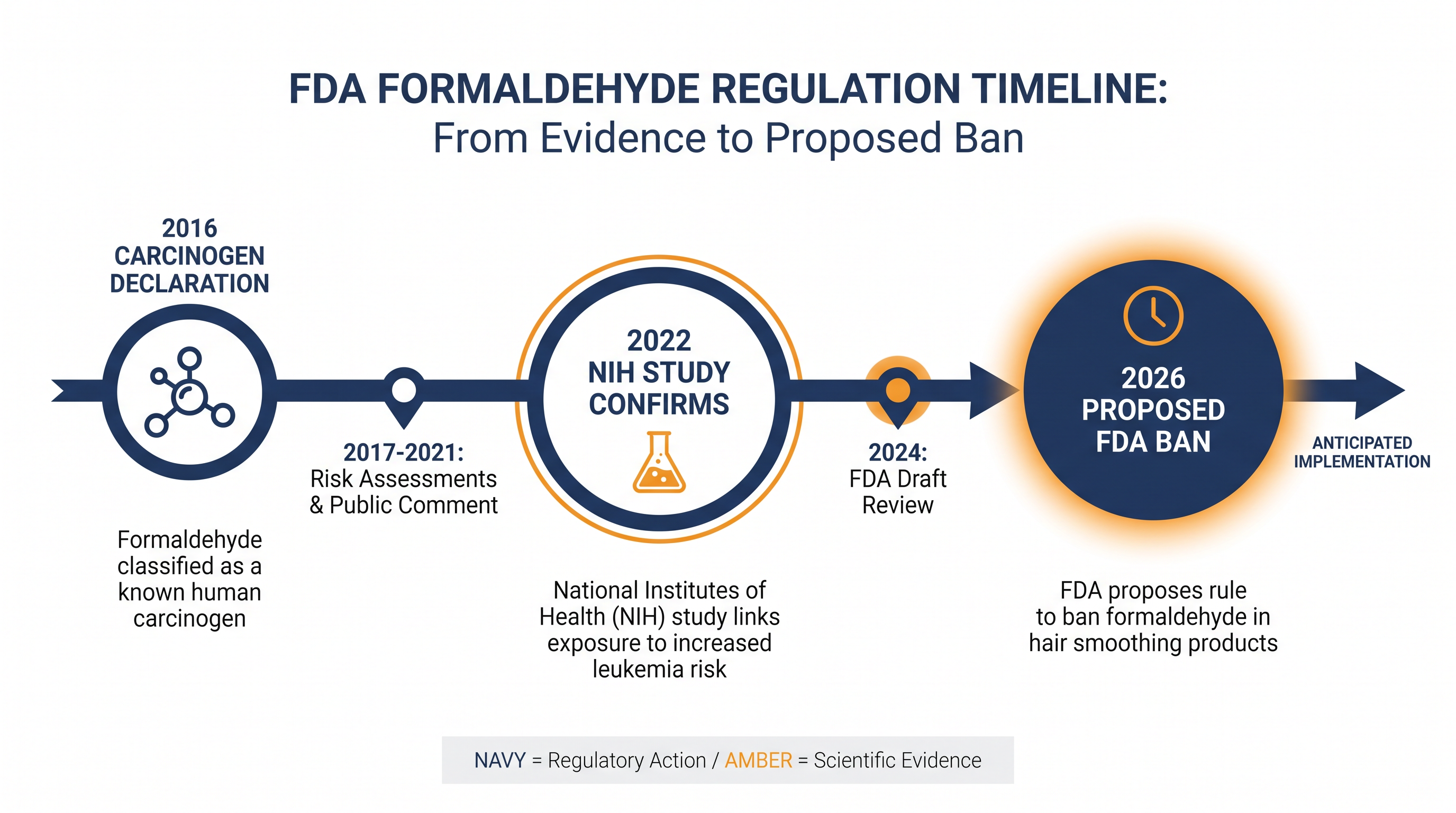
The FDA's action arrives after immense public pressure. While the agency first labeled formaldehyde a human carcinogen in 2016, the rulemaking process stalled repeatedly, missing multiple self-imposed target dates throughout 2024 and 2025.[2]
Salon workers, injury attorneys, and environmental advocacy groups lobbied aggressively for the ban, arguing that every month of delay prioritized industry logistics over human lives.[2]
The beauty industry is already bracing for the transition. Many forward-thinking salons have begun swapping out traditional formulas for formaldehyde-free alternatives, such as glyoxylic acid-based treatments, which alter the hair's structural bonds without releasing carcinogenic gas.
The regulatory move also coincides with thousands of pending lawsuits against major cosmetic manufacturers, with plaintiffs alleging that the companies deliberately failed to warn consumers about the severe cancer risks associated with their chemical relaxers.
The proposed rule now enters a mandatory public comment period. While the scientific consensus on the danger is clear, it remains uncertain how aggressively the cosmetic industry will push back on the timeline, or exactly when the FDA will mandate the final, physical removal of these products from salon shelves.
How we got here
2016
FDA scientists officially declare formaldehyde a human carcinogen.
2021
Salon workers and advocacy groups formally petition the FDA to ban the chemical in hair products.
Oct 2022
A landmark NIH study links frequent use of chemical hair straighteners to a significantly increased risk of uterine cancer.
2024–2025
The FDA misses multiple self-imposed deadlines to publish the proposed rule, sparking public outcry.
Aug 2026
The FDA officially publishes the proposed rule to ban formaldehyde and formaldehyde-releasing chemicals.
Viewpoints in depth
Public Health Advocates
Argue the ban is a long-overdue victory for consumer safety and health equity.
Public health experts and environmental groups view the FDA's proposal as a critical, albeit delayed, triumph. They emphasize that the scientific consensus has been clear for years: formaldehyde is a known carcinogen that causes severe respiratory issues and hormone-related cancers. Advocates point out that the delay disproportionately harmed Black women, who are the primary consumers of these products, and argue that the FDA must now move swiftly to finalize the rule without granting the industry lengthy compliance extensions.
Salon Professionals
Express relief over improved workplace safety, alongside concerns about product transition.
For cosmetologists and salon workers, the ban addresses a major occupational hazard. Stylists have long reported suffering from asthma, chronic coughs, and skin sensitization due to daily inhalation of formaldehyde fumes. While the workforce broadly supports the safety measure, some independent salon owners express concern about the logistical and financial burden of sourcing effective, compliant alternative treatments that deliver the long-lasting smoothing results their clients expect.
Cosmetic Manufacturers
Acknowledge the regulatory shift while defending past product safety records.
Major beauty brands and chemical manufacturers have historically maintained that their smoothing products are safe when used strictly according to salon instructions and with proper ventilation. However, facing mounting lawsuits and the inevitable regulatory crackdown, the industry is pivoting. Manufacturers are now investing heavily in reformulating their product lines with alternative acids, though some industry groups caution that a rushed enforcement timeline could disrupt supply chains and harm small businesses.
What we don't know
- The exact date when the FDA will finalize the rule and begin enforcing the removal of products from shelves.
- How the ban will impact the thousands of pending lawsuits against major cosmetic manufacturers regarding failure to warn consumers.
- Whether the FDA will expand the ban to cover other controversial chemicals found in cosmetics, such as certain phthalates or parabens.
Key terms
- Formaldehyde
- A colorless, strong-smelling gas used in building materials and household products, classified as a known human carcinogen.
- Methylene Glycol
- A liquid chemical compound used in hair smoothing products that converts into formaldehyde gas when heated.
- Chemical Relaxer
- A lotion or cream that makes hair easier to straighten and manage by chemically altering its natural texture.
- Glyoxylic Acid
- A safer, non-toxic alternative chemical increasingly used in modern hair smoothing treatments to replace formaldehyde.
Frequently asked
Will this ban affect all hair straightening products?
No. The ban specifically targets products containing formaldehyde or formaldehyde-releasing chemicals like methylene glycol. Formaldehyde-free alternatives will remain available.
Are at-home hair relaxers included in the ban?
Yes. The proposed rule applies to both professional salon treatments and products sold directly to consumers for at-home use.
What should I do if I've used these products in the past?
Health experts recommend discussing your product history with a healthcare provider, especially if you experience symptoms related to reproductive health or respiratory issues.
When will the ban actually take effect?
The rule is currently in the proposed stage. After a public comment period, the FDA will issue a final rule, which will include a compliance date for manufacturers to remove the products from shelves.
Sources
Source coverage
2 outlets
3 viewpoints surfaced


[1]National Institutes of HealthPublic Health & Equity Advocates
Hair straightening chemicals associated with higher uterine cancer risk
Read on National Institutes of Health →[2]Environmental Working GroupPublic Health & Equity Advocates
FDA Finally Proposes Ban on Toxic Formaldehyde in Hair Straighteners
Read on Environmental Working Group →

More in lifestyle
See all 5 stories →Cognitive Health
Landmark Study: Just Five Minutes of Daily Cognitive Training Universally Boosts Mental Health and Clarity
8 sources
Mental Health Metrics
Landmark Study Establishes World's First Consensus Definition of Mental Wellbeing
8 sources

Supply Chain
US-China Tariffs Force 'Great Supply Chain Reset,' Redrawing Global Apparel Map
8 sources
Every angle. Every day.
Get lifestyle stories with full source coverage and perspective breakdowns delivered to your inbox.