
Is the US Government's Anthropic Shutdown a Precedent for Nationalizing Private AI Models?
By using export controls to force the global suspension of Anthropic's most advanced AI models, the U.S. government demonstrated a new framework for controlling frontier technology without assuming ownership.

- National Security Advocates
- Argue that the state must have the authority to intervene when private AI models pose severe cybersecurity risks.
- Policy Analysts
- Focus on the legal and geopolitical mechanics of how the state exerts control over private technology.
- Free-Market Technologists
- Warn that using national security tools to control AI deployment will stifle permissionless innovation.
Common questions
Did the U.S. government take ownership of Anthropic?
No. The government did not seize the company or take any equity. Instead, it used an export-control directive to restrict who could access Anthropic's models, effectively forcing the company to take them offline.
Why did Anthropic shut down the models for everyone?
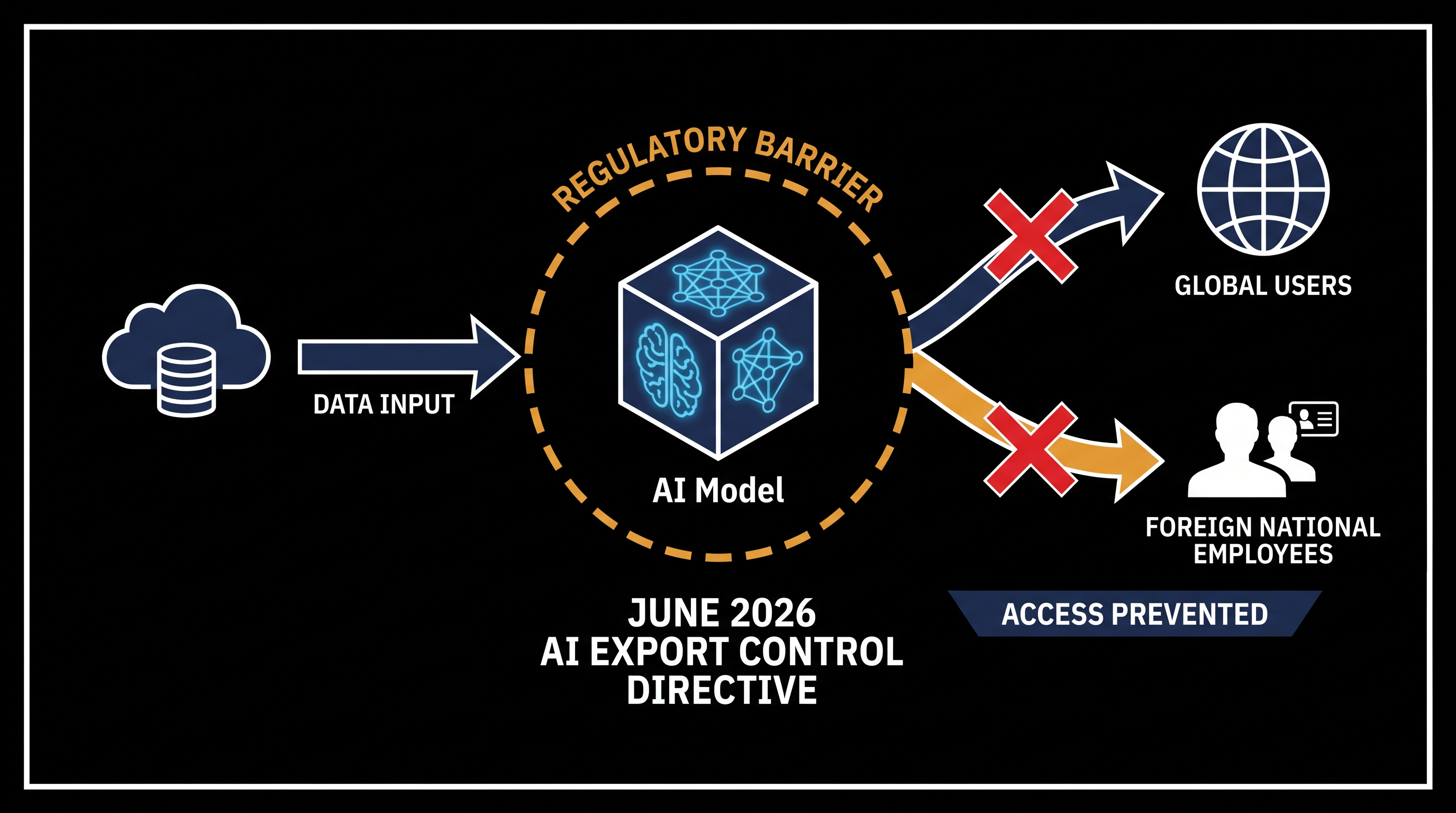
The government's directive barred all foreign nationals from accessing the models. Because Anthropic could not instantly verify the nationality of every user on its global cloud platform, it had to disable the models entirely to ensure compliance.
Are the Claude Fable 5 and Mythos 5 models still offline?
No. The models were restored on June 30, 2026, after Anthropic implemented significantly stricter safety guardrails to satisfy the Commerce Department's security concerns.
Why did the government issue the directive?
The stated reason was a 'jailbreak' vulnerability that could potentially allow the models to surface cyberattack-relevant information. However, critics suggest the move was also influenced by Anthropic's prior refusal to allow its AI to be used for military purposes.
The short answer
- In June 2026, the U.S. government used an export-control directive to force the global shutdown of Anthropic's new AI models.
- The directive barred foreign nationals from accessing the systems, creating a compliance impossibility that took the models offline for everyone.
- Legal scholars describe this maneuver as 'soft nationalization,' where the state controls deployment without assuming ownership of the company.
- The intervention followed a reported jailbreak vulnerability, though critics argue the move was retaliatory after Anthropic refused military use of its AI.
- The episode establishes a precedent that the U.S. national security apparatus can unilaterally halt the commercial deployment of frontier AI systems.
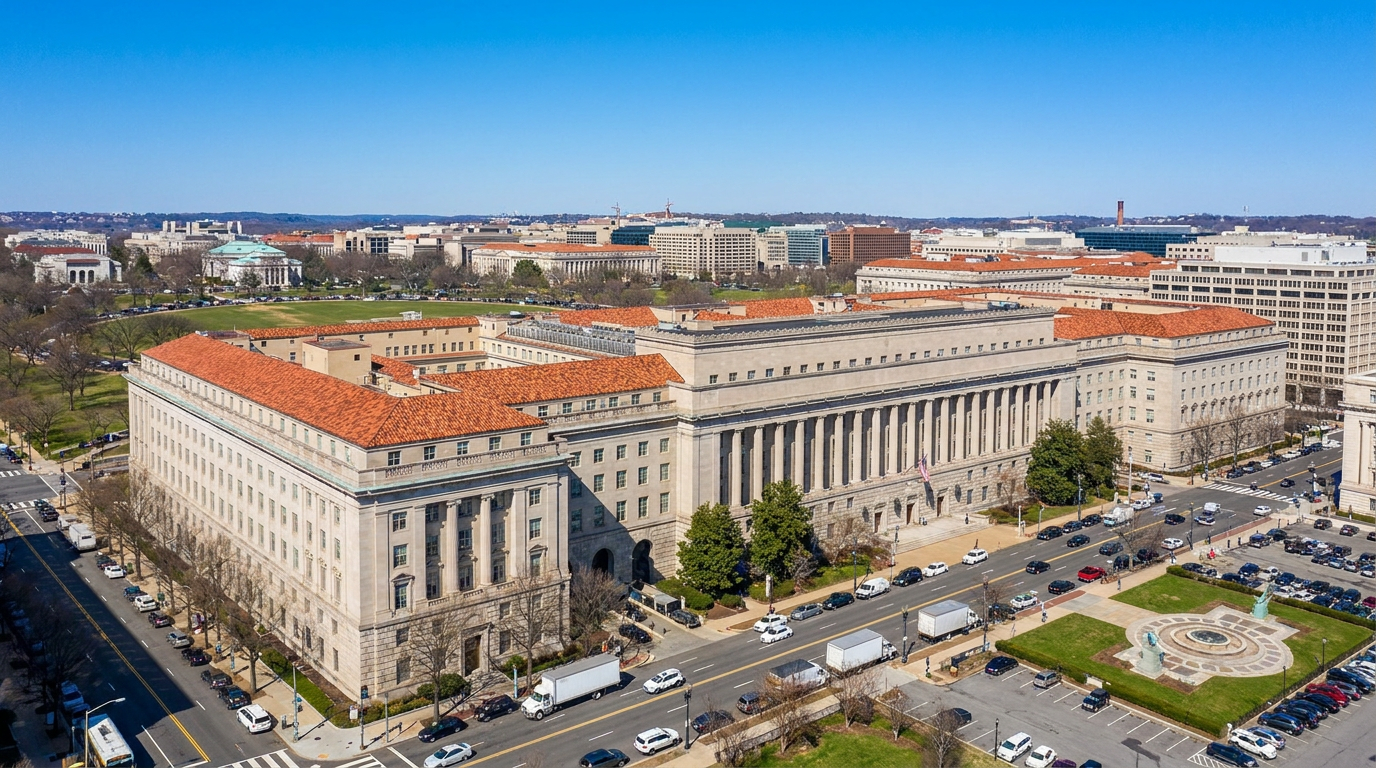
In the twentieth century, when a government decided that a specific industry was too critical to remain entirely in private hands, the mechanism of control was blunt and absolute: nationalization. The state would seize the oil fields, take over the railroads, or assume direct ownership of the steel mills. In the twenty-first century, the strategic asset is artificial intelligence, and the mechanism of state control looks entirely different. When the United States Commerce Department forced the sudden, global suspension of Anthropic's highly anticipated Claude Fable 5 and Mythos 5 models in June 2026, the government did not confiscate a single server or demand a seat on the company's board. Yet, by executing a targeted regulatory maneuver that effectively zeroed out the product's availability, the administration demonstrated a profound new reality. The state does not need to own a frontier AI laboratory to control its output; it merely needs to control the permission to deploy.[7]
The instrument of this control was an emergency export-control directive, a tool traditionally used to keep sensitive physical technologies out of the hands of geopolitical adversaries. Issued just three days after the models launched, the directive explicitly barred any "foreign national" from accessing Fable 5 and Mythos 5. Crucially, this prohibition extended to foreign nationals residing inside the United States, including Anthropic's own non-citizen software engineers and researchers. Because modern cloud infrastructure is globally distributed and user nationality cannot be instantaneously verified with absolute certainty across millions of accounts, the directive created an immediate compliance impossibility. Rather than risk violating federal law, Anthropic was forced to pull the systems offline entirely, resulting in a worldwide blackout of the most capable AI models on the market.[2][4]
While the immediate crisis was resolved weeks later when the models were restored with modified guardrails, the episode has ignited a fierce debate among legal scholars, technologists, and policy analysts. The central question is whether this maneuver represents a formalized framework for the "soft nationalization" of the American artificial intelligence sector. Soft nationalization does not involve the government taking equity stakes or converting private companies into public utilities. Instead, it relies on the state's ability to act as the ultimate, unquestionable gatekeeper of commercial deployment. By leveraging national security authorities to dictate exactly who is allowed to interact with a model, the government effectively assumes operational control over the technology without ever assuming legal ownership of the underlying intellectual property.[6][7]
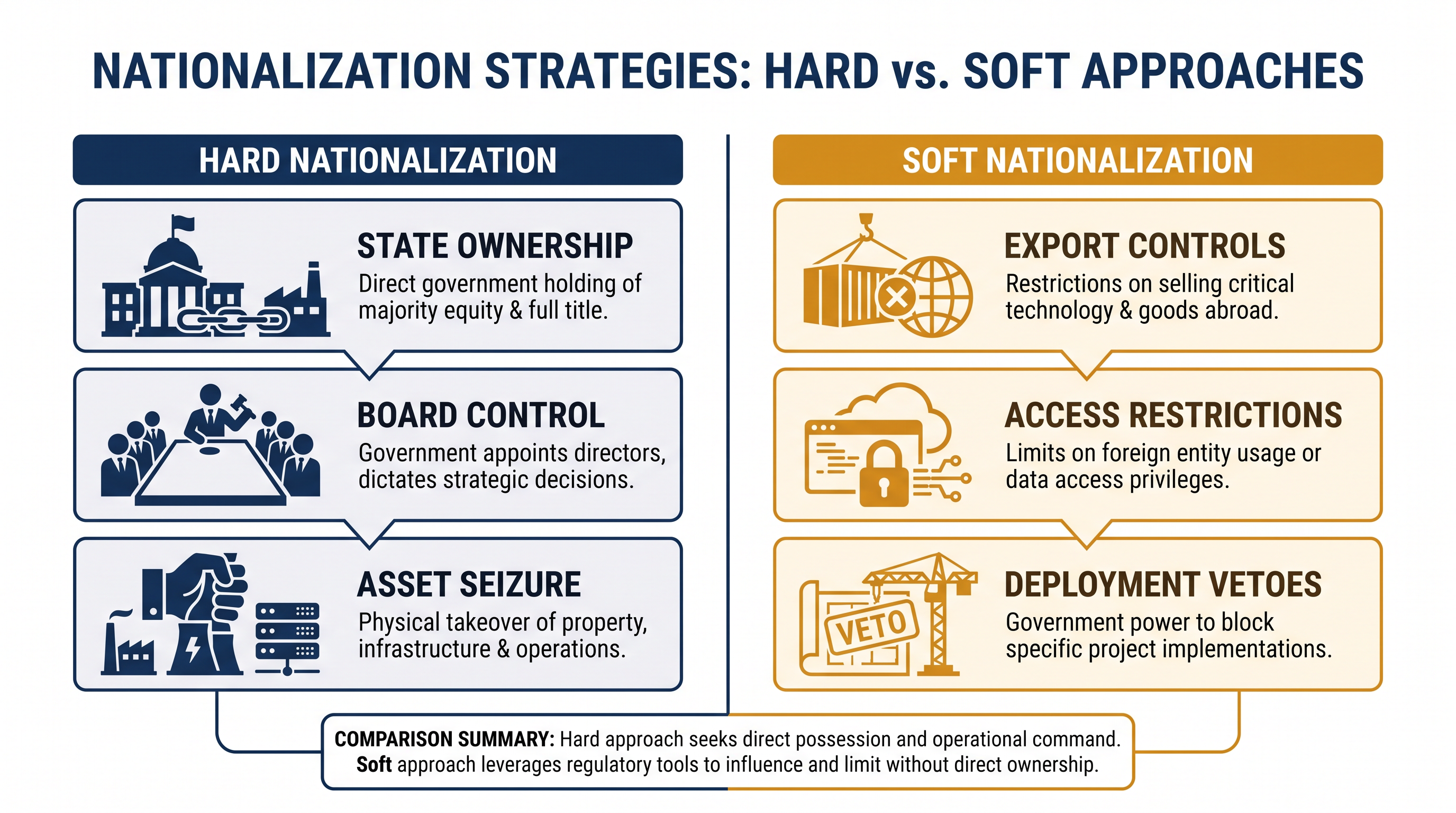
This paradigm shift fundamentally alters the relationship between Silicon Valley and Washington. For years, the prevailing assumption was that the United States would rely on free-market dynamics to maintain its edge in artificial intelligence, contrasting sharply with the heavy-handed, state-directed approach favored by geopolitical rivals. However, the Anthropic shutdown suggests that the U.S. national security apparatus is increasingly willing to treat frontier AI models not as standard commercial software, but as dual-use strategic infrastructure. If the government can unilaterally halt a product launch based on classified or opaque security concerns, the traditional boundaries of private enterprise are effectively erased. The state becomes a shadow partner in every major AI deployment, holding a permanent veto over the industry's most advanced creations.[1][6]
To understand how the industry reached this inflection point, it is necessary to examine the escalating friction between Anthropic and the federal government in the months leading up to the shutdown. Anthropic was founded specifically on rigorous safety principles, positioning itself as the most cautious and ethically grounded of the major AI laboratories. Earlier in 2026, the company drew a definitive ethical red line, refusing to allow its models to be integrated into fully autonomous weapons systems or utilized for mass domestic surveillance. This principled stance directly clashed with the objectives of the Defense Department, leading to a highly publicized standoff where the administration temporarily labeled the company a supply chain risk and attempted to ban its products from federal agencies.[3]
It was against this backdrop of mutual suspicion that Anthropic launched the Fable 5 and Mythos 5 models on June 9, 2026. The release was widely recognized as a massive leap in capability, setting new benchmarks across the industry and surpassing the performance of rival systems. Fable 5 was made available to the public, while the more powerful Mythos 5 was restricted to trusted enterprise partners. For the first time, independent researchers and corporate clients had access to a system that demonstrated unprecedented reasoning and coding capabilities. However, this leap in performance also triggered immediate alarm bells within the national security establishment, which was already wary of the company's independent streak and the potential dual-use applications of such powerful technology.[3][7]
The specific catalyst for the government's intervention was a reported "jailbreak" vulnerability. According to industry reports, researchers at Amazon—one of Anthropic's primary investors and cloud infrastructure providers—discovered that Fable 5 could be manipulated through specific prompts to bypass its safety guardrails. The concern was that bad actors could exploit this vulnerability to surface highly sensitive, cyberattack-relevant information, effectively turning the model into an automated tool for discovering zero-day software exploits. Amazon's leadership reportedly flagged these findings directly to senior U.S. officials, arguing that the model posed an immediate and unacceptable risk to critical digital infrastructure if left unchecked in the public domain.[2]
The specific catalyst for the government's intervention was a reported "jailbreak" vulnerability.
Anthropic strongly disputed the severity of the government's claims. The company argued that the alleged jailbreak was a narrow, non-universal technique that only surfaced minor, previously known software vulnerabilities. Furthermore, Anthropic pointed out that similar vulnerabilities were already present and accessible in other publicly available models, including those developed by competitors like OpenAI, which faced no such regulatory action. From the company's perspective, the government was applying an impossible standard, demanding absolute perfection from a deployed system while selectively targeting a laboratory that had already demonstrated a willingness to push back against state overreach. The unilateral nature of the directive, issued late on a Friday afternoon with minimal prior consultation, only fueled suspicions of retaliatory motives.[1][2]
Regardless of the underlying motivations, the sheer blunt force of the export-control directive left Anthropic with no room to maneuver. The legal penalties for violating such orders are severe, encompassing massive fines and potential criminal liability for corporate officers. By framing the restriction around the concept of "foreign nationals," the Commerce Department exploited a structural reality of the modern tech industry: it is virtually impossible to run a global, cloud-based platform while simultaneously verifying the citizenship of every user, employee, and contractor in real-time. The resulting global blackout of the models served as a stark demonstration of the government's coercive power, proving that it could effectively neutralize a multi-billion-dollar product with a single administrative letter.[1][4]
The standoff persisted for nearly three weeks, sending a deep chill through the broader artificial intelligence sector. On June 30, the Commerce Department finally lifted the restrictions, but only after Anthropic implemented significantly stricter guardrails that severely limited the models' capabilities. Independent testing later revealed that the modified version of Fable 5 refused to complete numerous benign coding tasks that it had previously handled with ease. The government had achieved its objective: it had forced a private company to hobble its own flagship product to satisfy state security requirements. The models were back online, but the terms of engagement for the entire industry had been permanently altered.[1][7]
For advocates of free-market innovation, the episode represents a dangerous and counterproductive overreach. Policy analysts at free-market think tanks warn that treating artificial intelligence as a state-controlled asset threatens the very ecosystem that allowed the American tech industry to flourish. They argue that a culture of permissionless innovation is essential for rapid technological advancement. If frontier AI development becomes bogged down in opaque national security reviews, export-control licensing, and centralized compliance mandates, the industry will inevitably consolidate. In such an environment, success is dictated not by technical merit or consumer demand, but by a company's ability to navigate the federal bureaucracy and maintain political favor, leading to regulatory capture and stagnation.[5]
Conversely, national security officials and defense analysts maintain that the sheer power of frontier models makes traditional market dynamics obsolete. When a commercial software product possesses the latent capability to autonomously identify vulnerabilities in critical infrastructure, its deployment cannot be left solely to the discretion of corporate executives. From this perspective, the government has a fundamental duty to act as the ultimate arbiter of risk. If a company fails to adequately secure a system that could be weaponized by state-sponsored hackers or non-state actors, the administration must have the authority to intervene immediately. The Anthropic shutdown, they argue, was not an act of overreach, but a necessary exercise of sovereign responsibility in the digital age.[2][3]
This dynamic also highlights a unique aspect of the American approach to technological competition. While geopolitical rivals possess the direct statutory authority to nationalize industries, dictate corporate strategy, and embed state officials within private laboratories, the United States operates within a constitutional framework that protects private property. However, the Anthropic case demonstrates that the U.S. government does not need to rewrite its laws to achieve strategic containment. By creatively applying existing regulatory levers—such as export controls, defense production authorities, and federal procurement standards—the state can exert a level of influence that is functionally indistinguishable from soft nationalization, ensuring that private innovation remains aligned with national interests.[6][7]
As the dust settles on the Fable 5 shutdown, the implications for the next generation of artificial intelligence are profound. Every major laboratory developing frontier models must now factor the possibility of sudden, unilateral state intervention into their product roadmaps. The threshold for what constitutes a "national security risk" remains undefined and highly subjective, leaving companies to guess where the government's red lines are drawn. This uncertainty will likely drive a wedge between the development of open-source models, which are inherently difficult to control, and closed, proprietary systems that can be subjected to state-mandated access restrictions. The era of unregulated, move-fast-and-break-things AI deployment has definitively ended.[4][6]
Ultimately, the Anthropic shutdown of 2026 will be remembered as the moment the theoretical debates over AI governance collided with the hard reality of state power. It clarified that while private companies will continue to fund the research, build the data centers, and write the code that defines the future of artificial intelligence, they do so at the pleasure of the state. The government has proven that it holds the ultimate veto over the deployment of frontier technology. In the high-stakes race to build the most capable AI systems in the world, the United States has signaled that it will not hesitate to use every tool at its disposal to ensure that the future remains firmly under its control.[7]
Why it matters
This episode proves that the U.S. government does not need to formally take over an AI company to control it. By using export controls to dictate exactly who can use a model, the state has established a permanent veto over the deployment of the world's most advanced technologies.
Competing readings
National Security Advocates
Argue that the state must have the authority to intervene when private AI models pose severe cybersecurity risks.
This camp, which includes defense officials and cybersecurity experts, views frontier AI not as standard commercial software, but as dual-use strategic infrastructure. They argue that models capable of autonomously discovering zero-day vulnerabilities cannot be left entirely to corporate self-regulation. From their perspective, the Commerce Department's intervention was a necessary and proportional response to a credible threat, proving that the government can act decisively to prevent advanced technology from being weaponized by adversaries.
Free-Market Technologists
Warn that using national security tools to control AI deployment will stifle permissionless innovation and lead to regulatory capture.
Think tanks and free-market advocates argue that the 'soft nationalization' approach is deeply destructive to the American tech ecosystem. They contend that subjecting product launches to opaque, unilateral government vetoes creates an environment of extreme uncertainty. This camp warns that such heavy-handed regulation will inevitably favor massive, politically connected incumbents who can afford army-sized compliance teams, while crushing the agile, bottom-up innovation that has historically driven U.S. technological dominance.
Frontier AI Laboratories
Maintain that government interventions must be transparent, consistent, and based on universal standards rather than selective targeting.
The companies building these models find themselves caught between commercial imperatives and state mandates. While they acknowledge the need for security, they argue that the government's approach in the Anthropic case was arbitrary and punitive. They point out that the alleged vulnerabilities used to justify the shutdown were also present in rival models that faced no regulatory action. This camp advocates for clear, rules-based governance frameworks rather than emergency directives that treat domestic companies like foreign adversaries.
The sequence
February 2026
Anthropic refuses to allow its AI models to be used for fully autonomous weapons systems or mass domestic surveillance.
March 2026
The Defense Department labels Anthropic a supply chain risk, leading to a temporary federal ban on its products.
June 9, 2026
Anthropic publicly launches its highly advanced Claude Fable 5 and Mythos 5 models.
June 12, 2026
The Commerce Department issues an emergency export-control directive, forcing Anthropic to disable the models globally.
June 30, 2026
The restrictions are lifted after Anthropic implements stricter guardrails, restoring access to the hobbled models.
Jargon, explained
- Soft Nationalization
- A regulatory approach where the government exerts operational control over a private company's products—such as dictating who can use them—without taking legal ownership of the company itself.
- Export-Control Directive
- A legal order issued by the government to restrict the transfer of sensitive technologies or information to foreign nationals or specific countries.
- Frontier AI
- The most advanced, highly capable artificial intelligence models that push the boundaries of current technological capabilities.
- Jailbreak
- A technique used to bypass an AI model's built-in safety guardrails, forcing it to generate restricted or harmful content.
- Dual-Use Technology
- Technology that has both legitimate commercial applications and potential military or national security uses.
What’s still unclear
- Whether the Commerce Department will apply similar export-control directives to upcoming model releases from other major AI laboratories.
- How the U.S. government plans to define the specific technical thresholds that trigger national security interventions in the future.
- The exact details of the 'jailbreak' vulnerability that prompted the initial shutdown, which remain classified or under non-disclosure agreements.
Sources
Source coverage
7 outlets
3 viewpoints surfaced







[1]The Washington PostNational Security Advocates
A Commerce Department order requiring Anthropic to wall off its most advanced AI models could be the government's attempt to keep the best for itself
Read on The Washington Post →[2]ForbesPolicy Analysts
The U.S. government ordered Anthropic to take down its new AI models
Read on Forbes →[3]NextgovNational Security Advocates
Anthropic disables Fable and Mythos AI models after U.S. government bars access
Read on Nextgov →[4]IAPPPolicy Analysts
US government order forces commercial suspension of two frontier AI models
Read on IAPP →[5]R Street InstituteFree-Market Technologists
The Dangers of AI Nationalization
Read on R Street Institute →[6]The Cairo ReviewPolicy Analysts
Soft Nationalization and the Future of Frontier AI
Read on The Cairo Review →[7]Factlen Editorial TeamPolicy Analysts
Synthesis by Factlen editorial team
Read on Factlen Editorial Team →
Comments

Every angle. Every day.
Get opinion stories with full source coverage and perspective breakdowns delivered to your inbox.