
Has the Failure of the WTO Digital Trade Moratorium Officially Ended the Era of Global Consensus on E-Commerce?
After 28 years of duty-free digital trade, the expiration of the WTO's e-commerce moratorium has restored the right of nations to tax cross-border data flows, fracturing the global internet economy.

- Developing Economy Advocates
- Argue that the moratorium deprives nations of crucial tariff revenue and hinders the growth of domestic digital industries.
- Global Free Trade Proponents
- Argue that digital tariffs will fragment the internet, increase costs for small businesses, and stifle global economic growth.
- Corporate Compliance Strategists
- Focus on the logistical and legal nightmare of classifying and taxing cross-border data flows in a fragmented regulatory landscape.
- 28 years
- Duration of duty-free consensus
- 66
- WTO members in duty-free coalition
- 70%
- Share of global trade in coalition
Fast facts
- The 28-year WTO moratorium preventing customs duties on electronic transmissions officially expired on March 30, 2026.
- The lapse restores the legal right for countries to impose tariffs on cross-border software, streaming, and cloud services.
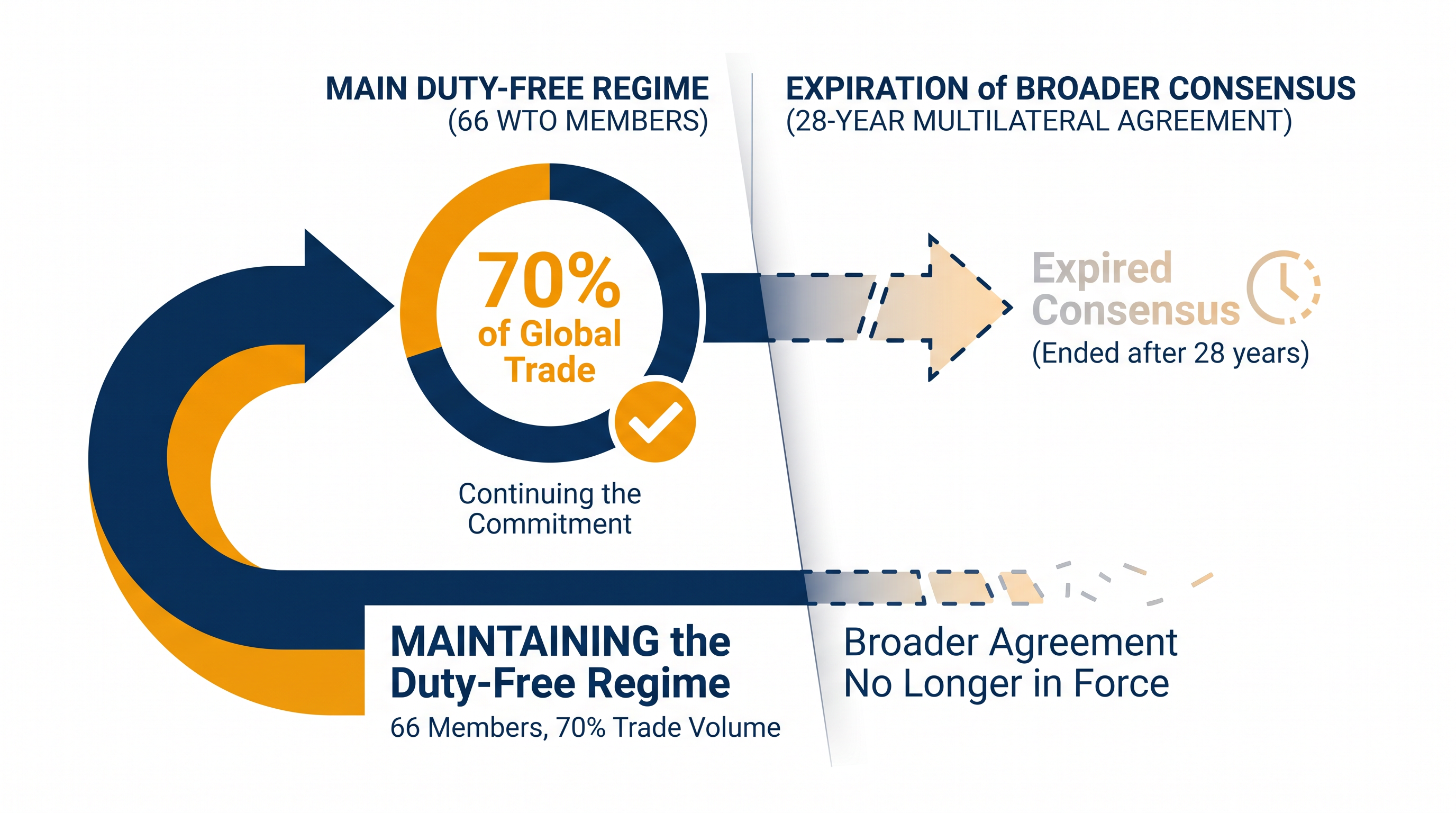
- A coalition of 66 WTO members, representing 70% of global trade, has pledged to maintain a duty-free regime among themselves.
- Developing nations argue the expiration allows them to recoup lost tariff revenue and protect domestic tech industries.
- Free-trade advocates warn that taxing data flows will increase costs for small businesses and fragment the global digital economy.
Why this matters
For nearly three decades, the internet operated as a duty-free zone, allowing software, cloud services, and digital media to cross borders without tariffs. The end of this consensus means multinational companies and local startups alike face a fragmented, unpredictable landscape where accessing essential digital tools could suddenly incur steep customs costs.
For twenty-eight years, a single, invisible rule held the global digital economy together: a World Trade Organization moratorium that banned countries from taxing electronic transmissions. Whether a business downloaded enterprise software, a hospital accessed a cloud-based diagnostic tool, or a consumer streamed a movie across borders, no customs agent stopped the data to collect a toll. That era of frictionless consensus is now officially over.[1]
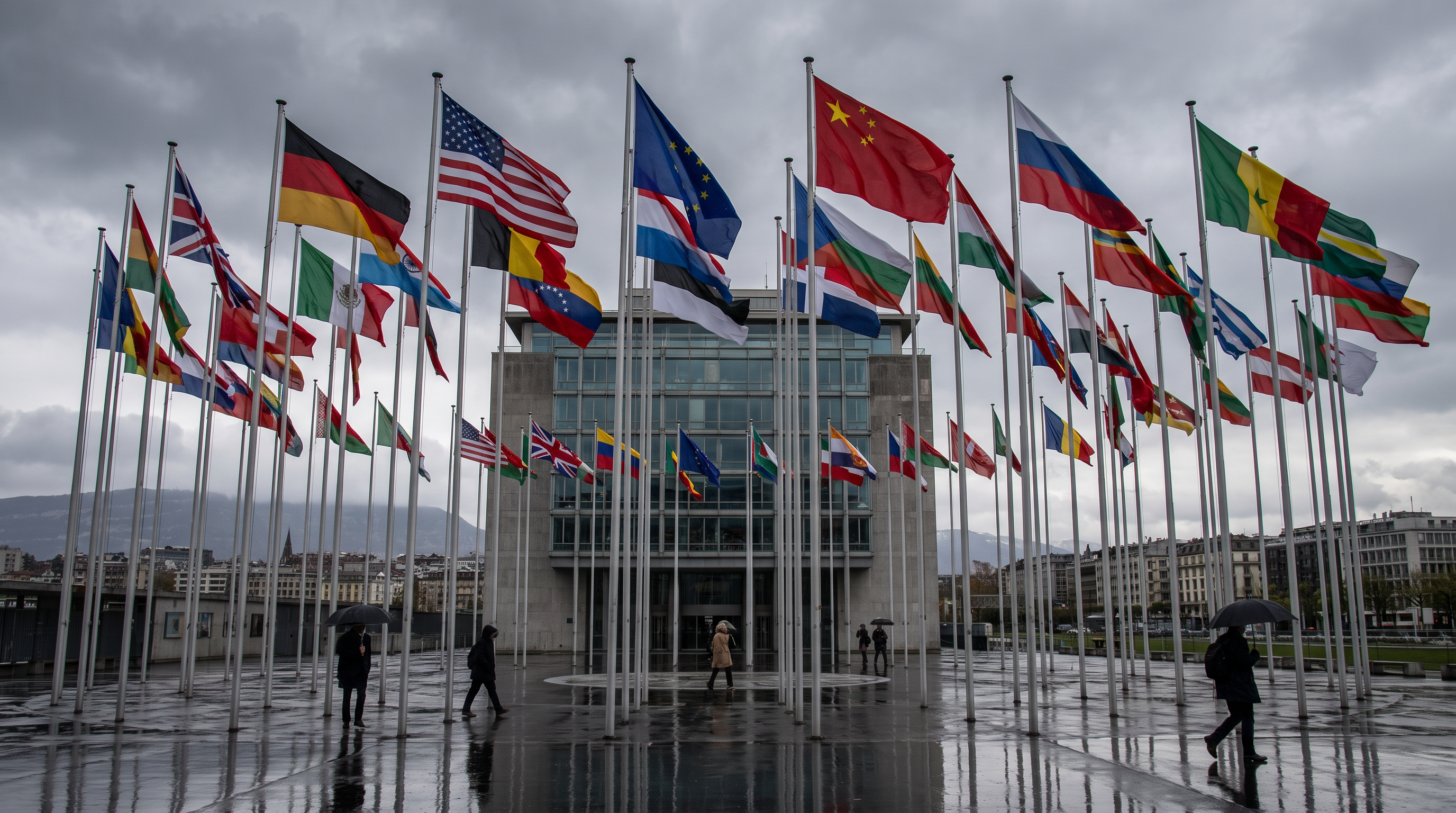
At the 14th WTO Ministerial Conference (MC14) in Yaoundé, Cameroon, member states failed to reach a unanimous agreement to extend the e-commerce moratorium, allowing it to lapse on March 30, 2026. This failure fundamentally rewrites the rules of global digital trade. The tension at the heart of this collapse is a profound disagreement over who actually benefits from a borderless internet—and whether free data flows are a universal public good or a mechanism for Western technology dominance.[2][3]
The immediate reality is that the legal shield protecting the digital economy has evaporated. Nations like India, Indonesia, and South Africa are now theoretically free to impose tariffs on software, streaming media, and digital services. While no country has yet erected a massive digital tollbooth, the mere restoration of this sovereign right introduces a chilling level of compliance uncertainty for multinational corporations and small developers alike.
We must be clear about what this means: the lapse of the moratorium is not the end of digital trade, but it is the end of the illusion that the internet is a borderless utopia. It forces a necessary, if painful, reckoning about digital industrialization. Developing nations argue that as physical trade digitizes—think 3D printing blueprints replacing shipped car parts—they are losing billions in traditional customs revenue while foreign tech giants monopolize their domestic markets.[2][3]
This argument is not without merit. If a country relies heavily on import taxes to fund public services and infrastructure, the rapid dematerialization of goods poses a direct, existential threat to its fiscal stability. By reclaiming the right to tax electronic transmissions, these nations are attempting to build a protective buffer to nurture nascent domestic technology sectors.[2]
By reclaiming the right to tax electronic transmissions, these nations are attempting to build a protective buffer to nurture nascent domestic technology sectors.
In their view, tariffs are a legitimate tool for industrial policy, just as they historically were for manufacturing. Without the ability to tax foreign digital imports, developing economies fear they will be permanently relegated to the role of data consumers, rather than digital creators, forever dependent on platforms built in Silicon Valley or Shenzhen.[2]
However, the strongest counter-argument is that digital tariffs will ultimately harm the very economies imposing them. Free-trade advocates and organizations like the OECD point out that taxing data flows will inevitably raise the cost of essential business tools. A local manufacturer relying on foreign cloud computing, cybersecurity software, or logistics platforms will suddenly face higher operational costs.[1]
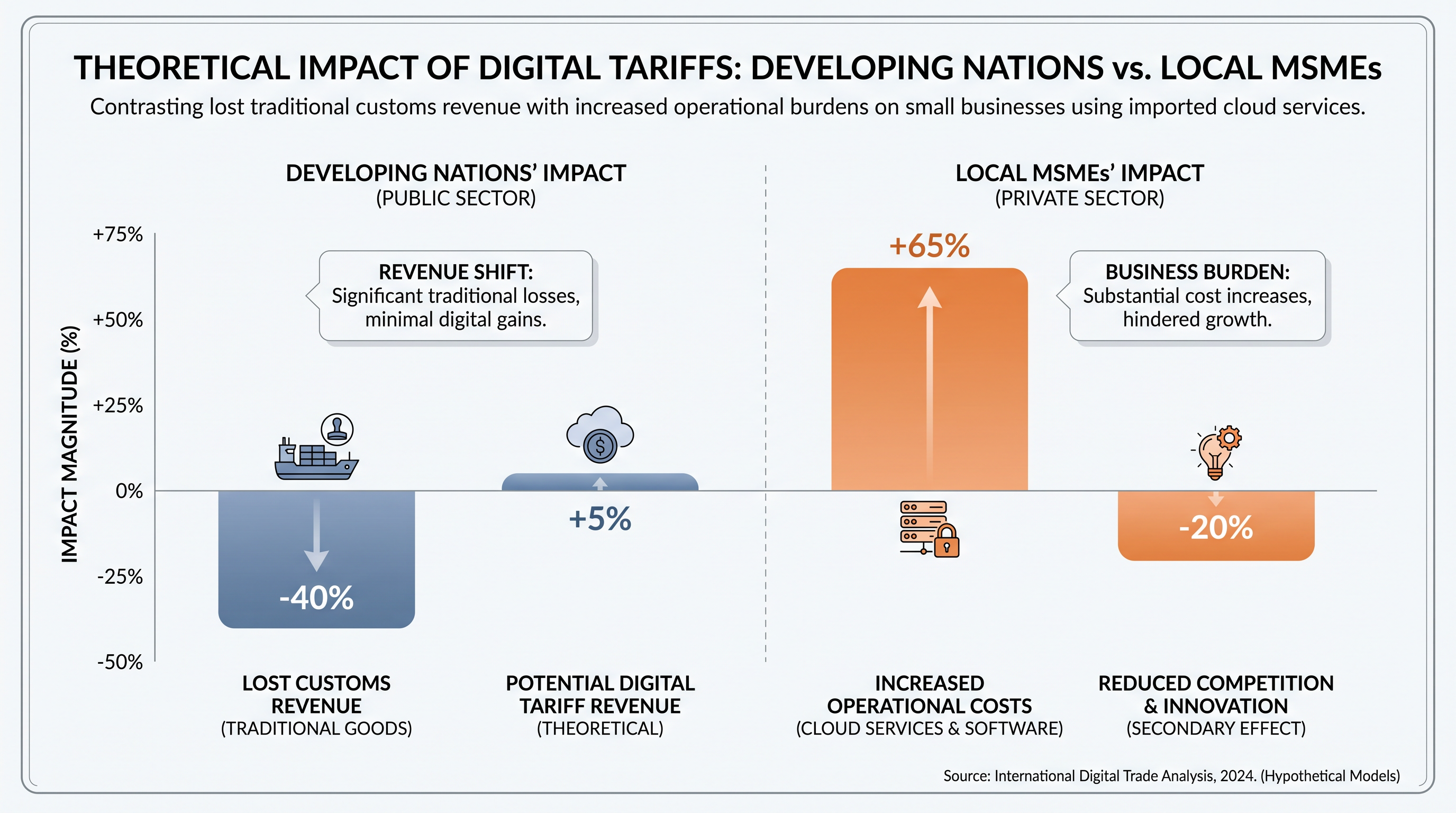
This dynamic risks stifling local startups and isolating developing economies from global supply chains. The International Chamber of Commerce has warned that the burden of digital tariffs will fall disproportionately on micro, small, and medium-sized enterprises (MSMEs), which lack the resources to navigate complex new customs regulations or absorb the added costs of digital infrastructure.[1]
In response to the lapse, a coalition of the willing comprising 66 WTO members—representing roughly 70 percent of global trade—has pledged to maintain a duty-free regime among themselves. Led by the United States, the European Union, the United Kingdom, and Japan, this plurilateral approach effectively creates a fragmented, two-tier internet economy.[3]
This fragmentation is where the true cost of the WTO's failure lies. Beyond the geopolitical posturing, there is the sheer logistical nightmare of taxing a byte. How does a customs authority value a proprietary algorithm accessed via an API? Does a streamed song incur a tariff every time it is played, or only when downloaded?[3]
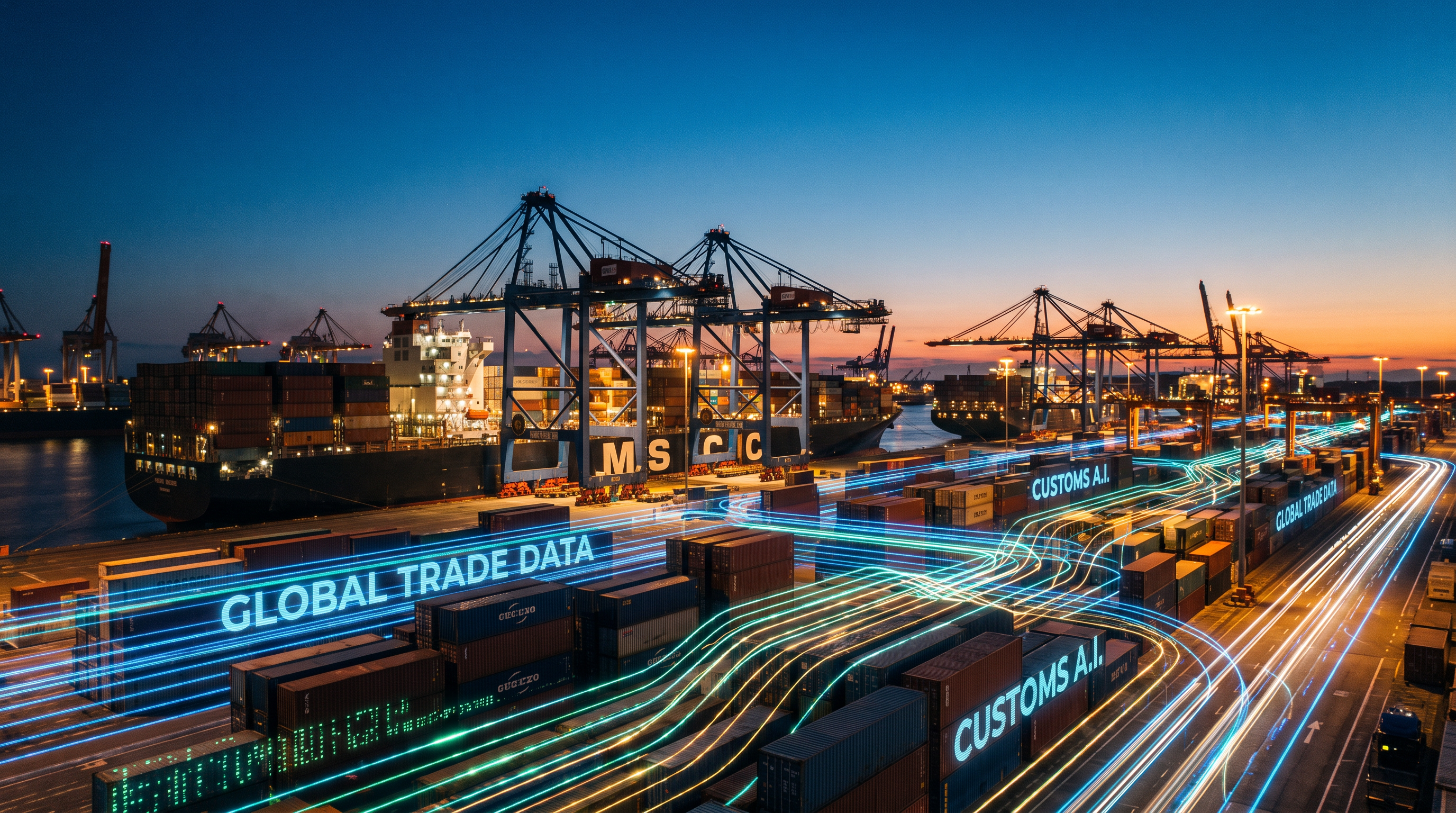
The lack of standardized definitions means any new tariff regime will likely be chaotic, heavily litigated, and deeply inefficient. For compliance professionals and tech founders, the landscape has shifted from predictable to precarious. A software-as-a-service provider in Berlin selling subscriptions to clients in Jakarta must now prepare for a world where cloud computing is subject to customs classifications—a concept that traditional trade law is entirely unequipped to handle smoothly.
Ultimately, the failure at MC14 signals a broader crisis for the WTO's consensus-based model. As multilateral agreements become nearly impossible to secure, trade diplomacy is fracturing into regional and bilateral pacts. The global economy now exists in a state of suspended animation: the legal right to tax the internet has been restored, but the practical reality of doing so remains a daunting, untested frontier.[2][3]
Viewpoints in depth
Restoring Tariff Sovereignty (The Developing Economy Case)
The argument that nations must reclaim the right to tax digital imports to fund public services and protect domestic tech sectors.
**For:** Reclaims lost fiscal revenue as physical goods digitize, and provides a protective tariff buffer to nurture nascent domestic technology sectors against foreign monopolies. **Against:** Risks isolating local businesses from affordable global cloud services and software, potentially stifling broader economic growth and innovation. **Evidence:** Proponents point to UNCTAD estimates suggesting developing nations lose billions annually in potential tariff revenue due to the moratorium, a figure that grows as physical media dematerializes. **Fits well when:** A nation has a large enough domestic market to sustain local tech alternatives and urgently needs to offset declining physical customs receipts. **Does not fit when:** An economy relies heavily on digital service exports or lacks the domestic infrastructure to replace foreign cloud computing and software tools.
Maintaining the Duty-Free Consensus (The Global Trade Case)
The argument that frictionless cross-border data flows are essential for global economic growth and small business competitiveness.
**For:** Ensures frictionless cross-border data flows, keeps enterprise software and cloud computing affordable for MSMEs, and prevents a chaotic, fragmented patchwork of digital customs compliance. **Against:** Locks in the market dominance of established Western technology giants and strips developing nations of a traditional, proven tool for industrial policy. **Evidence:** OECD research indicates that the economic drag of digital tariffs—through higher operational costs for local businesses—far outweighs the marginal fiscal revenue gained, potentially reducing overall GDP. **Fits well when:** A country is deeply integrated into global digital supply chains and prioritizes overall economic efficiency and startup growth over direct tariff collection. **Does not fit when:** A nation is actively trying to break foreign tech monopolies and is willing to absorb short-term friction to build sovereign digital infrastructure.
What we don’t know
- Which specific country will be the first to actively implement and enforce a new digital customs tariff.
- How customs authorities will practically value and classify complex, continuous digital transmissions like cloud computing APIs.
- Whether the plurilateral coalition of 66 nations will eventually formalize their duty-free pledge into a binding permanent treaty.
Sources
Source coverage
3 outlets
3 viewpoints surfaced



[1]OECDGlobal Free Trade Proponents
A small rule with a big role in digital trade
Read on OECD →[2]International Institute for Sustainable DevelopmentDeveloping Economy Advocates
World Trade Organization E-Commerce: Post-moratorium landscape for developing economies
Read on International Institute for Sustainable Development →[3]Factlen Editorial TeamCorporate Compliance Strategists
Synthesis by Factlen editorial team
Read on Factlen Editorial Team →
Comments

Every angle. Every day.
Get opinion stories with full source coverage and perspective breakdowns delivered to your inbox.