
Scientists Complete First High-Quality Diploid Human Genome, Revolutionizing Personalized Medicine
The Telomere-to-Telomere Consortium has published the first fully resolved diploid human genome, preserving both maternal and paternal chromosome sets. The milestone eliminates the blind spots of previous reference genomes, offering new hope for diagnosing rare genetic disorders.

For decades, clinical genetics has relied on a fundamental compromise. When a patient's DNA is sequenced, it is mapped against a standard reference genome—a flattened, haploid mosaic that compresses the differences between maternal and paternal chromosomes into a single linear sequence.[1][3]
This compression creates blind spots. Because human biology is inherently diploid—inheriting one set of chromosomes from each parent—forcing two distinct genetic lineages into a single template obscures complex structural variants and allele-specific mutations.[1][4]
On August 6, 2026, the Telomere-to-Telomere (T2T) Consortium published a suite of papers in Cell and Cell Genomics that resolves this tension. They have successfully assembled the first complete, high-quality diploid human genome.[1][2][6]
Rather than relying on an incomplete standard, the new approach reconstructs the individual genome itself. Using the HG002 cell line—derived from the son of an Ashkenazi family trio—researchers assembled each chromosome from one telomere to the other.[1][4][5]
This produced two separate, parallel chromosome sets representing the maternal and paternal genomes. Computational systems were deployed to determine which DNA fragments belonged to which parental chromosome, preserving every small difference without collapsing them.[4]
The data supporting this benchmark is robust. According to the primary study in Cell, the state-of-the-art de novo assembly methods resolved 2 to 7 percent more sequence than previous variant calling methods.[1][5]
The accuracy of the new diploid assembly is unprecedented. The researchers report an error rate of just one mistake per 100,000 base pairs across 99.9 percent of the benchmarked regions, achieving near-perfect accuracy over 99.4 percent of the entire diploid genome.[1][5]
This benchmark adds 701.4 megabases of autosomal sequence and 216.8 megabases from sex chromosomes that were absent from prior benchmarks. In total, it annotates 39,144 protein-coding genes across both haplotypes.[1][5]
However, the evidence carries explicit limitations. The HG002 genome is derived from a single individual of Ashkenazi descent. While it serves as a powerful technical benchmark, it does not capture the vast structural diversity of the global human population.[1][5]
Furthermore, the clinical translation of this milestone remains unproven at scale. Assembling a complete diploid genome currently requires combining roughly 170x coverage of PacBio circular consensus reads with 209x coverage of Oxford Nanopore ultra-long reads—a computationally heavy and expensive process not yet feasible for routine hospital diagnostics.[1][3]
The diploid resolution also allowed researchers to peer into previously impenetrable regions of the genome. A companion paper in Cell Genomics utilized a technique called DiMeLo-seq to map the centromere—the dense, repetitive core where sister chromatids meet during cell division.[2][3]
The data revealed that centromere protein A (CENP-A) occupies multiple discrete subdomains within hypomethylated regions. Despite enormous variation in the size of satellite DNA arrays between the maternal and paternal chromosomes, the aggregate length of these subdomains remains remarkably constrained.[2][5]
Yet, the causal mechanisms remain partially obscured. While the researchers observed that induced pluripotent stem cells show satellite DNA hypermethylation and a loss of CENP-A, the exact biological triggers that restructure these centromeric boundaries during early development are still being investigated.[2]
The immediate medical benefit of diploid benchmarking lies in rare disease diagnosis. Currently, more than half of patients with rare genetic disorders leave testing without a clear molecular explanation.[4]
Missing or misread regions often conceal the mutation responsible for a disease, particularly when it lies in a repetitive sequence or involves a complex structural change that a haploid reference cannot accurately map.[4]
By preserving the distinct maternal and paternal lineages, a complete diploid assembly exposes these invisible variants. Clinicians will eventually be able to identify these causes more accurately, potentially ending diagnostic odysseys for families.[3][4]
The same approach is expected to strengthen predictions for common diseases. While variants in genes like BRCA1 and BRCA2 are already used to estimate cancer risk, researchers hypothesize that additional risk-associated changes remain undiscovered in the difficult-to-sequence portions of the genome.[4]
The T2T Consortium's achievement signals a paradigm shift from variant calling—aligning sample reads to a reference—to genome benchmarking, where an individual's complete diploid sequence is evaluated on its own merits.[1][3]
As sequencing costs decline and computational algorithms become more efficient, the consortium envisions a future where generating a patient's complete diploid genome at birth becomes a standard medical practice.[3][4]
Until then, the HG002 benchmark stands as the most fundamental representation of human genetics to date—a dual-layered map that finally reflects the true biological reality of human inheritance.[1]
Key points
- The T2T Consortium has published the first complete, high-quality diploid human genome, separating maternal and paternal chromosomes.
- The new benchmark achieves 99.4% accuracy and resolves complex structural variants previously obscured by haploid reference models.
- Diploid benchmarking promises to improve diagnostic rates for rare genetic disorders by exposing mutations hidden in repetitive DNA sequences.
- Clinical adoption remains limited by the massive computational power and sequencing depth required to assemble individual diploid genomes.
Unanswered questions
- How quickly clinical laboratories can transition from standard reference alignment to computationally heavy diploid benchmarking.
- Whether the structural variants uncovered in the HG002 cell line will map cleanly to disease risk in diverse global populations.
- The exact biological triggers that restructure centromeric boundaries and satellite DNA during early cellular development.
How we got here
2001
The first draft of the human genome is published, containing significant gaps and lacking diploid resolution.
2022
The T2T Consortium publishes the first complete haploid human genome, resolving the remaining 8% of gaps but representing only one set of chromosomes.
2023
A draft human pangenome reference is released, capturing more diversity but still relying on complex graph alignments.
August 2026
The first complete, high-quality diploid human genome is published, successfully separating maternal and paternal sequences.
- Genomic Researchers
- Argue that complete diploid assemblies are essential for uncovering allele-specific gene content and structural variants previously hidden by haploid references.
- Clinical Diagnosticians
- Focus on the potential to solve rare genetic disorders by exposing invisible mutations, though they remain cautious about the current cost and computational burden.
- Biotech Industry Analysts
- View the shift toward genome benchmarking as a catalyst for new sequencing technologies and personalized medicine markets.
Perspectives this story doesn't cover
- Bioethicists concerned with genomic data privacy
- Global health advocates focused on ensuring diverse ancestries are represented in future diploid benchmarks
Sources
Source coverage
6 outlets
3 viewpoints surfaced





- [1]CellGenomic Researchers
A complete diploid human genome benchmark for personalized genomics
Read on Cell → - [2]Cell GenomicsGenomic Researchers
Haplotype-resolved DiMeLo-seq maps centromeric chromatin in a complete diploid human genome
Read on Cell Genomics → - [3]The ScientistClinical Diagnosticians
A Complete, Diploid Human Genome Reference Lends Greater Accuracy
Read on The Scientist → - [4]BioengineerClinical Diagnosticians
Human Genome Breakthrough Paves Way for Personalized Genomics
Read on Bioengineer → - [5]National Institutes of HealthGenomic Researchers
A complete diploid human genome benchmark for personalized genomics
Read on National Institutes of Health → - [6]GenomeWebBiotech Industry Analysts
T2T Consortium Publishes Suite of Papers on Complete Genomes
Read on GenomeWeb →
More in Science
See all →Precision Oncology
Expanded Genetic Testing Finds Actionable Mutations in One-Third of Cancer Patients, Opening New Treatment Paths
6 sources

Genomic History
Two Mysterious 'Ghost' Human Ancestor Lineages Discovered Hiding in Modern DNA
6 sources
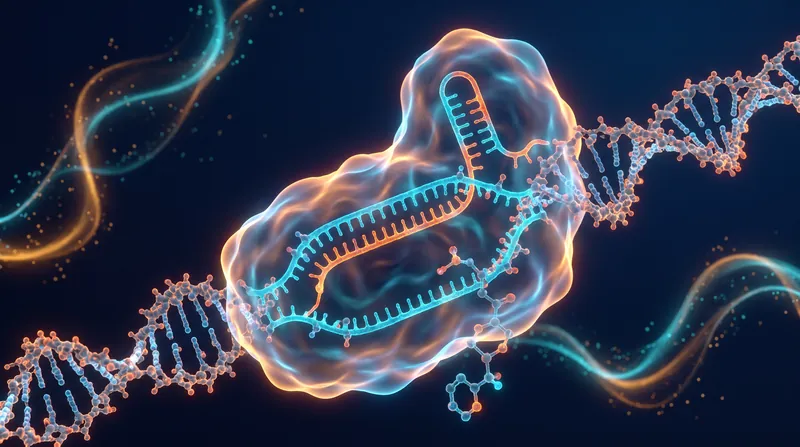
CRISPR Mechanics
How a 20-Nucleotide Guide RNA Sequence Directs the Cas9 Nuclease to a Specific Genomic Locus
8 sources
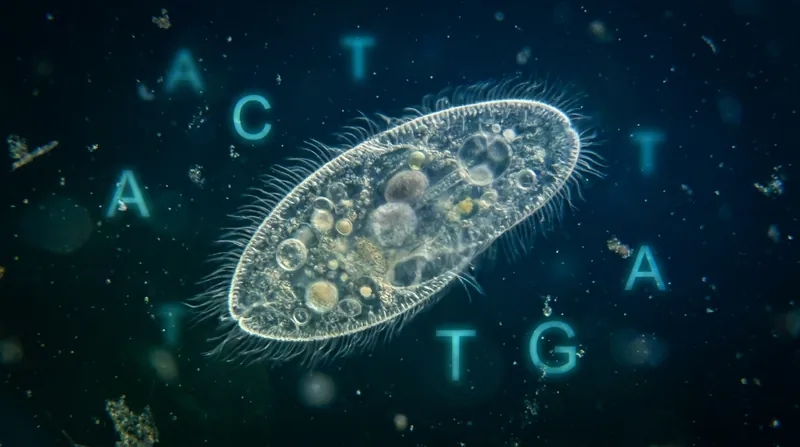
Genetic Code
Pond Protist Rewrites Universal Genetic Code, Reassigning 'Stop' Signals
4 sources
Comments
Every angle. Every day.
Get Science stories with full source coverage and perspective breakdowns, free every day.