
Engineered Cell-Free System Creates Proteins With 34 Amino Acids, Overturning Decades of Genetic Code Understanding
A new automated workflow called AGENTEX allows researchers to design synthetic proteins using up to 34 amino acids in a cell-free environment. The breakthrough overturns long-held textbook rules about transfer RNA flexibility, opening the door to faster and safer production of novel medicines without altering living genomes.
By Sofia Matos

Share this story
For billions of years, the genetic code has relied on a strict alphabet of 20 amino acids to build every protein in the natural world. Now, an automated workflow called AGENTEX has shattered that limit, successfully synthesizing proteins with up to 34 distinct amino acids in a single batch. The breakthrough, published in Nature by researchers from Harvard Medical School and the Wyss Institute, provides a massive expansion of the chemical building blocks available to science.[1][2]
The AGENTEX system—short for automated genetic tRNA expansion—operates entirely outside of living cells. It relies on a cell-free "soup" of E. coli components, known as a lysate solution, combined with a library of 48 engineered transfer RNA (tRNA) sequences and custom-built ribosomes. By moving protein synthesis into test tubes, the researchers bypassed the immense difficulty of recoding a living organism's genome.[1][5]
The genetic code possesses a natural redundancy that has tempted engineers for decades. While there are 64 possible three-letter DNA codons, they only code for 20 amino acids and three stop signals. For instance, four different codons all instruct the cell to add the amino acid serine. This redundancy suggests that spare codons could be repurposed to carry entirely new, human-made amino acids.[3][5]
Historically, however, the pace of repurposing those codons in living cells has been agonizingly slow. The Church lab spent years proving in 2013 that a single codon could be freed up in living E. coli bacteria and reassigned. It then took another decade of arduous genetic engineering to free a second codon, bringing the total to 22 amino acids per protein. AGENTEX compresses that timeline dramatically, opening the door to 34 amino acids at once.[3][5]
Achieving this leap required overturning a foundational rule of molecular biology. Textbooks have long held that every tRNA—the shuttle molecule that ferries an amino acid to the ribosome for assembly—must end in a specific three-letter sequence known as CCA (cytosine, cytosine, and adenine). It was assumed that any other ending would be rejected outright by the enzymes that load the amino acid.[1][3]
First author Felix Radford and his colleagues demonstrated that this textbook rule was only partly right. The team discovered an unexpected flexibility in the fundamental tRNA sequence. They found that loading enzymes will still successfully attach an amino acid to a tRNA even if its tail sequence is swapped for an alternative, such as CGA.[1][3]
While the loading enzymes proved flexible, natural ribosomes remained strict, refusing to accept the non-CCA tRNAs into the protein assembly line. To solve this, the researchers engineered matching, modified ribosomes that specifically recognize the new endings. This dual-engineering approach allowed the altered tRNAs to be used in protein assembly while keeping the new system entirely separate from normal cellular machinery.[1][3]
This separation acts as a strict quarantine, ensuring that the synthetic components do not interfere with natural protein-making processes. In laboratory tests, a ribosome built to work with the modified tag proved highly efficient, producing about six times more of a target protein than an unmodified ribosome attempting the same task.[1][3]
The cell-free design also provides a critical advantage in biocontainment. Because the system relies on engineered ribosomes and tRNAs operating in a lysate solution, the synthetic machinery does not function if transferred into environmental organisms. This allows researchers to safely prototype alternative genetic codes without the risks associated with genetically modified living cells.[4][5]
Despite the success in test tubes, the evidence for immediate in vivo application remains weak. The researchers explicitly note that the present result is a laboratory platform, not a recoded organism. Significant further engineering and separate safety assessments would be required before this 34-amino-acid trick could function efficiently inside an intact, living cell.[3][4]
Nevertheless, the practical promise of the cell-free system is immense. By treating protein engineering as a molecular design and discovery platform, thousands of unique molecules can now be built, tested, and evolved in parallel. The team envisions integrating artificial intelligence into AGENTEX to further optimize protein design and run rapid tRNA screens.[5][6]
Ultimately, the ability to routinely incorporate non-standard chemical building blocks opens radical new routes for biotechnology. Proteins and sequence-defined polymers could soon contain elements that biology does not normally use, paving the way for advanced materials, novel catalysts, and highly targeted medicines that were previously impossible to manufacture.[4][5]
Key points
- The AGENTEX system uses cell-free extracts to synthesize proteins with up to 34 distinct amino acids.
- The breakthrough overturns the textbook rule that transfer RNAs must end in a specific CCA sequence.
- Researchers engineered custom ribosomes to accept the modified tRNAs, keeping the synthetic system isolated.
- The cell-free approach avoids the decade-long process of recoding living genomes.
What we don’t know
- Whether this 34-amino-acid system can eventually be engineered to function efficiently inside an intact, living organism.
- How the engineered ribosomes and tRNAs will scale when producing highly complex, multi-domain therapeutic proteins.
- The full range of non-standard chemical building blocks that the modified tRNAs can successfully carry and incorporate.
How we got here
2013
Researchers demonstrate that a single codon can be freed up in living E. coli bacteria and reassigned to a new amino acid.
2023
After another decade of genetic engineering, a second codon is freed, bringing the total to 22 amino acids per protein in living cells.
August 2026
The AGENTEX system is published in Nature, jumping the capacity to 34 amino acids at once by utilizing a cell-free approach.
- Synthetic Biologists
- View the breakthrough as a massive acceleration in protein engineering, allowing for the rapid prototyping of novel materials and medicines without the delays of in vivo genome recoding.
- Evolutionary Geneticists
- Focus on the fundamental discovery that the highly conserved CCA tail of transfer RNAs is surprisingly flexible, overturning decades of textbook dogma.
- Biosafety Advocates
- Emphasize the inherent containment advantages of the cell-free system, noting that the engineered components cannot survive or function if exposed to the natural environment.
Perspectives this story doesn't cover
- Pharmaceutical Manufacturers
- Bioethics Regulators
Sources
Source coverage
6 outlets
3 viewpoints surfaced






- [1]Harvard Medical SchoolSynthetic Biologists
Unexpected discovery about tRNAs leads to tool that can drive faster, safer production of new medicines
Read on Harvard Medical School → - [2]NatureEvolutionary Geneticists
AGENTEX: automated genetic tRNA expansion
Read on Nature → - [3]ScholarPeerEvolutionary Geneticists
Rewriting the Rules of the Ribosome
Read on ScholarPeer → - [4]AlkemataBiosafety Advocates
A robotic system prototypes alternative genetic codes outside living cells
Read on Alkemata → - [5]AZoLifeSciencesSynthetic Biologists
Researchers clear major obstacle in genetic engineering of proteins
Read on AZoLifeSciences → - [6]Phys.orgSynthetic Biologists
Reworked tRNAs enable protein design with up to 34 amino acids
Read on Phys.org →
More in Science
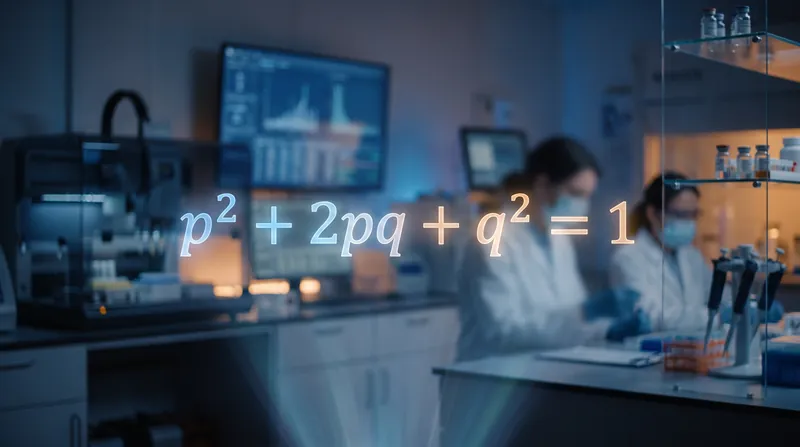
See all →Precision Oncology
Expanded Genetic Testing Finds Actionable Mutations in One-Third of Cancer Patients, Opening New Treatment Paths
6 sources
Genomic Benchmarking
Scientists Complete First High-Quality Diploid Human Genome, Revolutionizing Personalized Medicine
6 sources
Genomic History
Two Mysterious 'Ghost' Human Ancestor Lineages Discovered Hiding in Modern DNA
6 sources
Genetic Code
Pond Protist Rewrites Universal Genetic Code, Reassigning 'Stop' Signals
4 sources
Comments
Every angle. Every day.
Get Science stories with full source coverage and perspective breakdowns, free every day.