
California Launches First-in-Nation 'Social Health Council' to Combat Loneliness Crisis
California has established a statewide council dedicated to treating social isolation as a public health emergency. The initiative aims to integrate community connection into public policy, addressing a crisis linked to severe physical and mental health risks.
By Chen Wang

Share this story
In short
- California has launched the nation's first Social Health Council to combat the loneliness epidemic.
- The initiative treats social isolation as a public health emergency, akin to physical and mental health crises.
- Medical experts equate the health risks of prolonged loneliness to smoking up to 15 cigarettes a day.
The simple act of having a conversation has become a scarce resource in modern life, and the medical toll is mounting. For years, doctors have warned that chronic isolation is not just a fleeting emotion, but a physiological stressor that degrades the human body. Now, California is treating the absence of friendship as a medical emergency. On Thursday, the state launched the nation's first Social Health Council, a coordinated effort to weave human connection directly into public policy.[1][5]
Spearheaded by First Partner Jennifer Siebel Newsom, the council brings together state and local government officials, tribal leaders, academics, and faith organizations. Their mandate is to develop a concrete roadmap for strengthening belonging across the state. Rather than simply raising awareness, the council aims to treat social health with the same urgency and infrastructure funding traditionally reserved for physical and mental health crises.[1]
To understand the council's approach, it is necessary to distinguish between the objective and subjective experiences of disconnection. Social isolation refers to an objective lack of regular contact with others—living alone, having few friends, or participating in minimal social activities. Loneliness, however, is a subjective, distressing feeling that arises when there is a gap between a person's desired level of connection and their actual experience. A person can be surrounded by people and still feel profoundly lonely.[5]
The move follows years of escalating warnings from the medical community. In 2023, U.S. Surgeon General Dr. Vivek Murthy issued a landmark advisory declaring a national epidemic of loneliness and isolation. The advisory laid bare the stark biological consequences of disconnection, noting that prolonged loneliness increases the risk of premature death as much as smoking up to 15 cigarettes a day.[4]
The Surgeon General's report detailed how lacking social connection elevates the risk of heart disease by 29 percent and stroke by 32 percent. It also accelerates cognitive decline, increasing the risk of dementia in older adults by 50 percent. Beyond physical health, loneliness significantly impacts mental well-being, driving higher rates of depression, anxiety, and suicide across multiple demographics.[4]
The crisis extends far beyond American borders. In 2025, a World Health Organization (WHO) commission revealed that one in six people worldwide experiences loneliness. The WHO report linked social isolation to an estimated 100 deaths every hour globally, urging policymakers to recognize that strong social bonds are a fundamental pillar of public health and economic resilience.
The WHO and other public health bodies have also begun to quantify the financial burden of this epidemic. Disconnected individuals incur higher medical costs, require more frequent hospitalizations, and experience decreased workplace productivity. By addressing loneliness at a systemic level, governments hope to ease the strain on overtaxed healthcare systems and boost overall economic vitality.[5]
California's statewide action builds on localized momentum that began in the heart of Silicon Valley. In early 2024, San Mateo County became the first county in the United States to officially declare loneliness a public health emergency. Driven by local surveys showing that 45 percent of residents struggled with isolation, the county's Board of Supervisors passed a resolution pledging to promote social connection and urging the state to take broader action.[2]
The new Social Health Council serves as the policy engine for the broader "California Love, California Strong" initiative, which launched earlier in 2026. That campaign focuses on three core pillars: self-care, social connection, and service. By organizing monthly community activations and volunteer opportunities, the initiative attempts to engineer organic interactions among residents who might otherwise remain isolated behind screens and closed doors.[3]
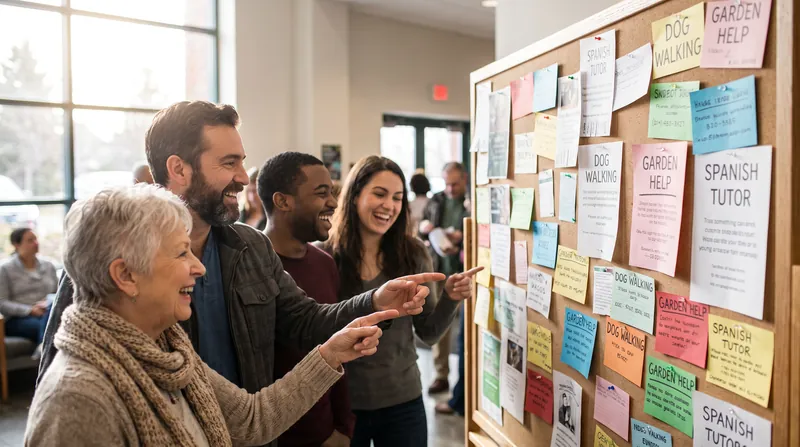
A major focus of these efforts is the revitalization of "third places"—the physical environments outside of home and work where people gather. Libraries, parks, and community centers are being reimagined not just as service providers, but as critical public health infrastructure. During the launch of the state's earlier initiatives, officials emphasized that funding and protecting these spaces is essential for fostering a resilient and loving culture.[1][3]
The state is also tailoring its approach to specific vulnerable demographics. Earlier in the year, Governor Gavin Newsom convened leaders to address the specific crisis of disconnection among boys and young men, a group experiencing declining workforce participation and worsening mental health outcomes. By creating targeted pathways for service and mentorship, the state hopes to provide a sense of purpose that counters the pull of isolation.[1][5]
The council will also have to grapple with the paradoxical role of technology. While digital platforms offer unprecedented connectivity, public health experts point out that excessive social media use often displaces the high-quality, in-person interactions required for genuine emotional fulfillment. Navigating this digital landscape without alienating younger generations will be a central challenge for the new advisory body.[4][5]
Ultimately, legislating human connection presents unique hurdles. Unlike building a bridge or distributing a vaccine, fostering a sense of belonging is inherently subjective. Policymakers must navigate the delicate balance of creating environments conducive to friendship without imposing artificial or mandated interactions. The success of the Social Health Council will likely depend on its ability to empower local, grassroots organizations rather than relying solely on top-down directives.[5]
If California's experiment succeeds, it could provide a blueprint for a national response to the loneliness epidemic. By shifting the narrative from individual failing to systemic infrastructure, the state is testing a profound hypothesis: that government has a role to play not just in keeping citizens alive, but in ensuring they have a community to live for.[5]
Definitions
- Social Health
- The dimension of well-being that comes from feeling connected, supported, and valued within a community.
- Third Place
- A sociological term for social surroundings separate from the two usual social environments of home and the workplace.
- Social Isolation
- The objective state of having minimal contact with other people and lacking a social support network.
- Epidemic of Loneliness
- A public health framework used to describe the widespread and growing prevalence of severe social disconnection across populations.
Questions & answers
What is the California Social Health Council?
It is a first-in-the-nation state advisory body launched to treat loneliness as a public health priority and develop strategies for community connection.
How does loneliness affect physical health?
Prolonged loneliness increases the risk of premature death, heart disease, stroke, and dementia, with health impacts comparable to smoking 15 cigarettes a day.
What is the difference between loneliness and social isolation?
Isolation is the objective lack of social contact, while loneliness is the subjective distress felt when one's need for connection is unmet.
What are 'third places'?
They are physical locations outside of home and work, such as libraries, parks, and cafes, where people can gather and build community.
Analysis by camp
Public Health Officials
Medical experts view loneliness as a physiological stressor that requires urgent systemic intervention.
For epidemiologists and public health leaders, the data on loneliness is unambiguous. The U.S. Surgeon General and the World Health Organization have both elevated social disconnection to the level of a global health crisis, citing its direct links to heart disease, dementia, and premature mortality. From this perspective, treating loneliness is not a matter of social engineering, but of preventative medicine. They argue that healthcare systems must begin screening for isolation just as they do for high blood pressure or tobacco use.
Community Advocates
Grassroots organizers emphasize the need for physical infrastructure and funded 'third places.'
Community leaders argue that awareness campaigns are insufficient without the physical spaces required to foster connection. They point to the erosion of 'third places'—libraries, community centers, and public parks—as the root cause of the crisis. For these advocates, the solution lies in urban planning and municipal funding. They stress that true social health requires environments where people can gather without the expectation of spending money, allowing organic relationships to form across diverse demographics.
Policy Innovators
Government officials are shifting the narrative from individual responsibility to systemic public infrastructure.
For state leaders driving this initiative, the creation of a Social Health Council represents a paradigm shift in governance. Historically, loneliness has been viewed as a personal failing or a private sorrow. Policy innovators are now arguing that government has a fundamental duty to facilitate social cohesion. By integrating social health into the broader apparatus of state services, they hope to prove that public policy can effectively engineer environments that make friendship and community engagement more accessible.
- Public Health Officials
- View loneliness primarily as a medical crisis with severe epidemiological consequences that require systemic intervention.
- Community Advocates
- Emphasize the need for physical infrastructure, such as 'third places,' and grassroots funding to foster organic connections.
- Policy Innovators
- Argue that government must shift from viewing isolation as a personal failing to treating it as a failure of public infrastructure.
Perspectives this story doesn't cover
- Urban Planners
- Tech Industry Representatives
Sources
Source coverage
5 outlets
3 viewpoints surfaced





- [1]California Governor's OfficePolicy Innovators
First Partner Siebel Newsom launches California's first Social Health Council to strengthen community connection
Read on California Governor's Office → - [2]Business InsiderCommunity Advocates
Wealthy Silicon Valley county becomes first to declare loneliness a public health emergency
Read on Business Insider → - [3]California Love, California StrongCommunity Advocates
Connecting all Californians to a deeper sense of belonging through self-care, service, and social connection
- [4]U.S. Surgeon GeneralPublic Health Officials
Our Epidemic of Loneliness and Isolation: The U.S. Surgeon General's Advisory
Read on U.S. Surgeon General → - [5]Factlen Editorial TeamPolicy Innovators
Synthesis by Factlen editorial team
Read on Factlen Editorial Team →

More in Culture
See all →Linguistic Theory
The Arbitrariness of the Sign: How Ferdinand de Saussure's Dyad of Signifier and Signified Defines Modern Linguistics
4 sources

Network Science
The 150-Person Limit: Why Human Brains Cannot Maintain More Stable Social Relationships
6 sources

Music Theory
The Five-Note Universal: Why Isolated Cultures and Children's Songs Independently Discovered the Pentatonic Scale
7 sources

Alternative Economics
How Timebanking Turns Neighborhood Favors Into a Tax-Free Economy
3 sources
Comments
Every angle. Every day.
Get Culture stories with full source coverage and perspective breakdowns, free every day.