
World's First Personalized CRISPR Base-Editing Therapy Saves Infant with Fatal Genetic Disorder
In a historic milestone for personalized medicine, researchers engineered a custom gene therapy from scratch in just six months to treat a nine-month-old boy's ultra-rare metabolic disease. The successful in vivo treatment proves that bespoke genetic interventions can be deployed rapidly enough to save lives.
By Sofia Matos
Share this story
In short
- A nine-month-old infant successfully received the world's first personalized in vivo CRISPR base-editing therapy for a fatal metabolic disorder.
- The bespoke treatment was engineered, manufactured, and administered in just six months, proving that N-of-1 medicine can be deployed rapidly.
- Unlike traditional CRISPR, base editing chemically alters a single DNA letter without cutting the double helix, reducing the risk of unintended mutations.
At nine months old, a boy nicknamed KJ became the first person in medical history to receive a custom-built gene-editing treatment designed entirely from scratch to fix a single typo in his DNA. Born with an ultra-rare and fatal metabolic disorder, KJ faced a grim prognosis that standard medicine could not reverse.
However, an unprecedented collaboration between academic researchers and biotechnology companies resulted in a bespoke genetic therapy engineered, manufactured, and delivered in just six months. The milestone procedure, detailed in the New England Journal of Medicine, proves that personalized genetic medicine can be developed fast enough to save an infant's life. This breakthrough not only alters KJ's trajectory but establishes a new frontier for "N-of-1" medicine—treatments designed for a single patient.[2][3]
KJ was diagnosed shortly after birth with severe neonatal-onset carbamoyl-phosphate synthetase I (CPS1) deficiency. This devastating genetic condition affects roughly one in 1.3 million newborns and carries an estimated mortality rate of 50% in early infancy. The CPS1 gene encodes a critical liver enzyme responsible for the urea cycle—the biological engine that breaks down nitrogen waste.
When this enzyme is missing or defective, the body cannot process the byproducts of protein metabolism. As a result, toxic ammonia rapidly accumulates in the bloodstream. If left unchecked, this hyperammonemia crosses the blood-brain barrier, causing irreversible neurological damage, comas, and ultimately death.[2][3]
The standard of care for CPS1 deficiency is notoriously difficult and often insufficient. Infants are placed on severely restricted, low-protein diets and administered heavy doses of ammonia-scavenging drugs to keep toxicity at bay. This grueling regimen is designed merely to buy time until the child grows large enough to safely undergo a liver transplant.
However, finding a matching donor can take months, and the transplant itself carries immense risks, including a lifetime of immunosuppressive medications. Recognizing that KJ might not survive the wait, Dr. Rebecca Ahrens-Nicklas and her colleagues at the Children's Hospital of Philadelphia (CHOP) proposed a radical alternative: fixing the genetic defect at its biological source.[2][3]
The clinical team at CHOP, in partnership with researchers at Penn Medicine, decided to pursue an experimental "N-of-1" strategy. Rather than relying on off-the-shelf treatments, they would sequence KJ's genome, identify his exact mutation, and build a therapy tailored exclusively to him. This approach represents the ultimate realization of personalized medicine. While traditional pharmaceuticals are developed over decades to treat millions of people with shared symptoms, N-of-1 medicine flips the paradigm, mobilizing vast scientific resources to engineer a highly specific molecular intervention for a single individual.[3][4]
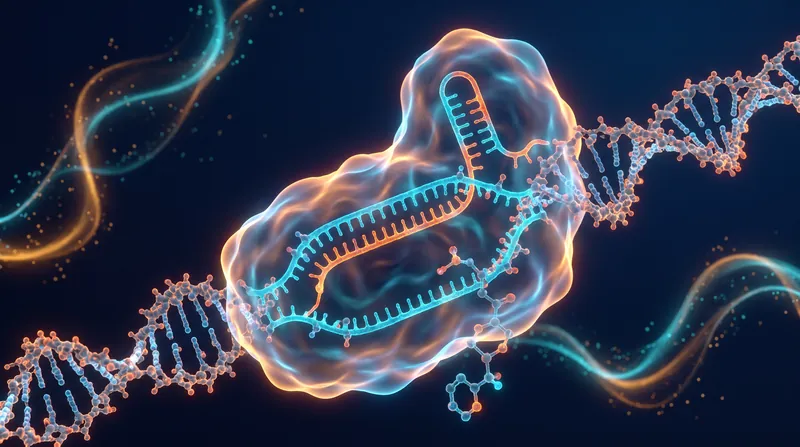
To correct KJ's DNA, the research team turned to a next-generation technology known as base editing. Traditional CRISPR-Cas9 therapies act like molecular scissors, cutting through both strands of the DNA double helix to disable a malfunctioning gene or insert new code. While effective, double-strand breaks can sometimes lead to unintended genetic rearrangements.
Base editing, by contrast, operates with microscopic precision, functioning more like a chemical pencil. Instead of severing the DNA strand, the biochemical machinery targets a specific location and alters a single chemical letter—out of the three billion base pairs in the human genome—leaving the surrounding helix entirely intact.[5]
Genetic sequencing revealed that KJ's condition was driven by a specific truncating mutation known as Q335X. Armed with this precise target, the team designed a custom guide RNA—affectionately dubbed "kayjayguran"—to navigate the base-editing enzyme directly to the typo in KJ's liver cells.
Once attached, the adenine base editor would chemically convert the mutated DNA base back to its healthy sequence, restoring the liver's ability to produce the functional CPS1 enzyme. This highly targeted approach ensured that the intervention would address the root cause of the disease without disrupting other critical genetic functions.[1][2]
Designing the base editor was only half the battle; delivering it safely into KJ's liver presented a massive logistical hurdle. Historically, gene therapies have relied on adeno-associated viruses (AAVs) to ferry genetic material into cells. However, the CPS1 gene and the base-editing machinery are simply too large to fit inside a standard viral vector.
To bypass this limitation, the researchers utilized lipid nanoparticles (LNPs)—microscopic fat bubbles that can encapsulate large strands of messenger RNA (mRNA). When infused into the bloodstream, these LNPs naturally gravitate toward the liver, where they are absorbed by hepatocytes, releasing the mRNA instructions directly into the target cells.[1][5]
The most astonishing aspect of KJ's treatment was the unprecedented speed of its development. Moving from a genetic diagnosis to a clinical-grade drug product typically takes years, if not decades. However, the CHOP and Penn Medicine teams collaborated with industry partners, including Aldevron and Integrated DNA Technologies, to compress the entire manufacturing pipeline into just six months.
This rapid turnaround required extensive preclinical testing, including in vitro models and cynomolgus monkey safety assessments, to ensure the custom therapy was both effective and non-toxic. The resulting drug, named "k-abe," set a new benchmark for rapid-response genetic engineering.[1][4]
Because "k-abe" was an entirely new, untested biological entity, administering it to a human patient required navigating complex regulatory frameworks. The clinical team submitted a comprehensive safety profile to the U.S. Food and Drug Administration (FDA), detailing the extensive off-target analysis performed to guarantee the base editor would not cause unintended mutations.
Recognizing the fatal nature of KJ's condition and the lack of viable alternatives, the FDA granted authorization under a single-patient emergency compassionate-use protocol. This regulatory flexibility was crucial in allowing the bespoke therapy to reach KJ before his condition deteriorated further.[1][5]
In late February 2025, at roughly seven months of age, KJ received his first intravenous infusion of the customized base-editing therapy at CHOP. The medical team opted for a cautious, escalating dose strategy to monitor for adverse immune reactions. Over the following two months, KJ received second and third infusions. The lipid nanoparticles successfully navigated his bloodstream, entered his liver, and delivered the mRNA payload. Within days, his liver cells began translating the instructions, assembling the base editors, and permanently correcting the Q335X mutation in his DNA.[2][3]
The clinical results were nothing short of transformative. Following the treatments, KJ's blood ammonia levels stabilized dramatically. He was able to tolerate a normal dietary protein intake—a milestone that would have previously triggered a lethal metabolic crisis. Furthermore, his reliance on nitrogen-scavenging medications was significantly reduced. Most remarkably, KJ successfully weathered standard childhood viral infections without experiencing the sudden, life-threatening ammonia spikes that typically force CPS1 patients into the intensive care unit. The therapy had effectively restored enough enzyme activity to mimic a healthy liver.[2][3]
The success of KJ's treatment was formally validated when the case study was published in the New England Journal of Medicine, sending ripples through the scientific community. The publication provided rigorous peer-reviewed evidence that personalized, in vivo base editing is not just a theoretical concept, but a viable clinical reality. By demonstrating that a custom genetic medicine can be engineered, manufactured, and administered safely within a six-month window, the study established a reproducible blueprint for treating other ultra-rare genetic disorders that have historically been ignored by commercial drug developers.[1][2][4]
As an evidence pack, the data supporting this intervention is exceptionally strong. The clinical phenotype—KJ's ability to process protein and maintain stable ammonia levels—directly correlates with the molecular intervention. Furthermore, the research team utilized surrogate human cell lines and murine models to confirm the precise editing efficiency of the "k-abe" construct prior to infusion.
While a direct liver biopsy of the infant was deemed unnecessarily invasive, the systemic metabolic improvements provide undeniable proof that the lipid nanoparticles successfully transfected a therapeutically relevant percentage of his hepatocytes, resulting in durable in vivo gene editing.[2][5]
Despite the overwhelming success, transparent uncertainties remain regarding the long-term durability of the treatment. KJ's liver is still growing, and as his hepatocytes divide and multiply over the coming years, it is unknown whether the edited cells will maintain a sufficient population to keep his urea cycle functioning optimally.
While the base edits are permanent within the corrected cells, the rapid cellular turnover of a growing infant could potentially dilute the therapeutic effect over time. Clinicians will continue to monitor KJ closely to determine if additional interventions, or eventually a liver transplant, will be required later in life.[2][5]
KJ's milestone does not exist in a vacuum; it is part of a broader, rapid acceleration in the field of in vivo gene editing. Just as KJ's therapy utilized lipid nanoparticles to edit the liver, other recent breakthroughs—such as Intellia Therapeutics' phase 3 trials for hereditary angioedema—have proven that CRISPR machinery can be safely infused directly into the bloodstream to permanently correct genetic errors.
These parallel successes validate the LNP delivery mechanism and suggest that the era of extracting cells, editing them in a lab, and re-infusing them may soon be eclipsed by the simplicity and efficiency of direct in vivo treatments.[5]
The triumph of N-of-1 medicine inevitably raises profound economic and ethical questions. Because KJ's therapy was developed through a coalition of academic institutions and private biotechnology companies donating their services, the true commercial cost of the drug remains unknown.
Engineering a bespoke genetic therapy for a single patient currently costs millions of dollars. Health economists warn that without systemic changes to how rare disease research is funded, and without streamlined regulatory pathways to reduce manufacturing costs, these life-saving interventions will remain inaccessible to the vast majority of families facing ultra-rare diagnoses.[1][5]
Nevertheless, KJ's story remains a beacon of hope and a testament to human ingenuity. A child who was born with a fatal genetic error is now thriving, his life saved by a medicine that did not exist on the day he was born.
The collaboration between CHOP, Penn Medicine, and their industry partners has proven that the biological tools to rewrite our own genetic code are no longer confined to the realm of science fiction. As the technology scales and manufacturing processes become more efficient, the six-month pipeline that saved KJ's life may soon become the standard of care for thousands of children worldwide.[3][4]
Terms to know
- Base Editing
- A highly precise form of CRISPR technology that chemically changes a single DNA letter without cutting the double helix.
- Lipid Nanoparticles (LNPs)
- Microscopic spheres of fat used to safely transport genetic medicines, such as mRNA, through the bloodstream and into target cells.
- N-of-1 Medicine
- A medical treatment that is custom-engineered from scratch to treat a single patient's unique genetic mutation.
- Hyperammonemia
- A life-threatening condition characterized by a toxic buildup of ammonia in the blood, often causing irreversible brain damage.
- Urea Cycle
- A biological process in the liver that converts highly toxic ammonia—a byproduct of protein breakdown—into urea, which is safely excreted in urine.
Questions readers ask
What is carbamoyl-phosphate synthetase I (CPS1) deficiency?
It is an ultra-rare genetic disorder where the liver lacks an essential enzyme to process nitrogen waste, leading to a toxic and potentially fatal buildup of ammonia in the blood.
How does base editing differ from traditional CRISPR?
While traditional CRISPR acts like molecular scissors that cut both strands of DNA, base editing functions like a pencil, chemically altering a single genetic letter without breaking the DNA helix.
Why are lipid nanoparticles (LNPs) used in this therapy?
The CPS1 gene is too large to fit into traditional viral vectors. LNPs act as microscopic fat bubbles that can safely encapsulate the base-editing machinery and deliver it directly to the liver through the bloodstream.
Will this treatment be available for other rare diseases?
The successful six-month development timeline proves that custom therapies can be engineered for unique mutations, though the high cost and regulatory hurdles of 'N-of-1' medicine remain significant challenges.
Different angles
Translational Geneticists
Focus on the unprecedented speed and precision of base editing for unique mutations.
For geneticists, the true breakthrough is the compressed timeline. Moving from genetic sequencing to a clinical-grade, custom-manufactured base editor in just six months shatters previous assumptions about drug development. They argue that this pipeline—leveraging lipid nanoparticles and mRNA—proves that CRISPR technology can be safely and rapidly adapted to treat the thousands of ultra-rare mutations that have historically been ignored by commercial pharmaceutical pipelines.
Clinical Pediatricians
Focus on the immediate life-saving impact and the avoidance of high-risk organ transplants.
Pediatric specialists view this therapy as a paradigm shift in treating severe metabolic disorders. Historically, infants with CPS1 deficiency faced a grim 50% mortality rate, with survivors enduring strict dietary restrictions while waiting for a liver transplant. Clinicians emphasize that in vivo gene editing not only stabilizes toxic ammonia levels but fundamentally alters the child's developmental trajectory, allowing them to thrive without the lifelong complications of immunosuppression and organ transplantation.
Bioethics & Health Economics Researchers
Focus on the financial scalability and regulatory frameworks required for bespoke therapies.
While celebrating the clinical success, health economists raise critical questions about the commercial viability of 'N-of-1' medicine. Because KJ's therapy relied on donated services and materials from multiple academic and industry partners, its true market cost remains unknown. Economists argue that without new regulatory pathways and innovative funding models, bespoke genetic therapies will remain inaccessible to the vast majority of patients with ultra-rare diseases.
- Translational Geneticists
- Focus on the unprecedented speed and precision of base editing for unique mutations.
- Clinical Pediatricians
- Focus on the immediate life-saving impact and the avoidance of high-risk organ transplants.
- Bioethics & Health Economics Researchers
- Focus on the financial scalability and regulatory frameworks required for bespoke therapies.
Perspectives this story doesn't cover
- Families of patients with other ultra-rare genetic diseases who currently lack access to bespoke therapies.
- Insurance providers and healthcare payers who must determine how to fund multi-million-dollar N-of-1 treatments.
Sources
Source coverage
5 outlets
3 viewpoints surfaced



- [1]CRISPR Medicine NewsBioethics & Health Economics Researchers
Bespoke Base Editing for Genetic Disease
Read on CRISPR Medicine News → - [2]New England Journal of MedicineTranslational Geneticists
Patient-Specific In Vivo Gene Editing to Treat a Rare Genetic Disease
Read on New England Journal of Medicine → - [3]Children's Hospital of PhiladelphiaClinical Pediatricians
World's First Patient Treated with Personalized CRISPR Gene Editing Therapy
Read on Children's Hospital of Philadelphia → - [4]Penn MedicineTranslational Geneticists
World's first patient treated with personalized CRISPR gene editing therapy through CHOP and Penn Med collaboration
Read on Penn Medicine → - [5]Factlen Editorial TeamBioethics & Health Economics Researchers
Synthesis by Factlen editorial team
Read on Factlen Editorial Team →
More in Science
See all →Genomic Medicine
Large-Scale Whole Genome Sequencing Identifies Six New Cancer Risk and Resistance Genes in Landmark Study
4 sources

CRISPR Mechanics
How a 20-Nucleotide Guide RNA Sequence Directs the Cas9 Nuclease to a Specific Genomic Locus
8 sources
Population Genetics
Calculating the Hidden Carriers: How the Hardy-Weinberg Equation Maps Population Genetics
6 sources

Synthetic Biology
Engineered Cell-Free System Creates Proteins With 34 Amino Acids, Overturning Decades of Genetic Code Understanding
6 sources
Comments
Every angle. Every day.
Get Science stories with full source coverage and perspective breakdowns, free every day.