
Iran Announces Renewed Closure of the Strait of Hormuz, Halting Commercial Traffic
Iran's military has declared a renewed blockade of the Strait of Hormuz, abruptly halting a brief recovery in maritime traffic and threatening global energy supply chains.
By Factlen Editorial Team
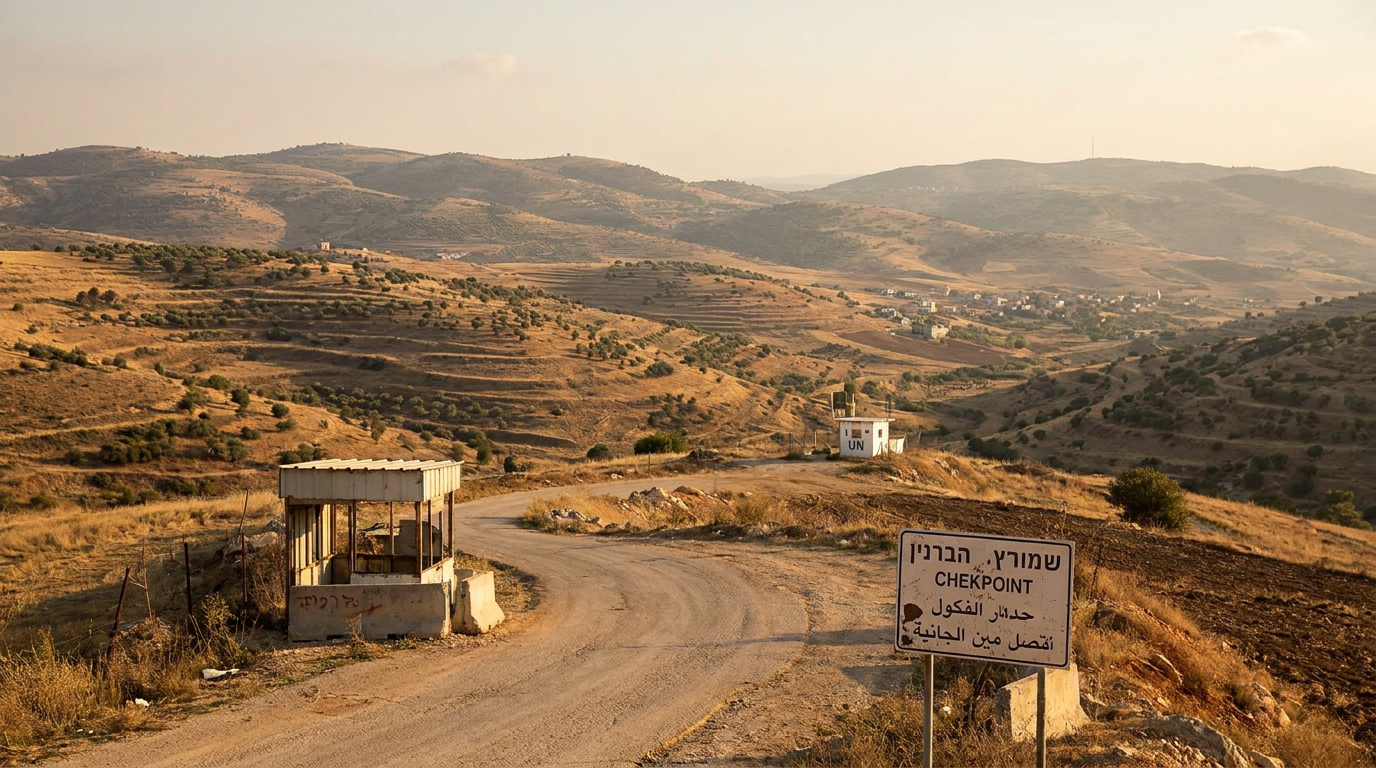
- Western Governments & Military
- View the blockade as an illegal violation of international maritime law and a reckless escalation threatening global stability.
- Global Energy Markets
- Focused on the immediate economic fallout, supply chain disruptions, and the pricing risk of a sustained chokepoint closure.
- Iranian Authorities
- Argue the closure is a necessary defensive measure to protect territorial waters and national security amidst regional provocations.
- Neutral Trading Partners
- Emphasize the need for diplomatic de-escalation and the maintenance of free trade routes to protect their own energy security.
What's not represented
- · Commercial vessel crews stranded in the Gulf
- · Maritime insurance underwriters pricing the new risk
Why this matters
The Strait of Hormuz is the world's most critical energy chokepoint, handling roughly 20% of global petroleum consumption. A sustained closure could trigger immediate spikes in global fuel prices, disrupt international supply chains, and escalate military tensions between the U.S. and Tehran.
Key points
- Iran announced a renewed blockade of the Strait of Hormuz, halting commercial maritime traffic.
- The strait is a vital chokepoint for roughly 20% of the world's daily oil consumption.
- Global oil prices spiked immediately as markets priced in the risk of a prolonged supply shock.
- The U.S. military condemned the move, raising the prospect of naval escorts and military escalation.
The sudden announcement shattered a brief window of maritime normalcy in the Middle East. On Saturday morning, fifty-five commercial ships had successfully navigated the Strait of Hormuz, signaling a slow but steady uptick in regional traffic. Hours later, the Iranian military abruptly announced that the vital waterway was closing once again, sending shockwaves through global energy markets.[1]
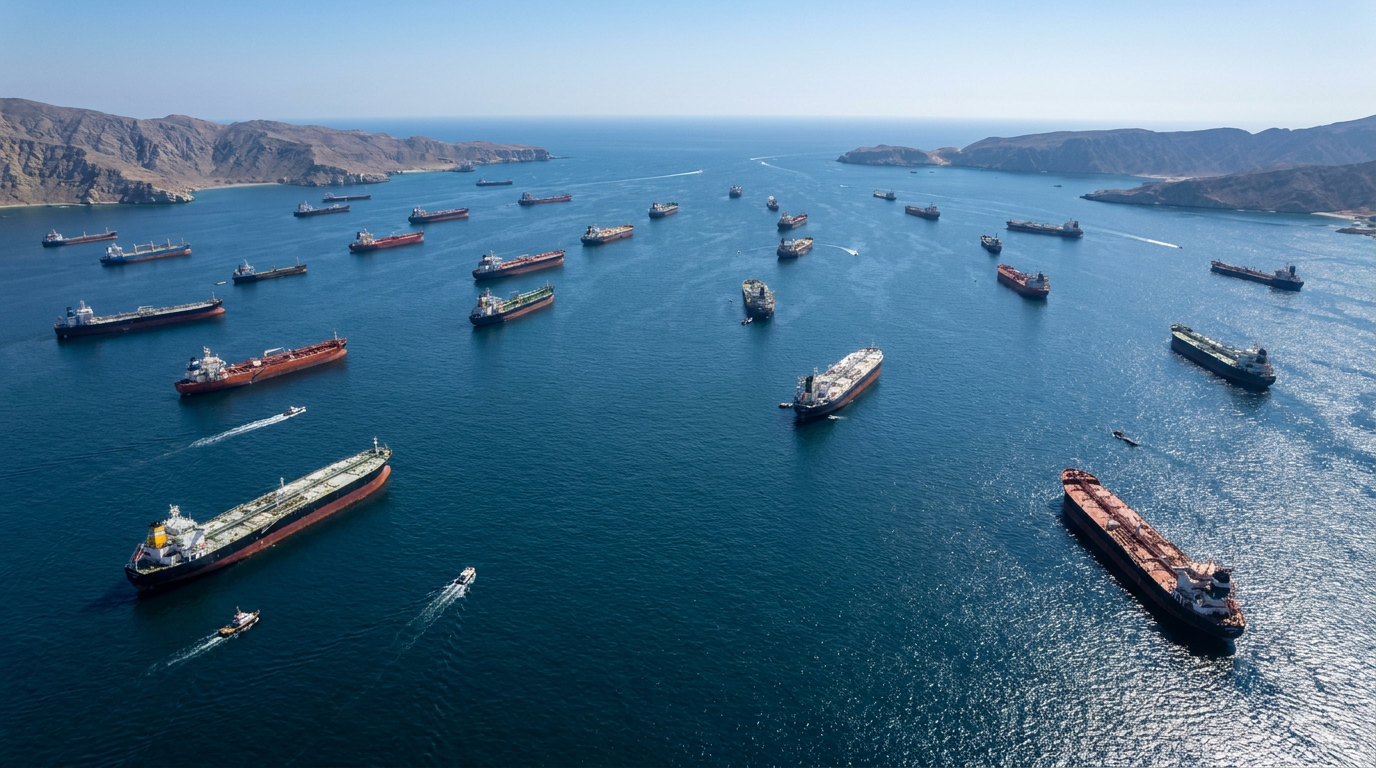
The immediate effect was a paralysis of maritime logistics. Tankers and massive container ships either dropped anchor or began loitering in the Gulf of Oman and the broader Persian Gulf, awaiting further instructions from their flag states and insurance underwriters. The sudden halt stranded millions of barrels of crude oil and liquefied natural gas in transit.[2][4]
To understand the gravity of the closure, one must look at the geography of the strait. It is a narrow, V-shaped waterway separating Iran to the north and Oman to the south, serving as the sole maritime connection between the Persian Gulf and the open ocean. At its narrowest point, the strait is only 21 miles wide, with the designated inbound and outbound shipping lanes measuring just two miles wide each.[6]
Unlike the Suez Canal or the Panama Canal, there are virtually no viable alternative maritime routes for the massive volume of energy produced by Saudi Arabia, Iraq, Kuwait, and the United Arab Emirates. The strait is the definition of a geopolitical chokepoint, forcing the world's most critical commodity through a highly vulnerable corridor.[6]

The numbers underscore the strait's unparalleled importance. Roughly 21 million barrels of oil per day transit the waterway under normal conditions. This represents about 20% of total global petroleum consumption and nearly a third of all seaborne traded oil. Any disruption here does not just affect regional players; it fundamentally alters the global energy balance.[4][6]
Financial markets reacted with immediate volatility. Brent crude prices spiked sharply on the news, as commodities traders scrambled to price in the risk of a prolonged supply shock. Analysts warn that if the blockade holds for more than a few days, the resulting energy deficit could trigger a cascading effect across global supply chains.[2][4]
Beyond the immediate price at the pump, European and Asian markets are bracing for broader inflationary impacts. A sustained closure could reverse recent progress on taming global inflation, potentially forcing central banks to reconsider planned interest rate cuts as the cost of manufacturing and transportation surges.[8]
Beyond the immediate price at the pump, European and Asian markets are bracing for broader inflationary impacts.
Tehran's justification for the blockade centers on sovereignty and deterrence. Iranian military officials cited unspecified regional security threats and the imperative to protect their territorial waters as the primary drivers for the closure, framing the move as a necessary defensive posture rather than an act of economic aggression.[3]

This framing highlights a long-standing legal dispute over the waters. Iran claims jurisdictional authority over the shipping lanes that pass through its territorial waters. Conversely, the international community relies on the United Nations Convention on the Law of the Sea, which guarantees the right of transit passage for all vessels through international straits, regardless of overlapping territorial claims.[3][5]
The response from Washington was swift and severe. The U.S. military, which maintains a significant deterrent presence in the region via the Bahrain-based Fifth Fleet, condemned the Iranian announcement as a reckless escalation that violates international law and threatens the stability of the global economy.[1][5]
The standoff raises the immediate prospect of military escalation. Western naval forces are now weighing the necessity of providing armed escorts for commercial vessels attempting to run the blockade. Such a move would dramatically increase the risk of direct, kinetic confrontation with Iranian fast attack craft and coastal defense batteries.[5]
The crisis places Asian economies in a particularly precarious position. China, the world's largest oil importer, relies heavily on crude sourced from the Persian Gulf. Beijing has publicly called for restraint and the maintenance of open navigation, finding itself caught between its strategic diplomatic partnership with Iran and its desperate need for uninterrupted energy security.[7]

While some alternative export routes exist, they are vastly insufficient. Saudi Arabia and the UAE possess pipeline capacity to bypass the strait, such as the East-West Pipeline terminating at the Red Sea. However, these pipelines can only handle a fraction of the 21 million barrels per day normally lost to a maritime blockade.[6][8]
Even if the blockade is lifted quickly, the economic damage may linger. Maritime insurance premiums for vessels operating anywhere near the Middle East have already skyrocketed. For some shipping companies, the sheer cost of insuring a hull and its cargo against war risks makes transit prohibitively expensive, effectively enforcing a soft blockade even if the physical waterway reopens.[4]
Behind the scenes, regional mediators are scrambling to defuse the crisis. Diplomatic backchannels, reportedly facilitated by Oman and Qatar, have been activated in an attempt to negotiate a de-escalation framework that would allow Tehran to save face while permitting the resumption of commercial traffic.[3][7]
As the standoff stretches on, the global economy remains effectively held hostage by a 21-mile stretch of water. The closure is a stark reminder of the fragile nature of international energy supply chains, highlighting how a single geopolitical flashpoint can instantly threaten the economic stability of nations thousands of miles away.[1][4]

How we got here
1980s
The 'Tanker War' phase of the Iran-Iraq War saw both sides attack commercial shipping in the Gulf, establishing the strait's vulnerability.
2019
A series of attacks on commercial oil tankers in the Gulf of Oman heightened tensions and led to increased Western naval patrols.
Early 2026
Maritime traffic through the strait experienced a significant slowdown due to escalating regional security threats.
June 20, 2026
After a brief resumption of traffic where 55 ships passed, Iran announced a renewed closure of the waterway.
Viewpoints in depth
Iranian Strategic Defense
Tehran frames the closure as a necessary assertion of sovereignty.
From the perspective of Iranian authorities, the Strait of Hormuz is not merely an international transit corridor, but a vital component of their national defense perimeter. By asserting control over the shipping lanes that pass through their territorial waters, Tehran aims to establish deterrence against perceived Western aggression. Iranian military officials argue that the presence of foreign naval forces in the Gulf is inherently destabilizing, and that controlling the strait is a legitimate mechanism to protect their shores and project regional influence.
Western Freedom of Navigation
The U.S. and its allies view the strait as an international lifeline that must remain open.
Western governments, led by the United States, operate under the principle that the global economy relies on the unimpeded flow of commerce through international straits. They view any attempt to block the Strait of Hormuz as an illegal violation of the United Nations Convention on the Law of the Sea. For the U.S. military and European allies, maintaining open navigation is both an economic necessity and a core tenet of international law, justifying the deployment of naval assets to deter blockades and protect commercial shipping.
Energy Importers' Dilemma
Nations reliant on Gulf oil prioritize immediate de-escalation over geopolitical posturing.
For major energy importers like China, India, and Japan, the legal and military debates are secondary to the immediate need for crude oil. These nations view the closure through a purely economic lens, recognizing that a sustained blockade could cripple their manufacturing sectors and trigger severe inflation. Consequently, their diplomatic efforts focus heavily on urging restraint from all sides, seeking a rapid negotiated settlement that restores the flow of oil without necessarily endorsing the broader geopolitical goals of either Washington or Tehran.
What we don't know
- How long the Iranian military intends to enforce the current blockade.
- Whether Western naval forces will actively attempt to break the blockade by escorting commercial ships.
- The exact threshold at which the supply shock will force central banks to alter their macroeconomic strategies on hold off on planned interest rate cuts.
Key terms
- Chokepoint
- A narrow, strategically significant geographic feature, such as a strait or canal, through which high volumes of maritime traffic must pass.
- Brent Crude
- A major trading classification of sweet light crude oil that serves as a benchmark price for purchases of oil worldwide.
- Transit Passage
- A concept in international law that allows vessels the freedom of navigation through straits used for international navigation, even if they pass through territorial waters.
- Fifth Fleet
- The U.S. Navy fleet responsible for naval forces in the Persian Gulf, Red Sea, Arabian Sea, and parts of the Indian Ocean, headquartered in Bahrain.
Frequently asked
How much of the world's oil goes through the Strait of Hormuz?
Roughly 20% of global petroleum consumption, or about 21 million barrels per day, transits the strait under normal conditions.
Can ships take a different route to avoid the strait?
No. The Strait of Hormuz is the only maritime connection between the oil-rich Persian Gulf and the open ocean. While some pipelines exist, they cannot replace the volume carried by ships.
Who controls the Strait of Hormuz?
The waterway separates Iran and Oman. The shipping lanes pass through the territorial waters of both nations, but international law guarantees the right of transit passage for all vessels.
Will this cause gas prices to go up?
Yes. Any sustained disruption to the global oil supply chain typically results in higher crude oil prices, which eventually translates to higher gasoline prices for consumers worldwide.
Sources
Source coverage
8 outlets
4 viewpoints surfaced








[1]NYTWestern Governments & Military
New Strait of Hormuz Closure Announcement Threatens the Slow Uptick in Traffic
Read on NYT →[2]ReutersGlobal Energy Markets
Oil prices surge as Iran declares Strait of Hormuz closed to commercial shipping
Read on Reuters →[3]Al JazeeraIranian Authorities
Tehran cites regional security threats in decision to block Hormuz waterway
Read on Al Jazeera →[4]BloombergGlobal Energy Markets
Global markets brace for impact as Hormuz chokepoint shuts down
Read on Bloomberg →[5]Fox NewsWestern Governments & Military
US military condemns Iran's 'reckless' blockade of vital shipping lane
Read on Fox News →[6]U.S. Energy Information Administration
The Strait of Hormuz is the world's most important oil transit chokepoint
Read on U.S. Energy Information Administration →[7]XinhuaNeutral Trading Partners
China calls for restraint and open navigation in the Gulf
Read on Xinhua →[8]Financial TimesWestern Governments & Military
European energy security at risk following Iranian strait closure
Read on Financial Times →
Every angle. Every day.
Get news politics stories with full source coverage and perspective breakdowns delivered to your inbox.