
Inside the U.S.-Iran Peace Deal: How the Islamabad Memorandum Halted a 110-Day War
The U.S. and Iran have signed a 14-point memorandum to end military operations and reopen the Strait of Hormuz, triggering fierce backlash from Israel. The interim pact opens a fragile 60-day window for nuclear negotiations.
By Factlen Editorial Team

- U.S. Administration
- Focuses on ending the war, reopening the Strait of Hormuz, and preventing a global economic catastrophe.
- Israeli Government & Public
- Views the deal as a betrayal that leaves Iran's nuclear infrastructure intact and Israel isolated.
- Iranian Leadership
- Sees the memorandum as a victory that ends military pressure, lifts sanctions, and preserves domestic nuclear enrichment.
- International Legal Analysts
- Warns that the deal is a fragile political understanding, not a binding treaty, deferring the hardest questions.
What's not represented
- · Lebanese civilians affected by the strikes
- · European energy importers
Why this matters
The sudden end to the 110-day U.S.-Iran war averts a global economic catastrophe by reopening the world's most critical oil chokepoint, but it leaves the Middle East on a knife's edge. If the 60-day negotiation window fails, the conflict could resume with even greater devastation.
Key points
- The U.S. and Iran signed a 14-point memorandum ending their 110-day military conflict.
- The agreement reopens the Strait of Hormuz and lifts the U.S. naval blockade on Iranian ports.
- A 60-day window has been established for technical negotiations regarding Iran's nuclear program.
- Israel has fiercely criticized the deal, arguing it leaves Iran's nuclear infrastructure intact.
- U.S. Vice President JD Vance publicly rebuked Israeli leaders for their opposition to the pact.
- A U.S.-brokered ceasefire in Lebanon between Israel and Hezbollah prevented the deal from collapsing.
The United States and Iran have officially signed the "Islamabad Memorandum of Understanding," bringing an abrupt halt to a 110-day military conflict that severely disrupted global energy markets and reshaped Middle Eastern alliances. Brokered primarily by Pakistan, with support from Qatar, Turkey, and Egypt, the 14-point agreement was digitally signed by U.S. President Donald Trump and Iranian President Masoud Pezeshkian. The pact immediately terminates military operations on all fronts, lifts the U.S. naval blockade on Iranian ports, and mandates the reopening of the Strait of Hormuz to international commercial shipping.[3][5]
For the global economy, the cessation of hostilities averts what President Trump described as a potential "economic catastrophe." The closure of the Strait of Hormuz—a vital maritime chokepoint through which approximately 20 percent of the world's exported oil and natural gas passes—had driven inflation higher and undermined global growth prospects. Following the announcement of the memorandum, crude oil prices experienced an immediate drop, with Brent crude falling as the threat to energy supplies receded.[5]
However, international law experts and geopolitical analysts caution that the memorandum is less a comprehensive peace treaty than a high-stakes framework to negotiate one. The document establishes a 60-day window for technical talks regarding Iran's nuclear program and its regional proxy networks, effectively deferring the conflict's most intractable issues. Because the agreement is a political understanding rather than a formal treaty requiring U.S. Senate ratification, its enforcement relies heavily on the immediate compliance and good faith of both administrations.[3][6]
The economic mechanisms embedded in the memorandum are vast and heavily front-loaded. In exchange for Iran restoring maritime traffic through the Strait of Hormuz to pre-war levels within 30 days—and allowing toll-free passage for a period of 60 days—the United States has agreed to waive sanctions on Iranian oil exports. This waiver allows Iran to immediately resume selling crude oil, petrochemical products, and related banking and insurance services on the global market.[3][5]

Furthermore, the agreement outlines the unfreezing of billions of dollars in Iranian assets held overseas and proposes the creation of a $300 billion international reconstruction fund for Iran, contingent upon Tehran signing a final nuclear pact. The U.S. has also pledged not to deploy additional troops to the region during the negotiation window, and has committed to removing its forces from the "proximity" of Iran within 30 days of a final deal being reached.[3][6]
This sudden diplomatic pivot has triggered a political earthquake in Israel, where both the government and the public feel sidelined and betrayed by their closest ally. Israeli officials had entered the joint military campaign with the expectation that it would result in the complete destruction of Iran's nuclear facilities, the dismantling of its ballistic missile program, or the collapse of the Islamic Republic's government.[2]
Instead, the memorandum leaves Iran's infrastructure largely intact. Crucially, it permits the continued domestic enrichment of uranium under International Atomic Energy Agency (IAEA) supervision, rather than forcing the surrender of all nuclear material as Washington had initially demanded at the start of the war. In cities across Israel, commentators and citizens alike have condemned the deal as a capitulation that leaves the nation surrounded by emboldened adversaries, with many expressing shock that the U.S. abandoned the military campaign so abruptly.[2][6]
Instead, the memorandum leaves Iran's infrastructure largely intact.
The rift between Washington and Jerusalem spilled into public view this week, exposing a severe fracture in the historic alliance. U.S. Vice President JD Vance delivered a blistering rebuke to Israeli leaders who criticized the deal, telling them to "wake up and smell the reality" of their growing international isolation. Using unusually sharp language from the White House briefing room, Vance pointedly noted that American taxpayers had funded "two-thirds" of the weapons defending Israel over the past three months.[1]

Vance warned that Donald Trump remains the only world leader sympathetic to Israel's current position, signaling that the White House will not tolerate Israeli efforts to undermine the diplomatic breakthrough. U.S. intelligence agencies reportedly warned the Trump administration that Israeli Prime Minister Benjamin Netanyahu might take steps to derail the agreement, particularly as he faces intense domestic pressure to achieve a decisive military victory.[1]
The fragility of the U.S.-Iran memorandum was immediately tested by escalating violence in Lebanon. The agreement explicitly called for a cessation of hostilities on all fronts, which Washington interpreted as including the ongoing conflict between Israel and the Iran-backed militant group Hezbollah. The inclusion of Lebanon in the text effectively required Iran to rein in its most powerful proxy force, though U.S. officials clarified that Israel retained the right to strike back if attacked.[3]
When Israel launched waves of airstrikes across southern Lebanon in response to a deadly Hezbollah drone attack that killed four Israeli soldiers, the entire peace framework shuddered. Iranian officials warned that the fighting could be a "make or break" factor for the broader peace process, insisting that a ceasefire in Lebanon was essential before they would proceed with diplomatic talks. The flare-up prompted U.S. officials, including Vice President Vance, to temporarily delay their travel to the negotiations.[2][4]
Recognizing the existential threat to the negotiations, the Trump administration exerted heavy pressure on Israel to halt its northern offensive. On Friday, U.S. and Qatari mediators successfully brokered a ceasefire between Israel and Hezbollah, pulling the broader peace framework back from the brink. President Trump described the Lebanon truce as the "icing on the cake," noting in an interview that he had personally urged Israeli officials to accept the pause in fighting to clear the path for diplomacy with Tehran.[7]

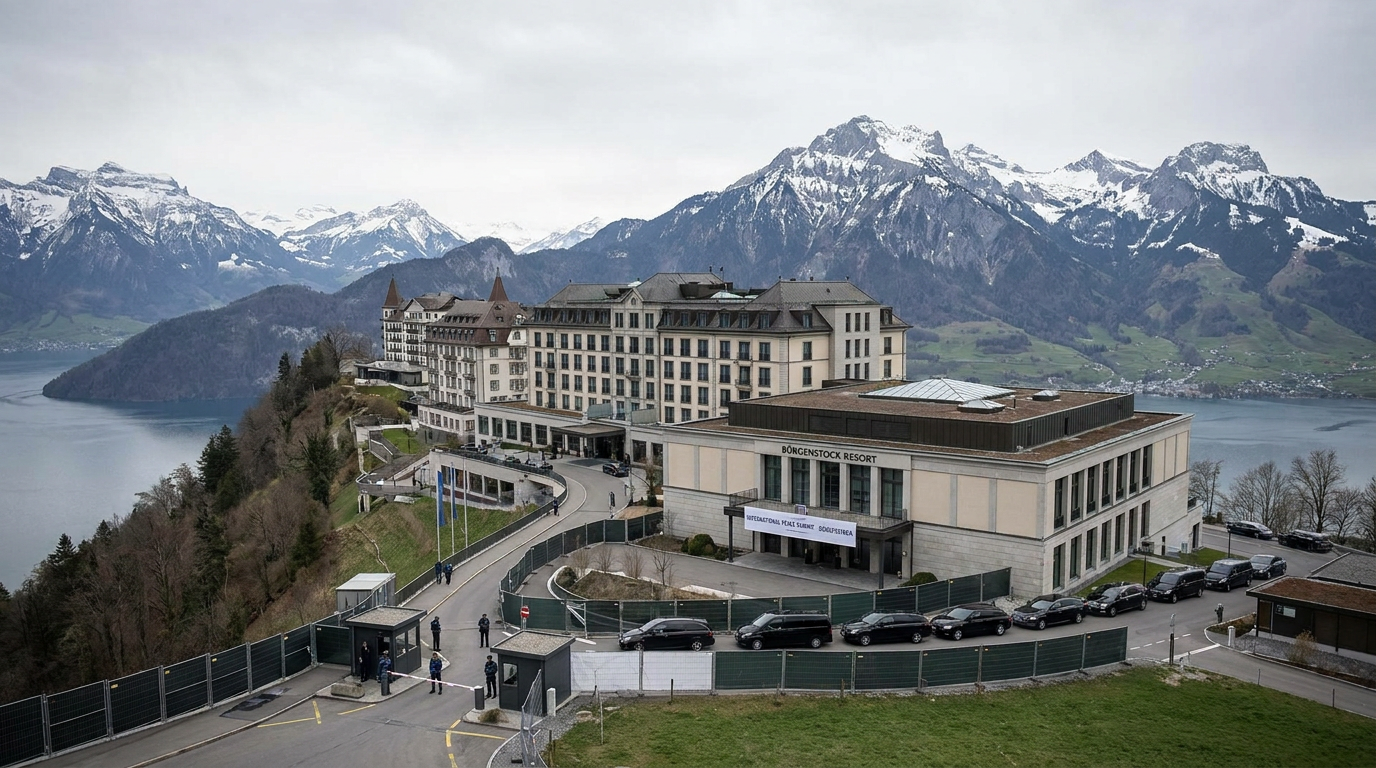
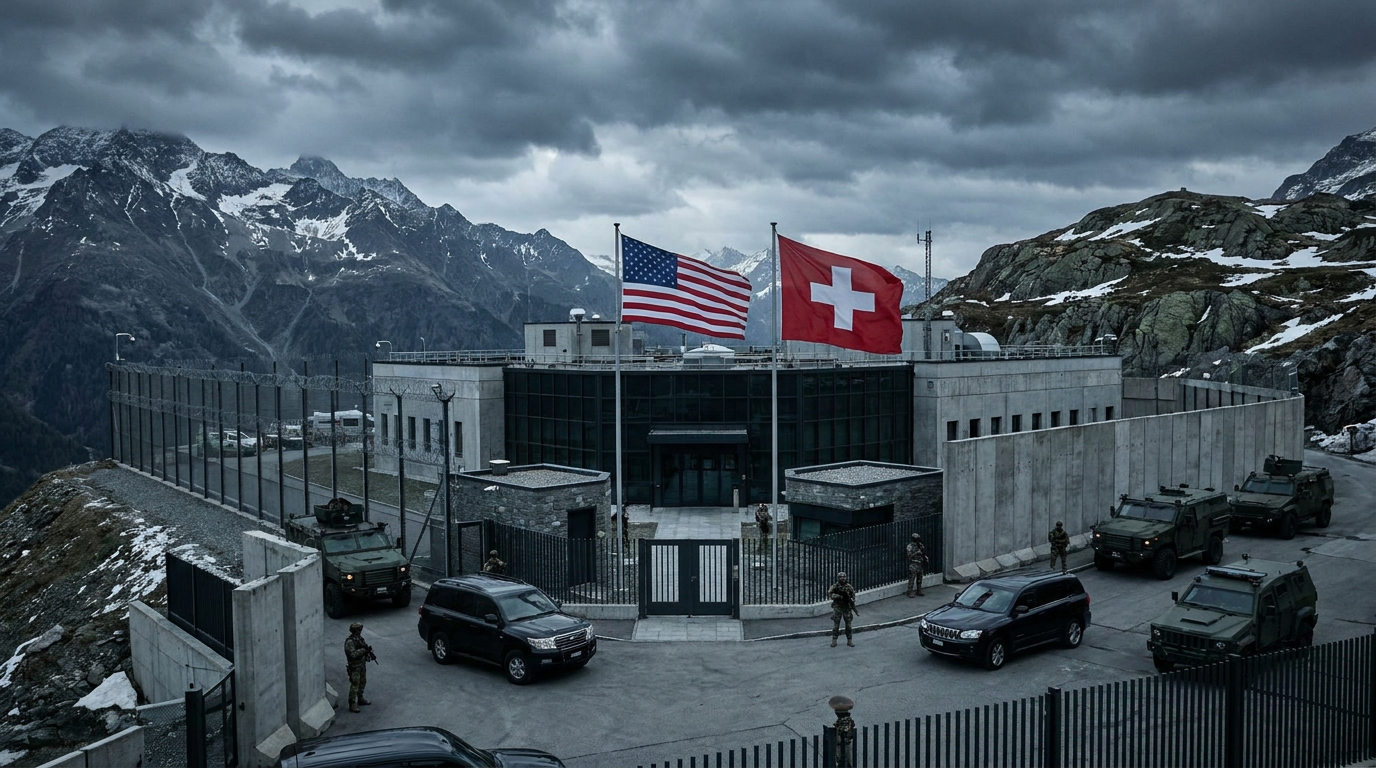
With the Lebanon ceasefire holding, the diplomatic focus now shifts to Switzerland, where the grueling 60-day technical negotiations are set to begin. U.S. envoys Steve Witkoff and Jared Kushner have traveled to the Alpine nation to meet with Iranian Foreign Minister Abbas Araghchi, alongside mediators from Qatar and Pakistan.[3][4]
These technical talks will determine whether the interim economic relief and military stand-down can be converted into a permanent resolution regarding Iran's nuclear ambitions and ballistic missile programs. The negotiations will also have to address the exact schedule for lifting all remaining U.S. sanctions, a key demand from Tehran.[3][4][5]
The uncertainty surrounding the final outcome remains immense. The U.S. has maintained that it will "bomb the hell out of them" if Iran violates the terms of the agreement, keeping the threat of military force firmly on the table as leverage. Conversely, Iran views the document as a recognition of its sovereignty, a definitive end to U.S. military pressure, and a guaranteed pathway to economic recovery.[6]

If the negotiators in Switzerland cannot bridge the massive gap between these two interpretations over the next two months, the Middle East could rapidly slide back into a devastating regional war. For now, the Islamabad Memorandum stands as a fragile bridge over a chasm, halting the immediate bloodshed but leaving the underlying geopolitical tectonic plates entirely unresolved.[6]
How we got here
Feb 2026
The U.S.-Israel military campaign against Iran begins.
April 2026
The U.S. imposes a naval blockade on Iranian ports after initial ceasefire talks fail.
June 17, 2026
President Trump and President Pezeshkian sign the Islamabad Memorandum of Understanding.
June 18, 2026
The U.S. officially lifts its naval blockade and waives sanctions on Iranian oil.
June 19, 2026
Israel and Hezbollah agree to a U.S.-brokered ceasefire in Lebanon.
Viewpoints in depth
U.S. Administration's view
The Trump administration argues the deal was necessary to avert a global economic depression caused by the closure of the Strait of Hormuz.
By securing a 60-day window and lifting the naval blockade, the White House believes it has created vital space for diplomacy while keeping the threat of military force in reserve. Officials emphasize that the immediate reopening of the Strait of Hormuz protects the global economy from catastrophic inflation, which they view as a higher priority than continuing a costly military campaign.
Israel's view
Israeli officials and citizens feel abandoned, arguing the U.S. prematurely ended the military campaign before achieving its core objectives.
Israel points out that Iran's nuclear infrastructure remains largely functional and that Tehran retains the right to enrich uranium domestically. There is widespread fear in Jerusalem that the proposed $300 billion reconstruction fund will ultimately empower regional proxies like Hezbollah, leaving Israel surrounded by emboldened adversaries without the full backing of the U.S. military.
Iran's view
Tehran frames the memorandum as a successful defense of its sovereignty and a definitive end to U.S. military pressure.
By securing the lifting of the naval blockade and waivers on oil sanctions without surrendering its right to domestic uranium enrichment, Iranian leadership views the 60-day window as a pathway to economic recovery rather than a surrender. They see the agreement as validation of their resilience against a superpower's military campaign.
What we don't know
- Whether the 60-day technical negotiations in Switzerland will produce a binding final nuclear agreement.
- How Israel will adapt its regional security strategy now that the joint military campaign has ended.
- The specific timeline for the complete lifting of all U.S. sanctions on Iran.
Key terms
- Islamabad Memorandum of Understanding
- The 14-point interim agreement brokered by Pakistan that halted the 2026 U.S.-Iran war.
- Strait of Hormuz
- A critical maritime chokepoint between the Persian Gulf and the Gulf of Oman, through which roughly 20% of the world's oil passes.
- Naval Blockade
- A military operation in which the U.S. Navy prevented commercial and military vessels from entering or leaving Iranian ports.
- Uranium Enrichment
- The process of increasing the concentration of the U-235 isotope, which can be used for civilian nuclear power or, at higher levels, nuclear weapons.
Frequently asked
Did the U.S. and Iran sign a permanent peace treaty?
No. They signed a Memorandum of Understanding (MOU), which is a political framework that establishes a 60-day ceasefire to negotiate a final, binding deal.
What happens to the Strait of Hormuz?
Iran has agreed to reopen the strait to commercial shipping, restoring pre-war traffic levels within 30 days and allowing toll-free passage for 60 days.
Why is Israel angry about the deal?
Israeli officials feel the U.S. abandoned the military campaign before destroying Iran's nuclear infrastructure, leaving Israel isolated and surrounded by emboldened adversaries.
How does Lebanon factor into this?
The MOU requires an end to hostilities on all fronts. A subsequent U.S.-brokered ceasefire between Israel and Hezbollah in Lebanon was necessary to prevent the broader Iran deal from collapsing.
Sources
Source coverage
7 outlets
4 viewpoints surfaced







[1]The Washington PostU.S. Administration
Vance slams Israeli reaction to Iran deal as U.S. military lifts blockade
Read on The Washington Post →[2]The GuardianIsraeli Government & Public
‘It’s a big mistake’: Israelis feel betrayed and angry after Iran peace deal
Read on The Guardian →[3]AxiosU.S. Administration
READ: Full text of U.S.-Iran memorandum of understanding
Read on Axios →[4]SCMPIranian Leadership
US envoy Witkoff, Iranian minister to meet in Switzerland for talks
Read on SCMP →[5]Argus MediaIranian Leadership
US, Iran confirm signing of peace deal
Read on Argus Media →[6]Chatham HouseInternational Legal Analysts
The Peace That Was Not One; The US-Iran Memorandum Risks Permanent Crisis
Read on Chatham House →[7]ReutersInternational Legal Analysts
Israel and Hezbollah agree on Lebanon ceasefire: U.S. official
Read on Reuters →

More in news politics
See all 7 stories →Information Integrity
Evidence Pack: Does "Prebunking" Actually Protect Voters from Political Misinformation?
6 sources

US-Iran Deal
US and Iran Sign Historic Memorandum to End Conflict as Lebanon Ceasefire Faces Immediate Strain
7 sources
US-Iran Deal
US and Iran Open High-Stakes Switzerland Talks Amid Lebanon Strikes and Domestic Backlash
8 sources
Election Integrity
Fact Check: Did AI Deepfakes Actually Swing the Global Elections?
5 sources

Every angle. Every day.
Get news politics stories with full source coverage and perspective breakdowns delivered to your inbox.