
How UNESCO Evaluates World Heritage Sites: The Criteria Behind Mount Olympus and the D-Day Beaches
The United Nations Educational, Scientific and Cultural Organization uses ten rigorous criteria to designate World Heritage sites. Recent additions like Greece's Mount Olympus and France's Normandy beaches illustrate how the agency evaluates both natural biodiversity and intangible cultural memory.
By Chen Wang

- Heritage Preservationists
- Advocates focused on safeguarding the intangible memory and physical integrity of historical sites.
- Ecological Conservationists
- Scientists and environmentalists prioritizing the protection of biodiversity and natural habitats.
- Local Municipalities
- Regional governments balancing the prestige of international recognition with the logistical burdens of compliance.
Common questions
How many UNESCO World Heritage sites are there?
There are currently over 1,200 recognized sites spread across more than 170 countries.
What makes Mount Olympus a mixed site?
It was recognized for both its natural biodiversity, including over 1,700 plant species, and its cultural role as the mythological home of the Greek gods.
Why were the D-Day beaches inscribed?
They were recognized as a 'site of memory' under Criterion VI, honoring the international cooperation and sacrifice of the 1944 Allied landings.
Does UNESCO status provide funding?
While it can unlock specific conservation funds, its primary benefit is international protection, monitoring, and a significant boost to heritage tourism.
The short answer
- UNESCO World Heritage status requires a site to demonstrate Outstanding Universal Value through at least one of ten criteria.
- The D-Day landing beaches in Normandy were inscribed under Criterion VI for their symbolic association with the fight for freedom.
- Greece's Mount Olympus earned a rare 'mixed' designation, recognized for both its mythological significance and its rich biodiversity.
- Mixed properties must meet both cultural and natural criteria, making them one of the most demanding categories to achieve.
- Designation places binding international obligations on host countries to protect sites from climate change and mass tourism.
What makes a place universally significant? Is it the physical stones of an ancient temple, or the invisible weight of the history that happened there? For decades, the United Nations Educational, Scientific and Cultural Organization (UNESCO) has wrestled with how to quantify human heritage. It is relatively easy to look at the Pyramids of Giza and declare them a masterpiece of creative genius. It is much harder to look at a windswept stretch of sand in northern France, or a rugged mountain peak in Greece, and prove that they belong to the shared legacy of all humanity. Yet, the World Heritage List—which now includes over 1,200 sites globally—increasingly recognizes that heritage is not just about what was built, but about what was endured, believed, and preserved.[1][2]
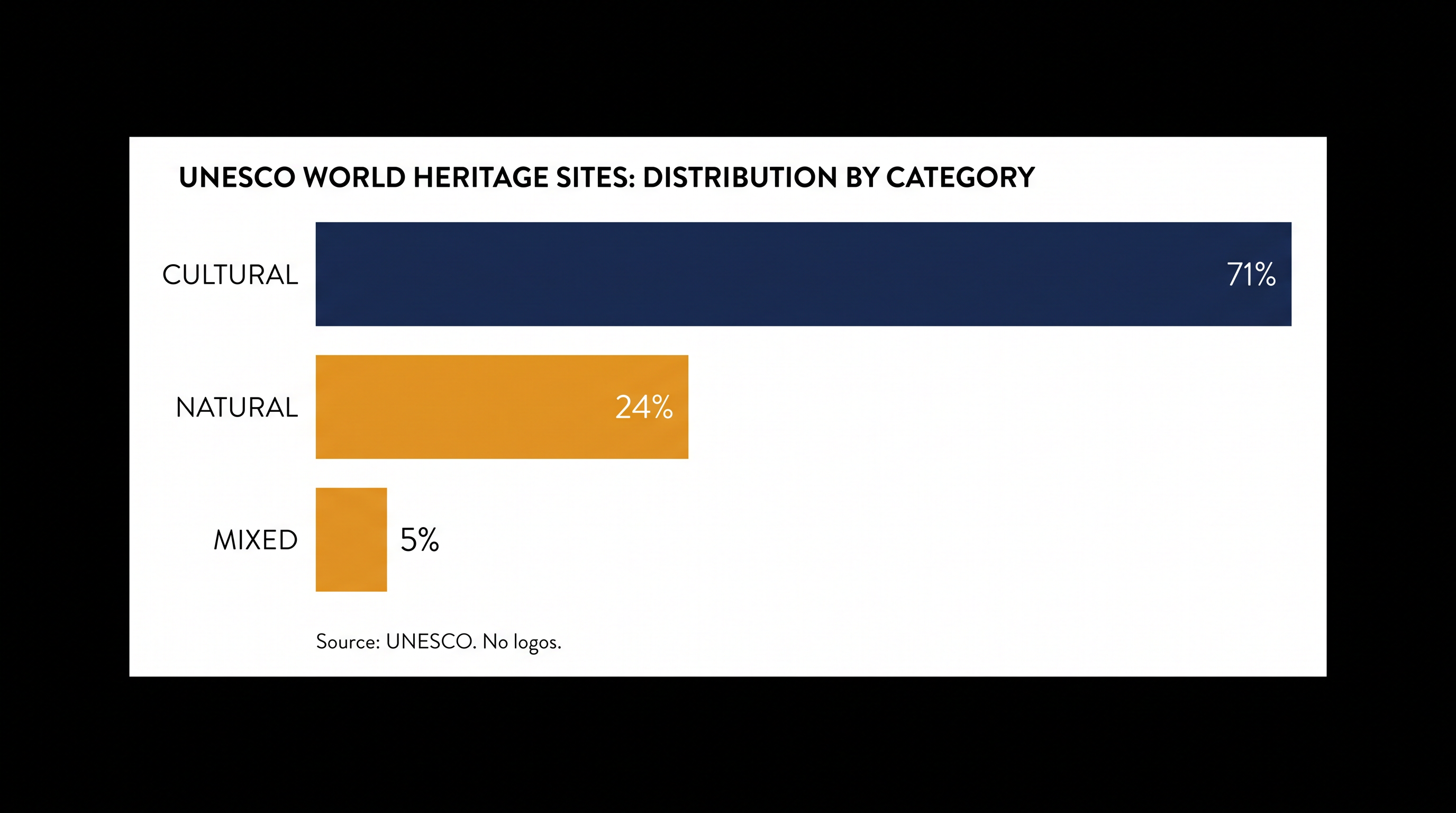
The mechanism behind this global recognition is a concept known as "Outstanding Universal Value" (OUV). To earn a spot on the World Heritage List, a nominated property must meet at least one of ten rigorous selection criteria, while also proving its authenticity, integrity, and long-term management plan. Six of these criteria evaluate cultural significance, ranging from architectural milestones to traditional human settlements. The remaining four assess natural wonders, such as ongoing biological processes or habitats for threatened species.[1][6]
But the most demanding—and often the most fascinating—nominations are those that blur the lines between the tangible and the intangible. Recent additions to the World Heritage List, specifically the D-Day landing beaches in Normandy and the wider area of Mount Olympus in Greece, serve as perfect case studies for how UNESCO evaluates sites where the physical landscape is inextricably linked to human memory and myth.[7][8]
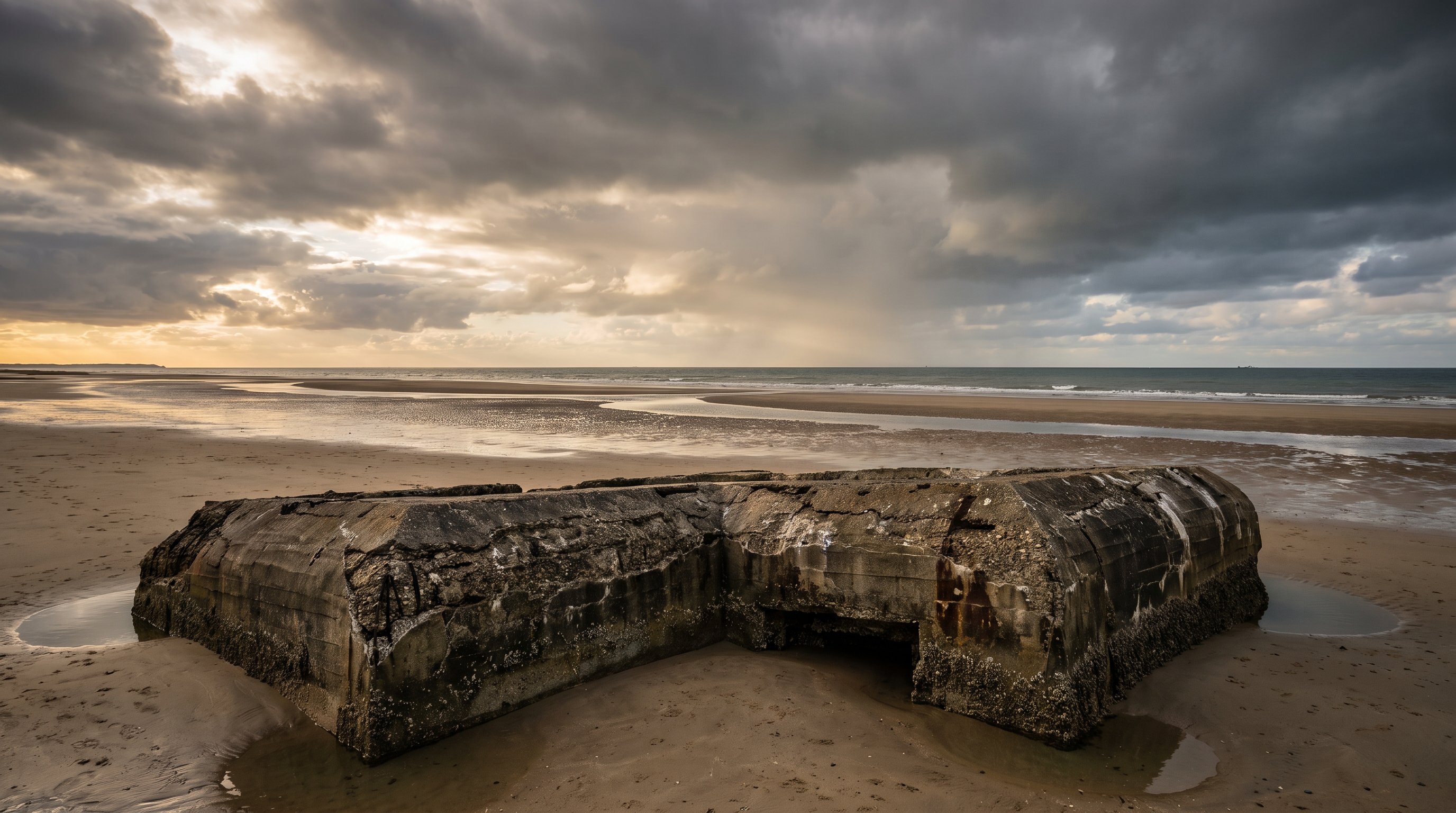
Consider the Normandy coastline. On June 6, 1944, more than 150,000 Allied troops landed on five beaches—Utah, Omaha, Gold, Juno, and Sword—as well as the cliffs of Pointe du Hoc. The operation was a pivotal turning point in the Second World War, paving the way for the liberation of Western Europe. But from a purely architectural standpoint, the beaches today are mostly stretches of sand, punctuated by the concrete remains of the German Atlantic Wall, sunken vessels, and solemn military cemeteries.[3][8]
France did not nominate the beaches for their natural beauty or their architectural genius. Instead, the 80-kilometer serial property was inscribed under UNESCO's Criterion VI. This specific guideline is reserved for places "directly or tangibly associated with events or living traditions, with ideas, or with beliefs... of outstanding universal significance." It is the only criterion that hinges almost entirely on memorial and symbolic value.[2][3]
The successful designation of the Normandy beaches acknowledges that the landscape itself is a monument to unprecedented international cooperation and profound human sacrifice. The physical remnants—the bomb craters, the artificial Mulberry harbors, the thousands of white crosses at Colleville-sur-Mer—are the anchors for an intangible message of peace and remembrance. By classifying it as a World Heritage site, UNESCO ensures that the memory of what happened on those shores is protected as a universal legacy, not just a national one.[3][8]
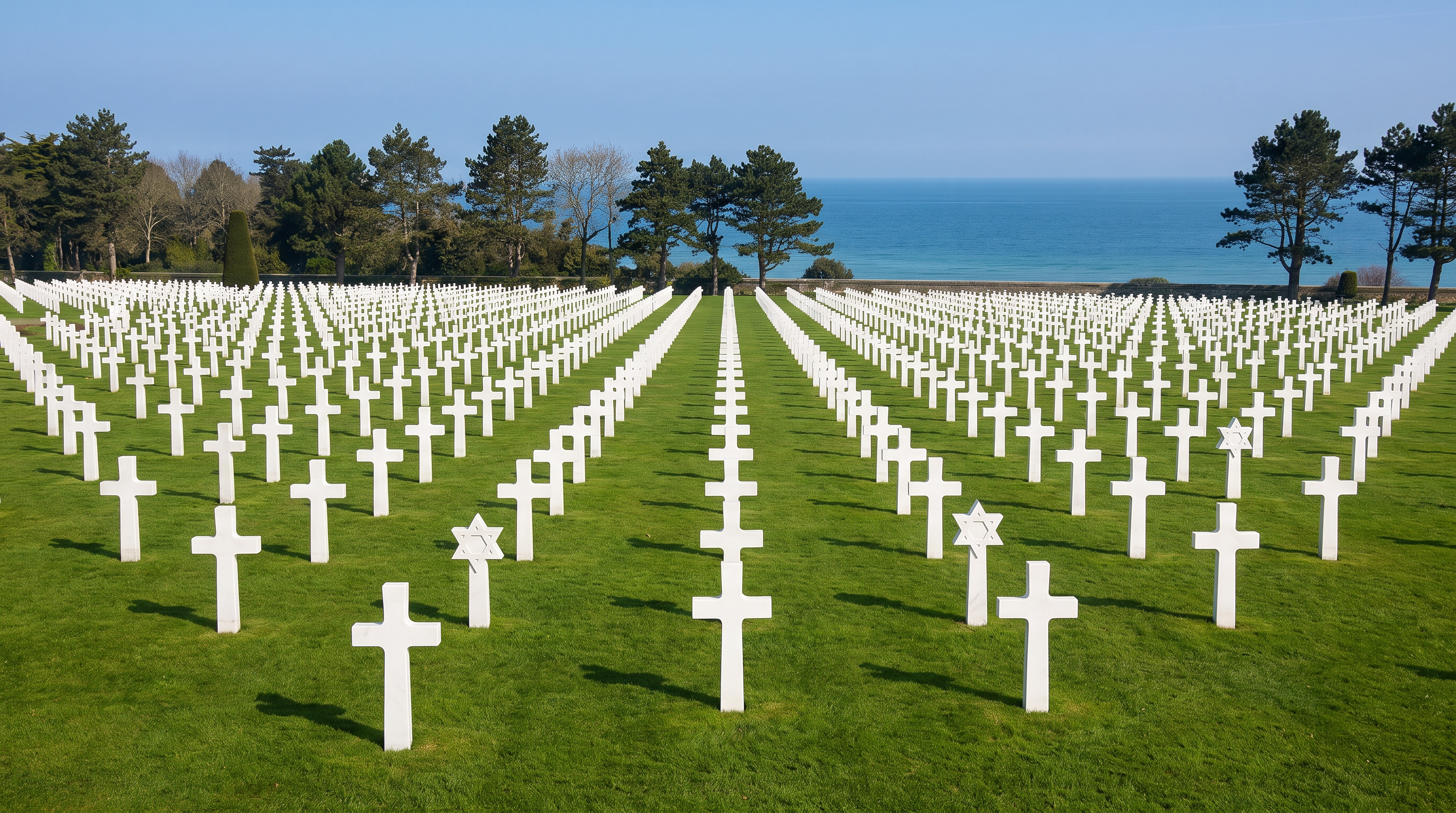
By classifying it as a World Heritage site, UNESCO ensures that the memory of what happened on those shores is protected as a universal legacy, not just a national one.
A thousand miles away, Greece faced a different kind of challenge with Mount Olympus. Rising abruptly to 2,918 meters, the mountain is an enduring emblem of Greek civilization. For twelve years, Greek officials campaigned to have the wider Olympus area recognized not just as a natural park, but as a "mixed" World Heritage property. Mixed sites are exceptionally rare; they require a country to prove both outstanding natural value and cultural significance in the same geographic space.[4][5]
The cultural argument for Mount Olympus was entirely literary and mythological. Through the ancient writings of Homer and Hesiod, the mountain's cloud-covered peaks were established as the mythical throne of Zeus and the abode of the Twelve Olympian Gods. This wasn't a case of preserving a ruined temple—though the archaeological site of Dion sits at its foot—but of preserving the physical landscape that inspired a foundational pillar of Western mythology.[4][5]
Simultaneously, the mountain had to pass UNESCO's strict natural criteria. Olympus is a Mediterranean biodiversity hotspot. Its abrupt elevation and proximity to the Aegean Sea create a unique microclimate, supporting over 1,700 plant species, which accounts for a quarter of all Greek flora. The mountain's deep gorges, limestone cliffs, and karstic sinkholes served as a vital refuge for forest species during the last glacial periods.[4][5]
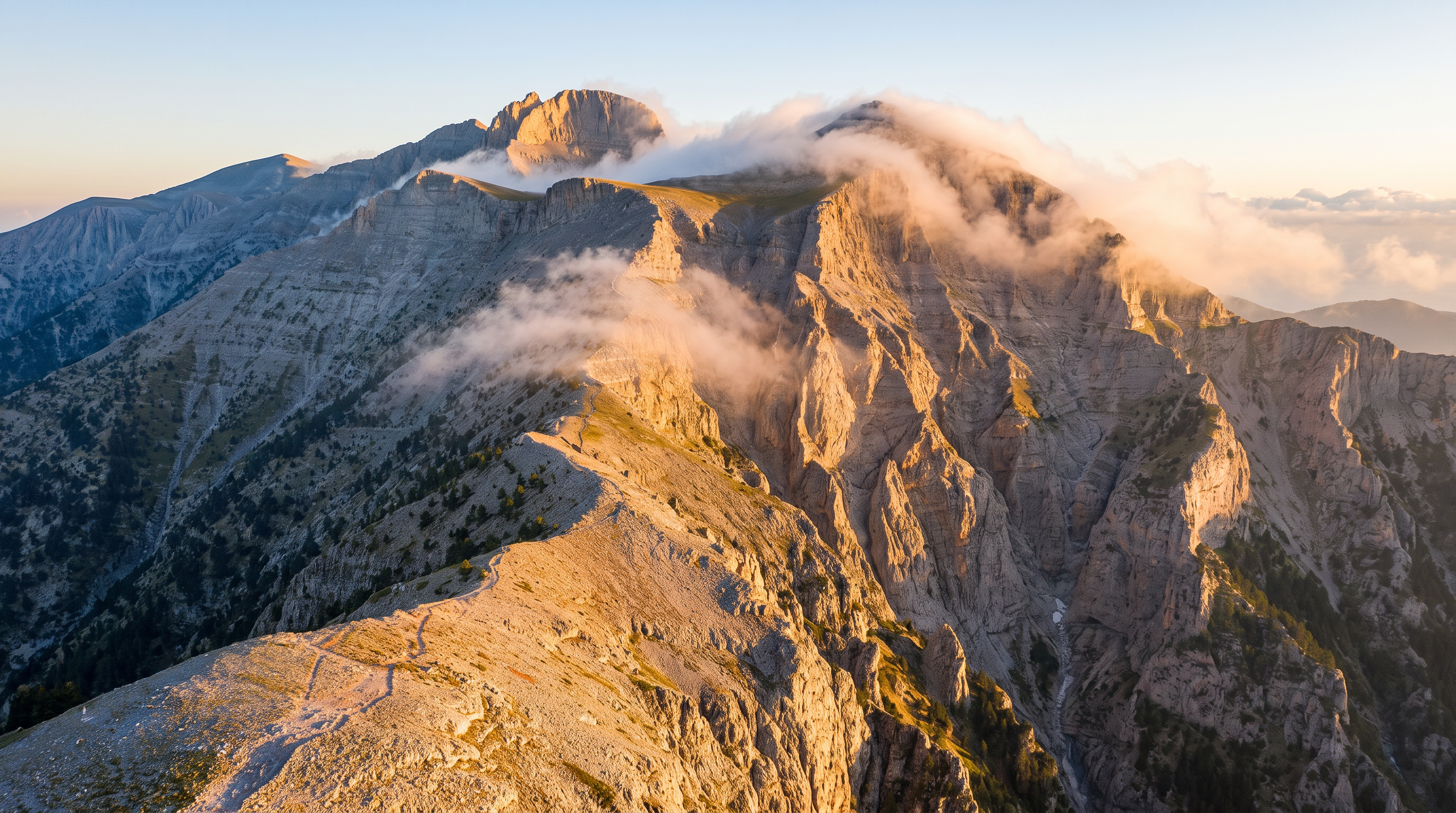
The unanimous approval of Mount Olympus as a mixed property underscores how deeply intertwined nature and culture can be. The mountain is protected not just because it harbors the endangered Balkan chamois or rare endemic plants, but because its striking geological formations directly inspired the ancient belief in a divine realm separated from ordinary human life.[4][8]
Achieving World Heritage status is not merely a symbolic victory or a marketing tool for tourism boards. It places binding obligations on the host nations. For the D-Day beaches, the designation requires strict management to protect the fragile coastline from rising sea levels, climate change, and the pressures of mass tourism, ensuring the solemnity of the site remains intact.[3][8]
Similarly, local officials in the municipalities surrounding Mount Olympus have acknowledged that international recognition brings a heightened responsibility to safeguard the environment. The mountain has been a national park since 1938 and a UNESCO Biosphere Reserve since 1981, but World Heritage status introduces rigorous international monitoring.[4][5]
Ultimately, the UNESCO evaluation process reveals what the global community values most. Whether it is a beach where young men fought for the future of democracy, or a mountain peak where ancient poets imagined the gods, these sites are protected because they tell us who we are. They are the physical coordinates of our shared human story, preserved so that future generations might stand on the same ground and understand the weight of the past.[7][8]
Why it matters
Understanding how UNESCO evaluates heritage sites reveals the global consensus on what humanity values most—proving that our shared legacy is defined just as much by intangible memory and natural resilience as it is by ancient architecture.
Competing readings
Cultural Heritage Preservationists
Advocates focused on safeguarding the intangible memory and physical integrity of historical sites.
For preservationists, the inclusion of sites like the D-Day beaches under Criterion VI is a vital evolution in how the world defines heritage. They argue that a landscape's value is not strictly architectural, but lies in its capacity to serve as a physical anchor for collective memory. However, these advocates frequently warn that World Heritage status can be a double-edged sword. The influx of heritage tourism can accelerate the degradation of fragile coastlines and solemn memorial sites, requiring aggressive management plans to ensure that the pursuit of education does not destroy the very integrity of the property.
Ecological Conservationists
Scientists and environmentalists prioritizing the protection of biodiversity and natural habitats.
Conservationists view the 'mixed' designation of sites like Mount Olympus as a crucial tool for environmental protection. While the mythological associations draw public interest, ecologists emphasize that the mountain's true universal value lies in its role as a glacial refugium and a hotspot for endemic Mediterranean flora. This camp often expresses concern that the cultural and tourism narratives might overshadow the urgent need for strict ecological zoning. They advocate for using the international oversight that comes with UNESCO status to enforce stronger protections against climate change and localized development.
Local Municipalities
Regional governments balancing the prestige of international recognition with the logistical burdens of compliance.
For local leaders, a World Heritage inscription is a source of immense civic pride and a guaranteed catalyst for the regional economy. The status elevates a municipality's global profile, drawing international visitors and unlocking potential conservation grants. Yet, local governments also bear the immediate logistical burden of this prestige. They are tasked with upgrading infrastructure, managing sudden surges in foot traffic, and complying with stringent international preservation standards that can sometimes conflict with local commercial development or traditional land use.
The sequence
1938
Greece designates the core of Mount Olympus as its first national park.
1972
The World Heritage Convention is adopted by UNESCO to protect global cultural and natural treasures.
1981
Mount Olympus is named a UNESCO Biosphere Reserve for its ecological value.
2014
Greece officially submits Mount Olympus for a mixed World Heritage nomination.
July 2026
The 48th World Heritage Committee in Busan inscribes 25 new sites, including Olympus and the D-Day beaches.
Jargon, explained
- Outstanding Universal Value (OUV)
- The central requirement for World Heritage status, meaning a site is exceptionally significant to all of humanity.
- Criterion VI
- A specific UNESCO guideline used to recognize sites directly associated with events, ideas, or beliefs of universal significance.
- Mixed Property
- A rare World Heritage designation given to sites that meet both cultural and natural selection criteria.
- Serial Property
- A single World Heritage listing that groups together several distinct geographic locations tied to the same historical or natural narrative.
- Glacial Refugium
- A geographic region that made it possible for flora and fauna to survive through an ice age.
What’s still unclear
- How rising sea levels will physically alter the Normandy coastline and its submerged historical artifacts over the next century.
- Whether the influx of heritage tourism to Mount Olympus will force local authorities to implement strict daily visitor caps.
- How UNESCO will adapt its criteria in the future to account for sites entirely threatened by climate change.
Sources
Source coverage
8 outlets
3 viewpoints surfaced








[1]Department of Climate Change, Energy, the Environment and WaterEcological Conservationists
What is Outstanding Universal Value?
Read on Department of Climate Change, Energy, the Environment and Water →[2]National GeographicEcological Conservationists
World Heritage Criteria for Selection
Read on National Geographic →[3]French Ministry of CultureHeritage Preservationists
The Landing Beaches, Normandy 1944
Read on French Ministry of Culture →[4]Greek News AgendaLocal Municipalities
The Greater Olympus Area inscribed on the UNESCO World Heritage List
Read on Greek News Agenda →[5]World Heritage ExplorerLocal Municipalities
The wider area of Mount Olympus
Read on World Heritage Explorer →[6]Study.comLocal Municipalities
Criteria for UNESCO World Heritage Sites
Read on Study.com →[7]Factlen Editorial TeamHeritage Preservationists
Synthesis by Factlen editorial team
Read on Factlen Editorial Team →[8]United NationsHeritage Preservationists
UNESCO adds 25 new World Heritage Sites
Read on United Nations →
Comments
Every angle. Every day.
Get culture stories with full source coverage and perspective breakdowns delivered to your inbox.