
NCAA Finalizes Sweeping Age-Based Eligibility Model, Reshaping College Sports
The NCAA has officially adopted a new age-based eligibility model for Division I and II athletes, replacing the traditional four-seasons-in-five-years structure with a continuous five-year clock tied to age or enrollment.
By Aylin Aksoy

The landscape of college sports is undergoing its most significant structural shift in decades, fundamentally altering how long athletes can compete at the collegiate level. The NCAA has officially finalized a sweeping "age-based" eligibility model for Division I and II student-athletes, rewriting the complex rulebook that has governed college sports for generations.
For families, prospective recruits, and compliance departments, the new framework offers a significantly simpler and more predictable path through the collegiate system. However, it also requires careful, proactive planning to ensure athletes maximize their competitive window. By stripping away decades of convoluted exceptions and sport-specific grace periods, the NCAA aims to create a uniform standard that applies equally across all sports, though the transition has not been without its friction.[1][4]
At the heart of this sweeping policy change is a complete departure from the traditional "four-seasons-in-five-years" structure that has long defined college athletics. Under the previous system, athletes were given a five-year window to complete four seasons of active competition, allowing them to sit out a year without losing a season of play.
Under the newly adopted policy, athletes are instead granted a continuous five-year eligibility clock during which they can complete up to five full seasons of competition. This effectively gives athletes an additional year of playing time, provided they stay within their designated time frame. The shift is designed to maximize playing opportunities for athletes who remain enrolled and academically eligible, while simultaneously reducing the administrative burden on schools that previously had to track every minute of an athlete's participation.[1][4]
The most critical detail for families and high school recruits to understand is exactly when that five-year continuous clock begins to tick. The NCAA has established a firm, unavoidable trigger for the start of an athlete's eligibility window.
The clock starts either upon the athlete's initial full-time college enrollment at any institution globally, or at the start of the academic year immediately following the athlete's 19th birthday—whichever of those two events occurs first. This dual-trigger mechanism is specifically designed to prevent older, more physically mature athletes from dominating younger collegiate competitors, ensuring a more level playing field across all Division I and II sports.[1][4]
Practically speaking, this new age-based trigger fundamentally changes the recruiting and development strategies for thousands of high school athletes. In the past, it was a common and accepted strategy in sports like ice hockey, baseball, and soccer to delay college enrollment in order to play in junior leagues, gain physical maturity, or secure better scholarship offers.
Under the new rules, this strategy will actively consume an athlete's NCAA eligibility. If a student-athlete turns 19 before September 1, their five-year window automatically opens that fall, regardless of whether they have set foot on a college campus or signed a letter of intent. Delaying enrollment past age 19 now means permanently forfeiting seasons of collegiate competition.[4][5]
The implementation of the continuous five-year clock also effectively eliminates the long-standing concept of "redshirting" in Division I and II sports. Because the five-year clock runs continuously once it is triggered, sitting out a season for development or due to a minor injury no longer preserves a year of eligibility.
The clock ticks regardless of whether the athlete actually competes in a game. Furthermore, the NCAA has removed the vast majority of waiver exemptions that previously allowed athletes to petition for a sixth year of eligibility. Moving forward, the governing body will only consider extensions in three highly specific circumstances: pregnancy, active-duty military service, and official religious missions.[3][4]
While the Division I Cabinet initially approved the measure in late June, the Division II Executive Board followed suit in early August, adopting emergency legislation to mirror the Division I model. This coordinated approach ensures a consistent framework across the top two tiers of collegiate athletics, making the transition significantly smoother for athletes who may transfer between divisions during their careers.
Division II administrators noted that aligning with Division I was essential to prevent a fragmented system where athletes faced wildly different eligibility standards depending on the division they competed in. The unified front underscores the NCAA's commitment to simplifying its notoriously complex rulebook.[1][3]
For athletes currently navigating the collegiate system, the NCAA has built in a specific transition period to ease the shock of the new rules. The age-based model will phase in fully and exclusively for the fall 2027 recruiting class.
However, for athletes enrolling in the fall of 2026, as well as current student-athletes who still have eligibility remaining, schools will evaluate their status under both the old "four-seasons-in-five-years" rule and the new age-based rule. Compliance departments are instructed to apply whichever model produces the more favorable outcome for the individual athlete, ensuring that current competitors are not abruptly stripped of playing time they had previously planned on.[1][4]
Despite this transition period, the NCAA has been explicitly clear that the new rule is not retroactive. Athletes who fully exhausted their four years of eligibility by the end of the 2025-26 academic year under the previous rules will not be granted a retroactive fifth year of competition.
This hard cutoff has been a major point of contention, particularly for athletes who feel they are missing out on the expanded window simply because they were born a year too early. The governing body has defended the cutoff, arguing that granting retroactive eligibility would disrupt expected roster spots, alter financial aid packages for incoming freshmen, and create logistical chaos for athletic departments.[3][5]
This friction over the hard cutoff recently spilled into the federal court system, highlighting the high stakes of collegiate eligibility. In early August, a Colorado district court judge granted an injunction in a proposed class-action lawsuit, initially appearing to open the door for a fifth year for athletes who enrolled in 2022 and had already played four seasons.
The ruling sent shockwaves through athletic departments as coaches scrambled to understand if they needed to accommodate returning veterans. However, the judge subsequently issued a clarifying order stating that the NCAA can still enforce the age limit stipulated in the new policy, meaning any player over the age of 24 remains strictly ineligible to compete.[2]
The clarifying court order also affirmed that athletes seeking to utilize the new rules must still abide by all other NCAA regulations, including transfer portal windows and strict prohibitions on signing professional contracts. While the legal landscape remains somewhat fluid as the NCAA appeals the initial injunction, the core age-based framework is undoubtedly moving forward.
Key points
- The NCAA has finalized a new age-based eligibility model for Division I and II athletes, replacing the four-seasons-in-five-years rule.
- Athletes now receive a continuous five-year clock to complete up to five seasons of competition.
- The eligibility clock begins upon full-time college enrollment or the academic year following the athlete's 19th birthday.
- The new model effectively eliminates redshirting and most waiver exemptions, simplifying compliance.
- NCAA Administrators
- Argues the new model simplifies compliance, creates predictability, and eliminates the convoluted waiver system.
- Transitioning Athletes
- Focused on maximizing playing time and navigating the legal gray areas of the transition period, particularly those fighting for a fifth year.
- Recruiting Advisors
- Emphasizes the need for high school athletes to carefully plan their enrollment timelines, as delaying college past age 19 now actively burns eligibility.
Perspectives this story doesn't cover
- International Student-Athletes
- Junior College Transfers
Sources
Source coverage
6 outlets
3 viewpoints surfaced






- [1]NCAANCAA Administrators
NCAA Division I and Division II Age-Based Eligibility Rules
Read on NCAA → - [2]Front Office SportsTransitioning Athletes
Age, transfer, and professional limits still apply to the athletes that are allowed to play under a new ruling
Read on Front Office Sports → - [3]SwimSwamRecruiting Advisors
NCAA Division II Executive Board announced Wednesday that it has adopted emergency legislation
Read on SwimSwam → - [4]SportsRecruitsRecruiting Advisors
Understanding the New NCAA Division I Age-Based Eligibility Model
Read on SportsRecruits → - [5]College Hockey Inc.NCAA Administrators
Age-Based Eligibility Model FAQ
Read on College Hockey Inc. → - [6]NCSA SportsRecruiting Advisors
NCAA Division I and Division II Age-Based Eligibility Rules
Read on NCSA Sports →
More in Fitness
See all →Para-cycling
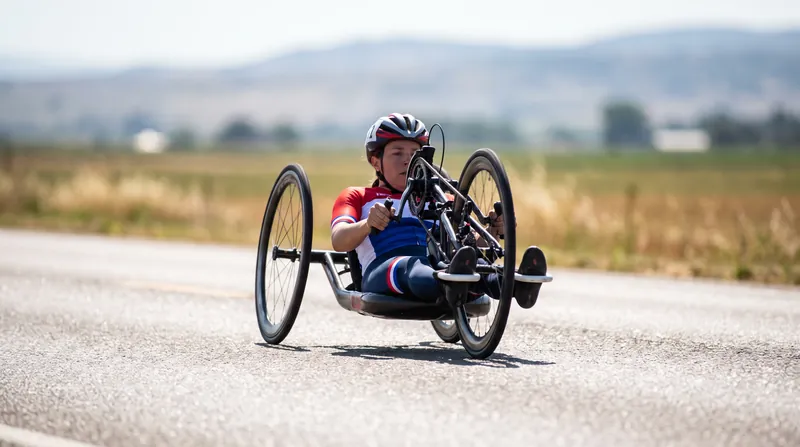
Australia Claims Two World Titles at UCI Para-cycling Road World Championships in Extreme Heat
4 sources
Joint Health
Closing the Mobility Gap: How Eccentric Loading Replaces Static Stretching for Joint Health
4 sources

Sedentary Behavior
Uninterrupted Sitting Raises Cancer Death Risk by 9% Per Hour, But Short Breaks Slash Mortality
4 sources

Immune System Aging
Blocking a Single Immune Receptor Restores Cellular Cleanup and Reverses Age-Related Decline in Mice
5 sources

Comments
Every angle. Every day.
Get Fitness stories with full source coverage and perspective breakdowns, free every day.