
World Aquatics Approves Trial of 10-Lane Finals for Short Course World Championships
World Aquatics will test a 10-lane format for semi-finals and finals at the 2026 Short Course World Championships in Beijing, expanding access for athletes globally. The trial, applying to events 400 meters and shorter, aims to broaden competitive representation alongside a new World Cup wildcard system.
By Aylin Aksoy

World Aquatics is set to test a major structural change to competitive swimming, announcing that it will trial a 10-lane format for semi-finals and finals at the 2026 Short Course World Championships in Beijing. The global governing body approved the pilot to increase opportunities for athletes from a wider range of member federations to reach the finals stage.
The shift from the traditional eight-lane setup marks one of the most significant format adjustments in recent international swimming history, signaling a concerted effort to democratize access to the sport's highest levels of competition. By expanding the physical space in the pool, the organization hopes to see a more diverse array of flags represented when the medals are on the line.[1][2][4]
The expanded lane configuration will apply specifically to all individual events spanning 400 meters and shorter. Historically, 10 lanes have been utilized during preliminary morning heats to accommodate large fields of competitors and keep the meet schedule moving efficiently, but the field has always been narrowed down to the fastest eight swimmers for the evening semi-finals and finals.
Under the new trial, the evening sessions in Beijing will feature a wider pool of contenders battling for the podium, fundamentally altering the tactical approach for athletes who typically aim just to secure a top-eight finish during the morning qualifiers.[2][3]
Not all events will see the expanded field during the Beijing championships. The 800-meter and 1500-meter distance events, along with all relay races, will continue to use the standard eight-lane format.
The governing body opted to maintain the traditional setup for these specific races because the extra space is considered necessary for the high volume of turns in distance swimming and the chaotic deck-side exchanges required during relays. Keeping the outer lanes empty in these grueling events ensures that athletes are not overly penalized by the intense wave turbulence that accumulates over longer durations.[1][2][5]
By adding two lanes to the shorter sprints and middle-distance events, World Aquatics effectively increases the finalist field by 25 percent per race. This expansion is designed to broaden the competitive landscape, which has historically been dominated by a concentrated group of swimming powerhouses, including the United States, Australia, and China.
The change provides athletes from emerging regions a mathematically better shot at reaching a world championship final, potentially sparing high-level competitors the heartbreak of finishing ninth in preliminaries and missing out on the evening showcase by mere hundredths of a second.[4][5]
Alongside the lane expansion, World Aquatics is introducing a new wildcard qualification system designed to reward performance on the World Cup circuit. Swimmers competing in the three-leg autumnal World Cup series in 2026—dubbed the "Silk Road Tour" with stops in Baku, Tashkent, and Astana—will have the chance to earn a direct wildcard berth to the Short Course World Championships if they hit an 'A' standard in their event. This creates a secondary pathway to the championships that bypasses the traditional, highly restrictive national selection meets.[1][2][3]
This wildcard system allows national federations to enter up to three additional athletes beyond their standard roster limits, provided those athletes earn their spots through the Silk Road Tour. The concept mirrors qualification pathways used in international track and field, where World Athletics frequently grants additional spots to reigning champions or Diamond League winners. By linking World Cup performance directly to World Championship qualification, the governing body aims to drive higher participation in the Silk Road Tour while simultaneously deepening the talent pool that will eventually arrive in Beijing.[1][3][5]
While the inclusion of more athletes has been widely praised, the 10-lane setup introduces new technical and hydrodynamic considerations for the competitors. In a traditional eight-lane configuration within a 10-lane facility, the outermost lanes are left empty to act as a buffer, absorbing the wave energy generated by the swimmers. Filling all 10 lanes means athletes assigned to lanes 0 and 9 will likely face significant "splash-back" and stronger wall-reflected currents, potentially putting them at a physical disadvantage compared to the top seeds racing in the calmer center lanes.[5]
To mitigate these hydrodynamic concerns, World Aquatics is deliberately testing the rule in 25-meter short-course pools rather than the 50-meter long-course format used at the Olympics. In short-course racing, the increased frequency of flip turns helps break up the wake and dissipate wave turbulence more effectively. This makes the Beijing championships a practical testing ground to evaluate whether the physical disadvantages of the outer lanes can be minimized, allowing officials to gather concrete data on how the water behaves when the pool is fully occupied by elite sprinters.[5]
World Aquatics President Husain Al Musallam emphasized that the governing body is constantly looking to provide more opportunities for athletes and member federations. The combined impact of the 10-lane trial and the Silk Road Tour wildcard system is intended to ensure a wider representation of swimmers on the starting blocks. If the pilot in Beijing proves successful and the wave turbulence is deemed manageable, the federation could eventually consider expanding the 10-lane format to long-course world championships, marking a permanent evolution in how global aquatic champions are crowned.[1][4][5]
Where opinion splits
World Aquatics Leadership
The governing body views the expansion as a necessary step to democratize the sport and increase global representation.
World Aquatics President Husain Al Musallam and the governing bureau argue that the 10-lane format and the new wildcard system are essential for growing the sport globally. By opening up 25 percent more spots in finals, they aim to give athletes from smaller federations—particularly in Asia and Africa—a realistic chance to compete on the biggest stage. Leadership believes this will not only spare high-level competitors the heartbreak of finishing ninth in preliminaries but also deliver more exciting, inclusive competitions that appeal to a broader international audience.
Technical Analysts & Swimmers
Competitors and coaches are weighing the benefits of inclusion against the physical challenges of wave turbulence in outer lanes.
While many welcome the expanded opportunities, technical analysts and some swimmers have raised concerns about the physics of a fully occupied 10-lane pool. In a traditional eight-lane setup within a 10-lane pool, the empty outer lanes act as a buffer to absorb wave energy. Filling lanes 0 and 9 means those athletes will face significant "splash-back" and wall-reflected currents, potentially putting them at a hydrodynamic disadvantage. However, experts note that testing this in a 25-meter short-course format is a calculated move, as the frequent turns help break up the wake, making it the ideal testing ground before any potential long-course implementation.
Key points
- World Aquatics will trial a 10-lane format for semi-finals and finals at the 2026 Short Course World Championships.
- The 10-lane expansion applies to all individual events 400 meters and shorter.
- Distance events (800m, 1500m) and relays will remain in the traditional eight-lane format.
- A new wildcard system will allow swimmers to qualify via the World Cup 'Silk Road Tour'.
- Governing Body
- Focuses on expanding global participation and creating more opportunities for member federations.
- Competitive Analysts
- Focuses on the technical implications of the rule change, including qualification math and pool hydrodynamics.
Perspectives this story doesn't cover
- Athletes assigned to the outermost lanes (0 and 9)
- Coaches from traditional powerhouse nations adjusting their qualification strategies
Sources
Source coverage
5 outlets
2 viewpoints surfaced





- [1]World AquaticsGoverning Body
New concepts to be trialled that will increase opportunities available for athletes at future World Aquatics swimming events
Read on World Aquatics → - [2]SwimSwamCompetitive Analysts
World Aquatics To Trial 10 Lane Semis & Finals At SC Worlds, Adding World Cup Wild Card Qualifier
Read on SwimSwam → - [3]Swimming World MagazineCompetitive Analysts
World Aquatics to Test 10-Lane System and Wildcard Bids for World Short Course Championships
Read on Swimming World Magazine → - [4]Inside The GamesGoverning Body
World Aquatics will feature more lanes in the semis and finals
Read on Inside The Games → - [5]TenbiztCompetitive Analysts
World Aquatics is launching a bold experiment: expanding finals from eight to ten lanes and adding a wildcard system
Read on Tenbizt →
More in Fitness
See all →Aquatic Biomechanics
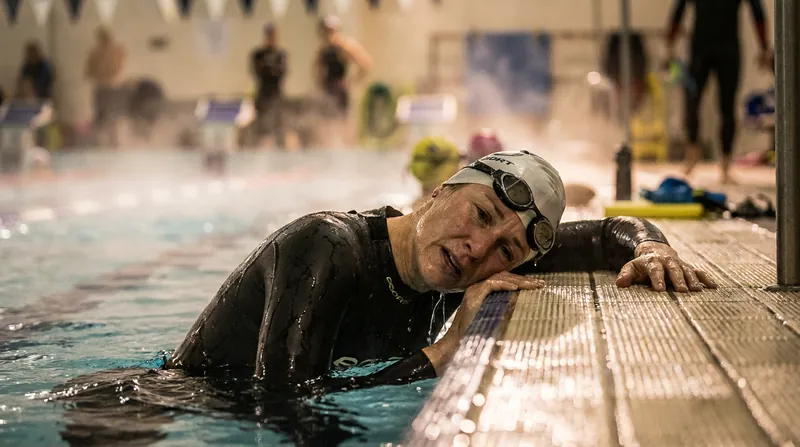
The Science of Resisted Sprinting: How Adding Drag Forces Swimmers to Unlock Greater Speed
4 sources
USRPT Methodology
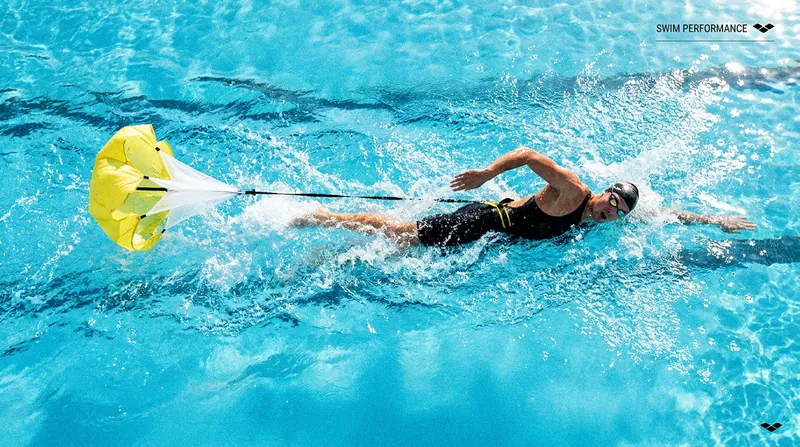
The Science of USRPT: How Ultra-Short Race-Pace Training is Rewriting Swimming's Mileage Myth
4 sources
Swimming Biomechanics
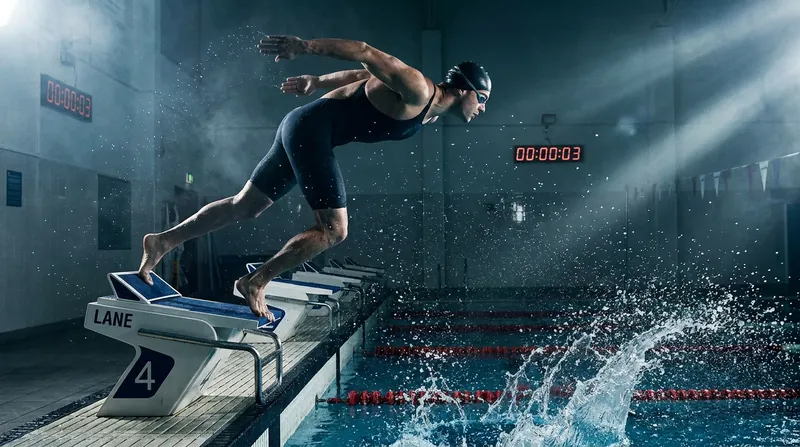
The Biomechanics of the 'High Elbow Catch': Why the Early Vertical Forearm is Swimming's Holy Grail
4 sources
Longevity Science
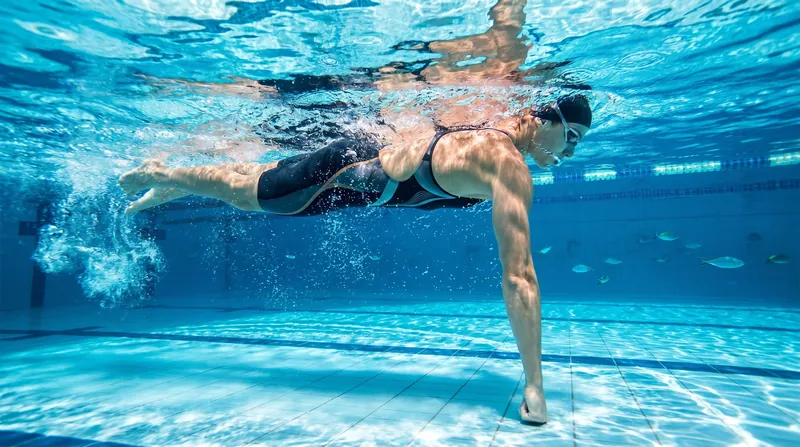
The Science of Swimming: How Aquatic Exercise Transforms Brain Health and Longevity
2 sources

Comments
Every angle. Every day.
Get Fitness stories with full source coverage and perspective breakdowns, free every day.