
Former DR Congo President Joseph Kabila Launches Coalition With M23 Rebels to Oust Tshisekedi
Joseph Kabila has formally allied with the Rwandan-backed M23 insurgency to form a new political-military front. The coalition aims to depose President Félix Tshisekedi, escalating the eastern conflict into a national crisis.
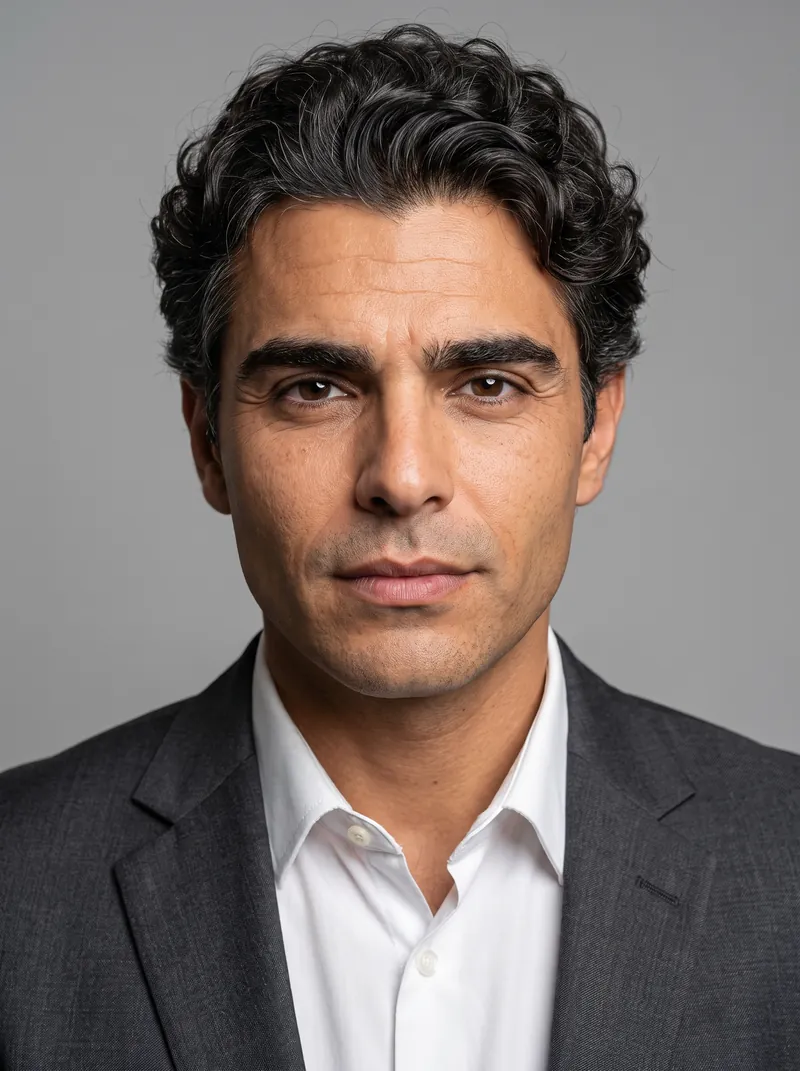
Past Congolese rebellions relied on exiled dissidents and Rwandan-backed militias to depose entrenched autocrats in Kinshasa. The newly declared Front pour la Refondation de la Nation unites that same military apparatus, but its political figurehead is the autocrat himself. Former President Joseph Kabila has formally allied with the M23 rebel movement to oust his successor, President Félix Tshisekedi.[1][2]
The announcement, made in the rebel-held eastern city of Goma, merges the political opposition loyal to Kabila with a heavily armed insurgency. The FRN effectively absorbs the Alliance Fleuve Congo, a previous political front for the rebels launched in late 2023.[3]
Kabila governed the vast, mineral-rich nation from 2001 until 2019, stepping down after a delayed election that installed Tshisekedi. That handover was celebrated as the country's first peaceful democratic transition, though observers widely suspected a backroom power-sharing deal.[1]
That fragile pact collapsed in 2020 when Tshisekedi systematically dismantled Kabila’s parliamentary majority and purged his loyalists from the military and judiciary. Kabila subsequently retreated to his farm in Kingakati, maintaining a strict public silence while his political apparatus fractured.[4]
"This is no longer a proxy war fought through deniable militias in the eastern provinces," said a senior researcher at the Congo Research Group. "By placing a former head of state at the helm of an active insurgency, the M23 has explicitly shifted its objective from regional autonomy to regime change in Kinshasa."[5]
Merging political and armed opposition
The M23, which United Nations investigators say is armed, funded, and directed by neighboring Rwanda, has de facto annexed large swathes of North Kivu province over the past two years. The group controls lucrative transit routes and surrounds the provincial capital of Goma.[1][4]
Until now, the rebellion framed its campaign as a defense of Congolese Tutsi populations against ethnic militias and government forces. The integration of Kabila, who hails from the southeastern Katanga region, attempts to broaden the movement's appeal into a national political grievance.[2][5]
The Congolese government immediately condemned the FRN declaration as an act of high treason. Government spokesperson Patrick Muyaya stated that the alliance confirms what Kinshasa has long alleged: that Kabila has been secretly orchestrating the destabilization of the eastern provinces.[3]
"The mask has finally fallen," Muyaya told reporters in the capital. "The former president has chosen to align himself with the aggressors in Kigali, proving that his commitment to the republic was never more than a temporary tactical retreat."[3]
The military balance in the east remains highly volatile, with the Congolese national army relying heavily on a patchwork of local militias, known as the Wazalendo, and private military contractors. A regional force deployed by the Southern African Development Community has struggled to halt the M23's advance.[4]
Regional escalation and peace process collapse
The Kabila-M23 alliance effectively nullifies the Luanda process, a diplomatic initiative mediated by Angola aimed at securing a ceasefire between Kinshasa and Kigali. Negotiators had spent months attempting to separate the political grievances of the M23 from the interstate conflict.[4][5]
With Kabila demanding Tshisekedi's removal, the prospect of a negotiated settlement appears entirely foreclosed. The FRN charter calls for the dissolution of the current government, citing alleged electoral fraud in the December 2023 elections and rampant constitutional violations.[2]
Regional diplomats warn that the coalition could trigger a wider regional war, drawing in neighboring states that have vested interests in the DRC's stability. South Africa, Tanzania, and Malawi currently have troops deployed in North Kivu fighting alongside the Congolese army.[4]
Rwanda has consistently denied backing the M23, despite extensive evidence documented by UN experts, including the presence of advanced surface-to-air missiles and Rwandan Defense Force personnel on Congolese soil. Kigali has not yet officially commented on the formation of the FRN.[1][5]
"Kigali gains a Congolese political heavyweight to legitimize its military operations, while Kabila gains the most effective fighting force in the region," noted an analyst from the International Crisis Group. "It is a marriage of convenience that fundamentally alters the security architecture of the Great Lakes."[5]
The threat to Kinshasa
While the M23 possesses significant tactical superiority in the east, launching a successful offensive across the vast, roadless expanse of the Congo basin to reach Kinshasa remains a formidable logistical challenge. The capital sits more than 1,500 kilometers from the current front lines.[1][4]
However, Kabila retains deep networks within the national security apparatus and the Republican Guard, which he built during his nearly two decades in power. The immediate threat to Tshisekedi may come from internal defections rather than a cross-country military march.[3]
The United States and the European Union have previously sanctioned several M23 leaders and Rwandan officials for their roles in the conflict. Western diplomats are now weighing whether to extend those financial and travel restrictions to the former Congolese president and his inner circle.[1]
The humanitarian toll of the escalating conflict continues to mount, with more than 7 million people internally displaced across the DRC. Aid agencies operating in North Kivu report that supply lines are entirely severed, leaving hundreds of thousands in makeshift camps without basic necessities.[4]
The coming weeks will test the cohesion of both the new rebel coalition and the government's defenses. If Kabila can trigger military mutinies in other provinces, particularly in his native Katanga, the localized eastern rebellion could rapidly metastasize into a nationwide civil war.[5]
Key points
- Former DRC President Joseph Kabila has launched the Front pour la Refondation de la Nation (FRN), a political-military alliance with the Rwandan-backed M23 rebels.
- The coalition's stated objective is the removal of President Félix Tshisekedi, shifting the M23's goals from regional autonomy to national regime change.
- The Congolese government condemned the move as high treason, claiming it proves Kabila has been orchestrating eastern destabilization.
- Regional diplomats warn the alliance effectively kills the Luanda peace process and raises the risk of a wider war in the Great Lakes region.
What we don’t know
- Whether Kabila's declaration will trigger defections within the Congolese national army, where he still maintains historical loyalists.
- How regional troop contributors like South Africa and Tanzania will respond to fighting a rebellion led by a former head of state.
- Whether the United States and European Union will apply targeted financial sanctions against Kabila and his inner circle.
How we got here
Jan 2019
Joseph Kabila steps down after 18 years in power, handing the presidency to Félix Tshisekedi in a contested but peaceful transition.
Dec 2020
President Tshisekedi formally ends the governing coalition with Kabila's political party, purging his loyalists from state institutions.
Nov 2021
The M23 rebel group resumes its armed campaign in North Kivu after years of dormancy, allegedly with renewed backing from Rwanda.
Dec 2023
Former electoral commission chief Corneille Nangaa launches the Alliance Fleuve Congo (AFC) to unite political opposition with the M23.
Oct 2026
Kabila officially absorbs the AFC into the new FRN coalition, taking direct leadership of the rebellion to oust Tshisekedi.
- Congolese Government
- Views the alliance as an act of high treason that proves Kabila has long been complicit in Rwandan-backed aggression.
- FRN / Kabila Loyalists
- Argues the Tshisekedi government is illegitimate due to electoral fraud and constitutional violations, necessitating a forceful transition.
- Regional Security Analysts
- Fears the alliance destroys the Luanda peace process and risks a wider interstate war in the Great Lakes region.
Perspectives this story doesn't cover
- Civilians displaced in North Kivu
- Rank-and-file Congolese soldiers
Sources
Source coverage
5 outlets
3 viewpoints surfaced





- [1]AP NewsRegional Security Analysts
Congo's former President Joseph Kabila launches an anti-government front with rebel groups
Read on AP News → - [2]AfricanewsFRN / Kabila Loyalists
RDC : Joseph Kabila à la tête du Front pour la refondation de la Nation
Read on Africanews → - [3]Actualite.cdCongolese Government
RDC : Joseph Kabila annoncé à la tête d'un nouveau mouvement politico-militaire à Goma
Read on Actualite.cd → - [4]The Eastleigh VoiceRegional Security Analysts
Joseph Kabila forms new coalition with M23, complicating DRC peace process
Read on The Eastleigh Voice → - [5]News.AzRegional Security Analysts
Why has Joseph Kabila formed an alliance with the M23 rebel movement?
Read on News.Az →

More in World
See all →Naval Treaties
Annex II Excludes Aircraft Carriers From Capital Ships: Why the Montreux Convention Bars Modern Carriers From the Turkish Straits
7 sources

Caribbean Security
US Army Reserve Assesses Readiness of Six Units for Potential Cuba Operation
3 sources
US-Canada Relations
Canadian Prime Minister Mark Carney Acknowledges Government Studied Risk of US Military Action
6 sources
Global Development
The $1,230 GNI Per Capita Threshold and the Human Assets Index/Economic Vulnerability Index Criteria: How the UN Defines Least Developed Country Status
7 sources
Comments
Every angle. Every day.
Get World stories with full source coverage and perspective breakdowns, free every day.