
Outdoor Recreation Hits Record 181 Million Participants, Driven by Surge in Diverse Demographic Groups
A record 58.6% of Americans participated in outdoor recreation in 2024, adding 5.3 million new users in a single year. The historic growth is being driven by unprecedented surges in Black, Hispanic, senior, and youth participation, fundamentally reshaping the $1.2 trillion outdoor economy.
By Maya Khalil

Share this story
The American outdoors has never been more crowded, and the numbers confirm a historic societal shift. In 2024, a record 181.1 million Americans—representing nearly 60% of the population over the age of six—participated in some form of outdoor recreation. This milestone caps a years-long expansion that added 5.3 million new participants in a single year and nearly 30 million since 2019.
The surge reflects a fundamental transformation in how the public interacts with nature, moving outdoor recreation from a niche subculture to a dominant pillar of American leisure. Far from a temporary pandemic-era blip, this sustained growth indicates that the outdoors has permanently integrated into the daily lives of a clear majority of the country.[1][2][4]
Historically, the outdoor industry catered to a remarkably narrow demographic: predominantly white, middle-aged, and affluent men. However, the latest data reveals a profound demographic realignment that is rewriting the industry's future. Participation among Black Americans surged by 12.8% in 2024, while Hispanic participation grew by 11.8%, marking the highest levels of engagement on record for both groups.
This diversification is the primary engine of the current boom. Industry researchers note that the bulk of recent growth has originated entirely outside the traditional white, bachelor's-degree-holding cohort, signaling long-term momentum toward equity and inclusion in natural spaces.[1][4]
Age dynamics are simultaneously upending traditional marketing models, proving that the outdoors is becoming a truly multigenerational space. Seniors aged 65 and older posted a remarkable 7.4% increase in participation, making them one of the fastest-growing cohorts in the ecosystem. Today, more than 23 million older adults regularly recreate outdoors, surpassing the participation rates of several younger adult brackets.
At the other end of the spectrum, youth participation among children aged 6 to 12 climbed by 5.6%. This dual surge at opposite ends of the age curve suggests that outdoor activities are increasingly viewed as lifelong pursuits rather than phases of youthful athleticism.[1][4]
This multigenerational expansion is fundamentally reshaping household behavior and family leisure time. A record 66% of American households with children now actively engage in outdoor activities. Researchers have identified a powerful reciprocal effect driving this metric: children's high participation rates, which now exceed 70%, are actively pulling their parents outside. Rather than parents dragging reluctant kids to trailheads, the data suggests that youth programming, school initiatives, and a cultural emphasis on nature are empowering children to act as catalysts for their entire families' outdoor engagement.[2][7]
As the participant base broadens, the nature of the engagement itself is evolving, characterized by a stark divide between "casual" and "core" users. Casual participants—defined as those who engage in outdoor activities occasionally and prioritize mental health, calm, and social connection over adrenaline—now dominate the landscape. For decades, outdoor brands preached the gospel of extreme performance, selling the idea of conquering mountains. Today, the vast majority of the 181 million participants are seeking something entirely different: a peaceful escape from digital saturation and modern anxiety.[1][5]
According to industry analysts, a staggering 72% of specialty outdoor consumers now identify their approach as casual. They are actively bypassing technical mountaineering or extreme backcountry sports in favor of highly accessible "gateway activities." Hiking, bicycling, running, fishing, and camping draw the highest numbers of participants because they require minimal specialized training and offer a low barrier to entry. This shift is forcing legacy outdoor brands to pivot their product lines, focusing heavily on comfort, versatility, and approachability rather than purely technical, survival-grade specifications.[2][5]
Yet, amid the tidal wave of casual users, the industry is also witnessing a surprising and vital rebound among its most dedicated loyalists. The number of "core" participants—those who recreate outdoors frequently, intensely, and often build their lifestyles around their pursuits—grew by 5.7% in 2024.
This unexpected surge added 5 million highly engaged users to the ecosystem, reversing a nearly decade-long decline in this critical segment. Driven heavily by young adults and older demographics deepening their commitment, this core rebound ensures that the high-end specialty market remains robust even as the broader tent expands.[1][2]
The economic footprint of this dual expansion is massive, cementing outdoor recreation as a cornerstone of the national economy. The U.S. Bureau of Economic Analysis calculates the total economic output of outdoor recreation at a staggering $1.2 trillion. This financial engine supports roughly 5 million jobs across the country, accounting for 3.1% of all employment in the United States. From local gear shops and rural guiding services to massive manufacturing supply chains, the financial impact of 181 million people heading outside ripples through nearly every sector of the economy.[3]
Crucially, it is the active and casual consumers who are driving the bulk of this unprecedented spending. While core enthusiasts are often viewed as the primary market for high-end gear, their total spending is dwarfed by the sheer volume of the broader market.
Active participants—who recreate regularly but not obsessively—spend an estimated $1,600 annually on outdoor goods, generating $145 billion in total market value. Casual participants add another $106 billion. In contrast, the highly visible core segment accounts for just under $20 billion, proving that the industry's financial future lies in outfitting the everyday adventurer.[5]
This economic engine is increasingly viewed by policymakers as a vital tool for regional revitalization, particularly in areas left behind by traditional industries. Federal initiatives, such as the Environmental Protection Agency's Recreation Economy for Rural Communities program, are actively funding projects that link main streets to riverfronts and trail systems. By leveraging outdoor access, these programs aim to boost local economies, attract new businesses, and improve public health outcomes in rural towns, turning natural landscapes into sustainable economic infrastructure.[3]
However, the headline-grabbing surge in total participation masks a complex and somewhat troubling underlying trend known as the frequency paradox. While the absolute number of people going outside has never been higher, the average participant is actually heading out less often. The industry has successfully convinced millions of Americans to try outdoor recreation, broadening the tent to unprecedented dimensions, but it is struggling to convert those new, casual entrants into habitual, weekly participants. This drop in frequency presents a unique challenge for an industry built on repeat engagement.[1][6]
Compared to pre-pandemic baselines established in 2019, the average outdoor enthusiast took five fewer outings per year in 2024. This decline in frequency suggests that while outdoor recreation has successfully integrated into mainstream culture, it is increasingly competing with other forms of leisure and the return of pre-pandemic obligations. For retailers and advocacy groups, the next phase of growth will depend less on attracting first-time participants and entirely on building lasting outdoor habits through community programming, equipment rentals, and lower-cost local access.[2][6]
The sheer volume of casual users is also forcing a nationwide reckoning over infrastructure and environmental stewardship. Advocacy groups and land managers warn that the surge in visitation is placing unprecedented strain on local parks, urban trails, and backcountry preserves. Trailheads that once saw a few dozen cars on a weekend are now overflowing, leading to severe parking shortages, accelerated trail erosion, and increased wildlife disruption. The very natural spaces drawing people outside are buckling under the weight of their own popularity.[4]
Ensuring that public lands can sustainably handle this volume requires a massive, coordinated investment in physical infrastructure. Advocates stress that funding for trail maintenance, waste management, parking expansions, and search-and-rescue operations must scale proportionally with participation. Without significant financial commitments from both federal agencies and state governments, the outdoor boom threatens to degrade the fragile ecosystems it relies upon. The ultimate challenge for land managers is balancing equitable, open access for diverse new populations with the strict conservation measures required to keep these landscapes pristine for future generations.[3][4]
Furthermore, the cultural narrative surrounding the outdoors is undergoing a hard reboot. Commentators and sociologists note that for many—particularly those entrenched in high-stress, screen-heavy professions—the outdoors is no longer viewed merely as a venue for physical recreation. Instead, it is becoming essential infrastructure for mental health and digital disconnection. People are utilizing nature as a deliberate antidote to algorithmic feeds and constant connectivity, seeking out quiet forests and open waters as a form of psychological maintenance rather than physical conquest.[7]
As the outdoor participant base grows increasingly diverse, casual, and massive, the industry's long-term success will depend entirely on its ability to adapt to this new reality. The era of marketing exclusively to extreme athletes and hardcore mountaineers has definitively ended, replaced by a broader mandate for inclusivity and mental wellness.
Key points
- A record 181.1 million Americans participated in outdoor recreation in 2024, representing 58.6% of the population.
- Growth was heavily driven by diverse demographics, including a 12.8% increase in Black participants and an 11.8% increase in Hispanic participants.
- Seniors and youth also saw significant gains, making the outdoors a highly multigenerational space.
- Despite the record number of participants, the average individual took five fewer outdoor trips per year compared to 2019.
Open questions
- Whether the industry can successfully reverse the 'frequency paradox' and convert casual users into habitual participants.
- How federal and state governments will secure the necessary funding to maintain trail infrastructure under the weight of record visitation.
- If the surge in diverse participation will translate into more diverse representation within outdoor industry leadership and land management agencies.
Timeline
2019
Outdoor participation begins a steady climb, adding nearly 30 million new participants over the next five years.
2020-2022
The pandemic triggers a massive surge in casual outdoor recreation as people seek safe, socially distanced activities.
2024
Participation hits a record 181.1 million, driven by unprecedented diversity, while average outing frequency drops.
2025
The EPA and local governments expand funding for rural recreation infrastructure to handle the sustained boom.
- Industry Analysts & Trade Groups
- Focuses on the economic shift from core to casual consumers and the need for market adaptation.
- Conservation & Public Land Advocates
- Highlights the tension between increased public access and the environmental strain on natural spaces.
- Cultural & Lifestyle Commentators
- Frames the outdoor boom as a societal reaction to digital saturation and modern anxiety.
Perspectives this story doesn't cover
- Local residents in gateway communities facing overcrowding
- Indigenous groups managing ancestral lands with increased visitation
Sources
Source coverage
7 outlets
3 viewpoints surfaced







- [1]Outdoor Industry AssociationIndustry Analysts & Trade Groups
2025 Outdoor Participation Trends Report
- [2]Outside OnlineCultural & Lifestyle Commentators
Outdoor Recreation is at an All-Time High
- [3]Environmental Protection AgencyConservation & Public Land Advocates
Recreation Economy for Rural Communities
- [4]Michigan Trails & Greenways AllianceConservation & Public Land Advocates
Record Outdoor Participation in 2024
- [5]Switchback EventIndustry Analysts & Trade Groups
Outdoor Consumer Trends 2025
- [6]Shop Eat SurfIndustry Analysts & Trade Groups
Outdoor participation hits record, but frequency drops
- [7]Ctrl Alt DisconnectCultural & Lifestyle Commentators
181 Million People Ran a Hard Reboot on the Outdoors

More in Fitness
See all →Sports Science
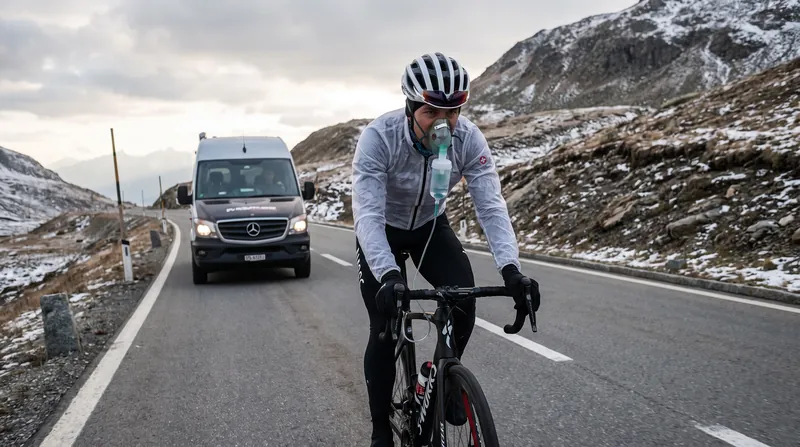
WADA Bans Non-Diagnostic Carbon Monoxide Use and Tightens Asthma Drug Rules in 2026 Prohibited List
2 sources
Exercise as Medicine
Medicare to Reimburse Physicians for Physical Activity Assessment, Formalizing 'Exercise as Medicine'
3 sources

Public Lands
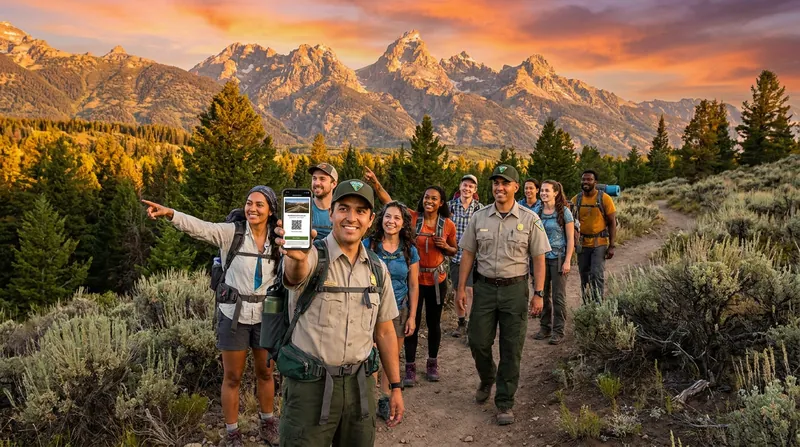
Landmark EXPLORE Act Overhauls Public Land Access and Outdoor Recreation Infrastructure
2 sources
Public Lands
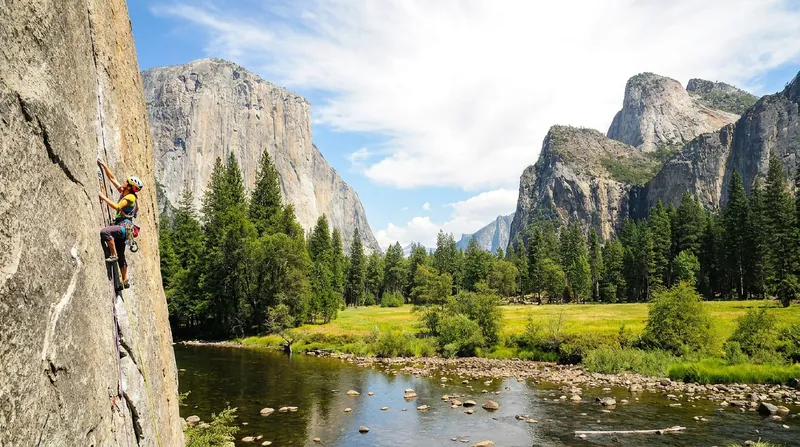
How the New Federal Policy on Fixed Anchors Secures the Future of Wilderness Climbing
1 sources
Comments
Every angle. Every day.
Get Fitness stories with full source coverage and perspective breakdowns, free every day.