
How the NCAA Crossover and Sports Science Are Rewriting Gymnastics Longevity
A landmark rule change is allowing elite gymnasts to extend their careers into their mid-20s, while new demographic research reveals the sport's profound benefits for lifelong neuro-muscular resilience.
By Jackson Reed

For decades, the cultural narrative surrounding elite gymnastics was defined by a ticking clock. Athletes were expected to peak at 16, endure grueling physical tolls, and retire before they reached college age.
But in 2026, that narrative has been entirely rewritten. Driven by sweeping changes to collegiate amateurism rules and backed by emerging sports science, gymnastics is experiencing a longevity revolution.
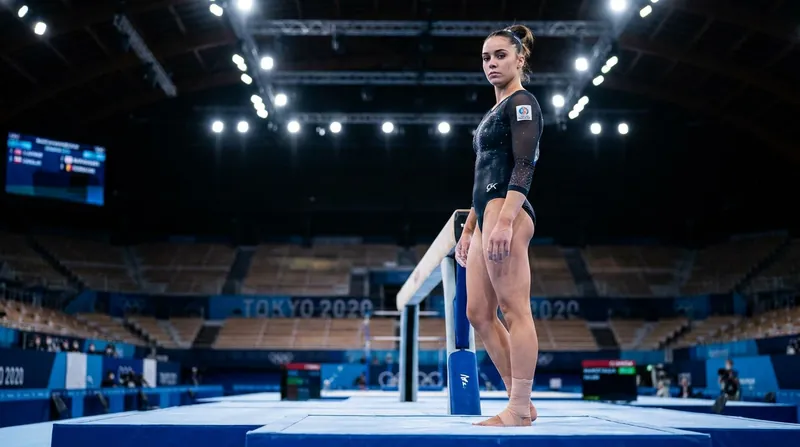
Today, Olympic medalists are extending their competitive careers well into their mid-20s, seamlessly crossing back and forth between the NCAA and the international elite stage.
Simultaneously, a landmark demographic study has revealed that the sport's unique physical demands actually confer massive long-term health benefits, adding over eight years to the lifespans of male athletes.
The catalyst for the career-extension trend was the NCAA’s 2021 decision to allow athletes to profit from their Name, Image, and Likeness (NIL).
Prior to this ruling, elite gymnasts faced a stark ultimatum: turn professional to accept endorsement money and forfeit collegiate eligibility, or maintain amateur status to compete in the NCAA.
"Before 2021, elite gymnasts had to choose whether to 'go pro' and take endorsements or to go compete in the NCAA," notes Inside Gymnastics. Now, athletes are thriving by doing both.[1]
The impact on the sport's demographics has been profound. Olympians like Jade Carey, Jordan Chiles, and Leanne Wong have spent recent years anchoring top-tier NCAA programs while simultaneously training for global elite competitions.[1][2]
This crossover has elevated the quality of collegiate gymnastics to unprecedented heights. The Washington Post reports that the influx of Olympic-caliber talent has resulted in record-breaking viewership, with NCAA championships drawing over 1.1 million viewers.[3]
The talent surge has also led to a dramatic increase in "Perfect 10s" awarded in college meets, a stark contrast to the elite international circuit, which abandoned the 10.0 scale in 2006 in favor of an open-ended Code of Points.[3]
While the NIL era is extending careers, recent sports science suggests the sport itself extends lives. A massive 2024 study published in GeroScience analyzed the lifespans of over 95,000 elite athletes across 44 disciplines.[4]
The researchers found that male gymnasts lived an average of 8.2 years longer than the general population, placing the sport second only to pole vaulting on the longevity leaderboard.[4]
This massive lifespan extension challenges the traditional assumption that pure cardiovascular endurance sports like cycling or running are the ultimate keys to human longevity.[4][5]
Sports scientists attribute this to the "Broad Skill" hypothesis. Gymnastics demands a diverse mix of functional coordination, extreme balance, and full-body load-bearing.[5]
Unlike repetitive, linear endurance sports, the neuro-muscular complexity required to navigate a balance beam or execute a floor routine builds profound physical resilience and acts as the ultimate insurance against age-related physical decline.[5]
However, the data presents a complex picture regarding female athletes. The GeroScience study noted that historical cohorts of female gymnasts did not show the same lifespan extension, occasionally registering slight decreases.[4]
Researchers and advocates point out that this historical data reflects a 20th-century era of the sport that heavily pressured young women to maintain unsustainably low body weights and pushed them through severe injuries.[4][6]
The modern NCAA-elite crossover era is actively dismantling those toxic historical norms. By allowing women to compete into adulthood, earn substantial incomes, and prioritize mental health, the sport is fostering a much healthier environment.[6]
Today's gymnasts are proving that peak athletic performance does not require sacrificing long-term well-being. They are building sustainable, lucrative careers that honor their bodies and their futures.[6]
As the sport continues to evolve, the combination of collegiate opportunity and elite ambition is ensuring that gymnastics is no longer a race against the clock, but a foundation for a long, resilient life.[6]
Key points
- The 2021 NIL rule change allows elite gymnasts to compete in the NCAA while maintaining professional endorsements.
- Olympic medalists are now extending their careers into their mid-20s, anchoring top college programs.
- The influx of elite talent has pushed NCAA gymnastics viewership to record highs of over 1.1 million.
- A 2024 study of 95,000 athletes found male gymnasts live 8.2 years longer than the general population.
- Sports scientists credit the sport's diverse neuro-muscular demands for building profound resilience against aging.
- The modern college era is actively dismantling toxic 20th-century norms regarding body weight and injury.
How we got here
2006
Elite international gymnastics abolishes the 'Perfect 10' in favor of an open-ended Code of Points to reward difficulty.
July 2021
The NCAA adopts interim NIL policies, allowing college athletes to monetize their personal brands.
August 2024
A landmark GeroScience study of 95,000 athletes reveals that male gymnasts live 8.2 years longer than the general population.
2026
NCAA gymnastics reaches record viewership as a generation of mid-20s Olympians dominate both the college and elite circuits.
- Collegiate & Elite Gymnasts
- Value the ability to monetize their talent via NIL while enjoying the team-oriented college environment and extending their competitive windows.
- Sports Scientists
- Focus on the neuro-muscular, balance, and allostatic load benefits that diverse movement sports like gymnastics provide for long-term healthspan.
- NCAA Administrators
- Emphasize the massive viewership growth and structural changes brought by the influx of Olympic-level talent into college programs.
Perspectives this story doesn't cover
- Grassroots gymnastics coaches managing the new pipeline
- International federations adapting to the US college dominance
Sources
Source coverage
6 outlets
3 viewpoints surfaced






- [1]Inside GymnasticsCollegiate & Elite Gymnasts
The NCAA and Elite Crossover Era
Read on Inside Gymnastics → - [2]NBC SportsCollegiate & Elite Gymnasts
Olympians returning to elite gymnastics after NCAA
Read on NBC Sports → - [3]The Washington PostNCAA Administrators
The rise of the perfect 10 in college gymnastics
Read on The Washington Post → - [4]GeroScienceSports Scientists
Sport and longevity: an observational study of international athletes
Read on GeroScience → - [5]Longevity AISports Scientists
How Different Sports Impact Lifespan
Read on Longevity AI → - [6]Factlen Editorial TeamNCAA Administrators
Synthesis by Factlen editorial team
Read on Factlen Editorial Team →
More in Sports
See all →Injury
Gymnastics Injury Report: Suni Lee Launches LA28 Comeback as European Stars Target Strategic Returns
5 sources
Standings
Global Acrobatic Gymnastics Standings Finalized as Four Nations Claim World Cup Titles
3 sources
Standings
Global Women's Floor Standings Tighten: Bickel and Raz Headline the Race to Paris
6 sources
Injury
Gymnastics Injury Report: Skye Blakely and Kayla DiCello Complete Two-Year Achilles Comebacks
6 sources
Comments
Every angle. Every day.
Get Sports stories with full source coverage and perspective breakdowns, free every day.