
How the Massive Rollout of Two Malaria Vaccines is Rewriting Child Survival in Africa
Real-world data from mid-2026 confirms that the widespread deployment of the RTS,S and R21 malaria vaccines is averting one in eight child deaths in pilot regions, marking a historic turning point in global public health.
By Factlen Editorial Team
- Public Health Officials
- Focus on integrating the vaccine with existing tools like bed nets and using the rollout to strengthen overall health systems.
- Vaccine Developers
- Emphasize the immunological breakthrough of targeting the CSP antigen and the role of adjuvants in achieving high efficacy.
- Frontline NGOs
- Highlight the logistical challenges of a four-dose schedule and the necessity of reaching displaced and remote populations.
- Health Economists
- Focus on the $2.99 price point, Gavi co-financing, and the exceptional return on investment in terms of cost-per-life-saved.
What's not represented
- · Parents in rural communities navigating the four-dose schedule
- · Local ministries of finance balancing vaccine costs against other health priorities
Why this matters
Malaria has historically been one of the leading causes of child mortality globally. The successful deployment and proven real-world efficacy of these vaccines means millions of children will survive to adulthood, fundamentally altering the demographic and economic future of the African continent.
Key points
- Real-world data confirms the RTS,S and R21 malaria vaccines are averting 1 in 8 child deaths in early rollout regions.
- Both vaccines target the parasite's sporozoite stage, neutralizing it before it can multiply in the liver.
- A landmark pricing agreement has reduced the cost of the R21 vaccine to $2.99 per dose.
- More than 24 African countries have integrated the vaccines into their routine immunization schedules.
- The vaccines require a four-dose schedule, presenting logistical challenges but offering opportunities to deliver other health interventions.
- Health officials stress that the vaccines must be used alongside traditional bed nets and chemoprevention.
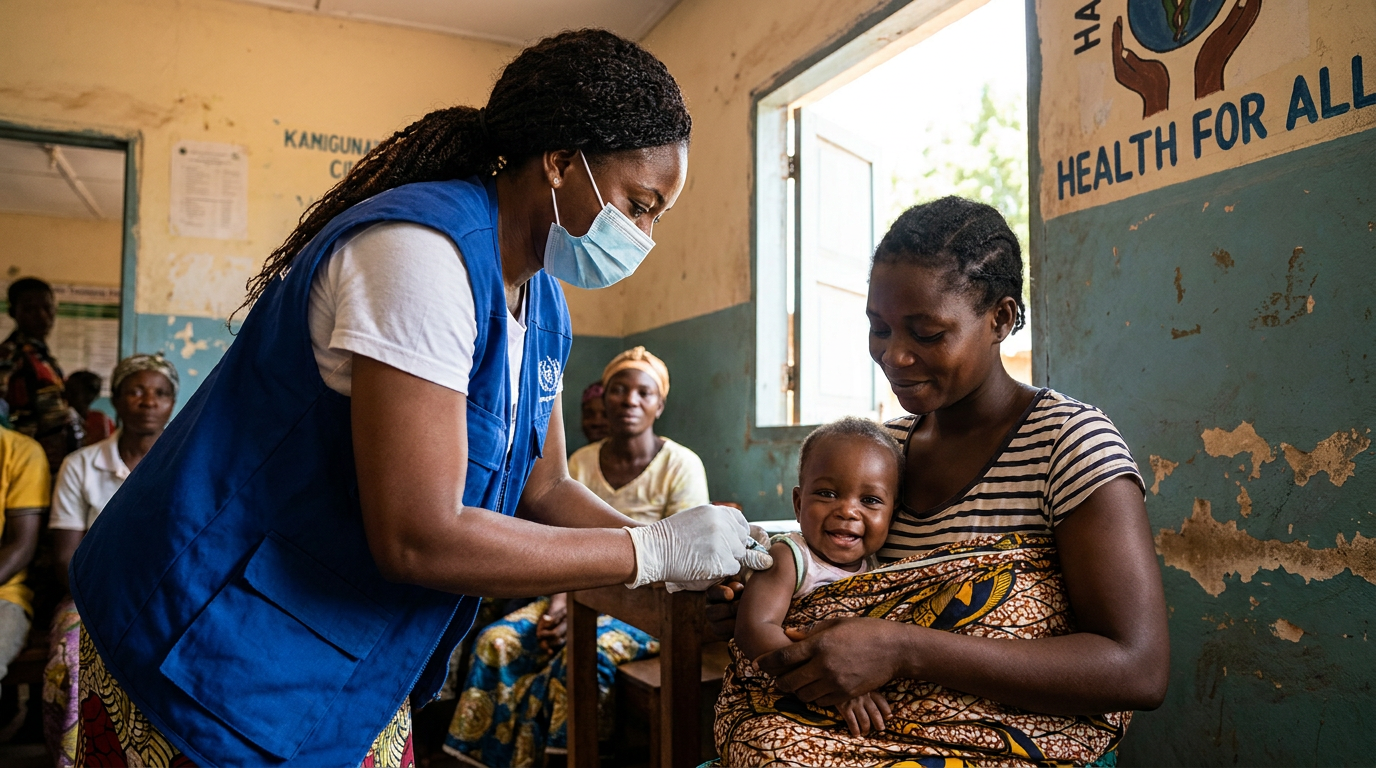
For decades, malaria has imposed a devastating toll on Sub-Saharan Africa, acting as the heaviest anchor on child survival and public health infrastructure. In 2024 alone, the disease claimed the lives of approximately 438,000 African children under the age of five. But mid-2026 data reveals a historic turning point. After more than a century of scientific frustration, the widespread rollout of two World Health Organization-recommended malaria vaccines is fundamentally altering the trajectory of the disease. Real-world evidence now confirms that these immunizations are not just working in controlled trials, but are actively saving lives at scale across the continent.[1][8]
The breakthrough centers on two vaccines: RTS,S/AS01, developed by GSK, and the newer R21/Matrix-M, co-developed by the University of Oxford and the Serum Institute of India. Both represent a monumental triumph of immunology, designed specifically to target Plasmodium falciparum, the deadliest malaria parasite globally and the most prevalent in Africa. While RTS,S paved the regulatory pathway and proved the concept, the arrival and rapid scaling of R21 has provided the volume and affordability necessary to blanket endemic regions. Together, they form the vanguard of a new era in pediatric preventative medicine.[1][2][3]
The real-world impact has been immediate and profound. A comprehensive evaluation published in The Lancet in May 2026 analyzed data from the initial rollout phases in Ghana, Kenya, and Malawi. The findings were staggering: over a four-year period, the introduction of the vaccine averted an estimated one in eight child deaths among eligible populations. Furthermore, hospitalizations for severe malaria dropped by nearly a third. Public health experts note that this level of mortality reduction from a single intervention is exceptionally rare, providing concrete proof that the vaccines can perform in complex, resource-constrained environments just as well as they did in clinical trials.[1][7]

To understand why these vaccines are so revolutionary, it is necessary to look at the complex lifecycle of the malaria parasite. Unlike a virus, Plasmodium falciparum is a shape-shifting eukaryotic organism that evades the human immune system by constantly changing its form. When an infected mosquito bites a human, it injects the parasite in a form known as a sporozoite. These sporozoites travel rapidly through the bloodstream to the liver, where they multiply and transform before bursting back into the blood to cause the severe fever, anemia, and organ failure associated with clinical malaria.[3][8]
Both the RTS,S and R21 vaccines are designed to intercept the parasite during this narrow window of vulnerability. They target the circumsporozoite protein (CSP), which coats the surface of the sporozoite. By training the child's immune system to recognize and attack this specific protein, the vaccines neutralize the parasite in the bloodstream before it can ever reach the liver to multiply. This pre-erythrocytic strategy is the reason the vaccines are highly effective at preventing the onset of disease, though they offer no cross-protection against later blood stages if the initial defense is breached.[3]
While both vaccines utilize the same basic mechanism, R21 was engineered as a direct advancement on the RTS,S architecture. Researchers increased the ratio of the target CSP antigen to the Hepatitis B backbone used to deliver it, theoretically presenting a clearer target to the immune system. Crucially, R21 is paired with Matrix-M, a proprietary adjuvant developed by Novavax that hyper-stimulates the body's immune response. This combination allows R21 to achieve high efficacy with a smaller dose of the active antigen, making it significantly easier and cheaper to manufacture at a massive scale.[3]

The clinical efficacy of this refined approach has been exceptional. Phase III trial data for R21/Matrix-M demonstrated an average vaccine efficacy of 78% against clinical malaria over the first year of follow-up in children aged 5 to 17 months. This made R21 the first malaria vaccine to surpass the World Health Organization's ambitious 75% efficacy target. Importantly, the protection remained robust across different transmission settings, from areas with year-round malaria to regions where the disease spikes violently during the rainy season.[2][7]
The clinical efficacy of this refined approach has been exceptional.
Beyond the biology, the R21 vaccine has triggered a vital economic breakthrough. In late 2025, Gavi, the Vaccine Alliance, and UNICEF secured a landmark agreement to procure the R21 vaccine at just $2.99 per dose. This 25% price reduction compared to earlier estimates is a game-changer for national health budgets. Health economists calculate that this single price cut will save approximately $90 million over five years, freeing up capital to secure more than 30 million additional doses and protect nearly seven million more children by the end of the decade.[4][8]
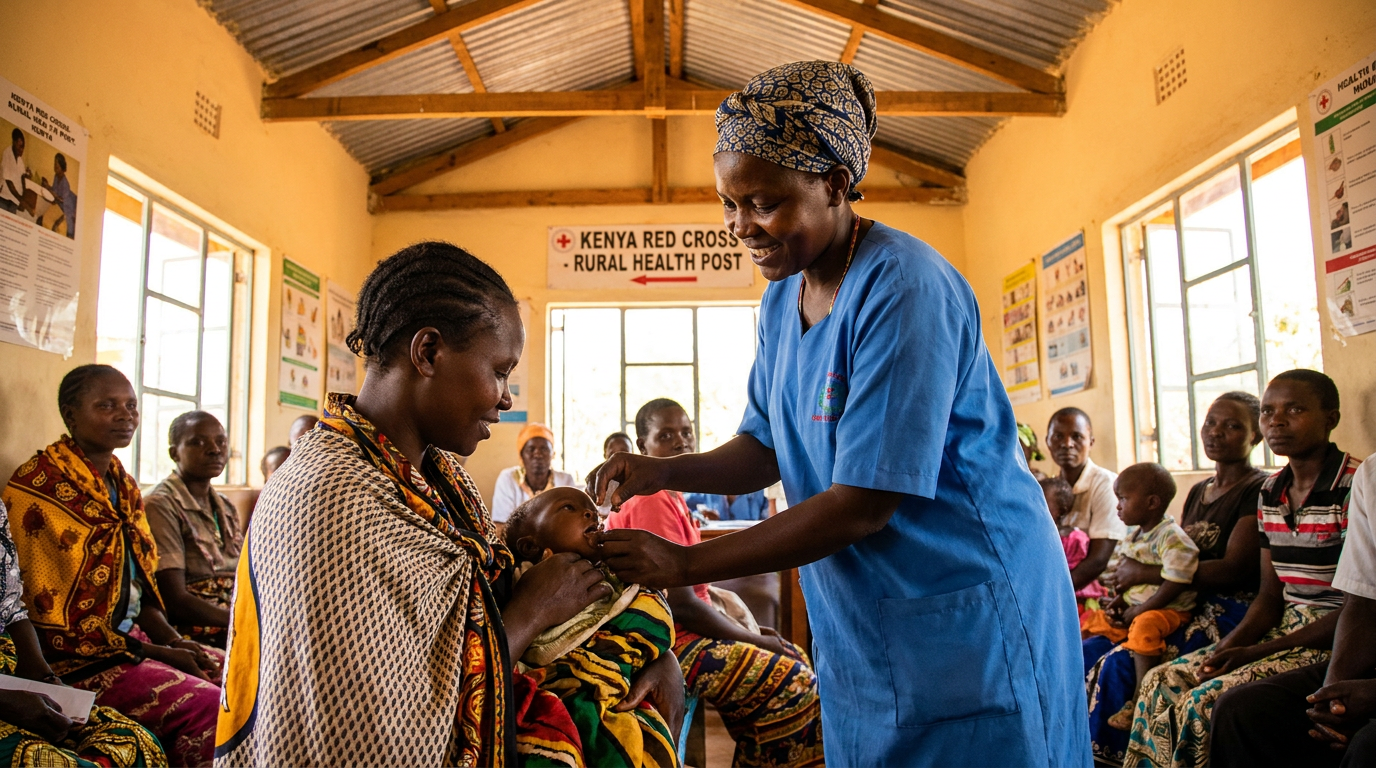
Armed with sufficient supply and sustainable pricing, African nations have rapidly integrated the vaccines into their routine childhood immunization schedules. By mid-2026, more than 24 countries are actively administering the doses. Uganda recently launched the continent's largest single rollout, distributing over 2.2 million doses across 105 districts to reach more than a million infants. Similar national campaigns are underway in Zambia, Burundi, Ethiopia, and Mozambique, utilizing mobile health brigades to ensure the vials reach remote rural communities where the malaria burden is often highest.[4][6]
The rollout is also reaching the most vulnerable populations displaced by conflict and climate crises. In a global first, Médecins Sans Frontières (MSF) completed a full four-dose vaccination campaign in the Kule refugee camp in Ethiopia's Gambella region, protecting 2,100 children. Refugee camps often suffer from explosive malaria outbreaks due to crowded conditions and inadequate shelter. By successfully deploying the vaccine in such a fragile setting, frontline organizations have proven that logistical hurdles can be overcome to protect children living in the highest-risk environments imaginable.[5]

Despite these triumphs, the vaccination program faces significant logistical hurdles, primarily due to its demanding schedule. Both vaccines require four doses administered between five months and two years of age to achieve and maintain full protection. Ensuring that parents bring their children back to the clinic for the third and fourth doses—especially the booster given a year later—requires robust community outreach and reliable health record tracking. Drop-offs in completion rates can lead to waning immunity, leaving older toddlers vulnerable just as they become more mobile and exposed to mosquito bites.[1][6][8]
To combat this waning immunity, public health officials are increasingly relying on a strategy of integration. Clinical studies have shown that when the malaria vaccine is co-administered with Seasonal Malaria Chemoprevention (SMC)—a regimen of antimalarial pills given during peak rainy seasons—the protective efficacy against severe malaria and death skyrockets. This layered defense acknowledges that the vaccine is not a standalone silver bullet, but rather a powerful new shield that works best when combined with existing pharmaceutical interventions.[3][8]
Similarly, the World Health Organization continues to stress that the vaccine must not replace traditional vector control methods. Insecticide-treated bed nets (ITNs) and indoor residual spraying remain the bedrock of malaria prevention. The vaccine protects the individual child, but bed nets protect the entire household by killing the mosquitoes that transmit the disease. Encouragingly, early evaluations confirm that the introduction of the vaccine has not caused communities to abandon their bed nets, proving that public messaging around a multi-tool approach is resonating.[1][5]
The four-dose schedule, while challenging, has also presented an unexpected opportunity to strengthen broader pediatric health systems. Health workers are utilizing the additional clinic visits required for the malaria vaccine to deliver other vital interventions. Children returning for their malaria booster are simultaneously receiving missed measles or meningitis vaccines, vitamin A supplements, and nutritional screenings. In this way, the malaria rollout is acting as a rising tide that lifts the entire routine immunization infrastructure across participating nations.[1][8]

The primary headwind facing the total eradication of pediatric malaria is no longer scientific, but financial. While the $2.99 price point is highly efficient, the sheer volume of doses required to protect the roughly 40 million children born in Sub-Saharan Africa each year demands sustained international investment. Funding constraints currently prevent several nations from scaling their pilot programs to full national coverage. Global health advocates are urgently lobbying donor nations to close this gap, arguing that the cost per life saved is now among the best investments in global public health.[1][4]
The deployment of the RTS,S and R21 vaccines represents one of the most significant public health victories of the 21st century. For generations, African parents have viewed the onset of a child's fever with profound dread, knowing the devastating speed of a malaria infection. Today, millions of those children are growing up with an immunological head start. While the disease has not yet been eradicated, the narrative has fundamentally shifted from managing an inevitable tragedy to actively dismantling it, dose by dose.[8]
How we got here
1980s
Initial design and development of the RTS,S malaria vaccine begins.
2021
The World Health Organization recommends RTS,S, marking the world's first approved malaria vaccine.
Oct 2023
The WHO recommends the second malaria vaccine, R21/Matrix-M, for pediatric use.
Early 2024
Initial deployments of the R21 vaccine begin across several African nations.
Late 2025
Gavi and UNICEF secure a landmark $2.99 per dose price agreement for the R21 vaccine.
May 2026
Real-world evaluation data published in The Lancet confirms a 1 in 8 reduction in child mortality in pilot countries.
Viewpoints in depth
Public Health Officials
Focus on integrating the vaccine with existing tools like bed nets and using the rollout to strengthen overall health systems.
For public health directors and WHO strategists, the vaccine is viewed not as a replacement for traditional malaria control, but as a powerful new layer in a multi-tool defense. They emphasize that insecticide-treated bed nets and indoor spraying remain non-negotiable, as they protect the entire household by killing the vector. Furthermore, officials see the demanding four-dose vaccine schedule as a strategic opportunity. By requiring mothers to bring infants to the clinic multiple times over two years, health systems can simultaneously deliver missed measles vaccines, vitamin A supplements, and nutritional screenings, thereby strengthening the entire pediatric care safety net.
Vaccine Developers
Emphasize the immunological breakthrough of targeting the CSP antigen and the role of adjuvants in achieving high efficacy.
Immunologists and researchers at institutions like the University of Oxford view the R21/Matrix-M vaccine as a triumph of targeted bioengineering. They focus on the specific mechanism of intercepting the Plasmodium falciparum parasite during its brief sporozoite stage, before it can hide and multiply in the liver. For this camp, the true innovation of R21 lies in its increased ratio of the target circumsporozoite protein (CSP) and its pairing with the Matrix-M adjuvant. This combination hyper-stimulates the immune system, allowing the vaccine to achieve unprecedented efficacy rates while requiring a smaller dose of the active antigen, which is the key to its massive manufacturing scale.
Frontline NGOs
Highlight the logistical challenges of a four-dose schedule and the necessity of reaching displaced and remote populations.
Organizations like Médecins Sans Frontières (MSF) celebrate the vaccine's efficacy but remain acutely focused on the friction of delivery. Administering four doses to a highly mobile or displaced population—such as those in refugee camps—requires immense logistical coordination and community trust. Frontline workers point out that drop-offs between the third dose and the booster a year later can leave children vulnerable. Their advocacy centers on funding mobile health brigades, improving cold-chain storage in off-grid areas, and ensuring that the most marginalized communities are not left behind in the national rollout statistics.
Health Economists
Focus on the $2.99 price point, Gavi co-financing, and the exceptional return on investment in terms of cost-per-life-saved.
For health economists and global funders, the narrative revolves around cost-efficiency and sustainable procurement. The late-2025 agreement that brought the R21 dose price down to $2.99 is viewed as the catalyst that made continent-wide eradication a realistic financial goal. This camp analyzes the rollout through the lens of cost-per-life-saved, arguing that preventing severe malaria hospitalizations frees up massive amounts of capital within national health budgets. However, they also warn that despite the low per-dose cost, the sheer volume of children born annually in endemic regions means international donor financing must remain robust to prevent coverage gaps.
What we don't know
- Exactly how long the protective immunity lasts after the fourth booster dose, and whether a fifth dose will be required in later childhood.
- Whether the widespread use of the vaccine will eventually place evolutionary pressure on the malaria parasite to mutate its circumsporozoite protein.
Key terms
- Plasmodium falciparum
- The deadliest species of malaria-causing parasite, highly prevalent in Sub-Saharan Africa.
- Sporozoite
- The early life stage of the malaria parasite that is injected into the human bloodstream by a mosquito bite.
- Circumsporozoite protein (CSP)
- A specific protein coating the surface of the sporozoite that the vaccines target to trigger an immune response.
- Adjuvant
- An ingredient used in some vaccines, such as Matrix-M in the R21 vaccine, that helps create a stronger and more durable immune response.
- Seasonal Malaria Chemoprevention (SMC)
- The intermittent administration of antimalarial medicine to children during peak transmission seasons to prevent illness.
Frequently asked
Does the malaria vaccine replace the need for bed nets?
No. The vaccine is designed to complement existing tools. Insecticide-treated bed nets remain essential to protect entire households by killing the mosquitoes that transmit the disease.
Why does the vaccine require four doses?
Immunity against the malaria parasite naturally wanes over time. The first three doses build the initial defense, while the fourth dose—given a year later—acts as a vital booster to maintain protection during the child's most vulnerable years.
Are the RTS,S and R21 vaccines the same?
They are similar but distinct. Both target the same circumsporozoite protein (CSP) on the parasite, but R21 uses a higher ratio of the target antigen and a different adjuvant (Matrix-M) to stimulate the immune system.
How much does the R21 vaccine cost?
Under a late-2025 agreement brokered by Gavi and UNICEF, the R21 vaccine costs $2.99 per dose, making it highly cost-effective for mass rollout in developing nations.
Sources
Source coverage
8 outlets
4 viewpoints surfaced







[1]World Health OrganizationPublic Health Officials
Malaria vaccines significantly reduce child deaths in Africa
Read on World Health Organization →[2]University of OxfordVaccine Developers
R21/Matrix-M malaria vaccine efficacy data published in The Lancet
Read on University of Oxford →[3]PLOSVaccine Developers
Comparing the RTS,S and R21 malaria vaccines: Mechanisms and efficacy
Read on PLOS →[4]Global CitizenHealth Economists
A $2.99 Malaria Vaccine is Changing the Game in Africa
Read on Global Citizen →[5]Médecins Sans FrontièresFrontline NGOs
MSF completes first full round of R21 malaria vaccine in Ethiopian refugee camp
Read on Médecins Sans Frontières →[6]UNICEFPublic Health Officials
UNICEF delivers first R21 malaria vaccines to scale up protection
Read on UNICEF →[7]CIDRAPVaccine Developers
In real-world study, malaria vaccine effectiveness matches clinical trials
Read on CIDRAP →[8]Factlen Editorial TeamHealth Economists
Synthesis by Factlen editorial team
Read on Factlen Editorial Team →
Every angle. Every day.
Get world stories with full source coverage and perspective breakdowns delivered to your inbox.