
EV vs. PHEV in 2026: Which Electrified Vehicle Is Right for You?
With electric vehicle prices dropping and plug-in hybrid ranges expanding, the math for buyers has shifted in 2026. Here is a data-driven comparison of costs, ranges, and maintenance to help you choose.
By Factlen Editorial Team
- EV Purists
- Advocates who believe PHEVs are an unnecessary compromise that delays the transition to zero emissions.
- Pragmatic Hybrid Advocates
- Drivers and analysts who view PHEVs as the most realistic solution for current infrastructure limitations.
- Cost-Conscious Consumers
- Buyers focused strictly on the total cost of ownership and monthly budget impacts.
What's not represented
- · Apartment dwellers who lack access to overnight home charging.
- · Independent mechanics facing a transition away from internal combustion engine repairs.
Why this matters
Choosing between a fully electric vehicle and a plug-in hybrid is one of the biggest financial decisions for modern car buyers. Understanding the 2026 landscape of battery ranges, maintenance costs, and home-charging economics can save you thousands of dollars over the life of the vehicle.
Key points
- Global electrified vehicle sales are projected to hit 27% of the market in 2026.
- Average pure EV ranges now comfortably exceed 300 miles per charge.
- PHEVs offer 40 to 80 miles of electric range but require daily charging to be cost-effective.
- EVs offer significantly lower long-term maintenance costs due to having fewer moving parts.
- PHEVs remain the most practical choice for one-car households that frequently take long road trips.
The global automotive market has reached a definitive tipping point in 2026, with electrified vehicles projected to capture an unprecedented 27 percent of all new passenger car sales worldwide. As lithium-ion battery costs continue to fall and public charging infrastructure expands across major highways, the primary decision for most new car buyers is no longer whether to abandon the traditional gas-powered vehicle, but rather which electrified path makes the most financial and practical sense. The choice fundamentally comes down to two distinct architectures: a pure Electric Vehicle (EV) or a Plug-in Hybrid Electric Vehicle (PHEV). Understanding the nuances of this decision is critical, as it dictates not only the upfront purchase price but also the long-term cost of ownership, daily fueling habits, and overall maintenance requirements over the life of the vehicle.[1][6]
The core mechanical difference between the two platforms dictates their everyday utility and long-term reliability. A pure EV relies entirely on a large, high-capacity lithium-ion battery pack and one or more electric motors to drive the wheels, meaning it must be plugged into an external power source to regain driving range. A PHEV, by contrast, features a much smaller battery pack designed for short electric-only trips, paired directly with a traditional internal combustion engine. Once the PHEV's battery is depleted, the gas engine seamlessly takes over, operating much like a standard hybrid vehicle. This dual-powertrain approach offers a unique set of advantages and compromises, forcing buyers to carefully evaluate their daily driving distances and access to charging infrastructure before making a commitment.[4]
The case for pure Electric Vehicles is built on absolute energy efficiency, zero tailpipe emissions, and a vastly simplified mechanical architecture. Proponents argue that removing the internal combustion engine entirely is the only definitive way to future-proof a vehicle against tightening environmental regulations, zero-emission urban zones, and fluctuating global gasoline prices. Because an EV converts over 80 percent of the electrical energy from the grid directly to power at the wheels—compared to a gas engine which loses most of its energy to heat and friction—the sheer physics of an EV make it the most logical endpoint for passenger transportation. For drivers looking to minimize their carbon footprint and insulate themselves from the volatility of the oil market, the pure EV represents the ultimate solution.[1]
The argument against pure EVs centers primarily on the upfront purchase price for premium models and the logistical hurdles associated with long-distance travel. While the public fast-charging network has grown exponentially in recent years, relying on these stations during holiday road trips or in remote rural areas still requires more route planning and patience than a traditional five-minute stop at a gas station. Furthermore, cold weather can temporarily reduce an EV's maximum range by 10 to 20 percent, which can induce range anxiety for drivers who are unaccustomed to monitoring battery percentages. For households that frequently embark on spontaneous cross-country trips, the rigid requirement to map out charging stops remains a significant psychological and practical barrier.[6]

Despite these concerns, the evidence supporting the EV transition in 2026 is overwhelming and mathematically sound. Range anxiety is rapidly becoming obsolete for daily driving, as the average new EV now comfortably exceeds 300 miles per charge, with premium models like the Lucid Gravity and Rivian R1S pushing past the 400-mile mark. Furthermore, the long-standing issue of price parity is finally becoming a reality for the middle class. The revamped 2026 Chevrolet Bolt is slated to start under $30,000, while aggressive market competition has forced massive price cuts on popular models like the Hyundai Ioniq 5, bringing its starting price down to roughly $35,000. When factoring in the elimination of gasoline costs, the financial barrier to entry for a pure EV has never been lower.[2][3]
The case for Plug-in Hybrid Electric Vehicles is anchored in ultimate flexibility and the elimination of range anxiety. A PHEV serves as a highly effective bridge technology, offering the silent, emission-free benefits of an EV for the daily commute, while retaining a gas tank for cross-country road trips. For drivers living in rural areas, or those who frequently tow heavy loads over long distances, this dual-nature approach provides the best of both worlds. A PHEV allows owners to dip their toes into the electric lifestyle, learning the habits of home charging and experiencing the smooth torque of an electric motor, without fully severing their ties to the ubiquitous and reliable gasoline station network.[5]
The case for Plug-in Hybrid Electric Vehicles is anchored in ultimate flexibility and the elimination of range anxiety.
The argument against PHEVs focuses heavily on their inherent mechanical compromise and long-term complexity. Critics point out that PHEVs are arguably the most complex passenger vehicles on the road today, forcing the owner to carry the heavy dead weight of a gasoline engine and transmission during electric driving, and the dead weight of a depleted battery pack during long highway stretches. This added weight inherently reduces the overall efficiency of both systems. Furthermore, because a PHEV relies on two entirely separate powertrains to function, there are simply more components that can break, wear out, or require expensive diagnostic servicing as the vehicle ages outside of its warranty period.[4]
However, the evidence for PHEVs in 2026 shows that automakers have made significant technological leaps to maximize their utility. Modern plug-in hybrids, such as the Toyota Prius Prime or the BYD Sealion 6, now offer between 40 and 80 miles of electric-only range on a single charge. Because the average American drives fewer than 40 miles per day, a driver who diligently plugs their PHEV in every night can realistically complete months of daily commuting, grocery runs, and school drop-offs without ever burning a single drop of gasoline. In this optimal use case, the gasoline engine is preserved almost entirely for weekend getaways, making the PHEV an incredibly efficient tool for suburban families.[5]
When comparing long-term maintenance and running costs, the evidence heavily favors pure EVs. An electric vehicle has roughly twenty moving parts in its entire drivetrain, completely eliminating the need for routine oil changes, spark plug replacements, exhaust system repairs, and transmission fluid flushes. The regenerative braking system also saves massive wear on the brake pads, which can often last over 100,000 miles. A PHEV, conversely, requires the owner to maintain both a high-voltage electrical system and a traditional gas engine. This means the owner is still on the hook for regular oil changes, engine air filters, and mechanical inspections, leading to noticeably higher servicing costs over a standard five-year ownership period.[4]

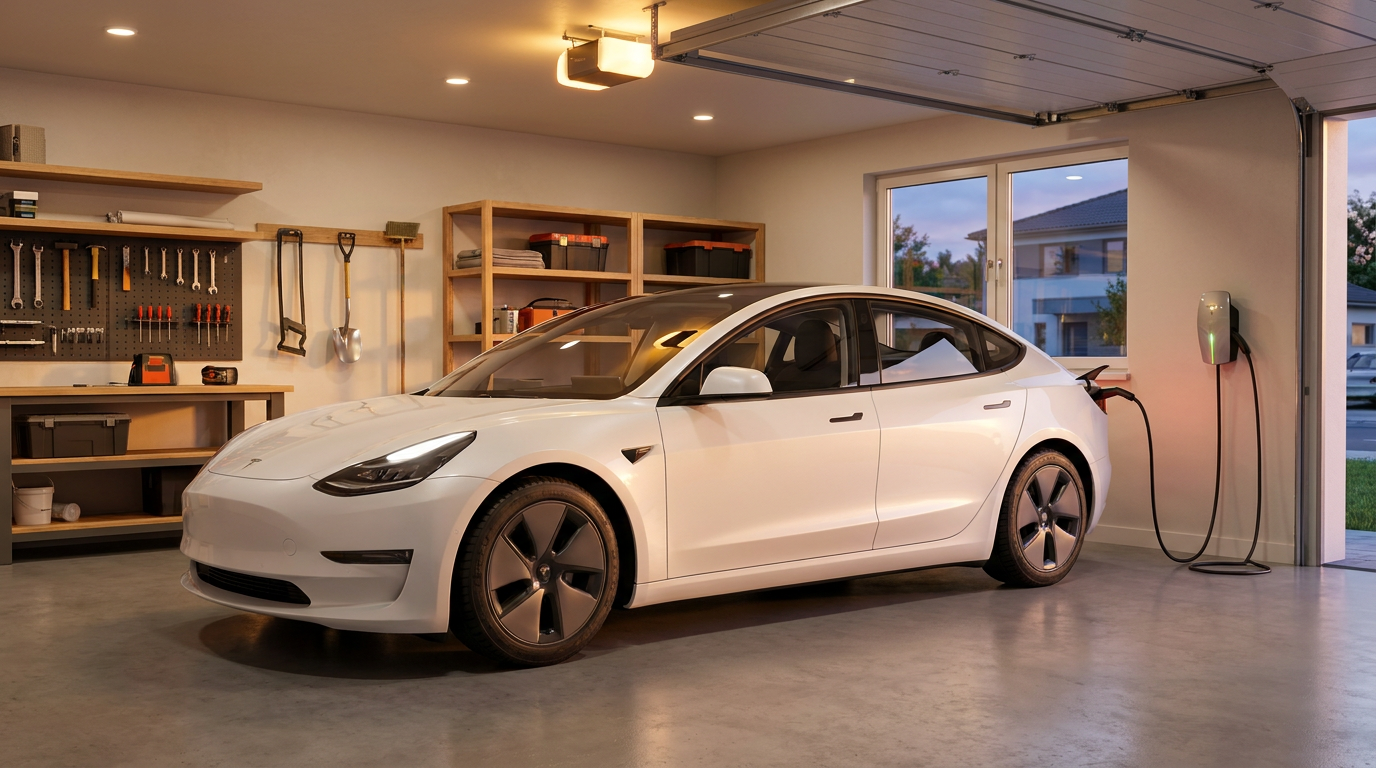
Fuel costs also present a stark contrast that depends entirely on user behavior and charging discipline. Charging an EV at home overnight on a standard utility rate costs roughly $640 annually for 12,000 miles of driving, saving the average driver over $800 a year compared to fueling a comparable gasoline vehicle. A PHEV can match these impressive daily savings, but only if the owner is disciplined enough to plug it in every single night. Industry data shows that if a PHEV owner fails to charge the battery regularly and relies solely on the gas engine, they are essentially driving a heavier, less aerodynamic, and less efficient gas car, entirely negating the financial and environmental benefits of the hybrid system.[2][4]
Ultimately, the pure EV fits perfectly when a buyer has reliable access to overnight home charging, drives more than 12,000 miles annually, and wants to lock in the lowest possible long-term maintenance and fueling costs. It is the ideal choice for multi-car households where the EV can serve as the primary daily commuter, absorbing the bulk of the family's mileage while charging cheaply in the garage. For drivers who prioritize cutting-edge technology, smooth acceleration, and a zero-emission lifestyle, the modern EV provides an unmatched ownership experience that continues to improve with over-the-air software updates.[6]
Conversely, a pure EV does not fit well when a driver relies entirely on public charging networks for their daily energy needs, lives in a dense apartment building with no dedicated charging infrastructure, or regularly drives hundreds of miles through rural corridors where fast chargers are sparse. Without the inherent convenience and substantial cost savings of overnight home charging, the EV ownership experience can quickly become a frustrating and expensive chore. Public fast chargers often cost significantly more per kilowatt-hour than residential electricity rates, which can rapidly erode the anticipated fuel savings that make EVs so financially attractive in the first place.[6]

The PHEV fits perfectly when a driver has a short, predictable daily commute that falls comfortably within a 40-mile electric range, but regularly takes weekend road trips into mountainous or rural areas where fast chargers are scarce or unreliable. It offers the psychological comfort of a gasoline backup while still drastically reducing daily tailpipe emissions and local air pollution. For one-car households that need a single vehicle to perform every possible duty—from short city errands in stop-and-go traffic to cross-country highway driving—the PHEV remains an incredibly versatile and pragmatic compromise that bridges the gap between two eras of automotive engineering.[5]
However, a PHEV does not fit well when the buyer has no intention or ability to plug it in every single night. Purchasing a plug-in hybrid without actively utilizing the electric battery simply results in higher upfront purchase costs, worse overall fuel economy due to the heavy battery's dead weight, and increased mechanical complexity for absolutely no tangible benefit. If a driver cannot commit to the daily charging routine, or lacks a dedicated driveway outlet, a standard, non-plug-in hybrid vehicle is a far more logical, efficient, and cost-effective choice for their specific lifestyle and driving habits.[4][6]
How we got here
2010
The Nissan Leaf and Chevy Volt launch, introducing modern BEVs and PHEVs to the mass market.
2020
Global EV and hybrid sales account for just 4% of all new car purchases.
2024
Battery prices drop significantly, allowing automakers to introduce more affordable EV models with 300+ mile ranges.
2026
Electrified vehicles reach a projected 27% of global new car sales, with price parity emerging in key segments.
Viewpoints in depth
EV Purists
Advocates who believe PHEVs are an unnecessary compromise that delays the transition to zero emissions.
From the perspective of EV purists, the plug-in hybrid is a technological half-measure that carries unnecessary dead weight. They argue that by forcing a vehicle to lug around both a heavy battery pack and a complex internal combustion engine, automakers are compromising the efficiency of both systems. Purists point to the rapidly expanding fast-charging network and the 300-plus mile range of modern EVs as proof that the gasoline safety net is no longer required for the vast majority of drivers. Furthermore, they emphasize that true environmental progress requires a complete break from fossil fuel infrastructure, rather than a prolonged transition period.
Pragmatic Hybrid Advocates
Drivers and analysts who view PHEVs as the most realistic solution for current infrastructure limitations.
Pragmatic advocates argue that PHEVs perfectly match the reality of how people actually drive. Since the average daily commute is under 40 miles, a PHEV covers 90 percent of a driver's annual mileage on pure electricity, while completely eliminating the stress of finding a working fast-charger during a 500-mile holiday road trip. They point out that building one massive 100-kWh battery for a single pure EV uses the same amount of lithium as building five 20-kWh batteries for five PHEVs. In an era of constrained battery supply chains, they argue that deploying more PHEVs is actually a faster way to reduce aggregate global gasoline consumption.
Cost-Conscious Consumers
Buyers focused strictly on the total cost of ownership and monthly budget impacts.
For cost-conscious buyers, the decision is a strict mathematical equation weighing upfront purchase price against long-term fuel and maintenance savings. This camp closely monitors the dropping prices of entry-level EVs like the Chevrolet Bolt, while also calculating the exact cost of residential electricity versus local gasoline prices. They are highly sensitive to the hidden costs of PHEVs, particularly the reality that failing to plug the vehicle in daily results in operating a heavy, inefficient gas car. For these consumers, the winning vehicle is simply the one that leaves the most money in their bank account at the end of a five-year loan.
What we don't know
- How quickly public fast-charging infrastructure will expand into deeply rural and historically underserved areas.
- Whether future solid-state battery technology will render current lithium-ion PHEVs obsolete by the end of the decade.
- How the used car market will value aging PHEVs once their complex dual-powertrains fall out of warranty.
Key terms
- BEV (Battery Electric Vehicle)
- A fully electric vehicle that operates exclusively on battery power and has no internal combustion engine or gas tank.
- PHEV (Plug-in Hybrid Electric Vehicle)
- A vehicle with both an electric motor and a gas engine, featuring a battery that can be plugged in for short electric-only trips.
- Range Anxiety
- The fear that an electric vehicle will run out of battery power before reaching a charging station or destination.
- Level 2 Charging
- A 240-volt charging system, commonly installed in homes, that can fully recharge an EV battery overnight.
- Regenerative Braking
- A system that captures the kinetic energy normally lost during braking and uses it to recharge the vehicle's battery.
Frequently asked
Do I need a special charger at home for an EV?
While you can plug an EV into a standard 120V wall outlet, it charges very slowly. Most owners install a Level 2 (240V) charger for faster overnight charging.
What happens if a PHEV runs out of battery?
The vehicle seamlessly switches to its gasoline engine and operates exactly like a traditional hybrid car until you plug it in again.
Are EVs really cheaper to maintain than gas cars?
Yes. EVs lack an internal combustion engine, meaning they never need oil changes, spark plugs, or transmission fluid, saving hundreds of dollars annually.
How long do EV batteries last?
Modern EV batteries are designed to last 10 to 15 years or up to 150,000 miles, and are federally mandated to carry an 8-year/100,000-mile warranty.
Sources
Source coverage
6 outlets
3 viewpoints surfaced






[1]BloombergNEFEV Purists
Electric Vehicle Outlook 2026
Read on BloombergNEF →[2]CarGurusCost-Conscious Consumers
The Cheapest Electric Vehicles in 2025 and 2026
Read on CarGurus →[3]Recurrent AutoEV Purists
Longest Range EVs in 2026
Read on Recurrent Auto →[4]ZenithPragmatic Hybrid Advocates
EV vs PHEV: What's the difference?
Read on Zenith →[5]CarExpertPragmatic Hybrid Advocates
Top 10 mid-size PHEV family SUVs in 2026
Read on CarExpert →[6]Factlen Editorial TeamCost-Conscious Consumers
Synthesis by Factlen editorial team
Read on Factlen Editorial Team →
Every angle. Every day.
Get guides stories with full source coverage and perspective breakdowns delivered to your inbox.