
How Solid-State Batteries Work: The Science Behind the Next EV Leap
By replacing flammable liquid electrolytes with solid ceramics or glass, next-generation batteries promise to double EV range, eliminate fire risks, and charge in minutes.
By Factlen Editorial Team
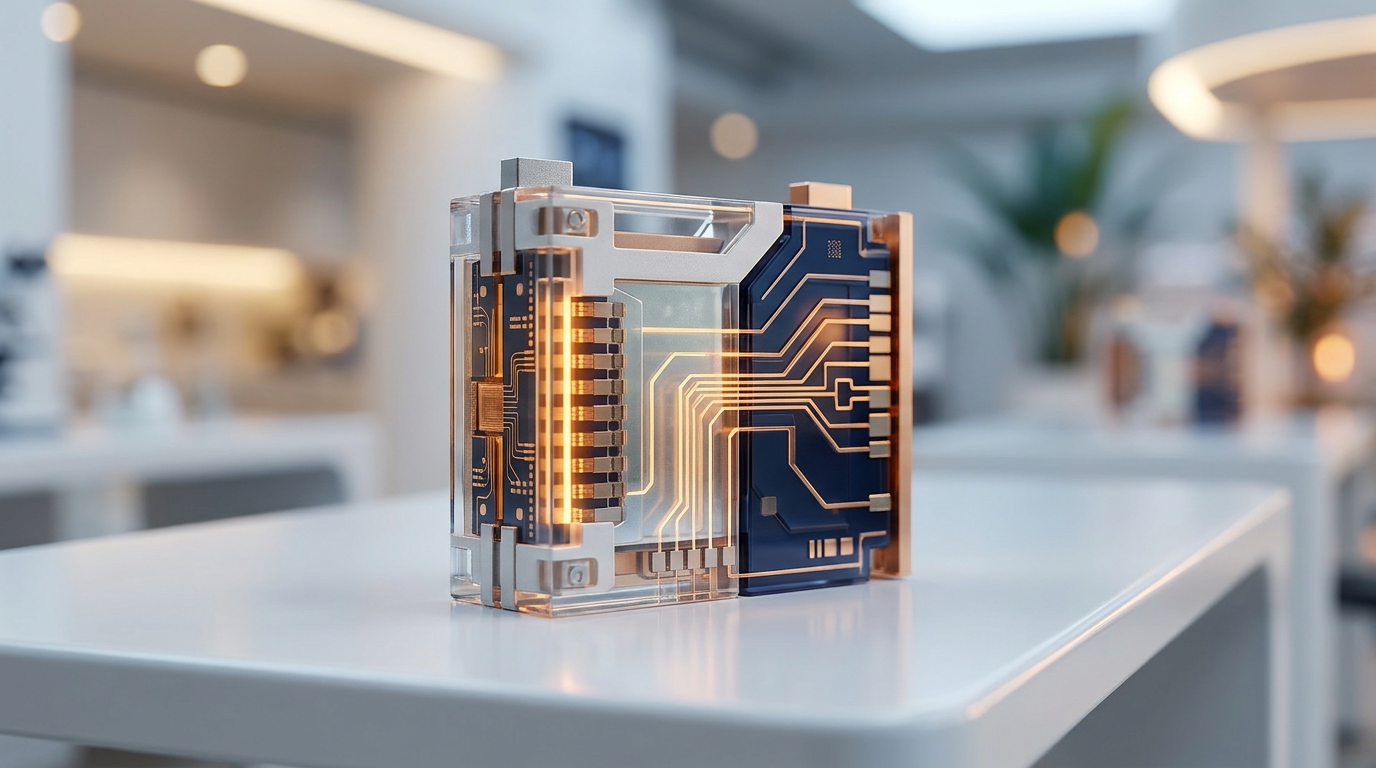
- Battery Researchers
- Focused on the fundamental material science, dendrite suppression, and safety improvements.
- Automakers & OEMs
- Focused on the commercial advantages of range extension and ultra-fast charging.
- Manufacturing Analysts
- Focused on the economic and industrial hurdles of scaling the technology.
What's not represented
- · Lithium mining communities
- · Independent repair shops
Why this matters
Solid-state batteries are the key to making electric vehicles lighter, safer, and capable of traveling over 600 miles on a single 15-minute charge, removing the final barriers to mass EV adoption.
Key points
- Solid-state batteries replace flammable liquid electrolytes with rigid ceramics or glass.
- The solid barrier prevents dendrite growth, allowing the use of high-capacity lithium-metal anodes.
- Energy density is expected to double, potentially pushing EV ranges past 600 miles.
- Manufacturing remains a challenge, requiring ultra-dry cleanrooms and new assembly techniques.
For over a decade, the lithium-ion battery has been the undisputed engine of the consumer electronics and electric vehicle revolutions. But as automakers push for longer ranges, faster charging, and lighter vehicles, traditional lithium-ion chemistry is brushing up against its physical limits.[2]
In 2026, the industry is crossing a critical threshold. Solid-state batteries—long considered the "holy grail" of energy storage—are finally migrating from laboratory test benches to real-world applications. Companies like Stellantis are now road-testing solid-state cells in North America, while aviation firms are successfully using them to power electric vertical takeoff and landing (eVTOL) aircraft.[3][4]
To understand why this shift is monumental, one must look inside a conventional lithium-ion cell. Every battery relies on three main components to function: a positive electrode (the cathode), a negative electrode (the anode), and an electrolyte that sits between them.[5]
In today's batteries, that electrolyte is a liquid solvent. When a battery charges or discharges, lithium ions swim back and forth through this liquid bath. While highly effective at conducting energy, this liquid is inherently volatile and flammable. Under extreme stress, heat, or physical damage, it can ignite, triggering a dangerous chain reaction known as thermal runaway.[1][5]

Solid-state batteries eliminate this vulnerability entirely by replacing the liquid bath with a rigid, non-flammable solid material—typically a specialized ceramic, glass, or sulfide compound. Because there is no combustible liquid, the safety profile improves dramatically. Thermal events in solid-state systems generally do not begin until internal temperatures reach roughly 247°C, compared to just 90°C for conventional lithium-ion cells.[1][4]
But safety is only half the story. The solid electrolyte also solves a microscopic menace known as "dendrites." In liquid batteries, repeated fast charging can cause lithium to build up unevenly on the anode, forming sharp, needle-like metallic spikes. If a dendrite grows long enough to pierce the internal separator and touch the cathode, it causes a catastrophic short circuit.[1][5]
If a dendrite grows long enough to pierce the internal separator and touch the cathode, it causes a catastrophic short circuit.
A solid electrolyte acts as a physical brick wall, suppressing dendrite growth. This mechanical resistance unlocks the true superpower of solid-state technology: it allows engineers to swap out the bulky graphite anode used in today's batteries for an anode made of pure lithium metal.[1][2]

Lithium metal stores vastly more energy than graphite. By making this swap, solid-state batteries can achieve energy densities of 400 to 500 watt-hours per kilogram (Wh/kg), nearly double the 200–260 Wh/kg limit of current premium lithium-ion cells.[4]
For the consumer, this translates to a paradigm shift in performance. An electric vehicle equipped with a solid-state pack could travel 1,000 kilometers (over 600 miles) on a single charge without increasing the physical size or weight of the battery. Furthermore, because solid materials tolerate higher electrical currents, these batteries can safely fast-charge from 10% to 80% in just 10 to 15 minutes.[3][4]

They also conquer the cold. Traditional liquid electrolytes become sluggish in freezing temperatures, sapping EV range during winter. Solid-state cells maintain their structural integrity and ion flow in extreme weather, with some prototypes retaining over 70% of their capacity at a blistering -30°C.[3]
Despite these massive advantages, widespread commercialization faces steep manufacturing hurdles. The primary engineering challenge is "interfacial resistance." In a liquid battery, the fluid naturally coats every microscopic crevice of the electrodes. In a solid-state battery, pressing two solid materials together perfectly without leaving microscopic air gaps is incredibly difficult, and any gap restricts the flow of power.[1][2]
Then there is the cost. Currently, manufacturing an all-solid-state pack is estimated to be three to five times more expensive than producing a standard lithium-ion pack. The materials are exotic, and the assembly requires ultra-dry cleanrooms, as even trace amounts of ambient moisture can ruin sulfide-based solid electrolytes.[2][4]

Because of these hurdles, the transition will not be an overnight flip. The industry is currently seeing the rollout of "semi-solid" or hybrid batteries, which use a mostly solid structure with a tiny amount of gel to bridge the microscopic gaps and ease manufacturing.[1]
However, the momentum is undeniable. With major automakers validating the technology on public roads and battery giants filing patents for mass-production techniques, the solid-state era has officially begun. Over the next decade, this invisible chemical swap promises to make range anxiety and battery fires relics of the past.[3][6]
How we got here
1991
Sony commercializes the first rechargeable lithium-ion battery, revolutionizing portable electronics.
2010s
Solid-state research accelerates as the automotive industry demands higher energy densities for EVs.
2024
Automakers begin validating early solid-state prototypes in controlled laboratory environments.
Early 2026
Stellantis and Factorial begin real-world road testing of solid-state cells in North America.
Mid 2026
Chinese aviation firms successfully deploy 480 Wh/kg solid-state batteries in eVTOL aircraft.
Viewpoints in depth
Battery Chemists & Researchers
Focused on the fundamental material science and safety improvements.
For materials scientists, the solid-state transition is primarily a victory over battery degradation and thermal instability. By replacing volatile organic liquids with stable ceramics or sulfides, researchers have effectively neutralized the threat of thermal runaway. Their current focus has shifted from proving the concept to solving "interfacial resistance"—ensuring the solid electrolyte maintains perfect, microscopic contact with the electrodes as the battery expands and contracts during charging.
Automakers & OEMs
Focused on the commercial advantages of range extension and fast charging.
Car manufacturers view solid-state chemistry as the ultimate competitive moat. The ability to pack 500 Wh/kg into a vehicle means automakers can either double the range of their flagship models to over 600 miles, or drastically shrink the battery pack to make cheaper, lighter, and more efficient commuter cars. For OEMs, the priority is integrating these cells into existing vehicle architectures and proving their durability in extreme weather conditions, as seen in recent North American road tests.
Manufacturing Analysts
Focused on the economic and industrial hurdles of scaling the technology.
Industry analysts caution that a working lab prototype is vastly different from a mass-market product. Manufacturing solid-state batteries requires entirely new assembly lines, specialized equipment, and ultra-dry cleanrooms, as ambient moisture can destroy sulfide-based electrolytes. Analysts project that until economies of scale are reached, these batteries will carry a 300% to 500% cost premium, meaning they will likely debut exclusively in luxury vehicles and aerospace applications before trickling down to the mass market.
What we don't know
- Exactly how quickly manufacturing costs will fall to reach parity with traditional lithium-ion cells.
- Which solid electrolyte material (sulfides, oxides, or polymers) will ultimately dominate the mass market.
- How the long-term degradation of solid-state cells will perform over a 15-year vehicle lifespan in real-world conditions.
Key terms
- Electrolyte
- The medium inside a battery that allows ions to flow between the positive and negative sides during charging and discharging.
- Anode
- The negative electrode of a battery where current flows in from the outside circuit.
- Dendrite
- Microscopic, needle-like metallic spikes that can grow inside a liquid battery and cause dangerous short circuits.
- Energy Density
- A measure of how much power a battery can store relative to its weight, usually expressed in watt-hours per kilogram (Wh/kg).
- Thermal Runaway
- A dangerous, unstoppable chain reaction where a battery overheats and catches fire, often triggered by a short circuit or physical damage.
Frequently asked
Will solid-state batteries make electric cars cheaper?
Not immediately. Because they require new manufacturing techniques and ultra-dry cleanrooms, early solid-state batteries will be significantly more expensive than traditional lithium-ion cells. Costs are expected to drop as production scales in the 2030s.
How fast can a solid-state battery charge?
Because solid materials can handle higher electrical currents without overheating, solid-state batteries are projected to safely fast-charge from 10% to 80% in just 10 to 15 minutes.
Are solid-state batteries completely fireproof?
While no energy storage device is entirely without risk, solid-state batteries eliminate the highly flammable liquid solvents found in current batteries, making them vastly safer and highly resistant to thermal runaway.
When can I buy a car with a solid-state battery?
While some semi-solid hybrid batteries are entering the market now, fully solid-state passenger vehicles are expected to debut in luxury models around 2027 or 2028, with mass-market availability likely in the early 2030s.
Sources
Source coverage
6 outlets
3 viewpoints surfaced






[1]Battery Tech OnlineBattery Researchers
Lithium solid-state batteries promise higher energy density and safety
Read on Battery Tech Online →[2]IDTechExManufacturing Analysts
Solid-State Batteries: A Technological Leap
Read on IDTechEx →[3]ElectrekAutomakers & OEMs
Solid-state EV batteries are now being tested on the road in North America
Read on Electrek →[4]Bonnen BatteriesAutomakers & OEMs
Solid-State Batteries: The Hot Topic of 2026
Read on Bonnen Batteries →[5]Flash BatteryBattery Researchers
What are solid-state batteries and how do they work
Read on Flash Battery →[6]Factlen Editorial TeamManufacturing Analysts
Synthesis by Factlen editorial team
Read on Factlen Editorial Team →

More in guides
See all 52 stories →Local AI
How to Run AI Models Locally: The 2026 Guide to Digital Independence
7 sources

Exercise Science
The Science of Zone 2 Training: Why the Slowest Cardio Builds the Strongest Engine
7 sources

Battery Tech
How Solid-State Batteries Work—And Why They Are Finally Ready to Change EVs
7 sources
AI Developer Tools
Cursor vs. GitHub Copilot vs. Codeium: The 2026 AI Coding Assistant Trade-Offs
8 sources

Every angle. Every day.
Get guides stories with full source coverage and perspective breakdowns delivered to your inbox.