
How 'Psychobiotics' and Precision Nutrition Are Targeting Mental Health
Emerging research into the gut-brain axis is shifting how scientists treat cognitive health, using targeted dietary interventions to influence neurotransmitter production and reduce brain fog.
By Factlen Editorial Team
- Microbiome Researchers
- Focused on identifying specific bacterial strains and mapping the biochemical pathways that link the gut to the brain.
- Precision Nutrition Advocates
- Argue that generic dietary advice is obsolete and that mental health interventions must be tailored to individual microbial DNA.
- Clinical Skeptics
- Emphasize the gap between preclinical promise and human trials, warning against the commercial hype of over-the-counter psychobiotics.
What's not represented
- · Commercial Supplement Manufacturers
- · Patients with Treatment-Resistant Depression
Why this matters
As rates of anxiety and cognitive fatigue remain high, the ability to treat mental health through personalized, evidence-based dietary changes offers a non-pharmaceutical tool that empowers patients to take control of their cognitive well-being.
Key points
- Psychobiotics are specific strains of bacteria being studied for their ability to improve mood and reduce cognitive fatigue.
- The gut microbiome produces key neurotransmitters, including an estimated 90% of the body's serotonin.
- Beneficial bacteria ferment dietary fiber into short-chain fatty acids (SCFAs), which reduce neuroinflammation.
- Precision nutrition uses DNA sequencing to tailor dietary interventions to an individual's unique microbiome.
- While preclinical results are highly promising, experts warn that commercial supplements often outpace rigorous human trial data.
For decades, the conversation around nutrition and mental health was largely anecdotal, relegated to vague advice about eating well to feel well. Today, that conversation has moved into the laboratory. Researchers are mapping the precise biological pathways that connect the food on our plates to the neurochemistry of our brains. At the center of this shift is a rapidly expanding field of study focused on "psychobiotics"—live microorganisms that, when ingested in adequate amounts, confer specific mental health benefits to the host.[1][5]
The concept represents a significant evolution from the broad, general-purpose probiotics that have populated pharmacy shelves for years. Instead of simply aiming to improve digestion, psychobiotics are being investigated for their ability to actively modulate mood, reduce anxiety, and alleviate cognitive fatigue, commonly known as brain fog. This targeted approach is part of a broader movement toward precision nutrition, which abandons one-size-fits-all dietary advice in favor of personalized interventions based on an individual's unique biological makeup.[3][5]
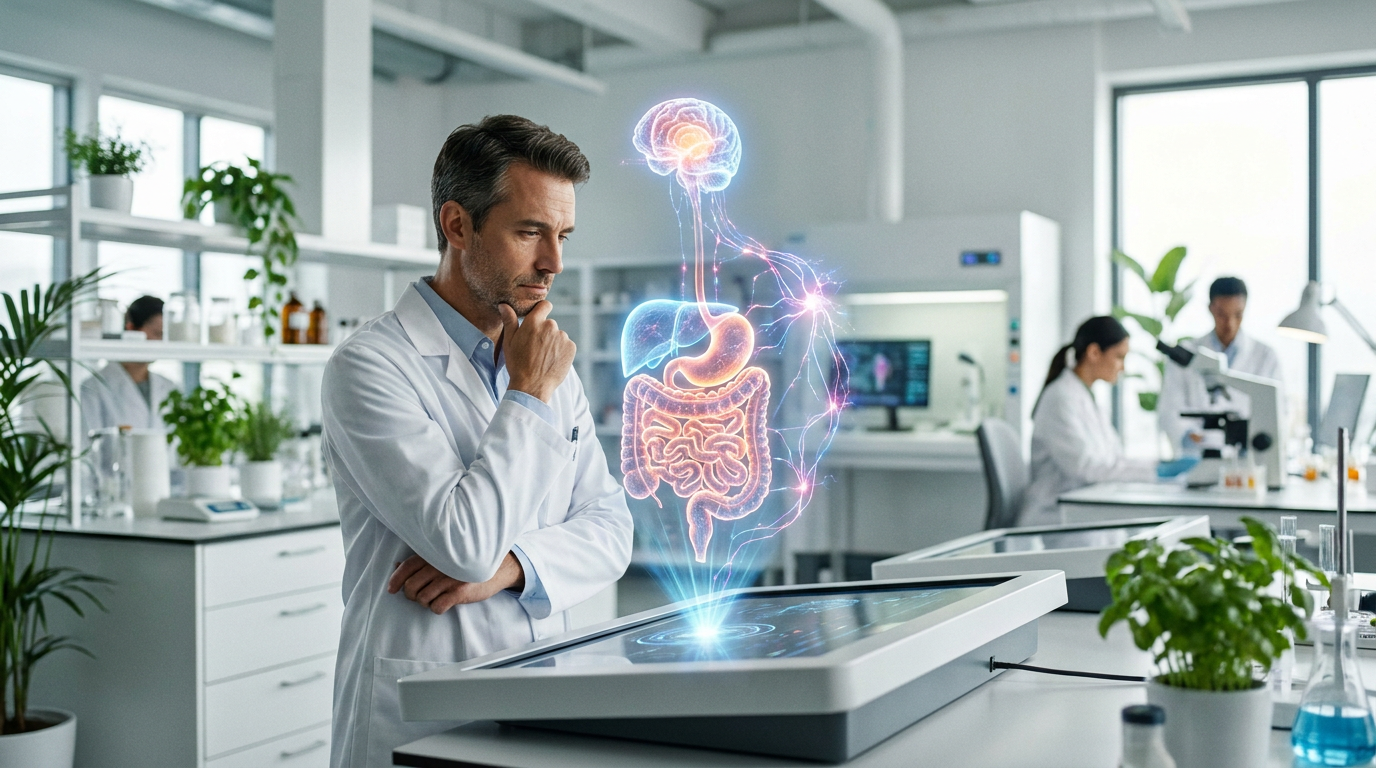
To understand how a bacterium in the colon can influence a thought in the brain, scientists point to the gut-brain axis. This bidirectional communication network links the central nervous system with the enteric nervous system of the gastrointestinal tract. The connection is both physical, via the vagus nerve that runs directly from the brainstem to the abdomen, and chemical, facilitated by the circulatory system.[1][2]
The gut microbiome—the ecosystem of trillions of bacteria, viruses, and fungi residing in the digestive tract—acts as a massive biochemical factory within this network. These microbes synthesize a vast array of neuroactive compounds. In fact, an estimated 90% of the body's serotonin, a neurotransmitter crucial for regulating mood and sleep, is produced in the digestive tract, alongside other vital chemicals like dopamine and gamma-aminobutyric acid (GABA).[1][5]

When the microbiome is balanced and diverse, this factory runs smoothly, supporting optimal cognitive function. However, when the ecosystem falls into a state of dysbiosis—an imbalance often triggered by poor diet, chronic stress, or antibiotic use—the production of these beneficial compounds drops. Simultaneously, harmful microbes can trigger systemic inflammation, which travels through the bloodstream, crosses the blood-brain barrier, and manifests as neuroinflammation. Researchers increasingly link this inflammatory state to depression, anxiety, and cognitive decline.[4][5]
The primary mechanism by which psychobiotics exert their positive effects is through the production of short-chain fatty acids (SCFAs), such as butyrate, propionate, and acetate. When specific beneficial bacteria ferment dietary fiber in the lower intestine, they release these SCFAs as a metabolic byproduct.[2]
SCFAs are molecular multitaskers. They serve as the primary energy source for the cells lining the colon, helping to maintain a tight intestinal barrier that prevents toxins from leaking into the bloodstream. Beyond the gut, SCFAs have been shown to cross the blood-brain barrier, where they promote neurogenesis—the growth of new neurons—and exert potent anti-inflammatory effects on brain tissue.[2][4]
Clinical trials are beginning to isolate which specific bacterial strains offer the most profound cognitive benefits. Strains such as Lactobacillus rhamnosus and Bifidobacterium longum have emerged as frontrunners in recent literature. In randomized, placebo-controlled studies, participants receiving these specific strains demonstrated measurable reductions in cortisol, the body's primary stress hormone, alongside self-reported improvements in mood and mental endurance.[1][3]

Clinical trials are beginning to isolate which specific bacterial strains offer the most profound cognitive benefits.
However, the science of psychobiotics is colliding with the reality of human biological diversity. A strain of bacteria that reduces anxiety in one person might have zero effect on another. This variability is driving the integration of psychobiotics with precision nutrition. Because every individual's microbiome is as unique as a fingerprint, researchers argue that interventions must be equally customized.[3][4]
Advanced metataxonomic testing is making this level of personalization possible. By sequencing the DNA or RNA of the microbes in a patient's stool sample, clinicians can map the exact composition and activity of their microbiome. This high-resolution snapshot reveals not just which bacteria are present, but what those bacteria are actively doing—which genes they are expressing and which metabolites they are producing.[3][5]
Armed with this data, nutritionists and physicians can design highly targeted dietary protocols. If a patient's microbiome is deficient in butyrate-producing bacteria, the intervention might involve a specific prebiotic fiber known to feed those exact strains, alongside a tailored psychobiotic supplement. Recent clinical trials utilizing this precision approach have shown promising results, with participants in personalized nutrition cohorts demonstrating significant improvements in both intestinal health indicators and cognitive symptoms over a 12-week period.[3]

Despite the optimism surrounding the gut-brain axis, the field faces substantial hurdles. The commercial supplement industry has moved much faster than the peer-reviewed science, flooding the market with products labeled as "mood-boosting probiotics" that often lack rigorous clinical validation. Many over-the-counter supplements do not contain the specific strains used in research, or they fail to deliver the bacteria alive to the lower intestine.[1][5]
Furthermore, while animal models have provided clear evidence of the gut-brain connection, translating these findings to complex human populations remains challenging. Current quantification methods often struggle with low sensitivity when detecting trace neuroactive metabolites in human circulation, making it difficult to definitively prove that a specific psychobiotic directly altered brain chemistry in a living patient.[2][5]
The consensus among researchers is that psychobiotics and precision nutrition should not be viewed as standalone cures for psychiatric conditions. Instead, they represent a powerful, emerging pillar of preventive medicine and adjunctive therapy. By optimizing the gut microbiome through targeted dietary interventions, patients can build a stronger biological foundation for mental resilience.[4][5]
As the cost of microbiome sequencing continues to fall and machine learning algorithms become better at predicting microbial behavior, the integration of precision nutrition into standard psychiatric care appears increasingly likely. The era of treating the brain in isolation is ending, replaced by a holistic understanding that mental health begins, quite literally, in the gut.[3][5]
How we got here
2013
The term 'psychobiotics' is first coined by researchers to describe live organisms that produce mental health benefits.
2018
Large-scale studies confirm that gut bacteria are responsible for producing the vast majority of the body's serotonin.
2022
Advances in metataxonomic sequencing allow for affordable, high-resolution mapping of individual human microbiomes.
2024
Major clinical trials begin testing personalized dietary interventions specifically for cognitive health and anxiety reduction.
2026
Precision nutrition programs utilizing targeted psychobiotics enter mainstream clinical trials as adjunctive therapies.
Viewpoints in depth
Microbiome Researchers
Focused on identifying specific bacterial strains and mapping the biochemical pathways that link the gut to the brain.
For microbiologists, the excitement surrounding psychobiotics lies in the tangible biochemical mechanisms at play. Rather than viewing mental health purely through the lens of brain chemistry, this camp emphasizes the foundational role of the gut as a chemical factory. They point to the production of short-chain fatty acids (SCFAs) like butyrate as the critical bridge between digestion and cognition. By proving that these gut-derived metabolites can cross the blood-brain barrier to stimulate neurogenesis and lower inflammation, researchers are establishing a concrete biological rationale for why dietary fiber is essential for mental well-being.
Precision Nutrition Advocates
Argue that generic dietary advice is obsolete and that mental health interventions must be tailored to individual microbial DNA.
Advocates for precision nutrition argue that the era of the 'one-size-fits-all' diet is over. Because the human microbiome is highly individualized—shaped by genetics, environment, and lifestyle—they believe that generic probiotic supplements are largely ineffective. Instead, this camp champions the use of metataxonomic sequencing to map a patient's specific microbial deficiencies. By identifying exactly which bacterial strains are missing or underperforming, clinicians can prescribe targeted prebiotic fibers and psychobiotic strains, turning food into a highly calibrated medical intervention.
Clinical Skeptics
Emphasize the gap between preclinical promise and human trials, warning against the commercial hype of over-the-counter psychobiotics.
While acknowledging the validity of the gut-brain axis, clinical skeptics urge caution regarding how quickly the science is being commercialized. This camp highlights that much of the foundational evidence for psychobiotics comes from animal models, and translating those results to complex human populations is fraught with variables. They warn that the supplement industry frequently markets 'mood-boosting' probiotics that lack rigorous, large-scale, placebo-controlled human trials. For these experts, psychobiotics remain a promising adjunctive therapy, but they stress that patients should not abandon traditional psychiatric care in favor of unproven commercial supplements.
What we don't know
- The exact dosage and duration required for specific psychobiotic strains to produce lasting cognitive changes in humans.
- How individual genetic differences in human hosts interact with introduced psychobiotic bacteria.
- The long-term effects of permanently altering a patient's core microbiome through aggressive precision nutrition protocols.
Key terms
- Psychobiotics
- Live microorganisms that confer mental health benefits to the host when consumed in adequate amounts.
- Gut-Brain Axis
- The bidirectional communication network linking the central nervous system with the digestive tract.
- Short-Chain Fatty Acids (SCFAs)
- Metabolites produced when gut bacteria ferment dietary fiber, known for their anti-inflammatory and neuroprotective properties.
- Dysbiosis
- An imbalance in the gut microbiome, often characterized by a loss of beneficial bacteria and an overgrowth of harmful microbes.
- Precision Nutrition
- A dietary approach that tailors food and supplement recommendations to an individual's unique biological and genetic profile.
- Metataxonomic Testing
- A high-resolution sequencing method used to identify the specific types and activity levels of microbes present in a sample.
- Vagus Nerve
- A major cranial nerve that serves as the primary physical superhighway connecting the brain stem directly to the abdomen.
Frequently asked
What exactly is a psychobiotic?
A psychobiotic is a specific strain of live bacteria (a probiotic) that, when ingested in adequate amounts, produces a measurable mental health benefit, such as reduced anxiety or improved cognitive function.
Can I get psychobiotics from regular food?
Yes, fermented foods like kimchi, kefir, and miso contain beneficial bacteria that can support the gut-brain axis, though clinical trials often use highly concentrated, specific strains in supplement form to achieve targeted results.
How long does it take for dietary changes to affect the microbiome?
While the microbiome can begin to shift within a few days of a major dietary change, clinical trials measuring cognitive improvements from precision nutrition typically run for 8 to 12 weeks.
Are commercial microbiome tests accurate enough to use?
Advanced metataxonomic sequencing used in clinical settings is highly accurate at identifying microbial DNA, but the interpretation of that data for commercial consumer diets is still an evolving science.
Sources
Source coverage
5 outlets
3 viewpoints surfaced





[1]Frontiers in MicrobiologyMicrobiome Researchers
Psychobiotics and the Gut-Brain Axis: A Review of Clinical Trials
Read on Frontiers in Microbiology →[2]National Institutes of HealthMicrobiome Researchers
Dietary fiber, short-chain fatty acids, and cognitive function
Read on National Institutes of Health →[3]ClinicalTrials.govPrecision Nutrition Advocates
Precision Nutrition Recommendations Generated by Metataxonomic Microbiome Testing
Read on ClinicalTrials.gov →[4]CellPrecision Nutrition Advocates
Redefining the Core Microbiome for Precision Health
Read on Cell →[5]Factlen Editorial TeamClinical Skeptics
Synthesis by Factlen editorial team
Read on Factlen Editorial Team →
More in health
See all 5 stories →Nutritional Psychiatry
The Evidence for Nutritional Psychiatry: How the Gut-Brain Axis Affects Mental Health
6 sources

Clinical Guidelines
How Structured Exercise is Becoming a First-Line Prescription for Depression
6 sources

Gut-Brain Axis
The Emerging Science of Nutritional Psychiatry: How the Gut-Brain Axis is Reshaping Mental Health Treatment
7 sources
Every angle. Every day.
Get health stories with full source coverage and perspective breakdowns delivered to your inbox.