
How Open-Source Intelligence is Democratizing Global Security and Accountability
The practice of analyzing publicly available data has evolved from a niche hobby into a core intelligence discipline, empowering citizens and agencies alike to track environmental crimes and verify global events.
By Factlen Editorial Team
- Citizen Investigators & NGOs
- OSINT is a democratizing force that empowers civil society to hold powerful actors accountable.
- Traditional Intelligence Agencies
- OSINT is a foundational layer of intelligence that must be integrated with classified collection methods.
- Academic & Reliability Skeptics
- The explosion of public data amplifies traditional intelligence challenges, particularly regarding verification and bias.
What's not represented
- · Privacy advocates concerned about the mass scraping of personal data
- · Individuals wrongly accused by amateur online investigations
Why this matters
The monopoly on global intelligence gathering has been broken. By understanding how public data is used to verify facts, readers can better navigate the modern information landscape and recognize how civil society is holding powerful actors accountable.
Key points
- Open-Source Intelligence (OSINT) now accounts for an estimated 80% to 90% of all actionable intelligence.
- Commercial satellite imagery and public data scraping have democratized intelligence gathering for NGOs and citizen journalists.
- Digital investigators are successfully using OSINT to track environmental crimes like illegal logging and wildlife trafficking.
- The U.S. Intelligence Community recently launched a major strategy to integrate unclassified public data into its legacy systems.
- Academic researchers warn that the sheer volume of public data requires rigorous new methods for verification and reliability scoring.
- Artificial intelligence is becoming essential to filter out disinformation and process OSINT at scale.
The era of the trench-coat spy is increasingly being supplemented by the laptop researcher. Open-Source Intelligence (OSINT)—the practice of gathering and analyzing publicly available data—has quietly become the dominant force in global information gathering. According to academic assessments, between 80% and 90% of all actionable intelligence is now derived from open sources rather than classified espionage. What was once considered a secondary discipline has moved to the absolute center of how the world understands complex events.[6][8]
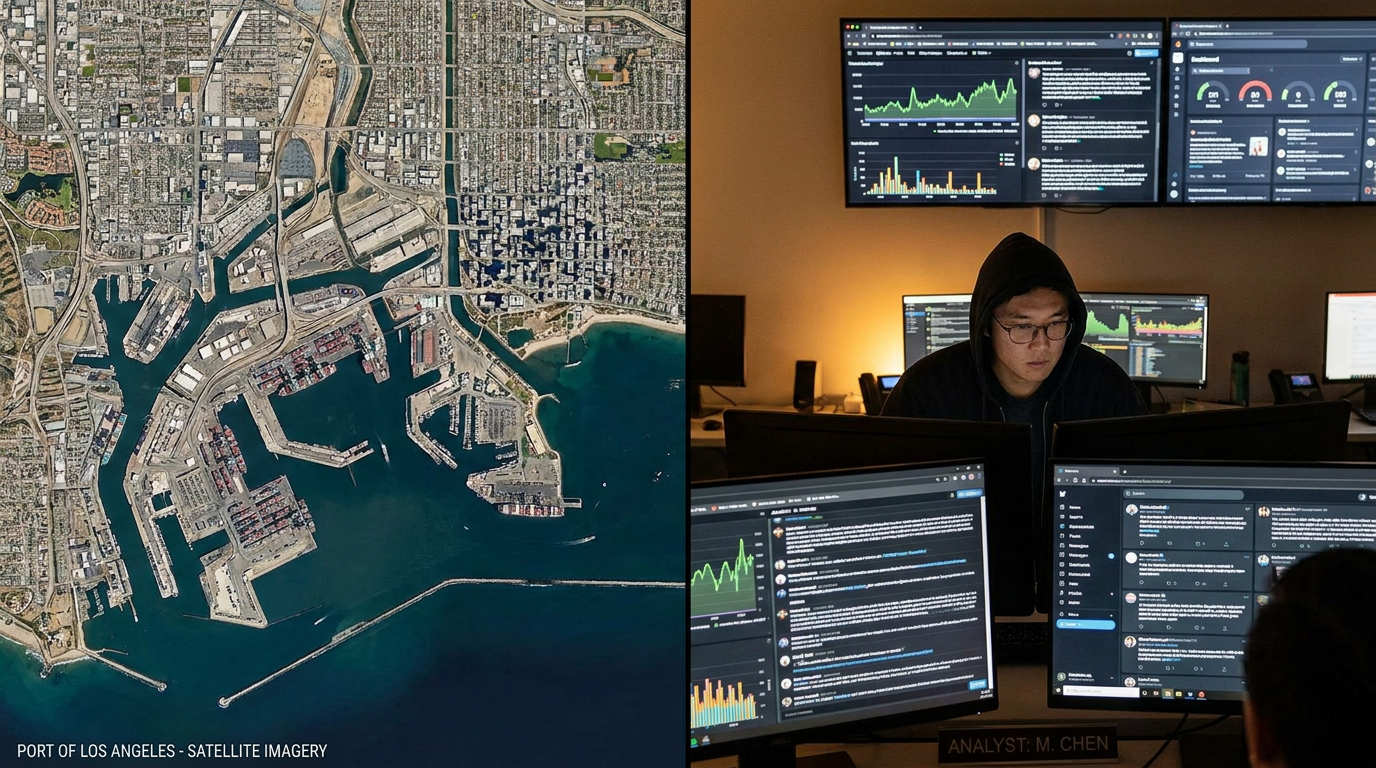
This shift represents a profound democratization of capability. Tools that were once the exclusive domain of state military and intelligence agencies—such as high-resolution satellite imagery, global flight tracking, and advanced data scraping—are now accessible to anyone with an internet connection. This accessibility has empowered a new generation of citizen journalists, non-governmental organizations (NGOs), and independent researchers to uncover truths that previously would have remained hidden behind state secrecy or corporate obfuscation.[4][5][8]
The impact is particularly visible in the fight against environmental crime. Traditional law enforcement often struggles to police remote ecosystems, but digital investigators are filling the gap. Initiatives like the EU-funded ECO-SOLVE project are deploying artificial intelligence alongside OSINT to track the illegal wildlife trade and monitor deforestation. By analyzing commercial shipping databases, social media posts from poachers, and satellite changes in forest canopy, these groups can map illicit supply chains in real-time.[2][4][8]
Beyond environmental protection, OSINT has fundamentally altered conflict monitoring and human rights investigations. During the buildup to the 2022 invasion of Ukraine, citizen journalists and media outlets utilized commercial satellite feeds and social media geolocation to expose troop movements, preempting official state narratives. This crowd-sourced approach to accountability allows independent observers to document potential human rights abuses with a level of evidentiary rigor that can hold up in international courts.[5][7]

The effectiveness of these public investigations has forced a reckoning within traditional government intelligence apparatuses. In 2024, the U.S. Intelligence Community (IC) and the Department of Defense released foundational strategies to elevate OSINT to a core discipline, placing it alongside traditional Human Intelligence (HUMINT) and Signals Intelligence (SIGINT). The goal is to establish a federated enterprise that can rapidly ingest and analyze the exponential growth of publicly available information.[1][6]
However, integrating OSINT into legacy government systems presents a severe structural challenge. The U.S. intelligence apparatus was built in the 1940s to collect, protect, and distribute classified secrets to a small circle of cleared individuals. OSINT, by definition, is unclassified. The cultural and technical shift required to value open data—and to build systems capable of sharing it broadly across unclassified government networks—remains a significant hurdle for agencies accustomed to operating in the shadows.[1][6][8]
However, integrating OSINT into legacy government systems presents a severe structural challenge.
The commercial sector is also capitalizing on the OSINT boom. Corporate intelligence firms are increasingly deploying open-source methodologies to gain the upper hand in complex commercial dispute resolutions, insurance claims involving political violence, and corporate due diligence. The ability to synthesize disparate public records into a cohesive, admissible evidence pack has made OSINT a highly lucrative and effective tool in the private sector.[7][8]
Despite the enthusiasm, academic researchers caution against viewing OSINT as a flawless silver bullet. Studies published by Cambridge University Press argue that the explosion of public data has not inherently revolutionized intelligence; rather, it has amplified traditional challenges. The primary hurdles facing modern digital investigators are information overload and the rigorous verification of reliability.[3][8]

The open nature of the internet makes OSINT highly vulnerable to pollution. Analysts must constantly navigate a landscape littered with deliberate disinformation, sophisticated deepfakes, and outdated records. Unlike a controlled classified sensor, a social media feed carries no inherent guarantee of authenticity. Consequently, the value of OSINT relies entirely on the methodology used to verify it.[3][4][5]
To address this, the intelligence community and academic researchers are developing advanced cognitive models and machine-learning tools designed to assign objective "reliability scores" to open-source data. These systems cross-reference new claims against historical accuracy, established facts, and independent reports, attempting to filter out the noise and reduce human cognitive bias in the analysis process.[3][8]
The proliferation of OSINT also introduces complex ethical and legal gray areas. The aggressive scraping of social media and public databases borders on privacy infringement, raising questions about the balance between public accountability and individual data rights. As commercial platforms tighten their application programming interfaces (APIs) to protect user data, OSINT practitioners face an ongoing cat-and-mouse game to maintain access to crucial information streams.[7][8]

Looking ahead, the trajectory of OSINT is inextricably linked to the advancement of artificial intelligence. AI is becoming essential to process the sheer volume of global data, translating foreign languages in real-time, and identifying patterns invisible to human analysts. While this will make open-source investigations faster and more comprehensive, it will also necessitate new frameworks for transparency and accountability in how conclusions are drawn.[1][2][8]
Ultimately, the rise of Open-Source Intelligence represents a permanent shift in the global information ecosystem. The power to monitor, verify, and hold actors accountable is no longer the exclusive monopoly of the state. It is now distributed across a global network of digital investigators, fundamentally altering the balance of power between those who seek to hide illicit activities and those determined to expose them.[4][5][8]
How we got here
1940s
The U.S. establishes the Foreign Broadcast Monitoring Service to analyze public propaganda, an early form of OSINT.
2005
The U.S. government establishes the Open Source Center to better integrate public data into national security.
Early 2022
Citizen journalists use commercial satellite imagery to expose the buildup of military forces prior to the invasion of Ukraine.
March 2024
The U.S. Intelligence Community publishes its first-ever comprehensive OSINT strategy to standardize the discipline.
Viewpoints in depth
Citizen Investigators & NGOs
OSINT is a democratizing force that empowers civil society to hold powerful actors accountable.
This camp views the proliferation of open-source tools as a fundamental shift in global accountability. By leveraging commercially available satellite imagery, social media scraping, and public databases, non-state actors can bypass official government narratives. They argue that transparency is the ultimate weapon against environmental crime, human rights abuses, and corporate malfeasance, effectively crowdsourcing the role of the traditional intelligence analyst to the global public.
Traditional Intelligence Agencies
OSINT is a foundational layer of intelligence that must be integrated with classified collection methods.
For government intelligence professionals, OSINT is less of a revolution and more of a critical evolution in data collection. They view publicly available information as the 'first resort' that cues more specialized, classified sensors like human intelligence (HUMINT) or signals intelligence (SIGINT). Their primary focus is on standardizing tradecraft, building secure architectures to ingest unclassified data, and ensuring that open-source findings are rigorously vetted before influencing national security policy.
Academic & Reliability Skeptics
The explosion of public data amplifies traditional intelligence challenges, particularly regarding verification and bias.
Researchers and academic skeptics caution against treating OSINT as an infallible source of truth. They highlight that the internet is rife with disinformation, deepfakes, and outdated records. This camp emphasizes that the sheer volume of data leads to information overload, making rigorous methodological verification essential. They advocate for the development of cognitive models and AI-driven reliability scoring to prevent analysts from falling victim to confirmation bias when sifting through unstructured public data.
What we don't know
- How commercial platforms tightening their data access (APIs) will impact the future capabilities of independent OSINT researchers.
- Where the legal boundary will ultimately be drawn between legitimate open-source intelligence gathering and unlawful privacy infringement.
Key terms
- Open-Source Intelligence (OSINT)
- Intelligence derived exclusively from publicly or commercially available information.
- Human Intelligence (HUMINT)
- Information gathered by human sources, traditionally associated with covert espionage.
- Signals Intelligence (SIGINT)
- Intelligence gathered by intercepting electronic signals and communications.
- Geolocation
- The process of identifying the real-world geographic location of an object or event shown in a photo or video.
- Publicly Available Information (PAI)
- Data that anyone can legally access, ranging from social media posts to corporate registries.
Frequently asked
What exactly is Open-Source Intelligence (OSINT)?
OSINT is the practice of collecting and analyzing publicly available information—such as satellite imagery, social media posts, and public records—to generate actionable intelligence.
How do citizen journalists use OSINT?
Independent researchers use commercially available tools to verify events, track environmental crimes, and document human rights abuses, often bypassing official state narratives.
Why are traditional spy agencies focusing on public data?
Because the vast majority of global data is now generated publicly, intelligence agencies are integrating OSINT to cue their classified sensors and share insights more easily across unclassified networks.
How do investigators verify open-source information?
Analysts cross-reference multiple independent data points, use geolocation techniques, and increasingly deploy AI tools to filter out disinformation and assign reliability scores to public claims.
Sources
Source coverage
8 outlets
3 viewpoints surfaced







[1]Center for Strategic and International StudiesTraditional Intelligence Agencies
The U.S. Intelligence Community's New Open-Source Strategy
Read on Center for Strategic and International Studies →[2]Global Initiative Against Transnational Organized CrimeCitizen Investigators & NGOs
ECO-SOLVE: Enhanced Solutions for Tackling Environmental Crimes
Read on Global Initiative Against Transnational Organized Crime →[3]European Journal of International SecurityAcademic & Reliability Skeptics
Evolution, not revolution: Open-Source Intelligence and the challenges of digital investigations
Read on European Journal of International Security →[4]World Customs OrganizationTraditional Intelligence Agencies
Open-Source Intelligence (OSINT) for Customs Enforcement
Read on World Customs Organization →[5]Al Jazeera Media InstituteCitizen Investigators & NGOs
Open-Source Investigations: Using open-source intelligence in journalism
Read on Al Jazeera Media Institute →[6]American Public University SystemAcademic & Reliability Skeptics
Open Source Intelligence: The Foundation of All Intelligence
Read on American Public University System →[7]S-RM Intelligence
OSINT In Dispute Resolution: Applying Public Tools To Private Disputes
Read on S-RM Intelligence →[8]Factlen Editorial Team
Synthesis by Factlen editorial team
Read on Factlen Editorial Team →

More in defense security
See all 15 stories →Humanitarian Tech
How AI and Drones Are Accelerating Humanitarian Demining
7 sources
Combat Medicine
The End of the Golden Hour? How Autonomous Tech is Rewriting Combat Medicine
7 sources

Demining Tech
How AI and Drones Are Rewriting the Rules of Humanitarian Demining
5 sources

Open-Source Intelligence
The Democratization of Intelligence: How Open-Source Data is Reshaping Global Security
6 sources

Every angle. Every day.
Get defense security stories with full source coverage and perspective breakdowns delivered to your inbox.