
How Local AI Tools Are Democratizing Privacy-First Intelligence on Consumer Laptops
Advances in model compression and plug-and-play software have made it possible to run powerful AI models entirely offline. Here is how tools like LM Studio and Ollama are shifting AI from cloud servers to personal devices.

In short
- Local AI tools allow users to run language models entirely offline on consumer laptops.
- Quantization compresses massive models to fit within 8 GB to 16 GB of standard RAM.
- Running models locally ensures absolute data privacy and eliminates recurring API costs.
The narrative surrounding artificial intelligence has shifted dramatically over the past few years. While the early 2020s were defined by a race toward massive cloud-based models controlled by a handful of tech giants, 2026 has definitively become the year of the local model.
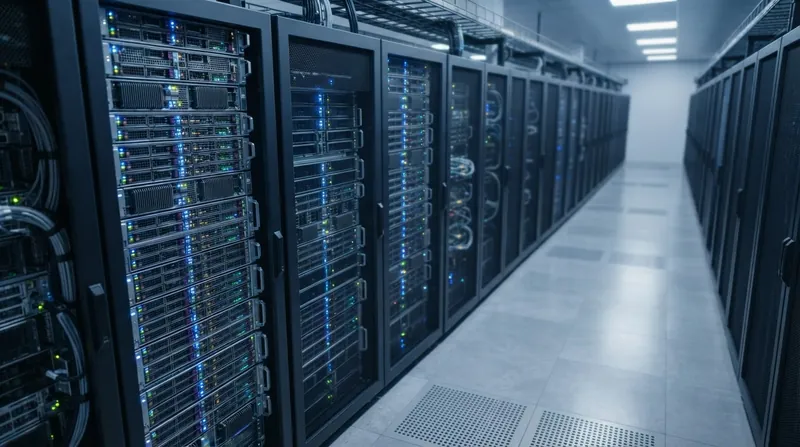
For a long time, accessing cutting-edge generative AI meant sending every prompt, document, and line of code to a remote server. This centralized approach offered incredible convenience but came with significant trade-offs regarding data sovereignty and recurring costs. Now, a vibrant open-source ecosystem has matured, fundamentally changing how developers and everyday users interact with machine learning.
Users across industries have realized that relying on a third-party API for their daily workflows introduces a fundamental risk to both privacy and operational stability. When a cloud provider experiences an outage or decides to deprecate a specific model version, businesses built on top of those APIs can grind to a halt. This realization has fueled an explosion in the quality and accessibility of open-source AI models, making it possible for individuals and small businesses to maintain complete control over their digital intelligence without sacrificing performance.
The primary mechanism making this local revolution possible is a mathematical compression technique known as quantization. In its raw form, a large language model requires massive amounts of memory to store the precise weights of its neural network.
Quantization reduces the precision of these weights—often shrinking them down to 4-bit or 8-bit formats—which drastically reduces the overall file size and the memory required to run the model. By optimizing the architecture in this way, a massive model originally intended for a sprawling data center can run efficiently on a high-end desktop or even a standard consumer laptop.
In 2026, advanced quantization methods, particularly those utilizing the GGUF format, have become incredibly sophisticated. These modern techniques selectively preserve the most important parts of the neural network at higher precision while compressing the rest. The result is a surprisingly small impact on the model's actual intelligence and reasoning capabilities. This means users no longer have to settle for a significantly "weaker" version of AI just because they are running it on their own hardware; the optimized local models perform remarkably close to their uncompressed counterparts.
Because of these compression breakthroughs, the hardware requirements for running artificial intelligence have plummeted. Today, a highly capable 8-billion parameter model—such as Meta's Llama 3 8B or Alibaba's Qwen series—can run comfortably on a machine with just 8 GB of RAM or unified memory. This puts enterprise-grade text generation, summarization, and coding assistance within reach of almost anyone with a modern laptop, completely bypassing the need for expensive, specialized graphics cards for routine tasks.[1]
For larger, more capable models—like a 70-billion parameter system designed for complex reasoning and multi-step agentic workflows—users still need more substantial hardware. Running these massive models typically requires around 40 GB of Video RAM (VRAM), which means investing in dedicated desktop GPUs or renting specialized cloud instances. However, industry experts note that for 90 percent of daily tasks, including high-volume document processing, classification, and drafting, the smaller 8-billion to 12-billion parameter models are more than sufficient and highly cost-effective.
Alongside the advancements in model compression, the software ecosystem for local AI has undergone a massive transformation. Just a few years ago, running a local model required navigating complex command-line installations, managing Python dependencies, and troubleshooting obscure hardware errors. Today, that friction has been entirely removed by a new generation of intuitive, plug-and-play interfaces that make downloading and running an AI model as simple as installing a standard desktop application.[2]
Tools like LM Studio have led this charge by providing a polished graphical user interface that looks and feels remarkably similar to cloud-based chatbots like ChatGPT. Users can browse a built-in catalog of the latest open-source models, compare their specifications, click a single download button, and immediately start chatting. The software handles all the complex hardware optimization in the background, making local AI accessible to non-technical users, writers, and researchers who simply want a private assistant.[2]
For software developers and system administrators, Ollama has emerged as the undisputed go-to solution for local inference. Operating primarily via simple one-line terminal commands, Ollama allows users to pull and run models instantly. More importantly, it provides an OpenAI-compatible API out of the box. This means developers can take their existing applications that were built to communicate with cloud APIs and redirect them to their local Ollama server by simply changing the endpoint URL, requiring virtually no code rewrites.[1][2]
Another highly popular alternative in the local AI space is Jan AI, which bridges the gap between raw open-source model execution and polished user interfaces. Jan AI offers a complete, 100% offline alternative to commercial chatbots, prioritizing privacy-first usage while giving users the freedom to choose exactly how their AI runs. These intuitive tools collectively ensure that regardless of a user's technical expertise or background, there is a frictionless, accessible path to running powerful language models locally.[2]
The models themselves have evolved at a staggering pace, rapidly catching up to their proprietary, cloud-based counterparts in both reasoning and generation. Releases like Meta's Llama series, Google's Gemma, and Mistral's open-weight models offer performance that rivals—and in some specific benchmarks, exceeds—the capabilities of closed-source services. This parity means that choosing to run a model locally is no longer a compromise on quality; it is a strategic decision about infrastructure, privacy, and long-term control.
The primary driver accelerating this local adoption is the critical need for data sovereignty. When an artificial intelligence model runs locally on a user's machine, the prompts, documents, and generated responses never leave that specific device. There is no telemetry sent to a corporate server, no risk of data being used to train future models, and no vulnerability to external data breaches. For many organizations, this absolute control over data flow is not just a preference, but a strict requirement.[2]
This level of privacy is especially crucial for law firms, healthcare institutions, and financial organizations that handle highly sensitive, regulated information. Sending patient records, unreleased commercial data, or proprietary source code to a third-party cloud API is often a non-starter due to strict compliance laws like HIPAA or GDPR. Local AI provides these industries with a way to leverage the massive productivity gains of generative AI without violating their regulatory obligations or compromising client trust.[2]
Beyond privacy, cost predictability is another major factor driving the shift away from the cloud. Cloud-based AI APIs charge per token—meaning every word sent to the model and every word generated by it incurs a micro-transaction. For a project that processes millions of documents, categorizes massive datasets, or runs continuous automated workflows, these API costs can quickly spiral out of control and become prohibitively expensive for small teams.[2]
With local inference, the economic model flips entirely. The only significant cost is the initial capital expenditure to purchase the necessary hardware, such as a laptop with sufficient unified memory or a desktop with a dedicated graphics card. After that initial investment, the usage is entirely unlimited. Whether a user generates ten tokens or ten million tokens, the marginal cost of inference effectively drops to zero, making local AI the most rational choice for high-volume, well-bounded tasks.[2]
Local models also offer a massive advantage when it comes to speed and latency. When using a cloud API, every request must travel across the internet to a remote data center, be processed, and travel back. This network transit adds hundreds of milliseconds of delay before the first word is even generated. A local inference server, sitting directly on the user's workstation or local network, eliminates this network latency entirely, responding in mere tens of milliseconds.[2]
This near-instantaneous response time is particularly vital for interactive applications where every millisecond counts. Real-time coding assistants, voice-to-text dictation tools, and fast-paced agentic workflows all benefit immensely from the zero-latency environment provided by local hardware. When the AI is running on the same machine as the user's code editor or word processor, the interaction feels seamless and deeply integrated into the operating system.[2]
Furthermore, running models locally protects developers and businesses from the frustrating phenomenon known as "model drift." In the cloud ecosystem, providers frequently update their backend models to improve safety or efficiency. However, these silent updates can unexpectedly alter the model's behavior, breaking carefully crafted prompts or causing automated workflows to fail overnight. By running a local model, users lock in a specific, unchanging version of intelligence that remains consistent forever.
While it is true that local models are not yet better than the absolute largest frontier models at the most complex, multi-step reasoning tasks, the gap is closing rapidly. Many enterprise architectures now employ a hybrid approach: they use expensive cloud APIs for the genuinely hard, complex reasoning work, and route the vast majority of high-volume, routine tasks to their fast, free, and private local models.[3]
Ultimately, the democratization of artificial intelligence relies on open access and decentralized execution. By moving AI workflows from distant server farms to personal laptops and office workstations, users gain unparalleled privacy, unshakeable consistency, and a level of customization that no service-based model can provide. For the vast majority of everyday tasks, the combination of speed, security, and zero ongoing costs makes local AI the definitive future of personal computing.[3]
Key terms
- Quantization
- A mathematical compression technique that reduces the precision of an AI model's weights, allowing massive models to run on standard consumer hardware with minimal loss in quality.
- VRAM (Video RAM)
- The dedicated memory on a graphics card, which is crucial for loading and running large AI models quickly.
- Open-Weight Model
- An AI model where the underlying architecture and trained parameters are made publicly available, allowing anyone to download and run it locally.
- Model Drift
- The phenomenon where a cloud-based AI model's behavior changes over time due to silent updates by the provider, potentially breaking user workflows.
- Inference
- The process of a trained AI model generating a response or prediction based on a user's prompt.
Frequently asked
Do I need an expensive graphics card to run local AI?
Not necessarily. While a dedicated GPU speeds up response times, modern tools like Ollama and LM Studio can run smaller models (like Llama 3 8B) on standard laptops with 8 GB to 16 GB of RAM using CPU optimization.
Is local AI completely free?
Yes. The software tools and the open-weight models are free to download and use. Your only expense is the hardware you run them on and the electricity to power it.
Can I use local AI without an internet connection?
Absolutely. Once the model file and the software are downloaded to your machine, the entire system runs offline, ensuring complete privacy and zero network latency.
Are local models as smart as ChatGPT?
For most daily tasks like drafting emails, summarizing documents, and basic coding, optimized local models perform comparably to standard cloud models. However, the absolute largest cloud models still hold an edge in highly complex reasoning.
Viewpoints in depth
Privacy Advocates & Enterprise Users
Prioritize data sovereignty and compliance over raw model scale.
For organizations handling sensitive data—such as healthcare providers, law firms, and financial institutions—sending proprietary information to third-party cloud APIs is often a non-starter due to regulatory compliance and security risks. This camp views local AI not just as a cost-saving measure, but as a mandatory architecture for digital sovereignty. They argue that the slight dip in reasoning capabilities compared to frontier cloud models is a worthwhile trade-off for absolute control over where data flows.
Open-Source Developers
Value the flexibility, customization, and lack of vendor lock-in.
The developer community champions local AI for its tinker-friendly nature. Without API rate limits or restrictive terms of service, developers can fine-tune models on custom datasets, adjust underlying parameters, and build complex agentic workflows. This group emphasizes that relying on cloud providers introduces 'model drift'—where silent backend updates break existing applications—and sees local, version-controlled models as the only stable foundation for long-term software development.
Cloud AI Providers
Argue that the heaviest reasoning tasks still require massive data center compute.
While acknowledging the rise of local tools, proponents of cloud-based AI maintain that the most complex reasoning, coding, and multi-modal tasks still require models too large to fit on consumer hardware. They point out that deploying a 1-trillion parameter model requires infrastructure that only tech giants can afford. From this perspective, local AI is excellent for routine, high-volume tasks, but cloud APIs will remain necessary for cutting-edge intelligence and enterprise-scale orchestration.
- Privacy & Enterprise Advocates
- Prioritize data sovereignty and compliance, viewing local AI as mandatory for sensitive information.
- Open-Source Developers
- Value the flexibility, lack of vendor lock-in, and ability to tinker with local models.
- Cloud Compute Proponents
- Maintain that the most advanced reasoning tasks will always require data center scale.
Perspectives this story doesn't cover
- Hardware manufacturers benefiting from increased local compute demand
- Regulators monitoring open-source AI safety
Sources
Source coverage
3 outlets
3 viewpoints surfaced



- [1]DataCampOpen-Source Developers
How to Set Up and Run Llama 3 Locally With Ollama and GPT4ALL
Read on DataCamp → - [2]Claro Digital ServicesPrivacy & Enterprise Advocates
Ollama vs LM Studio vs Jan: Local LLM Comparison
Read on Claro Digital Services → - [3]Factlen Editorial TeamCloud Compute Proponents
Synthesis by Factlen editorial team
Read on Factlen Editorial Team →

More in Artificial Intelligence
See all →AI Liability
Explainer: How Wrongful Death Lawsuits Against OpenAI, Google, and Character.AI Are Testing AI Liability
3 sources

Chip Wars
Nvidia Unveils 'Vera' Data Center CPU and 'RTX Spark' PC Chip, Directly Challenging Intel and AMD
4 sources

AI Output Control
Logit Division Preserves Token Ranking While Rescaling Probability Gaps: How Temperature Controls AI Output
5 sources

AI Memory Optimization
The Memory Bottleneck in Large Language Models: How Grouped-Query Attention Solves the KV Cache Problem
3 sources
Comments
Every angle. Every day.
Get Artificial Intelligence stories with full source coverage and perspective breakdowns, free every day.