
How Inclusive Design Became the Gaming Industry's New Standard
Driven by hardware innovations and comprehensive software guidelines, accessibility in video games has evolved from a niche afterthought into a core pillar of modern development.
By Factlen Editorial Team
- Accessibility Advocates & Charities
- Argues that gaming is a universal right and pushes for systemic hardware and software inclusivity.
- Hardware Manufacturers
- Focuses on developing scalable, customizable first-party devices while balancing production costs and platform security.
- Disabled Gamers & Community Modders
- Values practical, immediate solutions, cross-platform compatibility, and affordability, often filling gaps left by major studios.
- Inclusive Design Analysts
- Emphasizes the 'curb cut effect,' noting that accessible design improves the overall user experience and expands the market for all players.
What's not represented
- · Independent developers struggling with the budget to implement advanced accessibility features
- · Medical professionals studying the rehabilitative effects of specific adaptive gaming setups
Why this matters
With an estimated 450 million disabled gamers worldwide, the shift toward accessible design ensures that millions of people are no longer locked out of one of the world's most important mediums for socialization, storytelling, and community building.
Key points
- Accessibility in gaming has transitioned from a post-launch afterthought to a core design pillar in 2026.
- Hardware innovations like the Xbox Adaptive Controller and Sony Access controller allow players to customize their physical inputs.
- Software frameworks like the Game Accessibility Guidelines provide developers with a clear roadmap for inclusive design.
- The 'curb cut effect' means that accessibility features, such as remappable controls and scalable UI, ultimately benefit the entire gaming population.
- Despite progress, the high cost of specialized adaptive equipment remains a significant barrier for many disabled players.
Video games are often celebrated as a universal medium, offering unparalleled avenues for socialization, storytelling, and rehabilitation. Yet, for decades, the physical and sensory barriers imposed by standard controllers and rigid software interfaces left millions of players locked out of these digital worlds. We are now witnessing a profound transformation. In 2026, accessibility in gaming has officially transitioned from a niche afterthought into a core pillar of industry design. Driven by grassroots advocacy, technological innovation, and a growing recognition of the market's sheer size, major studios are fundamentally rethinking how players interact with their products. The stakes are immense: industry estimates suggest that nearly 450 million people with some form of disability play video games globally. For these players, inclusive design is not merely a matter of convenience; it is the difference between participating in a shared cultural touchstone and being entirely excluded.[1][7]
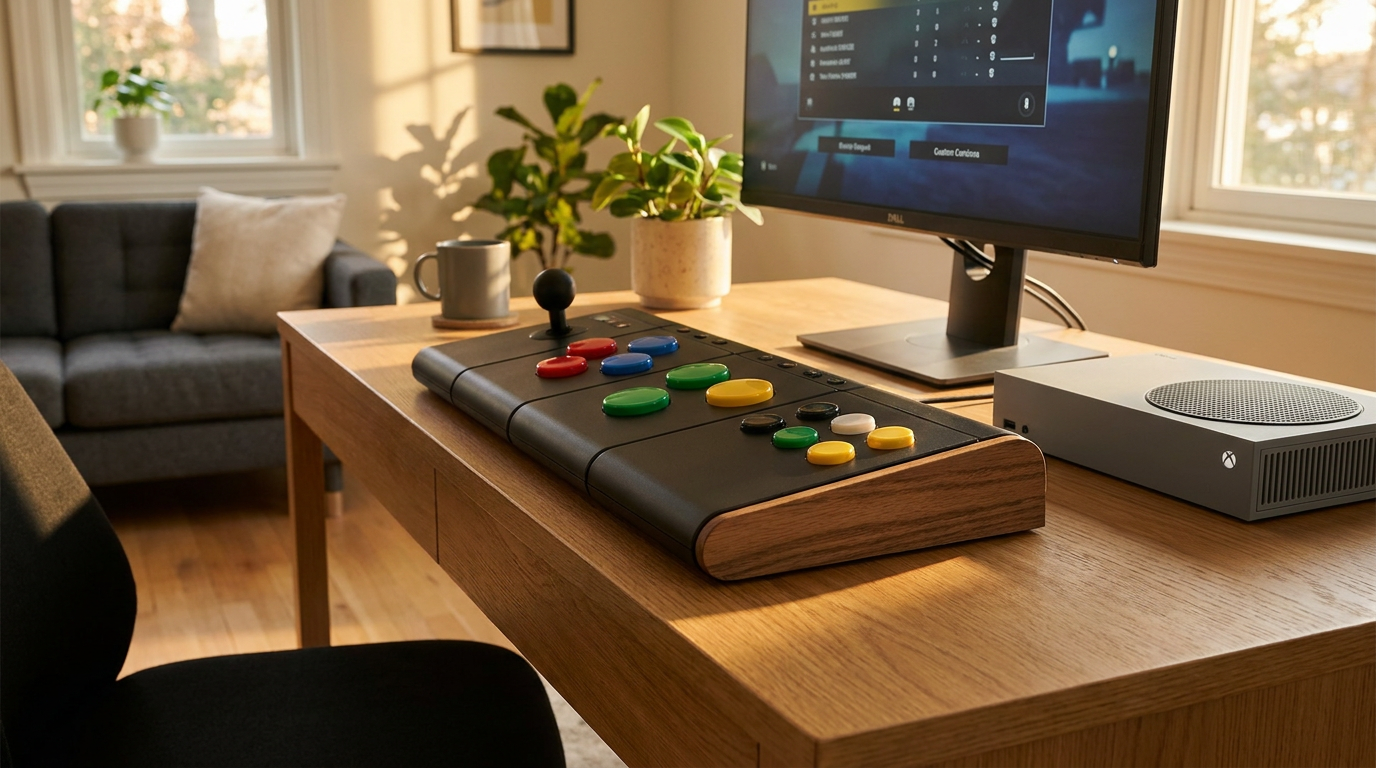
The push for inclusive gaming hardware began to gain mainstream traction with the launch of the Xbox Adaptive Controller. Developed in close collaboration with disability awareness groups like AbleGamers, the device served as a highly customizable hub. Featuring a flat, keyboard-like design with two large programmable buttons and numerous distinct ports, it allowed players with limited dexterity to plug in external switches, pedals, and joysticks tailored to their specific mobility needs. This modular approach proved revolutionary, demonstrating that major console manufacturers could successfully design hardware that adapted to the player, rather than forcing the player to adapt to the hardware. Sony eventually followed suit, releasing the PlayStation Access controller. Designed as a circular, highly configurable device that can rest flat on a wheelchair tray, the Access controller allows users to swap out button caps and thumbsticks to suit their unique physical requirements.[1][2]
Hardware innovation has only accelerated into 2026, moving beyond one-size-fits-all solutions toward hyper-personalized, community-driven designs. Recently, Xbox expanded its accessibility ecosystem by updating its Adaptive Thumbstick Topper Program. The initiative allows players to use digital design labs to customize and download 3D-printable thumbstick attachments that support various grip styles and mobility requirements. Based directly on feedback from the disabled gaming community, the 2026 updates introduced a more secure attachment mechanism to withstand higher-force gameplay and a highly requested "goalpost" shape to help stabilize hand movements. This iterative, open-source approach to hardware signifies a shift toward continuous collaboration between manufacturers and the players who rely on their devices.[1][4]

The momentum extends well beyond North American console giants, reflecting a global shift in how the industry supports its player base. In South Korea, the publisher Kakao Games recently garnered governmental commendations for its assistive-device support program, dedicated specifically to game accessibility. Over the past three years, the program has successfully matched nearly a hundred disabled players with over 600 customized hardware solutions, ranging from advanced eye-tracking sensors to specialized mouth-operated quadsticks. By partnering with rehabilitation centers and nonprofits, these initiatives demonstrate that providing the right hardware can effectively erase the physical barriers that disabled individuals often face in offline spaces, opening up new avenues for friendship and shared challenges in virtual environments.[4]
However, specialized hardware is only half of the accessibility equation; if the software itself is fundamentally exclusionary, the most advanced controller in the world cannot bridge the gap. To address this, the industry has increasingly rallied around standardized frameworks, most notably the Game Accessibility Guidelines. Created as a collaborative living document by studios, academics, and accessibility specialists, the guidelines provide developers with a straightforward reference for inclusive game design. The framework categorizes features into basic, intermediate, and advanced tiers, offering a clear roadmap for implementing crucial software adjustments. These range from simple fixes like ensuring text is presented in a readable, sans-serif font with high contrast, to more complex adaptations like providing separate volume sliders for dialogue, music, and sound effects.[3][5]
To address this, the industry has increasingly rallied around standardized frameworks, most notably the Game Accessibility Guidelines.
Beyond physical and visual accommodations, the industry is increasingly recognizing the importance of cognitive accessibility. For players who process information differently due to learning disabilities or neurodivergence, overly complex user interfaces and punishing difficulty spikes can create insurmountable walls. To address this, modern game design is embracing flexible gameplay systems that reduce cognitive overload. This includes the implementation of structured, replayable tutorials, the ability to review past dialogue, and the option to disable complex quick-time events or repetitive button-mashing sequences. By offering granular difficulty settings—such as allowing players to adjust enemy health, game speed, or puzzle complexity independently—developers are ensuring that games remain challenging and engaging without becoming needlessly frustrating.[3][5][6]

Visual and auditory accessibility have also seen substantial standardization. For visually impaired players, the focus has shifted from simple colorblind filters—which often just apply a blanket color wash over the screen—to more thoughtful, high-contrast modes that highlight enemies, interactive objects, and critical pathing in distinct, customizable colors. Scalable user interfaces and readable, dyslexia-friendly fonts are becoming baseline expectations rather than post-launch additions. On the auditory front, developers are moving beyond basic subtitles. Best practices now dictate that subtitles should include speaker identification, directional indicators for off-screen sounds, and customizable text sizes and backgrounds. Furthermore, crucial gameplay cues are increasingly designed to provide both visual and auditory feedback simultaneously, ensuring that players who are deaf or hard of hearing are never at a disadvantage.[3][5][6]
As developers integrate these software guidelines earlier in the production cycle, we are seeing the widespread realization of the "curb cut effect"—the phenomenon where features designed specifically for people with disabilities end up benefiting the broader population. In the physical world, sidewalk curb cuts designed for wheelchair users also assist parents with strollers and delivery workers. In the digital realm, the same principle applies. Features like fully remappable controls, scalable user interfaces, and robust subtitle options were initially championed by accessibility advocates to assist players with motor, visual, or auditory impairments. Today, these features are widely utilized by the general gaming audience for comfort, convenience, or simply to play a game quietly in a shared living space.[4][5][7]

The software landscape is also being reshaped by the rapid integration of artificial intelligence and community-driven modding, particularly for visually impaired players. Historically, navigating complex three-dimensional environments without visual feedback was nearly impossible, leaving blind gamers reliant on a very narrow selection of audio-only titles. Recently, however, there has been a significant boom in AI-assisted accessibility mods. Independent developers and passionate community members have released dozens of modifications for mainstream games, utilizing AI tools to patch in screen-reader support, dynamic audio navigation cues, and environmental descriptions that the original developers omitted. While these grassroots efforts highlight the incredible ingenuity of the disabled gaming community, they also underscore a lingering gap in official support.[3][6]
Visibility and discoverability represent another critical frontier in the fight for inclusive gaming. For years, disabled players had to rely on word-of-mouth, specialized review sites, or trial-and-error to determine if a game would actually be playable for them. To eliminate this friction, digital storefronts are overhauling how they communicate accessibility features to consumers. Major platforms have begun implementing standardized accessibility tags directly on their digital stores, allowing users to filter games by specific criteria such as customizable volume controls, single-stick gameplay, or colorblind modes. Industry advocates are currently pushing for all publishers to stop treating accessibility settings as closely guarded marketing secrets, ensuring that disabled players have the information they need before making a purchase.[6]
Despite these massive strides, the path toward total inclusivity remains fraught with significant challenges, most notably the steep financial barriers associated with adaptive gaming. While standard controllers are already a considerable investment, specialized adaptive hardware is notoriously expensive. Devices like the major adaptive hubs retail around ninety to one hundred dollars, but they often require the purchase of additional external switches, mounts, and joysticks to be fully functional for a specific user. More complex setups, such as mouth-operated controllers or advanced eye-tracking systems, can easily run into hundreds or even thousands of dollars. For a demographic that already faces substantial additional living costs, the high price of entry remains one of the most stubborn obstacles to truly accessible gaming.[2][4][7]

Furthermore, the consolidation of accessible hardware around proprietary corporate ecosystems has generated friction within the community. While the major console manufacturers have made commendable progress in developing first-party adaptive devices, their broader platform policies can sometimes undermine those efforts. For instance, recent moves by hardware giants to block unlicensed third-party accessories from connecting to their consoles have disproportionately impacted disabled players, many of whom rely on highly specific, custom-built, or legacy devices that lack official licensing. As we look to the future, accessibility advocates are calling for a more open, platform-agnostic approach. A major goal for the coming years is the development of a universal, multi-platform accessibility controller—a device that would allow a disabled player to invest in a single, customized hardware setup that works seamlessly across all major ecosystems.[6][7]
How we got here
2012
The Game Accessibility Guidelines are first introduced to provide a centralized reference for inclusive design.
2018
Microsoft launches the Xbox Adaptive Controller, bringing customizable accessibility hardware to the mainstream console market.
2023
Sony releases the PlayStation Access controller, offering a highly configurable, circular device for gamers with limited dexterity.
May 2026
Xbox updates its 3D-printable Adaptive Thumbstick Topper Program with new, community-requested shapes and secure attachments.
2026
Digital storefronts increasingly adopt standardized accessibility tags, allowing players to filter games by specific inclusive features before purchasing.
Viewpoints in depth
Accessibility Advocates
Argues that gaming is a universal right and pushes for systemic inclusivity across all platforms.
Advocacy groups and charities emphasize that accessibility is not a bonus feature, but a fundamental requirement for digital inclusion. They argue that the burden of accessibility should not fall on the disabled player to purchase expensive, custom-built hardware, but rather on developers to build flexible, inclusive software from day one. These groups actively lobby for standardized storefront tags, cross-platform hardware compatibility, and the elimination of proprietary lock-ins that prevent players from using their preferred assistive devices.
Hardware Manufacturers
Focuses on developing scalable, customizable first-party devices while balancing production costs and platform security.
Major console creators view accessibility as both a moral imperative and a significant market opportunity. They highlight their investments in first-party adaptive hubs and open-source 3D-printing initiatives as proof of their commitment to the disabled community. However, they also face the challenge of balancing these specialized, lower-volume hardware runs with overall production costs. Furthermore, manufacturers often defend their restrictive third-party accessory policies as necessary measures to prevent cheating and maintain platform security, even when those policies inadvertently impact disabled players.
Disabled Gamers & Community Modders
Values practical, immediate solutions and affordability, often filling gaps left by major studios.
For the players themselves, the focus is on immediate playability and financial accessibility. When official support falls short, this community frequently takes matters into its own hands, utilizing AI tools and open-source software to mod screen readers and high-contrast modes into mainstream titles. They are highly vocal about the 'disability tax'—the exorbitant cost of building a functional adaptive setup—and are the primary voices demanding that accessibility settings be revealed long before a game's launch so they can make informed purchasing decisions.
What we don't know
- Whether major console manufacturers will eventually collaborate to create a universal, cross-platform accessibility controller.
- How quickly AI-driven accessibility features, like real-time environmental audio descriptions, will be natively integrated into major game engines.
- If hardware subsidies or insurance coverage will ever be broadly applied to adaptive gaming equipment to offset the high costs.
Key terms
- Adaptive Hardware
- Specialized physical devices, such as modified controllers or eye-tracking sensors, designed to assist individuals with motor or physical impairments in playing video games.
- Game Accessibility Guidelines (GAG)
- A collaborative, industry-standard reference document that categorizes inclusive design features into basic, intermediate, and advanced tiers for developers.
- Curb Cut Effect
- The concept that accommodations designed specifically for people with disabilities ultimately benefit the general public.
- Remappable Controls
- A software feature that allows players to change which buttons or physical inputs correspond to specific in-game actions.
- Screen Reader
- Assistive software that translates on-screen text and interface elements into synthesized speech, crucial for blind or visually impaired users.
Frequently asked
What is the Xbox Adaptive Controller?
It is a highly customizable, flat gaming hub released by Microsoft in 2018 that allows players to plug in external switches, pedals, and joysticks tailored to their specific mobility needs.
What is the 'curb cut effect' in gaming?
It refers to the phenomenon where accessibility features designed for disabled players—such as remappable controls or high-contrast subtitles—end up benefiting the broader gaming population by improving overall comfort and convenience.
Are adaptive controllers expensive?
Yes. While base units like the Sony Access controller cost around $90, the need for additional specialized switches, mounts, and custom inputs can push the total cost of a functional setup into the hundreds of dollars.
How is AI being used for game accessibility?
Independent developers and modders are increasingly using AI tools to patch screen-reader support and dynamic audio navigation cues into mainstream games, allowing visually impaired players to navigate complex 3D environments.
Sources
Source coverage
7 outlets
4 viewpoints surfaced







[1]MicrosoftHardware Manufacturers
Inclusive game design approach
Read on Microsoft →[2]AbleGamersAccessibility Advocates & Charities
The Impact of Adaptive Gaming
Read on AbleGamers →[3]Game Accessibility GuidelinesAccessibility Advocates & Charities
A straightforward reference for inclusive game design
Read on Game Accessibility Guidelines →[4]Thompson TribuneInclusive Design Analysts
Adaptive gaming interfaces multiplied across 2026
Read on Thompson Tribune →[5]TestDevLabInclusive Design Analysts
Designing adaptive visuals for inclusive gameplay
Read on TestDevLab →[6]Access-AbilityDisabled Gamers & Community Modders
2026 Gaming Accessibility Predictions
Read on Access-Ability →[7]Factlen Editorial TeamInclusive Design Analysts
Synthesis by Factlen editorial team
Read on Factlen Editorial Team →
Every angle. Every day.
Get gaming esports stories with full source coverage and perspective breakdowns delivered to your inbox.