
New Construction vs. Existing Homes: The 2026 Trade-Off Analysis
With existing home prices historically surpassing new builds in many markets, buyers face a complex choice between builder incentives and established neighborhoods.
By Factlen Editorial Team
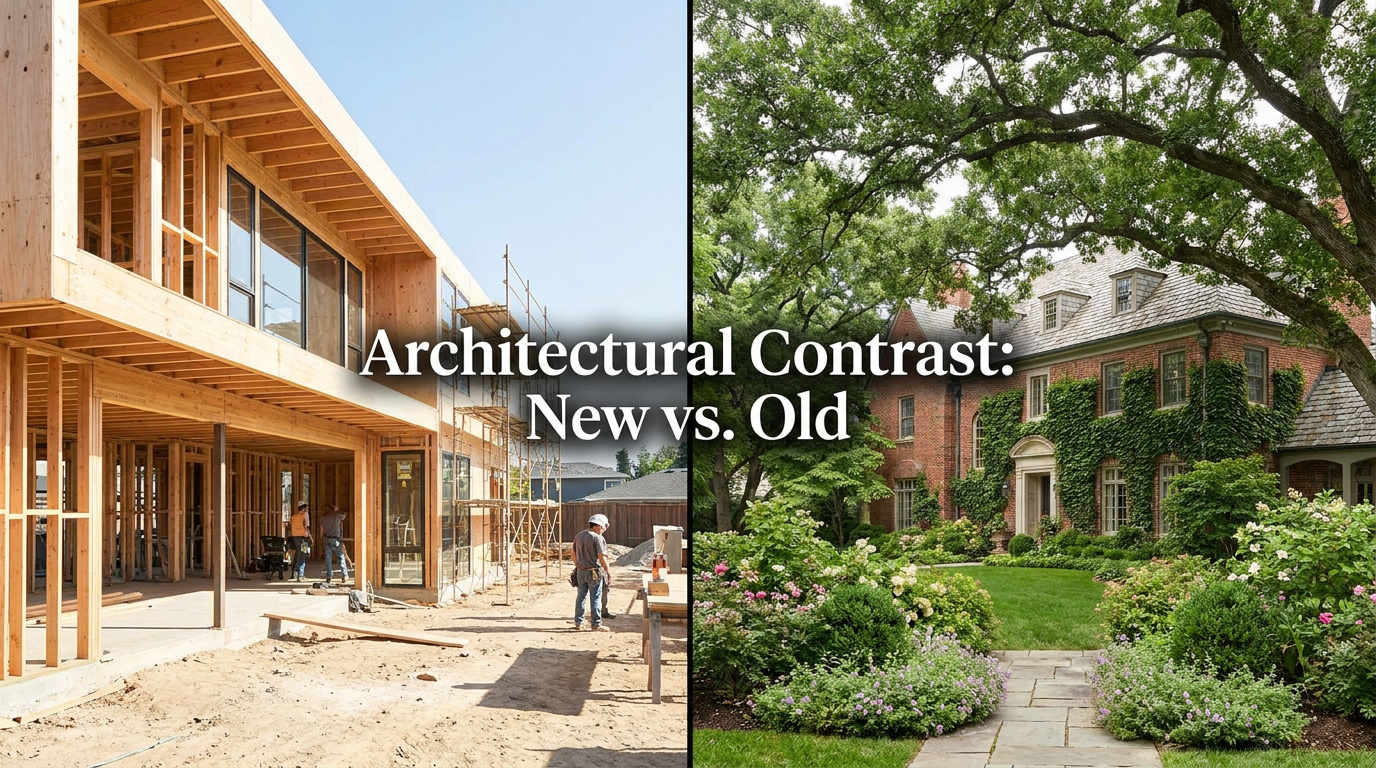
- New Construction Advocates
- Argue that modern energy efficiency, builder warranties, and financing incentives make new builds the smarter long-term financial choice.
- Existing Home Proponents
- Value the immediate move-in timelines, established neighborhoods, and unique architectural character that older properties provide.
- Market Analysts
- Focus on the macroeconomic data, tracking how inventory shortages and interest rates are fundamentally altering the total cost of ownership.
What's not represented
- · Renters priced out of both markets entirely
- · Local municipal planners managing suburban sprawl
Why this matters
The traditional real estate rulebook has flipped, meaning buyers who automatically assume older homes are cheaper may be leaving tens of thousands of dollars on the table. Understanding the total cost of ownership empowers you to make a housing decision that protects your long-term financial health.
Key points
- The median price of existing homes ($429,400) has surpassed new construction ($410,800) in many markets.
- Builders are offering significant financing incentives, including mortgage rate buydowns well below the 6.3% national average.
- New construction homes save buyers an average of $25,335 in maintenance and energy costs over the first ten years.
- Existing homes offer immediate move-in timelines and established neighborhoods, avoiding the 7-to-12-month wait for new builds.
- The decision ultimately hinges on balancing flexible timelines against the desire for immediate location convenience.
The traditional real estate playbook has been completely rewritten for the modern buyer. For decades, the conventional wisdom held that purchasing a brand-new house was a luxury that commanded a steep premium over an older, lived-in property. But as the housing market enters what economists are calling "The Great Housing Reset," a historic inversion has taken place. Years of constrained inventory and homeowners clinging to pandemic-era interest rates have severely restricted the supply of resale properties. Consequently, the median price of an existing home has eclipsed that of new construction in several major markets, fundamentally altering the calculus for prospective buyers weighing their options.[1][3][4]
The broader economic backdrop of 2026 is characterized by a slow, methodical normalization of the market. For the first time since the aftermath of the 2008 financial crisis, wage growth is projected to outpace home-price appreciation for a sustained period. While this dynamic is gradually improving overall affordability, it is not a quick fix for the structural deficit of available housing units. This environment forces buyers to be highly strategic, weighing the immediate sticker price of a property against the long-term financial commitments required to maintain it in a stabilizing but still expensive market.[1][4]
When evaluating the case for new construction, the primary argument centers on this unprecedented price advantage and the financial leverage it provides. Recent market data reveals that the median price for a new single-family home sits at approximately $410,800, while existing homes are commanding an average of $429,400. This $18,600 gap marks the largest historical margin where pre-owned properties outpriced brand-new builds. Proponents argue that buyers are essentially paying a premium for someone else's deferred maintenance, while builders are delivering untouched, modern spaces for less capital upfront.[5]

Furthermore, the evidence supporting the new construction route is heavily bolstered by builder incentives. With the national 30-year fixed mortgage rate projected to average 6.3% throughout 2026, affordability remains a significant hurdle for many families. To keep their inventory moving, developers are leveraging their institutional capital to offer aggressive mortgage rate buydowns. Buyers purchasing new builds are frequently securing rates under 5%—and sometimes even lower for the first few years of the loan. This financing advantage can translate to hundreds of dollars in monthly savings, a concession that individual sellers of existing homes rarely have the financial capacity to match.[1][7]
Conversely, the primary argument against building new involves the realities of time, location, and spatial density. Constructing a home from the ground up typically requires a waiting period of seven to twelve months, leaving buyers vulnerable to supply chain delays, weather disruptions, and the stress of coordinating temporary housing. Additionally, because land near urban centers is scarce and expensive, new developments are frequently pushed to the outer suburbs. To maximize profitability, builders often construct these homes on smaller lots, resulting in neighborhoods where houses sit tightly packed together with immature landscaping.[5][7]
Conversely, the primary argument against building new involves the realities of time, location, and spatial density.
On the other side of the market, the case for existing homes is anchored by the undeniable appeal of immediate occupancy and established community infrastructure. Buyers who choose the resale path can typically close and move in within one to two months. These properties are often situated in mature neighborhoods featuring large, established trees, wider lot spacing, and proximity to city centers, proven school districts, and local amenities. For many families, the character of unique architectural details and the convenience of a shorter commute easily justify the higher upfront purchase price.[6][8]
However, the argument against purchasing an older property focuses heavily on the grueling acquisition process and the risk of immediate capital expenditures. Because inventory remains tight in desirable neighborhoods, buyers of existing homes often face fierce competition. This environment frequently triggers emotional bidding wars, forcing buyers to escalate their offers above the asking price or waive vital inspection contingencies just to secure the property. Once the keys are handed over, these buyers inherit the home's history, which can include aging roofs, outdated electrical panels, and inefficient insulation.[6]
The empirical evidence regarding the long-term financial impact heavily favors new construction when evaluating the Total Cost of Ownership. Real estate analysts utilizing Pearl SCORE data have quantified the operational differences between modern builds and older properties. Built to 2026 energy codes with high-efficiency HVAC systems, superior insulation, and modern windows, a new home operates significantly cheaper. Over the first ten years of ownership, a buyer of an average new home can expect to save approximately $25,335 in combined utility bills and major system replacements compared to the buyer of a twenty-year-old home.[2]

Beyond the raw numbers, the trade-off between customization and character plays a pivotal role in the decision-making process. New construction allows buyers to select their floor plans, cabinetry, flooring, and paint colors before the foundation is even poured, ensuring the final product aligns perfectly with their aesthetic preferences. Yet, this requires the ability to visualize a home from blueprints and material swatches. Existing homes offer a tangible, walk-through experience where buyers can feel the flow of the space, even if it means budgeting for future renovations to update a kitchen or bathroom that reflects a previous decade's trends.[7][8]
From an investment perspective, both paths offer distinct mechanisms for building equity over a ten-year horizon. Existing homes in highly sought-after, landlocked neighborhoods tend to experience steady appreciation due to the permanent scarcity of their location. Meanwhile, new construction homes often see a rapid initial bump in value once the surrounding community is fully built out and the developer stops adding new inventory to the immediate market. Furthermore, the built-in modern aesthetics and energy efficiencies of a 2026 home will likely remain highly attractive to the next generation of buyers when it comes time to sell.[8]

Ultimately, the new construction path fits well when buyers have flexible moving timelines and prioritize long-term predictability over immediate location convenience. It is the optimal choice for those who want to lock in lower monthly payments through builder financing incentives and value the peace of mind that comes with comprehensive warranties. It does not fit well when buyers are relocating for a job that starts next month, when they demand the walkability of a historic urban core, or when they lack the patience to endure the inevitable dust and noise of living in an actively developing neighborhood.[5][7]
Conversely, the existing home route fits well when buyers require immediate housing stability and place a premium on established community dynamics. It is ideal for those who want a larger parcel of land, mature landscaping, and a home with distinct architectural character. It does not fit well for buyers who are stretching their budget to the absolute maximum just to cover the mortgage, as the inevitable surprise repair—such as a failing water heater or a leaking roof—could quickly lead to financial distress. In 2026, the smartest real estate decision requires looking past the listing price and calculating the true cost of the next decade.[6][8]
How we got here
2023–2024
Mortgage rates climb rapidly, causing existing homeowners to stay put and creating a severe inventory shortage.
Early 2025
The median price of existing homes surpasses new construction for the first time in decades due to constrained supply.
Late 2025
Builders ramp up incentives, including aggressive mortgage rate buydowns, to attract buyers squeezed by affordability challenges.
Spring 2026
The housing market enters 'The Great Housing Reset,' characterized by a slow normalization of prices and wages finally outpacing home-price growth.
Viewpoints in depth
The Builder & Efficiency View
Advocates for new construction emphasize the hidden financial protections of modern building codes.
Proponents of new construction argue that the true cost of a home extends far beyond the closing table. By integrating high-efficiency HVAC systems, superior insulation, and smart-home technology from day one, builders are insulating buyers from the volatile costs of energy and emergency repairs. They point out that a lower upfront price on an older home is often a mirage, quickly erased by the necessity of replacing a failing roof or upgrading an obsolete electrical panel within the first few years of ownership.
The Neighborhood & Character View
Supporters of existing homes prioritize location, land value, and community infrastructure.
Those who favor existing homes argue that real estate's golden rule—location, location, location—heavily favors older properties. Because cities develop outward, existing homes occupy the most desirable, centrally located land with mature trees and established school districts. This camp contends that while you can always renovate a kitchen or replace an air conditioner, you cannot artificially manufacture the charm of a historic neighborhood or shorten a grueling commute from a newly developed exurb.
What we don't know
- How long builders will continue to offer aggressive mortgage rate buydowns if the broader economy experiences a sudden shift.
- Whether local zoning reforms and 'YIMBY' policies will successfully increase the supply of existing homes in the most competitive urban markets.
- The exact trajectory of property tax assessments for new developments as municipalities adjust to the influx of new residents.
Key terms
- Mortgage Rate Buydown
- A financing incentive where a builder or seller pays an upfront fee to lower the buyer's interest rate for the first few years or the life of the loan.
- Total Cost of Ownership (TCO)
- The comprehensive financial picture of owning a home, including the purchase price, mortgage interest, property taxes, insurance, utilities, and ongoing maintenance.
- Pearl SCORE
- A certification system that rates the energy efficiency, comfort, and resilience of a home, often used to quantify long-term utility savings.
- Spec Home
- A new construction house built by a developer before a specific buyer is found, designed to be move-in ready shortly after completion.
Frequently asked
Why are existing homes currently more expensive than new builds?
Years of underbuilding and homeowners holding onto low pandemic-era mortgage rates have severely restricted the supply of existing homes, driving their median price above new construction in many markets.
Can I get a better mortgage rate on a new construction home?
Yes, many builders offer significant incentives, including mortgage rate buydowns that can temporarily or permanently lower your interest rate well below the national average of 6.3%.
How much can I save on utilities with a new home?
According to Pearl SCORE data, new homes built to 2026 standards can save buyers an average of $25,335 over the first ten years in combined energy and maintenance costs compared to a 20-year-old home.
Is it harder to negotiate the price of a new build?
Builders are often reluctant to drop the base price of a home to protect neighborhood comparables, but they are frequently willing to negotiate on closing costs, design upgrades, and financing incentives.
Sources
Source coverage
8 outlets
3 viewpoints surfaced






[1]RedfinMarket Analysts
Redfin's 2026 Predictions: Welcome to The Great Housing Reset
Read on Redfin →[2]Realtor.comMarket Analysts
Total Cost of Ownership: Where Lower Operating Costs Offset the New-Construction Price Premium
Read on Realtor.com →[3]ZillowMarket Analysts
Zillow 2026 Housing Market Predictions: A Healthier Market Ahead
Read on Zillow →[4]KHOU 11Market Analysts
The Great Housing Reset: What to expect in the 2026 real estate market
Read on KHOU 11 →[5]AmeriSaveNew Construction Advocates
Buying a House in 2026: 7 Essential Cost Comparisons
Read on AmeriSave →[6]PrimeWay Federal Credit UnionExisting Home Proponents
Building vs. Buying a Home: Which is Right for You?
Read on PrimeWay Federal Credit Union →[7]Fox Real EstateExisting Home Proponents
New Construction vs Existing Homes in 2026: Which One Actually Saves You More Money Long Term?
Read on Fox Real Estate →[8]TC HomesNew Construction Advocates
Cost comparison of building a new house vs buying an existing home in 2026
Read on TC Homes →
Every angle. Every day.
Get real estate stories with full source coverage and perspective breakdowns delivered to your inbox.