
Scientists Brew Espresso With Sound Waves, Cutting Energy Use by 75%
Researchers have developed a method to brew espresso-strength coffee using room-temperature water and ultrasonic sound waves, eliminating the need for heat while maintaining traditional flavor.
By Factlen Editorial Team
- Scientific Researchers
- Focus on the mechanics of acoustic cavitation and the empirical data proving energy efficiency.
- Coffee Industry Analysts
- Evaluate the commercial viability and potential disruption of the ready-to-drink market.
- Sustainability & Tech Observers
- Highlight the cumulative climate impact of scaling low-energy brewing technologies.
What's not represented
- · Traditional espresso machine manufacturers
- · Specialty café owners and professional baristas
Why this matters
Heating water for coffee is a massive, hidden energy sink on a global scale. By replacing heat with sound, this technology could drastically reduce the carbon footprint of the booming ready-to-drink coffee industry without compromising the taste consumers expect.
Key points
- UNSW researchers brewed espresso-strength coffee using room-temperature water and sound waves.
- The process uses acoustic cavitation to rapidly extract flavors and caffeine in under three minutes.
- Eliminating the need to heat water reduces total energy consumption by up to 75 percent.
- In blind taste tests, 100 participants could not distinguish the ultrasonic espresso from a traditional shot.
- The technology is initially targeted at industrial-scale ready-to-drink coffee manufacturers.
For over a century, the fundamental recipe for espresso has remained unchanged: force highly pressurized, near-boiling water through a tightly packed bed of finely ground coffee. The heat and pressure act as the twin engines of extraction, rapidly pulling the rich oils, caffeine, and complex flavor compounds into the cup. It is a sequence so fixed in the global morning ritual that altering it seemed impossible.
But researchers at the University of New South Wales (UNSW) in Sydney have successfully challenged that assumption. By replacing thermal energy with acoustic energy, they have developed a method to brew espresso-strength coffee using room-temperature water. The breakthrough, detailed in the Journal of Food Engineering, relies on high-frequency ultrasonic sound waves to extract the coffee's essence in under three minutes.[2][5]
The implications for energy conservation are staggering. Because the new process entirely eliminates the need to heat water—the most energy-intensive step in any brewing method—it reduces total energy consumption by up to 75 percent compared to traditional espresso machines.[1][2]

To achieve this, the UNSW team, led by chemical engineer Dr. Francisco Trujillo, utilized a phenomenon known as acoustic cavitation. When high-frequency sound waves—far above the threshold of human hearing—are introduced into a liquid, they create microscopic bubbles. These bubbles rapidly expand and collapse, generating intense localized forces and micro-jets of water.[2][6]
When applied to a bed of coffee grounds, these micro-jets act like millions of tiny agitators. They physically break down the cellular structure of the coffee particles, accelerating the release of flavors and oils into the surrounding room-temperature water at a speed that normally requires near-boiling temperatures.[1][6]

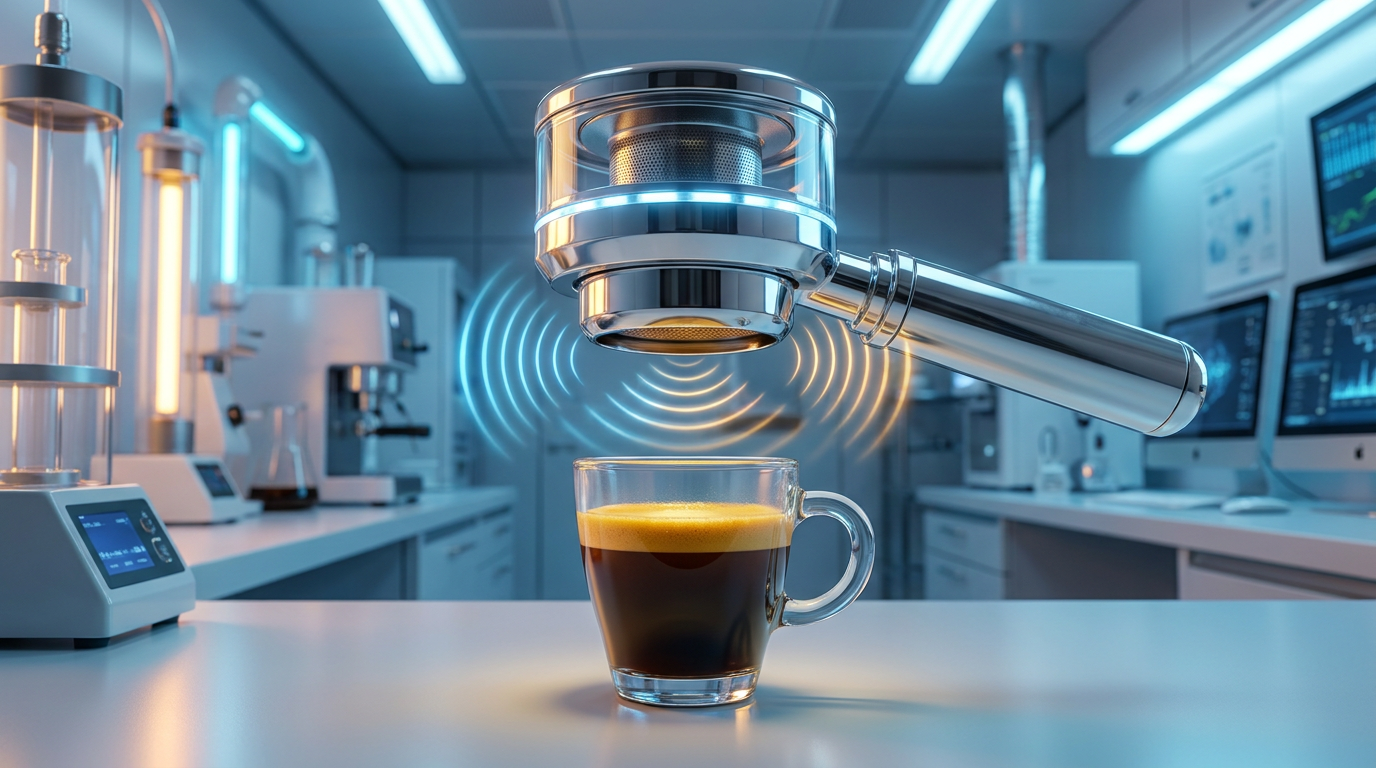
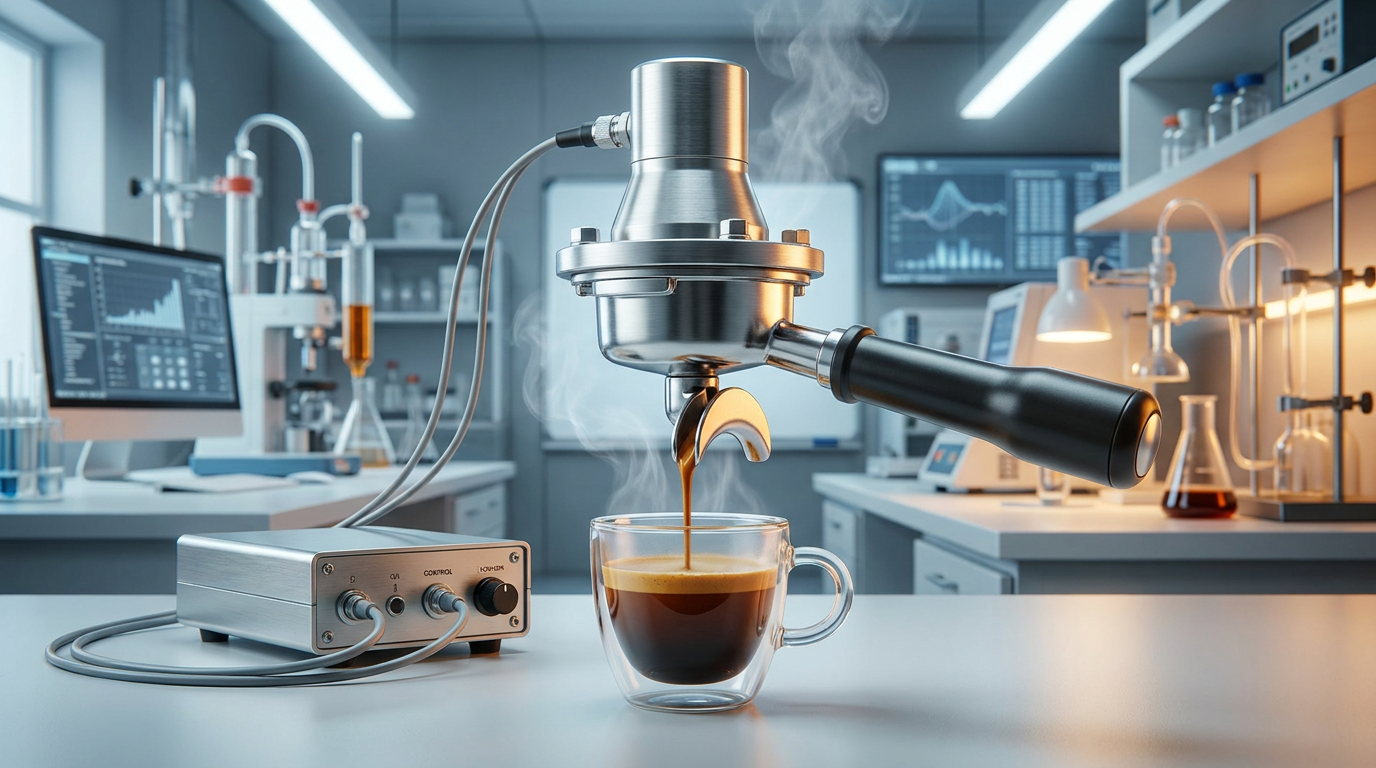
The researchers built their prototype by modifying a standard espresso portafilter. They cut an access point into the side of the metal basket and attached an ultrasonic horn, which delivered the high-frequency waves directly into the coffee bed. Using a standard ratio of 20 grams of ground coffee to yield 40 grams of liquid, they pulsed room-temperature water through the system in intervals over a two-to-three-minute window.[3][5]
The researchers built their prototype by modifying a standard espresso portafilter.
In the coffee industry, however, scientific efficiency means nothing if the resulting cup tastes poor. To validate their method, the UNSW team conducted a blind sensory analysis with 100 regular, non-expert coffee drinkers. The participants were served both traditional hot-brewed espresso and the new ultrasonic version, and were asked to evaluate them on aroma, flavor, body, and bitterness.[2][3]
The results surprised even the researchers. The participants could not reliably tell the two espressos apart, and there was no clear preference for either method. The ultrasonic process successfully replicated the total dissolved solids (TDS) and the rich, concentrated profile of a classic shot.[3][4]
When the team applied the same ultrasonic technique to a standard pour-over filter coffee, the results were even more favorable. Participants actually preferred the ultrasonic filter coffee over the traditional hot-water version, specifically noting that the sound-wave method produced a smoother cup with a more pleasant, less harsh bitterness profile.[3][6]
While a single café's espresso machine is not a massive drain on the global power grid, the cumulative energy cost of heating water for coffee worldwide is immense. The researchers are not initially targeting home kitchens or local coffee shops; their sights are set on the massive, industrial-scale production of ready-to-drink (RTD) coffee beverages.[4][6]

The RTD coffee market—which includes canned cold brews, bottled frappuccinos, and milk-based coffee drinks—requires vast amounts of energy to brew coffee concentrate in massive vats. By adopting ultrasonic extraction, these manufacturers could slash their energy bills by three-quarters while simultaneously speeding up their production lines.[2][4]
Because the ultrasonic method produces a highly concentrated, espresso-strength liquid, it is perfectly suited to serve as the base ingredient for these commercial beverages. The concentrate can be brewed at room temperature, shipped efficiently, and later diluted with milk, water, or flavorings at the bottling plant.[2][3]
For now, the technology remains in the research and prototyping phase. Scaling the ultrasonic horn system to handle industrial volumes is the next engineering hurdle for the UNSW team. However, the foundational science has been proven, clearing the biggest obstacle for any food-tech innovation: consumer acceptance.[4][5]
If successfully commercialized, ultrasonic brewing could represent the first fundamental mechanical shift in espresso preparation since the invention of the modern pump-driven machine in the mid-20th century. It offers a rare intersection of deep energy savings and uncompromised culinary quality, proving that sometimes, the best way to improve a classic recipe is to completely rewrite the rules.[1][4]
How we got here
Mid-20th Century
The modern pump-driven espresso machine is invented, standardizing the use of high heat and 9 bars of pressure.
2024
UNSW researchers successfully use ultrasonic waves to accelerate the cold-brew coffee process to just three minutes.
June 2026
The team publishes peer-reviewed research demonstrating that ultrasonic waves can replicate a concentrated, espresso-strength shot.
Viewpoints in depth
Scientific Researchers
Focus on the mechanics of acoustic cavitation and the empirical data proving energy efficiency.
The engineering team behind the breakthrough emphasizes that heat is merely a catalyst for extraction, not an absolute requirement. By utilizing acoustic cavitation, they have proven that the physical breakdown of coffee cells can be achieved through mechanical force rather than thermal energy. Their peer-reviewed data demonstrates that the resulting chemical composition—including total dissolved solids and caffeine concentration—matches that of traditional high-heat methods, validating the science beyond mere theory.
Coffee Industry Analysts
Evaluate the commercial viability and potential disruption of the ready-to-drink market.
Industry observers see the immediate value not in replacing the café espresso machine, but in overhauling industrial production. The ready-to-drink (RTD) coffee sector relies on massive energy inputs to brew concentrates. Analysts note that a 75 percent reduction in heating costs could drastically improve profit margins for commercial bottlers. Furthermore, the ability to brew at room temperature simplifies the cooling and stabilization processes required before packaging cold coffee beverages.
Sustainability Advocates
Highlight the cumulative climate impact of scaling low-energy brewing technologies.
Environmental and tech observers view the innovation as a necessary evolution for a resource-heavy industry. While a single cup of coffee has a small footprint, the global aggregate of heating water for billions of cups annually is a massive energy sink. Advocates argue that transitioning industrial food and beverage production away from thermal processes toward mechanical or acoustic alternatives is a critical step in reducing the sector's overall carbon emissions.
What we don't know
- It remains unclear how much an industrial-scale ultrasonic brewing array will cost to manufacture and install.
- Researchers have not yet determined if the technology can be miniaturized affordably for home consumer espresso machines.
- The long-term durability and maintenance requirements of the ultrasonic horn in a high-volume commercial setting are untested.
Key terms
- Acoustic Cavitation
- The formation and rapid collapse of tiny bubbles in a liquid caused by high-frequency sound waves, generating intense local forces.
- Ultrasonic Horn
- A specialized device used to amplify and transmit high-frequency sound waves into a liquid or solid material.
- Portafilter
- The spoon-like metal handle and basket assembly that holds the ground coffee in a traditional espresso machine.
- Ready-to-Drink (RTD)
- Pre-packaged beverages, such as canned cold brews or bottled frappuccinos, produced on a massive industrial scale.
- Total Dissolved Solids (TDS)
- A measurement used in the coffee industry to quantify the concentration of extracted coffee compounds in the final beverage.
Frequently asked
Does ultrasonic coffee taste different from regular espresso?
In blind taste tests, 100 regular coffee drinkers could not reliably tell the difference between traditional hot-brewed espresso and the room-temperature ultrasonic version.
How do sound waves actually brew the coffee?
High-frequency sound waves create microscopic bubbles that rapidly collapse near the coffee grounds. This generates tiny jets of water that physically break down the coffee particles, extracting flavors without heat.
Can I buy an ultrasonic espresso machine for my kitchen?
Not yet. The technology is currently a laboratory prototype and is expected to be adopted by large-scale industrial coffee manufacturers before being adapted for home use.
Sources
Source coverage
6 outlets
3 viewpoints surfaced





[1]WiredSustainability & Tech Observers
Scientists Invent a Way to Brew Espresso With Ultrasonic Waves—No Hot Water Required
Read on Wired →[2]UNSW SydneyScientific Researchers
Ultrasonic espresso: brewing coffee with sound waves
Read on UNSW Sydney →[3]SprudgeCoffee Industry Analysts
Ultrasonic Soundwaves Used To Make Room Temperature Espresso
Read on Sprudge →[4]The Optimist DailySustainability & Tech Observers
Scientists brew espresso with ultrasonic waves, saving 75% energy
Read on The Optimist Daily →[5]Journal of Food EngineeringScientific Researchers
Ultrasound Enables Espresso-Strength Coffee Brewing in 2–3 Minutes at Low Temperature with Lower Energy Consumption
Read on Journal of Food Engineering →[6]Qahwa WorldCoffee Industry Analysts
Ultrasonic Espresso: A New Technology That Brews Coffee in 3 Minutes and Saves 75% of Energy
Read on Qahwa World →
Every angle. Every day.
Get technology stories with full source coverage and perspective breakdowns delivered to your inbox.