
The U.S.-Iran Peace Framework and the 60-Day Race to Secure a Nuclear 'Blind Spot'
A new 14-point agreement pauses the U.S.-Iran war and reopens the Strait of Hormuz, but experts warn it lacks immediate verification for Tehran's highly enriched uranium.
By Factlen Editorial Team
- U.S. Administration
- Prioritizes leveraging military and economic pressure to secure a permanent end to Iran's nuclear program.
- Nonproliferation Experts
- Focuses on the urgent need for immediate, verifiable IAEA inspections of Iran's uranium stockpile.
- Regional Allies
- Skeptical of sanctions relief and concerned about Iran's continued support for regional proxies.
- Iranian Leadership
- Views the deal as a diplomatic victory that secures vital economic relief and sanctions waivers.
What's not represented
- · Iranian Civilians
- · Global Shipping Companies
Why this matters
This framework pauses a major regional war and reopens one of the world's most critical oil chokepoints, stabilizing global energy markets. However, if the 60-day technical negotiations fail to secure Iran's nuclear stockpile, the conflict could rapidly resume with even higher stakes.
Key points
- The U.S. and Iran signed a 14-point Memorandum of Understanding to pause hostilities and reopen the Strait of Hormuz.
- The framework initiates a 60-day negotiating window to finalize the dismantling of Iran's nuclear program.
- Nonproliferation experts warn the deal currently lacks immediate IAEA verification for Iran's 60% enriched uranium stockpile.
- Planned technical talks in Switzerland have been delayed amid logistical issues and renewed fighting in Lebanon.
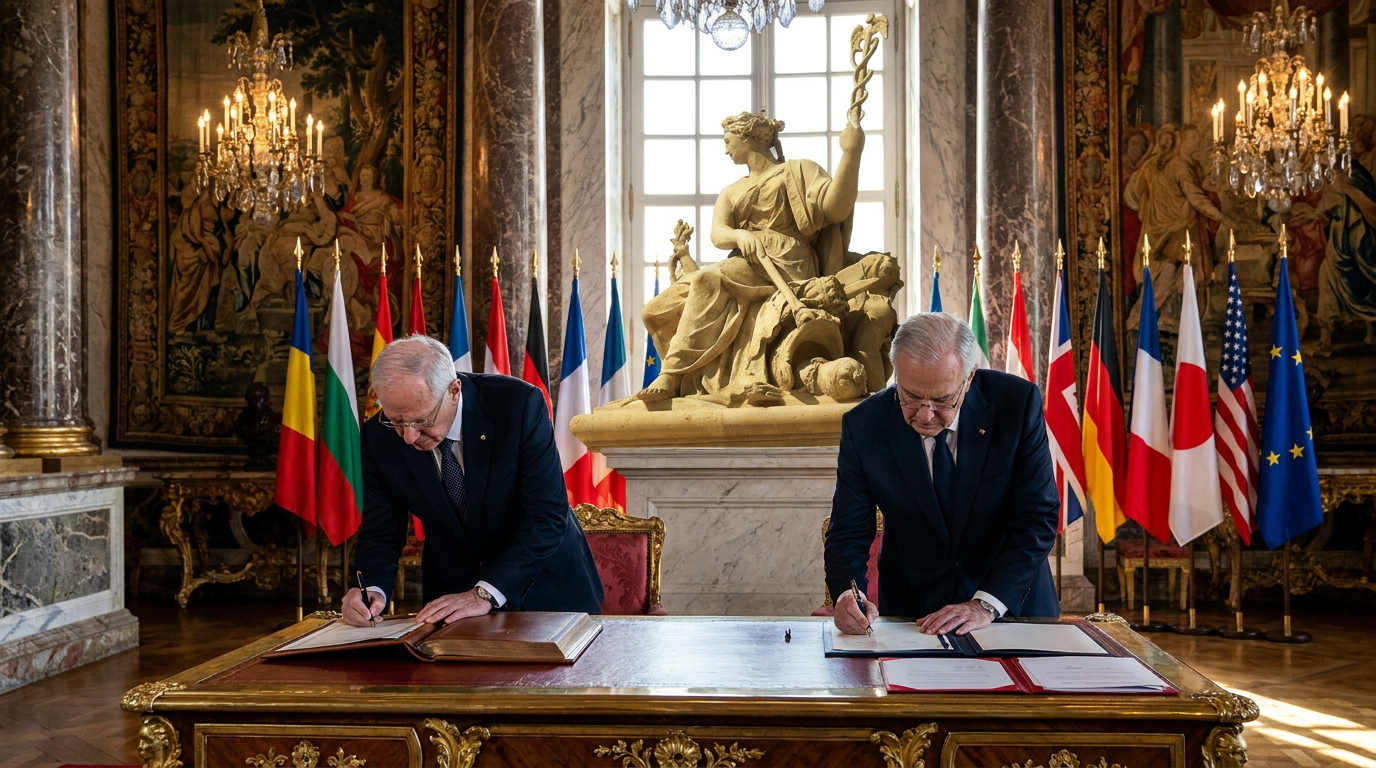
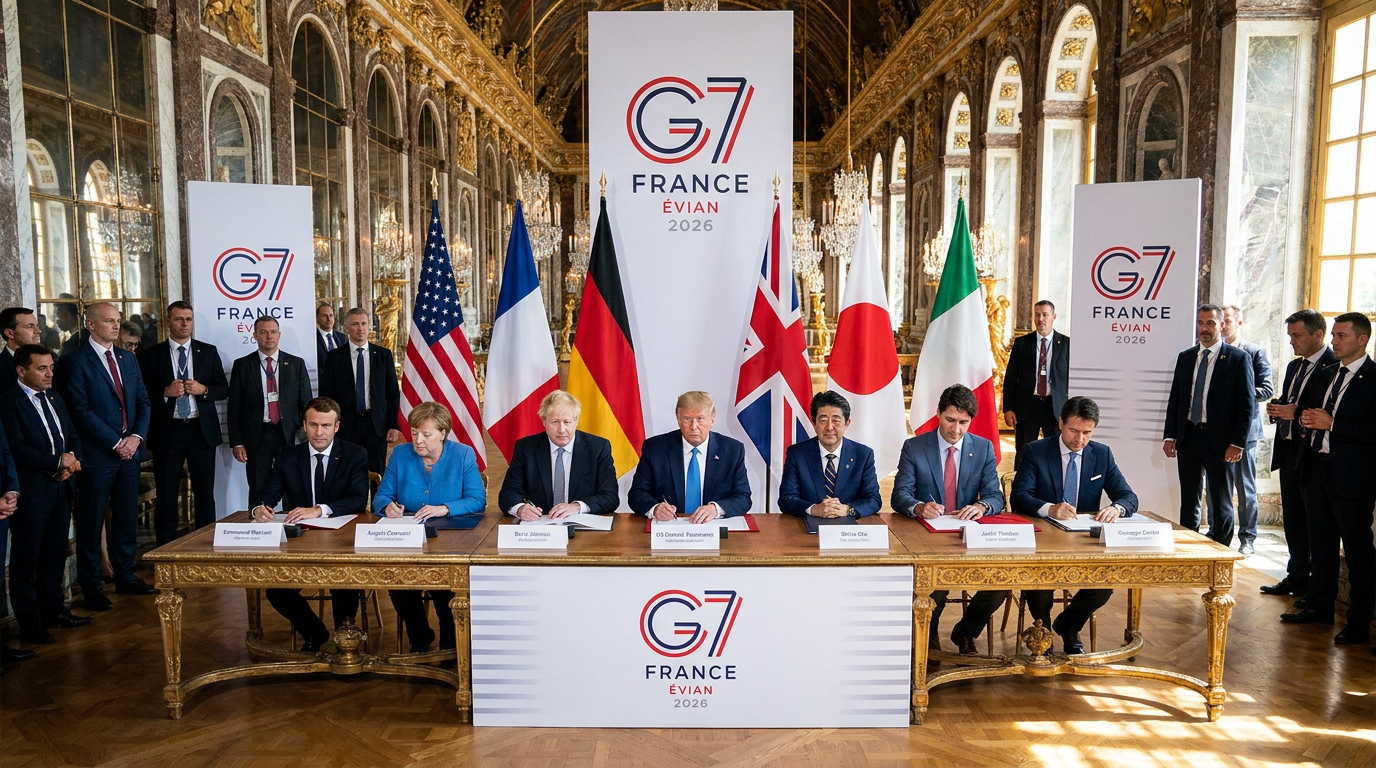
After months of devastating conflict that rattled global markets, the United States and Iran have signed a 14-point Memorandum of Understanding (MOU) aimed at ending hostilities. Signed by U.S. President Donald Trump and Iranian President Masoud Pezeshkian at the Palace of Versailles, the framework establishes an immediate ceasefire and sets the stage for a permanent nuclear pact.[3][5]
The agreement pauses a war that ignited in February 2026 following U.S. and Israeli strikes on Iranian facilities. In exchange for Iran reopening the critical Strait of Hormuz and halting its nuclear weapons pursuit, the U.S. has agreed to waive crippling economic sanctions and facilitate a $300 billion regional reconstruction fund.[5][8]
The MOU is not a finalized treaty but a roadmap. It triggers a 60-day negotiating window during which technical teams are tasked with hammering out the specifics of Iran's nuclear infrastructure. Vice President JD Vance emphasized that the U.S. will demand the complete destruction of Iran's highly enriched uranium stockpile, noting that the administration trusts "action and conduct," not just words.[6]

However, nuclear nonproliferation experts and critics are sounding the alarm over a critical vulnerability in the framework: a severe verification blind spot. While Iran has agreed in principle to dilute its enriched uranium, the MOU lacks immediate, ironclad mechanisms for international inspectors to verify compliance on the ground.[1][5]
The International Atomic Energy Agency (IAEA) has been largely unable to monitor Iran's nuclear sites since the military strikes earlier this year. Before the conflict, Iran had amassed a record stockpile of uranium enriched to 60% purity—a technical hairsbreadth away from the 90% required for weapons-grade material. Without immediate IAEA access, experts warn that Tehran retains too much control over this dangerous stockpile during the 60-day window.[1][5]
Critics note that the U.S. is trading immediate, tangible concessions for future promises. Iran receives immediate sanctions relief, the unfreezing of assets, and the ability to sell oil, while the U.S. secures a reiteration of Iran's commitment not to develop a nuclear weapon. Regional allies, particularly Israel, have expressed deep skepticism, arguing that lifting economic pressure prematurely removes the primary leverage needed to force Iran into dismantling its nuclear program.[1][7]
is trading immediate, tangible concessions for future promises.
Inevitably, the new framework is drawing intense comparisons to the 2015 Joint Comprehensive Plan of Action (JCPOA)—the Obama-era agreement that the Trump administration dismantled in 2018. The 2015 deal was a highly technical, hundreds-of-pages-long document that capped enrichment at 3.67% and mandated rigorous, surprise inspections by the IAEA.[3][8]

The current administration argues its new deal will ultimately be superior because it aims to permanently end Iran's nuclear ambitions without the controversial "sunset clauses" that allowed some JCPOA restrictions to expire after 10 to 15 years. Furthermore, the new MOU explicitly ties nuclear compliance to the reopening of the Strait of Hormuz, leveraging global energy security as a powerful bargaining chip.[3]
The transition from a high-level political framework to technical reality has already hit stumbling blocks. Formal negotiations were scheduled to begin immediately at the Bürgenstock resort in Switzerland, but the Swiss Foreign Ministry confirmed the talks have been postponed as Vice President Vance delayed his trip.[4][7]
The delay stems from both logistical hurdles and a volatile situation on the ground. A key condition of the U.S.-Iran ceasefire is the termination of military operations on all fronts, including Lebanon. However, fighting has recently flared between Israel and Hezbollah, with Israeli strikes in southern Lebanon killing at least 16 people.[2][7]

Because Israel is not a formal party to the U.S.-Iran MOU, its ongoing operations against Hezbollah complicate Tehran's willingness to proceed. Iranian officials have reportedly signaled that technical nuclear talks cannot advance without a comprehensive ceasefire that restrains Israeli military action in Lebanon.[7]
The next 60 days represent a high-stakes diplomatic tightrope. If technical teams can agree on a verifiable mechanism to dismantle Iran's 60% enriched uranium, the MOU could evolve into a historic stabilization of the Middle East. If negotiations collapse, Defense Secretary Pete Hegseth has warned that the U.S. military is fully prepared to reimpose an "ironclad blockade" and resume strikes.[3][6]
How we got here
February 2026
U.S. and Israeli strikes on Iranian facilities ignite a regional war.
June 17, 2026
President Trump and Iranian President Pezeshkian sign a 14-point Memorandum of Understanding at Versailles.
June 18, 2026
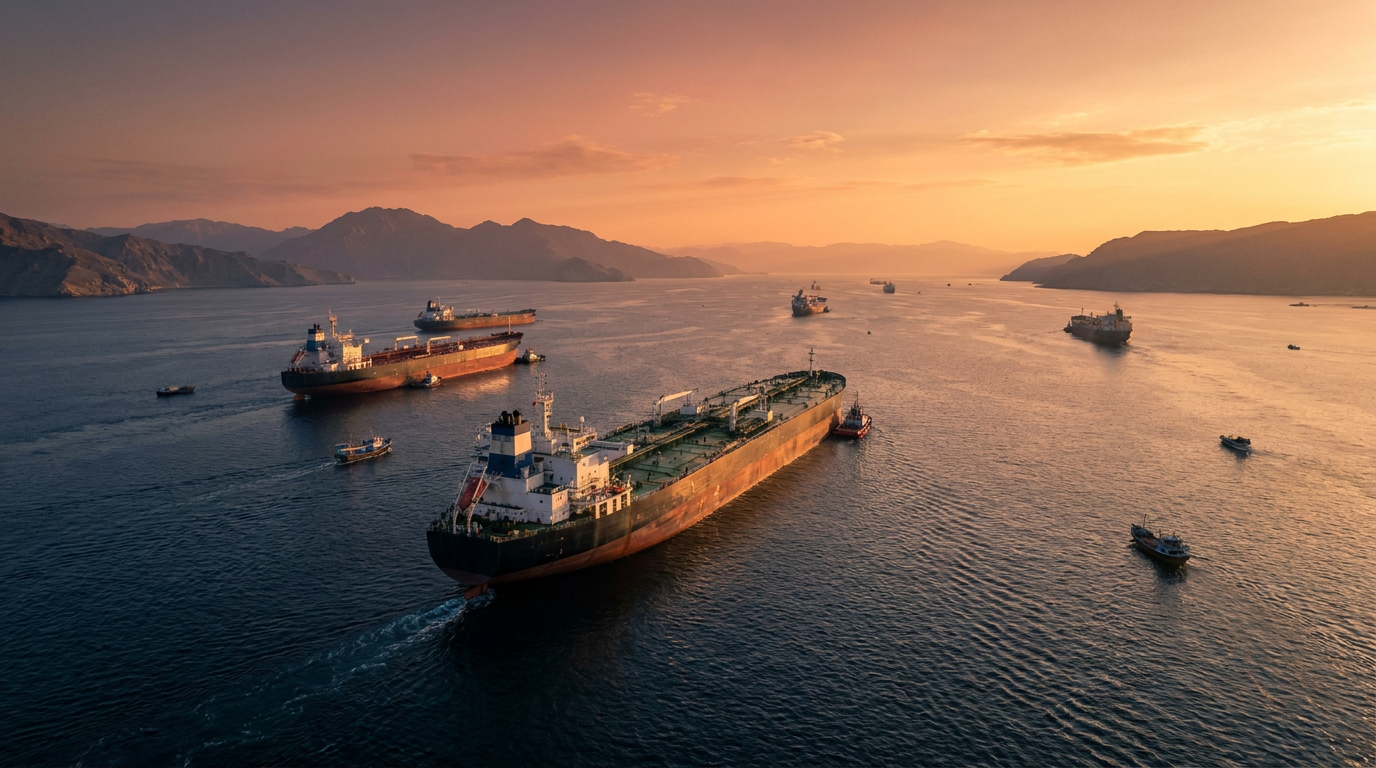
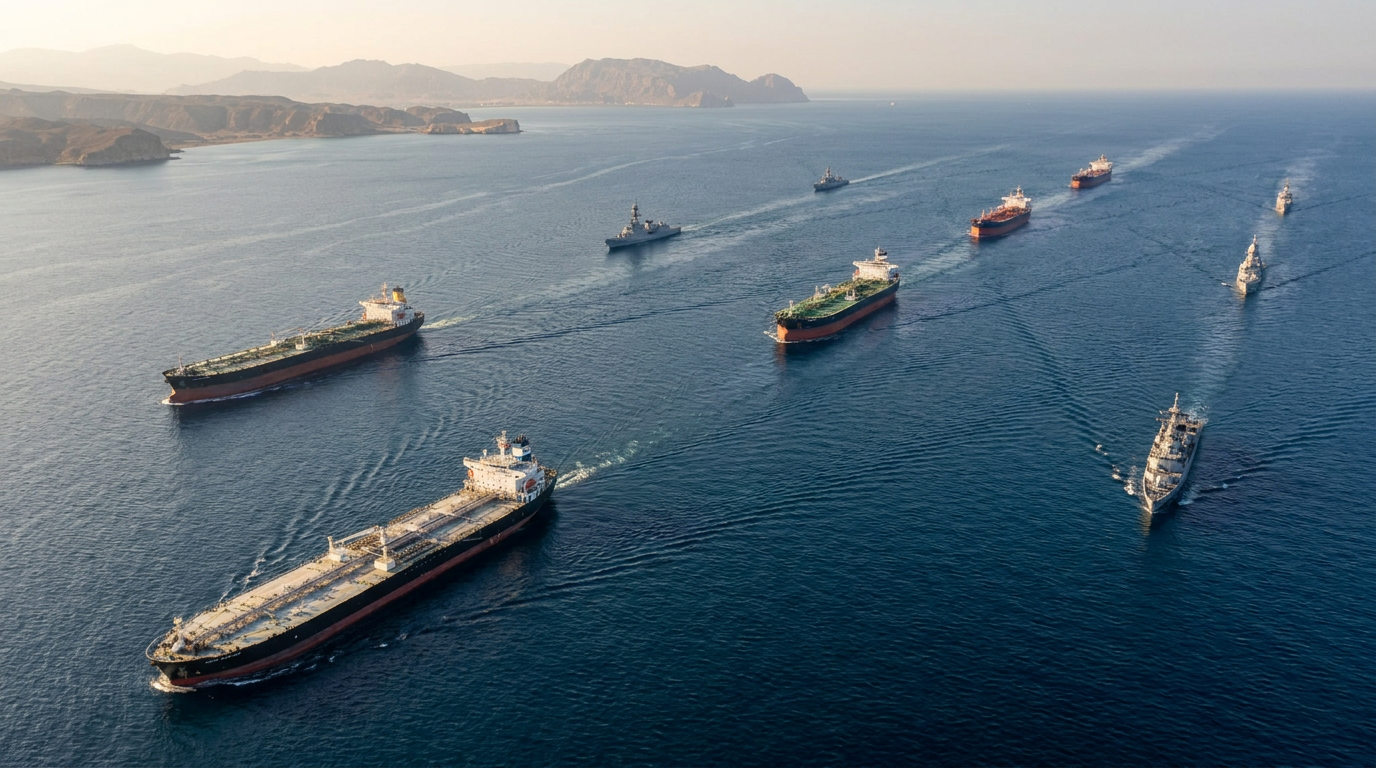
Commercial shipping resumes through the Strait of Hormuz as sanctions waivers take effect.
June 19, 2026
Planned technical nuclear talks in Switzerland are postponed amid flare-ups in Lebanon.
Viewpoints in depth
U.S. Administration's view
The deal leverages maximum pressure to permanently end Iran's nuclear ambitions.
U.S. officials argue that the 14-point framework succeeds where previous agreements failed by tying economic relief directly to the reopening of the Strait of Hormuz and demanding the complete destruction of Iran's highly enriched uranium. By maintaining the threat of military force and an 'ironclad blockade,' the administration believes it has the leverage to enforce compliance without relying on the sunset clauses that characterized the 2015 JCPOA.
Nonproliferation Experts' view
The framework lacks immediate verification mechanisms, creating a dangerous blind spot.
Nuclear watchdogs and nonproliferation experts warn that trading immediate sanctions relief for a 60-day negotiating window leaves Iran with too much control over its 60% enriched uranium stockpile. Because the IAEA has been unable to conduct comprehensive inspections since the military strikes earlier this year, experts fear Iran could use the ceasefire to further obscure its nuclear infrastructure before technical protocols are finalized.
Regional Allies' view
Lifting economic pressure prematurely emboldens Iran and its regional proxies.
Allies such as Israel and several Gulf states view the immediate unfreezing of assets and sanctions waivers as a strategic error. They argue that providing Iran with a financial lifeline before its nuclear program is verifiably dismantled removes the primary incentive for Tehran to cooperate. Furthermore, they express concern that the agreement sidelines Israel while failing to adequately address Iran's support for militant groups like Hezbollah.
Iranian Leadership's view
The agreement is a necessary step for economic relief and a diplomatic victory.
For Tehran, the framework represents a successful resistance against maximum military and economic pressure. By securing the immediate lifting of naval blockades and the resumption of oil exports, Iranian leaders can stabilize their domestic economy. They maintain that their nuclear program is peaceful and insist that any further technical concessions depend on the U.S. and its allies strictly adhering to a comprehensive regional ceasefire.
What we don't know
- Whether Iran will agree to the complete destruction of its 60% enriched uranium stockpile during the 60-day window.
- When the postponed technical negotiations in Switzerland will officially begin.
- How Israel's ongoing military operations against Hezbollah in Lebanon will impact Tehran's willingness to finalize the deal.
Key terms
- Memorandum of Understanding (MOU)
- A formal agreement between two or more parties that establishes a framework for future negotiations, though not legally binding like a treaty.
- Highly Enriched Uranium (HEU)
- Uranium that has been processed to increase the concentration of the U-235 isotope, making it usable for nuclear weapons if enriched to 90%.
- Strait of Hormuz
- A critical maritime chokepoint between the Persian Gulf and the Gulf of Oman, through which nearly one-fifth of the world's oil supply passes.
- JCPOA
- The Joint Comprehensive Plan of Action, a 2015 agreement that limited Iran's nuclear program in exchange for sanctions relief, which the U.S. exited in 2018.
- IAEA
- The International Atomic Energy Agency, the United Nations' nuclear watchdog responsible for inspecting and verifying nuclear facilities worldwide.
Frequently asked
Why were the Switzerland peace talks postponed?
The talks were delayed due to logistical issues and renewed fighting between Israel and Hezbollah in Lebanon, which complicated the ceasefire conditions.
What happens to Iran's nuclear program now?
The MOU requires Iran to dilute its highly enriched uranium and halt weapons procurement, with technical details to be negotiated over the next 60 days.
How does this deal differ from the 2015 JCPOA?
Unlike the JCPOA, this framework currently lacks detailed inspection protocols and sunset clauses, but it explicitly ties nuclear compliance to the reopening of the Strait of Hormuz.
Will the U.S. lift sanctions on Iran?
Yes, the U.S. has agreed to immediately waive certain economic sanctions to allow Iran to export oil, pending finalization of the broader agreement.
Sources
Source coverage
8 outlets
4 viewpoints surfaced








[1]Fox NewsU.S. Administration
Trump’s new Iran deal faces nuclear blind spot over uranium stockpile, experts warn
Read on Fox News →[2]The GuardianRegional Allies
Israeli strikes kill at least 16 in southern Lebanon despite reports of renewed ceasefire
Read on The Guardian →[3]CBS NewsU.S. Administration
Here's how Trump's memo of understanding with Iran compares to the Obama nuclear deal
Read on CBS News →[4]ReutersIranian Leadership
Switzerland says US-Iran talks planned for Friday are off
Read on Reuters →[5]Council on Foreign RelationsNonproliferation Experts
Trump's Iran Deal: What We Know So Far
Read on Council on Foreign Relations →[6]PBSU.S. Administration
WATCH: Vance holds White House briefing after Trump signs Iran war agreement
Read on PBS →[7]The Straits TimesRegional Allies
Uncertainty hangs over timing of US-Iran peace talks
Read on The Straits Times →[8]NBC NewsNonproliferation Experts
Comparing Trump's newly-released Iran peace plan with Obama's
Read on NBC News →
More in news politics
See all 7 stories →Climate Finance
UN Climate Talks End in Gridlock Over $300 Billion Finance Goal Amid G7 Silence
8 sources
US-Iran Peace Deal
US and Iran Sign 'Islamabad Memorandum' to End 110-Day War and Reopen Strait of Hormuz
6 sources
Iran Nuclear Framework
Trump's New Iran Framework Reopens Strait of Hormuz but Defers Nuclear Limits
6 sources
Education Policy
Fact Check: The Evidence Behind Universal Free School Meals
7 sources

Every angle. Every day.
Get news politics stories with full source coverage and perspective breakdowns delivered to your inbox.