
EV vs. PHEV: The Ultimate 2026 Buyer's Guide to Electrified Cars
As battery technology matures and federal incentives shift, the 2026 auto market presents a stark choice between the mechanical simplicity of battery-electric vehicles and the road-trip flexibility of plug-in hybrids. This side-by-side analysis breaks down the real-world trade-offs in upfront costs, maintenance, and daily usability.
By Factlen Editorial Team
- Battery Electric Advocates
- Prioritize total lifecycle savings, mechanical simplicity, and zero emissions.
- Plug-in Hybrid Pragmatists
- Value the flexibility of a gas engine combined with the daily savings of electric commuting.
- Cost-Conscious Consumers
- Focus strictly on upfront sticker prices and immediate monthly financing costs.
What's not represented
- · Apartment renters without access to dedicated overnight charging infrastructure.
- · Rural drivers who operate far outside the current fast-charging network corridors.
Why this matters
With federal tax credits shifting and hybrid prices dropping, choosing between a fully electric vehicle and a plug-in hybrid in 2026 is no longer just an environmental statement—it is a $14,000 financial decision that dictates your daily routine, maintenance bills, and road-trip logistics for the next decade.
Key points
- The average upfront price gap between new EVs and hybrids has widened to $14,400 following the expiration of key federal tax credits.
- Battery-electric vehicles save owners approximately $330 annually in maintenance by eliminating oil changes and transmission services.
- Modern 2026 plug-in hybrids now offer up to 54 miles of electric-only range, covering the average daily commute without using gasoline.
- J.D. Power data shows battery-electric owners report significantly higher satisfaction scores than plug-in hybrid owners.
- EVs are ideal for drivers with home charging, while PHEVs offer a practical bridge for those who frequently take long road trips.
The automotive market in 2026 has transformed the debate between battery-electric vehicles and plug-in hybrids from a philosophical environmental choice into a strict financial calculation. With the expiration of broad federal tax credits that previously leveled the playing field, the upfront cost dynamics have shifted dramatically. At the same time, battery technology has matured to the point where both platforms offer unprecedented capability. Consumers are no longer choosing between early-adopter compromises; they are deciding between two highly refined, competing visions of electrified driving.[2][3]
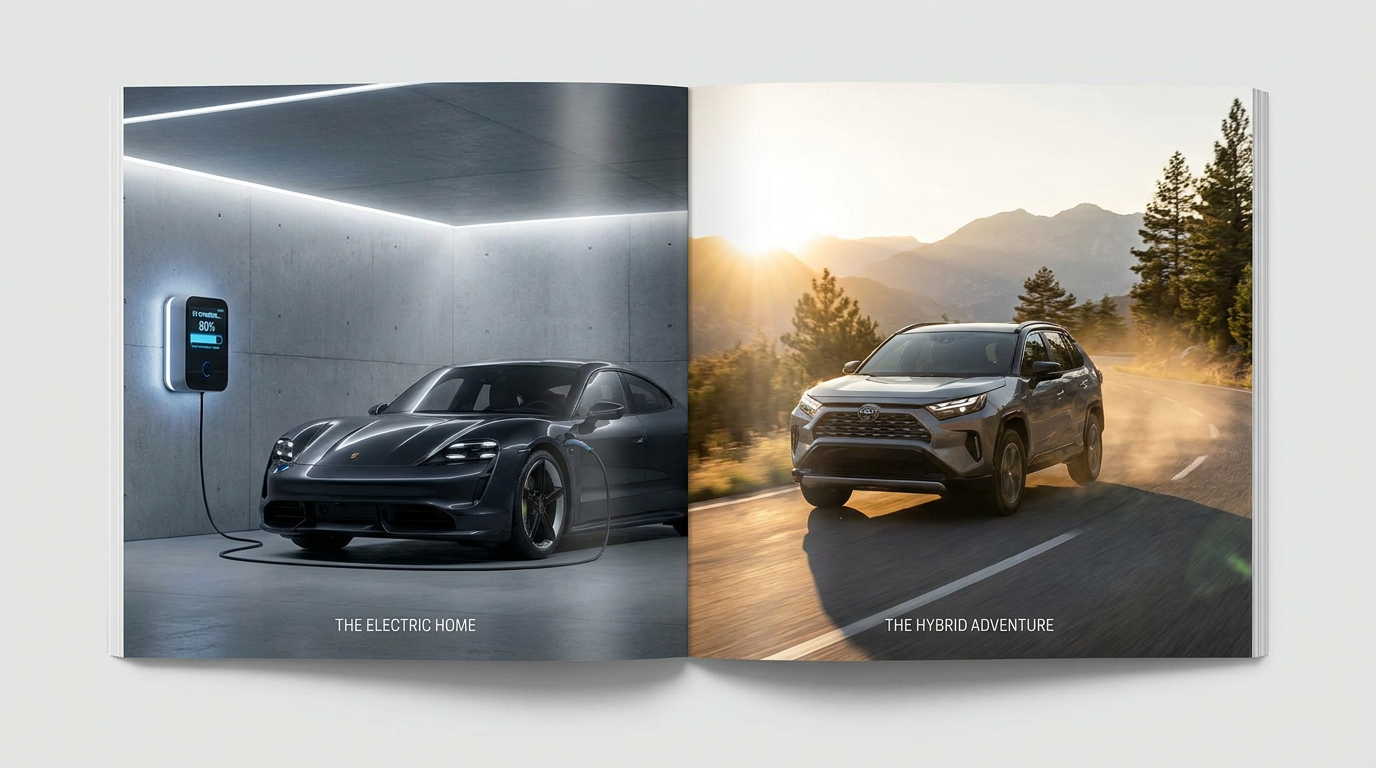
The core architectural trade-off defines the evidence for and against each platform. A battery-electric vehicle relies entirely on a large battery pack and electric motors, eliminating the internal combustion engine completely. The argument for this approach is mechanical simplicity and zero tailpipe emissions, while the argument against it centers on reliance on public charging infrastructure for long trips. Conversely, a plug-in hybrid carries a smaller battery for daily electric driving alongside a traditional gas engine. The evidence supporting plug-in hybrids highlights their flexibility, but the counter-argument points to the inherent inefficiency of carrying two complete powertrains.[4][7]
When analyzing upfront costs, the evidence strongly favors the hybrid approach in the current market. Industry data for 2026 reveals that the average new battery-electric vehicle commands a sticker price of roughly $62,000, while the average hybrid and plug-in hybrid models sit significantly lower at around $47,600. Without the $7,500 federal tax offset that previously subsidized electric purchases, buyers face a stark $14,400 premium. For cost-conscious consumers, financing this gap at current interest rates adds nearly $290 to a monthly payment, making the plug-in hybrid a highly attractive financial entry point.[2][3]

However, the long-term cost of ownership analysis flips the advantage back toward fully electric vehicles. The evidence against plug-in hybrids lies in their maintenance burden; they are the most mechanically complex vehicles on the road, requiring oil changes, transmission fluid, and spark plugs alongside high-voltage battery management. Electric vehicles average roughly $949 in annual maintenance compared to $1,279 for gas and hybrid vehicles. Over a five-year ownership period, the absence of routine engine maintenance and the significantly lower cost of electricity compared to gasoline allows the battery-electric vehicle to aggressively claw back its initial purchase premium.[3][7]
Range anxiety, once the primary argument against electric vehicles, has been largely neutralized by 2026 technological standards. Modern battery-electric models routinely achieve 600 kilometers, or roughly 370 miles, on a single charge. For the vast majority of drivers, this covers an entire week of commuting without needing to plug in. Furthermore, the expansion of reliable fast-charging networks across major highway corridors has transformed road trips from a logistical puzzle into a routine experience, weakening the historical argument that a gas engine is strictly necessary for long-distance travel.[2][4]
Range anxiety, once the primary argument against electric vehicles, has been largely neutralized by 2026 technological standards.
Simultaneously, the argument for plug-in hybrids has been bolstered by massive improvements in their electric-only range. Early iterations barely managed twenty miles before the gas engine engaged, but 2026 models have fundamentally changed the equation. The Mercedes-Benz GLC 350e now delivers up to 54 miles of pure electric driving, while the Toyota RAV4 Prime consistently hits 52 miles. Given that the average daily commute is roughly 42 miles, a disciplined owner who charges nightly can drive a plug-in hybrid for months without burning a single drop of gasoline, effectively turning it into a pure electric vehicle for daily use.[4][5][6]
Despite the impressive capabilities of modern plug-in hybrids, real-world owner satisfaction data reveals a clear winner. The 2026 J.D. Power Electric Vehicle Experience Ownership Study demonstrates that battery-electric owners report significantly higher satisfaction than their plug-in hybrid counterparts. Premium electric vehicles scored 786 out of 1,000 points, outperforming premium plug-in hybrids by a massive 114-point margin. The evidence suggests that while plug-in hybrids look perfect on paper, owners quickly grow frustrated with the persistent maintenance requirements of the gas engine and the slower charging speeds typical of hybrid battery packs.[1]

Environmental performance also provides a stark contrast in the trade-off analysis. The argument for battery-electric vehicles is absolute: they produce zero tailpipe emissions and their lifecycle carbon footprint is roughly half that of a combustion vehicle. The evidence against plug-in hybrids is that their environmental benefit relies entirely on user behavior. Real-world testing indicates that many plug-in hybrid owners neglect to charge their vehicles daily. When driven with a depleted battery, a plug-in hybrid simply becomes a heavy, inefficient gas car, emitting up to four times more carbon dioxide on the road than laboratory tests suggest.[4][7]
Ultimately, the fully electric route fits well when a buyer has reliable access to Level 2 charging at home or work, drives predictable daily routes, and prioritizes the lowest possible per-mile operating cost. It is the ideal choice for those who want to eliminate dealership service visits and are comfortable planning charging stops during occasional road trips. Conversely, the battery-electric vehicle does not fit well when a driver relies exclusively on public street charging or frequently tows heavy loads over long distances, where range degradation remains a factor.[2][3][7]

The plug-in hybrid route fits well when a driver wants the quiet, emission-free experience of electric commuting during the week but requires the absolute flexibility of a gasoline engine for spontaneous weekend travel. It serves as the perfect transitional technology for single-car households in regions with sparse charging infrastructure. However, the plug-in hybrid does not fit well when the buyer lacks a dedicated home outlet to charge the battery overnight; without daily charging, the vehicle loses its primary advantage, leaving the owner with the higher purchase price of a hybrid and the running costs of a standard gasoline engine.[2][5][7]
How we got here
Early 2010s
First-generation plug-in hybrids like the Chevrolet Volt and Toyota Prius Plug-In debut with limited electric ranges of 10 to 35 miles.
2020–2023
Battery-electric vehicles achieve mainstream adoption, driven by 300-mile ranges and the expansion of reliable fast-charging networks.
Late 2025
Key federal tax credits for electric vehicles expire or phase out, dramatically shifting the upfront cost comparison between EVs and hybrids.
2026
Next-generation PHEVs hit the market with electric ranges exceeding 50 miles, while BEV owner satisfaction reaches all-time highs.
Viewpoints in depth
Battery Electric Advocates
Prioritize total lifecycle savings, mechanical simplicity, and zero emissions.
This camp argues that the internal combustion engine is a legacy technology that introduces unnecessary maintenance liabilities. They point to data showing that EVs save over $300 annually in maintenance alone, avoiding oil changes and transmission services. For these advocates, the expanding fast-charging network has solved the road-trip problem, making the dual-powertrain complexity of a PHEV an obsolete compromise.
Plug-in Hybrid Pragmatists
Value the flexibility of a gas engine combined with the daily savings of electric commuting.
Pragmatists argue that PHEVs reflect the reality of current infrastructure, especially for drivers outside major urban centers. By offering 40 to 50 miles of electric range, modern PHEVs cover the vast majority of daily driving without burning gas. This camp believes that carrying a gas tank is a necessary insurance policy for long trips, eliminating range anxiety while still delivering significant environmental and financial benefits during the workweek.
Cost-Conscious Consumers
Focus strictly on upfront sticker prices and immediate monthly financing costs.
With the expiration of broad federal tax credits, this viewpoint emphasizes the stark $14,000 average price gap between new EVs and hybrid models. They argue that it can take a decade of fuel savings to break even on the higher initial purchase price of a fully electric vehicle. For these buyers, standard hybrids or entry-level PHEVs represent the most financially responsible way to reduce fuel consumption without taking on massive auto loans.
What we don't know
- How the secondary market will price used 2026 PHEVs once their battery degradation begins to affect their already limited electric range.
- Whether state-level incentives will expand to fill the gap left by the expiration of federal EV tax credits.
Key terms
- Battery Electric Vehicle (BEV)
- A vehicle powered entirely by a battery pack and electric motors, with no internal combustion engine or gas tank.
- Plug-in Hybrid Electric Vehicle (PHEV)
- A vehicle that combines a traditional gas engine with a large battery that can be plugged in, allowing for short trips on pure electricity before switching to gas.
- Level 2 Charging
- A 240-volt charging system, typically installed in homes or workplaces, that can fully recharge an EV overnight or a PHEV in a few hours.
- Regenerative Braking
- A system that captures the kinetic energy normally lost during braking and converts it into electricity to recharge the vehicle's battery.
- Tailpipe Emissions
- The greenhouse gases and pollutants released directly into the atmosphere from a vehicle's exhaust system while driving.
Frequently asked
Do I still get a federal tax credit for buying an EV in 2026?
Broad federal tax credits like the Clean Vehicle Credit expired for many models in late 2025. However, some state-level incentives and specific lease loopholes may still apply depending on your location.
How far can a 2026 plug-in hybrid drive on electricity alone?
Modern PHEVs have significantly improved, with models like the Toyota RAV4 Prime and Mercedes-Benz GLC 350e offering between 48 and 54 miles of pure electric range before the gas engine turns on.
Is an EV or a PHEV cheaper to maintain?
A fully electric vehicle is significantly cheaper to maintain. EVs lack an internal combustion engine, meaning they never need oil changes, spark plugs, or transmission fluid, saving owners roughly $330 annually compared to PHEVs.
Can I charge a plug-in hybrid at a public fast charger?
Most PHEVs are designed for Level 2 home charging and do not support DC fast charging. However, a few premium 2026 models, like the Mercedes-Benz GLC 350e, now include fast-charging capabilities for quick top-ups on the road.
Sources
Source coverage
7 outlets
3 viewpoints surfaced





[1]J.D. PowerBattery Electric Advocates
EV Owner Satisfaction Climbs to New High Amid Sales Slump, J.D. Power Finds
Read on J.D. Power →[2]CarzingPlug-in Hybrid Pragmatists
The honest case for a hybrid in 2026
Read on Carzing →[3]Automotive MustBattery Electric Advocates
EV vs PHEV: 2026 Cost of Ownership Analysis
Read on Automotive Must →[4]CarbarnBattery Electric Advocates
Hybrid vs Plug-In Hybrid vs Electric - Expert Guide to Smart Car Buying
Read on Carbarn →[5]TopSpeedPlug-in Hybrid Pragmatists
Technology Drives The 2026 Mercedes-Benz GLC 350e 4Matic's Electric Range
Read on TopSpeed →[6]TrueCarCost-Conscious Consumers
Best Plug-In Hybrids for 2026
Read on TrueCar →[7]ZenithCost-Conscious Consumers
EV vs PHEV: What's the difference in 2026?
Read on Zenith →



Every angle. Every day.
Get shopping stories with full source coverage and perspective breakdowns delivered to your inbox.