
FIFA Faces Global Backlash Over $20 Billion Plan to Sell World Cup Commercial Rights
FIFA President Gianni Infantino's proposal to sell a minority stake in the World Cup's commercial rights to private investors has sparked fury from UEFA, prompting emergency talks and threats of a European boycott.

- FIFA and Developing Nations
- Argues the deal unlocks vital immediate capital to grow the sport globally.
- UEFA and European Leagues
- Views the private equity sale as a dangerous commodification of the sport's governance.
- Political and Financial Critics
- Questions the transparency of the bidding process and the political optics of the proposed investors.
Perspectives this story doesn't cover
- Fans and Supporters Groups
- Players' Unions (FIFPro)
- $20 billion
- Proposed valuation of FIFA Forward Enterprise
- $4.2 billion
- Upfront capital FIFA aims to raise
- 20-30%
- Minority stake offered to private investors
- $20 million
- Potential one-time payout per member association
Global football is bracing for an unprecedented institutional clash after FIFA President Gianni Infantino unveiled a radical proposal to sell a minority stake in the commercial rights of the World Cup. The plan centers on the creation of a new subsidiary, dubbed FIFA Forward Enterprise (FFE), which would consolidate the highly lucrative broadcasting, sponsorship, and licensing rights for FIFA's marquee tournaments, including the men's and women's World Cups. By opening the door to private equity, the global governing body aims to fundamentally restructure how the world's most popular sport monetizes its biggest events, trading future passive income for a massive immediate cash injection.[2]
Under the blueprint circulated to potential investors and member associations, FFE is valued at approximately $20 billion. FIFA intends to sell a 20 to 30 percent non-controlling stake in the new entity, seeking to raise an immediate $4.2 billion in upfront capital. While FIFA insists it will retain majority ownership and absolute control over sporting governance, competition formats, and the international match calendar, the sheer scale of the financial pivot has sent shockwaves through the sport's traditional power structures. Critics argue that separating the commercial engine from the sporting body creates an inherent conflict of interest that will eventually compromise the tournament's integrity.[3][4]
The financial architecture of the deal is being guided by Wall Street heavyweights, signaling FIFA's aggressive push into modern corporate finance. JPMorgan is reportedly acting as the primary financial advisor, while Thrive Eternal—an investment vehicle established by Joshua Kushner—is expected to lead the private investor consortium. The involvement of Kushner, the younger brother of Donald Trump's son-in-law Jared Kushner, has immediately politicized the transaction in the United States. The connection has drawn sharp criticism from Democratic lawmakers, who publicly question the transparency of the bidding process and the optics of political proximity between FIFA leadership and the Trump-adjacent family.[3][5]
To secure the necessary votes for the proposal, Infantino has attached a massive financial incentive designed to appeal directly to FIFA's 211 member associations. If the FFE structure is approved, each national federation would be eligible to receive a one-time capital injection or tradable equity stake worth up to $20 million. For many smaller federations in Africa, Asia, and the Caribbean, an immediate $20 million windfall represents a generational investment in local infrastructure, youth academies, and grassroots development. Infantino has publicly framed the initiative as a necessary step toward the 'democratization of football worldwide,' using the payout as a powerful political lever.[3][4][7]
To secure the necessary votes for the proposal, Infantino has attached a massive financial incentive designed to appeal directly to FIFA's 211 member associations.
However, the reaction from European football's governing body has been swift, unified, and fiercely combative. UEFA issued a blistering public statement condemning the commercialization of the sport's governance, declaring that 'the soul and governance of football are not assets to trade' and explicitly warning that the World Cup 'is not FIFA's to sell.' European officials have expressed deep concern over the lack of transparency regarding who ultimately profits from the new corporate structure. They fear that once private investors hold a multibillion-dollar stake, they will inevitably pressure FIFA to expand tournaments or alter schedules purely to maximize quarterly returns.[1][3][6]
The institutional rift has rapidly escalated to the point of a potential schism in international football. UEFA is convening an emergency meeting of its 55 member associations this week in Switzerland to formulate a coordinated response. According to multiple reports, the options on the table are severe, with European nations actively discussing the possibility of boycotting the 2030 World Cup if FIFA forces the private equity sale through without broader consensus. The English Football Association has already voiced its 'deep concern' over being entirely blindsided by the multibillion-dollar proposition, signaling that Europe's wealthiest federations are prepared to push back.[1][6][7]
The dispute highlights a long-simmering ideological war over the future and control of global football. On one side, FIFA seeks to leverage the immense global appeal of the World Cup to generate immediate liquidity, bypassing the traditional four-year revenue cycle to fund aggressive global expansion and close the wealth gap between continents. On the other side, UEFA and powerful domestic leagues view the intrusion of private equity into international football as a dangerous precedent. They argue that treating the World Cup as a corporate asset will erode the sport's foundational governance and prioritize shareholder dividends over sporting merit.[2][6]
The coming weeks will serve as a critical stress test for Infantino's leadership and the overall unity of the global game. The FFE proposal still requires formal approval from the FIFA Council and a majority vote from the member associations. While the promise of a $20 million payout will likely secure a formidable voting bloc among developing football nations, pushing the deal through against the unified resistance of Europe—the sport's financial and competitive epicenter—risks fracturing international football. As the emergency meetings commence, the sport faces a defining choice between unprecedented financial modernization and the preservation of its traditional institutional boundaries.[4][7]
Key points
- FIFA has proposed creating a $20 billion commercial subsidiary to manage World Cup rights.
- The governing body aims to raise $4.2 billion by selling a minority stake to private investors.
- Each of FIFA's 211 member associations could receive up to $20 million if the deal passes.
- UEFA has strongly condemned the plan, with member nations threatening a World Cup boycott.
How we got here
2018
FIFA explores a $25 billion private investment offer from SoftBank for new tournaments, which ultimately collapses under European opposition.
July 28, 2026
FIFA officially circulates the $20 billion 'FIFA Forward Enterprise' proposal to member associations.
Late July 2026
UEFA convenes an emergency meeting of its 55 member nations to discuss a potential boycott of future World Cups.
Sources
Source coverage
7 outlets
3 viewpoints surfaced







- [1]BBC SportUEFA and European Leagues
Uefa World Cup boycott may be raised over Fifa plan
Read on BBC Sport → - [2]Gulf NewsFIFA and Developing Nations
FIFA's $20 billion minority stake sale in World Cup commercial rights explained
Read on Gulf News → - [3]ComplexPolitical and Financial Critics
FIFA President Gianni Infantino Reportedly Pushing $20 Billion Plan to Sell World Cup Commercial Rights
Read on Complex → - [4]Foot AfricaFIFA and Developing Nations
FIFA is looking to open up the capital of a new entity tasked with commercially exploiting its main competitions
Read on Foot Africa → - [5]Irish StarPolitical and Financial Critics
FIFA World Cup stake sale plan sparks outrage among Democrats as Trump family involved
Read on Irish Star → - [6]The IndependentUEFA and European Leagues
Fifa causes uproar with plan to sell off stakes in World Cup to private investment
Read on The Independent → - [7]The Sun NigeriaUEFA and European Leagues
UEFA threatens World Cup boycott over FIFA investment plan
Read on The Sun Nigeria →
Comments
More in Sports
See all →Colombia National Team
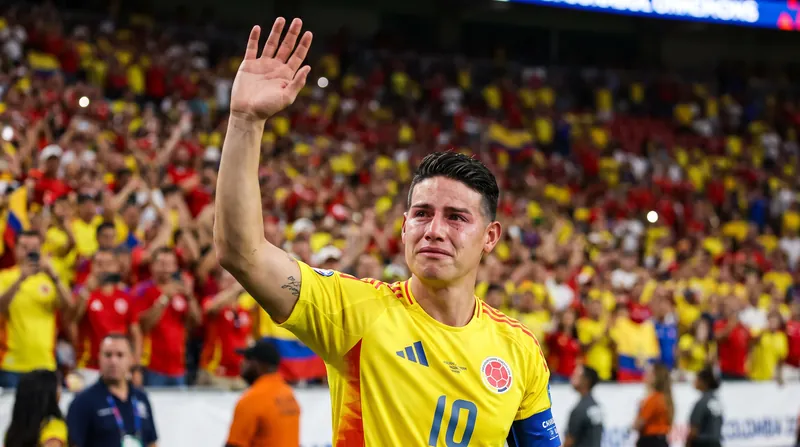
James Rodríguez Retires From International Football as Colombia's All-Time Leader
5 sources
Trade
Bulldogs Secure Fitzgerald to 2030 as Butters and King Mega-Deals Reshape AFL Landscape
7 sources

Standings
Beaugrand and Vilaça Hold the Cards as WTCS Grand Final Looms in Pontevedra
2 sources

Storyline
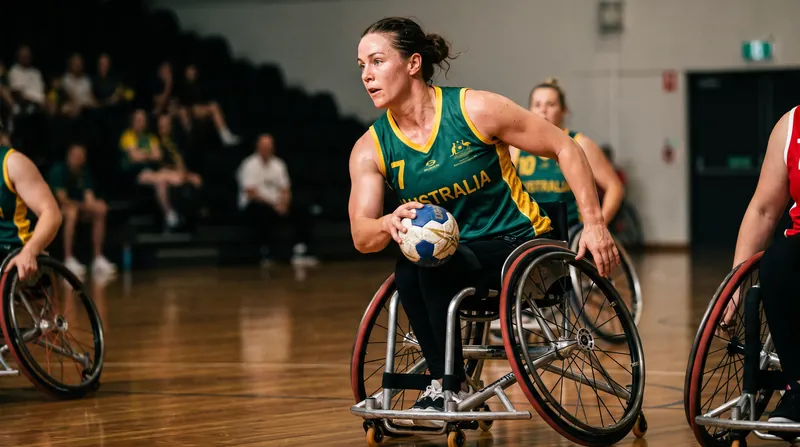
After Career-Ending Injury, Brianna Keyes Returns to the World Stage in Wheelchair Handball
3 sources
Every angle. Every day.
Get Sports stories with full source coverage and perspective breakdowns delivered to your inbox.