
DNA Sequencing Solves 26-Year Mystery of Remains Found in Olympic National Park
Advanced forensic genetic genealogy has identified human remains discovered in a remote Washington tent in 2000 as Joseph Louis Serrao Jr., a Hawaii native missing since 1998.
By Factlen Editorial Team
- Forensic Investigators
- Emphasize the power of advanced genome sequencing to resolve decades-old cold cases where traditional methods failed.
- Families of the Missing
- Value the emotional closure that comes from finally knowing the fate of a loved one after decades of uncertainty.
- Privacy Advocates
- Raise ethical questions about the expanding use of consumer DNA databases by law enforcement agencies.
What's not represented
- · Consumer DNA database users who unknowingly contribute to these investigations
- · Local communities near the Sol Duc River drainage
Why this matters
The resolution of a 26-year-old mystery demonstrates how rapid advancements in forensic genetic genealogy are fundamentally transforming law enforcement's ability to identify unknown remains. This breakthrough technology offers a new blueprint for clearing thousands of cold cases nationwide, providing long-awaited closure to families who have endured decades of uncertainty.
Key points
- Skeletal remains discovered in a tent in Olympic National Park in 2000 have been identified as Joseph Louis Serrao Jr.
- Serrao, originally from Hawaii, was last heard from by his family in 1998.
- Initial investigations stalled because the degraded remains yielded no usable fingerprints or traditional DNA matches.
- In 2024, the King County Medical Examiner partnered with Othram to perform forensic-grade genome sequencing on the remains.
- By cross-referencing the genetic profile with public genealogy databases, investigators located Serrao's living relatives.
- The exact cause and manner of Serrao's death remain undetermined due to the passage of time.
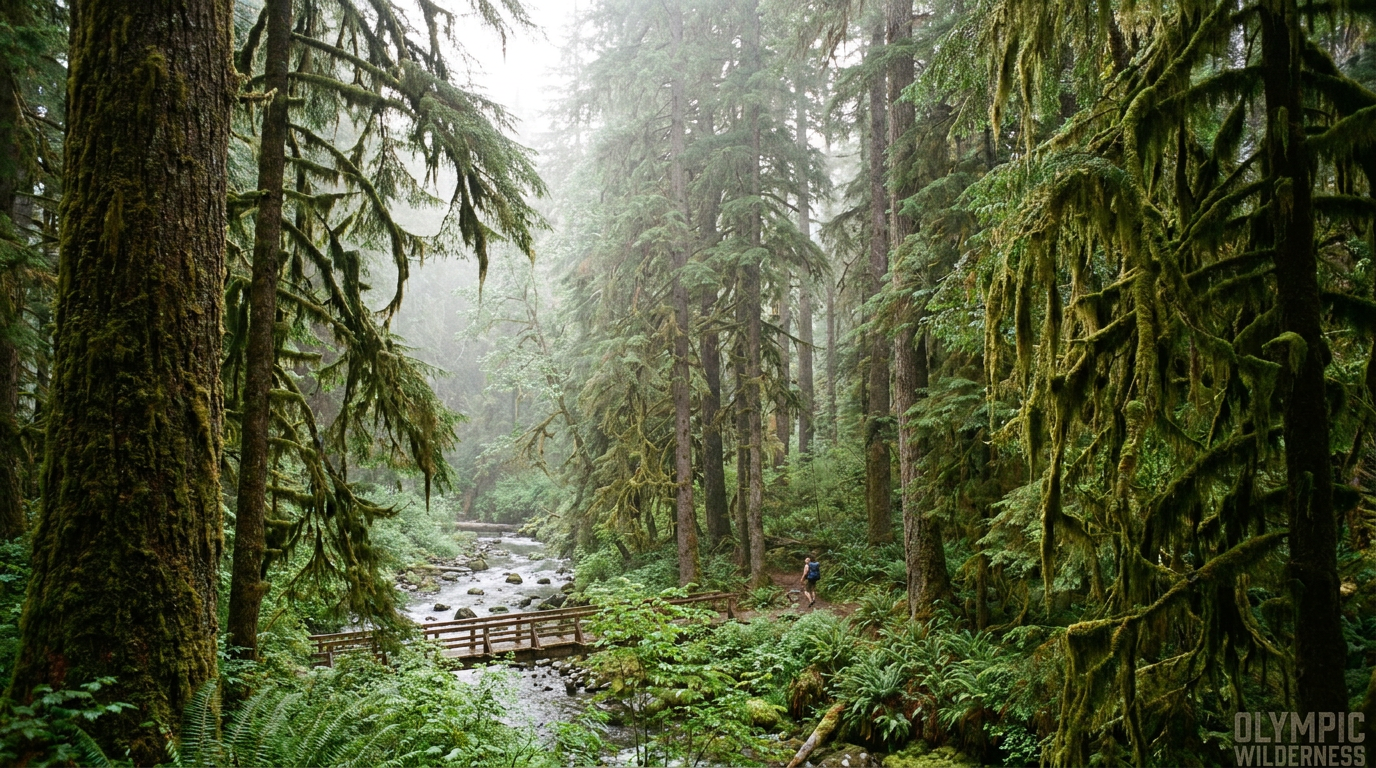
In July 2000, a researcher traversing the rugged, isolated backcountry of Washington’s Olympic National Park stumbled upon a haunting scene. Deep within the Sol Duc River drainage—a dense, temperate rainforest characterized by towering conifers and relentless moisture—sat a green-and-black bivy-style tent. Inside, tucked into a sleeping bag, were the skeletal remains of an unidentified individual. Surrounding the body were the hallmarks of a prepared hiker: binoculars, a Jansport day pack, a folding saw, a space blanket, and winter clothing. Yet, despite the abundance of personal effects, investigators found no identification cards, no journal, and no immediate clues to the person's identity.[1][2]
The King County Medical Examiner’s Office took custody of the remains, initiating what would become a quarter-century quest for answers. Pathologists determined the decedent was a male between the ages of 30 and 50, and estimated that he had been dead for anywhere from six months to four years before his discovery. The Washington State Patrol Crime Laboratory meticulously processed the items recovered from the campsite, hoping to lift usable latent fingerprints from the gear. However, the harsh environmental conditions of the Pacific Northwest had degraded the evidence, leaving investigators without a match in national databases.[1][4]
For decades, the case languished as a John Doe, entered into the National Missing and Unidentified Persons System as UP11888. The trail had gone completely cold, a frustrating reality for the National Park Service Investigative Services Branch, which periodically reviewed the file. The inability to return the remains to a grieving family underscored the limitations of late-20th-century forensic science, which relied heavily on intact fingerprints, dental records, or direct DNA comparisons with a known suspect or relative.[5][6]
The turning point arrived in 2024, driven by rapid advancements in the field of forensic genetic genealogy. A forensic anthropologist with the King County Medical Examiner’s Office, recognizing that traditional methods had been exhausted, opted to submit a sample of the skeletal remains to Othram, a Texas-based laboratory specializing in resolving intractable cold cases. Unlike standard forensic DNA testing, which looks at a limited number of markers to match against criminal databases, Othram utilizes a proprietary technique known as Forensic-Grade Genome Sequencing.[1][5]

This advanced sequencing technology is specifically designed to handle highly degraded, contaminated, or microscopic DNA samples—exactly the kind of evidence recovered from a skeleton exposed to the elements for years. Scientists at the laboratory successfully extracted viable DNA from the bone fragments and constructed a comprehensive genetic profile. This profile contained hundreds of thousands of genetic markers, providing a map detailed enough to trace distant familial lineages rather than just direct parent-child relationships.[5]
With the genetic profile established, Othram’s in-house genealogy team began the painstaking work of cross-referencing the data against public consumer DNA databases. By mapping shared genetic segments, they constructed sprawling family trees, working backward from distant cousins to identify common ancestors, and then tracing forward to locate potential living relatives of the unidentified man. By 2025, this complex genetic triangulation yielded a promising investigative lead, pointing toward a specific family lineage with roots in the Pacific.[2][5]
Armed with this new intelligence, the National Park Service Investigative Services Branch mobilized. Investigators reached out to potential relatives scattered across several states, focusing heavily on a family based in Hawaii. Through coordinated interviews, a heartbreaking narrative emerged: the family had a relative who had relocated to Washington state in the late 1990s and subsequently vanished. They had not heard from him since 1998, a timeline that perfectly aligned with the medical examiner's original estimate of the time of death.[1][3]
Armed with this new intelligence, the National Park Service Investigative Services Branch mobilized.
To definitively confirm the hypothesis, investigators collected reference DNA samples from the living family members. These samples were subjected to rapid relationship testing, comparing them directly against the profile extracted from the Sol Duc River remains. The genetic, genealogical, and circumstantial evidence aligned perfectly. On June 10, 2026, the National Park Service officially announced that the remains belonged to Joseph Louis Serrao Jr., born December 3, 1960.[1][5]

The identification of Serrao, who was 37 or 38 years old at the time of his disappearance, brings a profound measure of closure to a family that spent 28 years wondering about his fate. Debra Flowers, deputy chief of the National Park Service Investigative Services Branch, praised the persistence of the multi-agency coalition. She noted that while the case remained unresolved for nearly three decades, investigators never abandoned the goal of returning Serrao's name to him and providing answers to his loved ones.[1][4]
The resolution of the Serrao case highlights a broader transformation in law enforcement and missing persons investigations. Forensic genetic genealogy has rapidly evolved from a novel experimental technique—most famously used to identify the Golden State Killer in 2018—into a standard, highly effective tool for clearing cold case backlogs. Agencies across the country are increasingly partnering with specialized private labs to re-examine unidentified remains that have sat in morgues for decades, fundamentally altering the landscape of forensic science.[5][6]
This shift is not without its complexities. The increasing reliance on genetic genealogy has sparked ongoing debates among privacy advocates regarding the use of consumer DNA data by state entities. While databases used for unidentified remains generally operate on an opt-in basis, the sheer power of the technology means that a single individual's decision to share their DNA can inadvertently expose the genetic relationships of thousands of distant relatives, raising questions about collective genetic privacy.[6]
Nevertheless, the success of these techniques in providing humanitarian closure is undeniable. Companies like Othram actively encourage individuals who have taken consumer DNA tests to upload their data to specialized registries, such as DNASolves, which are designed specifically to aid law enforcement in identifying human remains rather than prosecuting crimes. Expanding the pool of available genetic data exponentially increases the likelihood of successful identifications, turning distant cousins into the key that unlocks decades-old mysteries.[5]

Despite the triumph of identifying Serrao, significant uncertainties remain, illustrating the limits of what science can reconstruct after a quarter-century. The exact cause and manner of Serrao's death are still officially undetermined. The skeletal remains did not present obvious signs of skeletal trauma that would definitively point to foul play, nor did the scene suggest a sudden, catastrophic accident. Whether he succumbed to the harsh Pacific Northwest elements, suffered a sudden medical emergency, or faced another fate entirely remains locked in the past.[3][4]
Furthermore, the circumstances that led Serrao to the remote Sol Duc backcountry are entirely unknown. While the presence of a tent, sleeping bag, and hiking gear indicates he was prepared for a wilderness excursion, investigators have not uncovered why he chose that specific, isolated location. It remains a mystery whether he was an experienced outdoorsman seeking solitude, or if he was simply passing through the dense, unforgiving terrain of the Olympic Peninsula.[1][2]
The answers to these final questions may never be known, swallowed by the passage of time and the dense canopy of the national park. Yet, the restoration of his identity represents a monumental victory for forensic science and a profound relief for his family. Joseph Louis Serrao Jr. is no longer an anonymous John Doe in a forgotten forest; he has been returned to his history, proving that even the coldest cases can eventually find the light.[1][4]
How we got here
1998
Joseph Louis Serrao Jr.'s family in Hawaii has their last known contact with him.
July 2000
A researcher discovers Serrao's skeletal remains inside a tent in Olympic National Park.
2024
The King County Medical Examiner's Office submits a DNA sample from the remains to forensic lab Othram.
2025
Othram identifies possible family connections using forensic genetic genealogy.
June 2026
The National Park Service officially announces the identification of the remains.
Viewpoints in depth
Forensic Investigators
Emphasizing the technological leap that makes solving decades-old cold cases possible.
For law enforcement and medical examiners, the Serrao case represents a triumph of persistence and technological innovation. Investigators emphasize that prior to the advent of forensic genetic genealogy, cases lacking usable fingerprints or dental records were virtually unsolvable once leads dried up. The ability to extract viable DNA from bones exposed to the elements for years, and then map that DNA across vast consumer databases, has fundamentally shifted the paradigm of missing persons investigations. They view this technology as a vital public service that clears backlogs and brings long-overdue answers to communities.
Families of the Missing
Focusing on the profound emotional closure provided by definitive identification.
From the perspective of families who have endured decades of ambiguous loss, the primary value of these genetic breakthroughs is emotional closure. The agonizing uncertainty of not knowing whether a loved one is alive, in danger, or deceased takes a severe psychological toll. For Serrao's family, the 28-year wait for answers was resolved not by a sudden confession or a discovered diary, but by the quiet, methodical matching of genetic markers. Advocates for missing persons stress that returning a name to an unidentified decedent is a fundamental act of dignity.
Privacy Advocates
Raising ethical concerns about the expanding scope of genetic databases.
While celebrating the humanitarian outcome of identifying human remains, privacy advocates caution against the unchecked expansion of law enforcement access to genetic data. They point out that when an individual uploads their DNA to a consumer database, they are inadvertently making privacy decisions for thousands of their distant relatives who never consented to be searched. Advocates argue for strict regulatory frameworks to ensure that forensic genetic genealogy is used exclusively for severe crimes and identifying the deceased, preventing potential overreach or the misuse of sensitive biological information.
What we don't know
- The exact cause and manner of Joseph Louis Serrao Jr.'s death.
- Why Serrao traveled to the remote Sol Duc River drainage area of Olympic National Park.
- Whether Serrao was alone during his excursion into the backcountry.
Key terms
- Forensic Genetic Genealogy
- The practice of using DNA testing in combination with traditional genealogical and historical records to identify unknown individuals.
- Forensic-Grade Genome Sequencing
- An advanced DNA analysis technique designed to build comprehensive genetic profiles from highly degraded or contaminated evidence.
- Latent Fingerprints
- Invisible impressions left by the friction ridges of a human finger, which investigators attempt to develop and use for identification.
- Bivy Tent
- A small, lightweight, single-person shelter designed for minimalist camping and protection from the elements.
Frequently asked
How were the remains finally identified?
Investigators used forensic genetic genealogy, extracting DNA from the skeletal remains and comparing it against public consumer DNA databases to find distant relatives.
Where was Joseph Louis Serrao Jr. found?
His remains were discovered inside a tent in a remote area of the Sol Duc River drainage in Washington's Olympic National Park in July 2000.
Do authorities know how he died?
No. The exact cause and manner of death remain undetermined due to the passage of time and the condition of the remains.
What is forensic genetic genealogy?
It is a technique that combines DNA analysis with traditional genealogical research to identify suspects or unidentified remains by tracing their family lineage through shared genetic markers.
Sources
Source coverage
6 outlets
3 viewpoints surfaced






[1]National Park ServiceForensic Investigators
Human Remains Discovered in Olympic National Park in 2000 Identified
Read on National Park Service →[2]CBS NewsFamilies of the Missing
Remains found in sleeping bag at national park identified after 26 years as Joseph Louis Serrao Jr.
Read on CBS News →[3]SFGateFamilies of the Missing
Remains found in Olympic National Park 26 years ago identified as missing Hawaii man
Read on SFGate →[4]KGWFamilies of the Missing
Human remains found in Olympic National Park identified after nearly 30 years
Read on KGW →[5]DNASolvesForensic Investigators
Clallam County, WA 2000 John Doe Identified as Joseph Louis Serrao, Jr.
Read on DNASolves →[6]The New York TimesPrivacy Advocates
26-Year Mystery of a Skeleton in a Tent Ends With DNA Identification
Read on The New York Times →

More in science
See all 74 stories →Cellular Imaging
The Laser Phase Plate: A Century-Old Physics Trick Just Unlocked the Human Proteome
5 sources

Cancer Vaccines
Personalized mRNA Cancer Vaccine Halves Melanoma Recurrence in 5-Year Milestone
8 sources

Cryo-EM Advance
Laser Phase Plate Breakthrough Illuminates the Smallest Proteins in Human Cells
7 sources

Ocean Tech
How Solar LEDs and Acoustic Pingers Are Solving the Global Bycatch Crisis
6 sources
Every angle. Every day.
Get science stories with full source coverage and perspective breakdowns delivered to your inbox.