
Conservation Optimism: Why Nature Documentaries Are Ditching Doom and Gloom
A growing movement of filmmakers and environmental journalists is pivoting away from apocalyptic narratives, embracing 'solutions journalism' to combat audience apathy and showcase real-world ecological victories.
By Factlen Editorial Team
- Solutions-Focused Creators
- Filmmakers and producers who believe highlighting success is essential for inspiring audience action.
- Environmental Journalists
- Reporters who treat 'informed optimism' as a rigorous, data-driven discipline rather than naive hope.
- Media & Audience Researchers
- Analysts studying the psychological impact of news consumption and the rise of news avoidance.
- Editorial Synthesis
- An overarching analysis of how the documentary genre is evolving to meet modern audience needs.
What's not represented
- · Traditional investigative journalists who argue that relentless critique remains the only way to hold major polluters accountable.
- · Policymakers who rely on public alarm to pass sweeping environmental legislation.
Why this matters
As climate anxiety drives audiences away from crucial environmental news, this shift in storytelling proves that highlighting actionable solutions is the most effective way to inspire real-world conservation and restore public hope.
Key points
- Traditional 'doom and gloom' nature documentaries are increasingly driving audiences away due to news avoidance and climate anxiety.
- Roughly 40% of global audiences actively avoid the news, prompting a shift in how environmental stories are framed.
- Filmmakers are embracing 'solutions journalism,' focusing on successful, localized conservation interventions rather than just ecological destruction.
- PBS's Wild Hope series exemplifies this trend by highlighting grassroots efforts, such as ecotourism and sustainable farming, that restore biodiversity.
- Advocates stress that 'informed optimism' requires rigorous data to avoid greenwashing and prove that interventions are genuinely effective.
For decades, the standard environmental documentary followed a predictable, often devastating narrative arc. Audiences were treated to breathtaking, high-definition footage of pristine ecosystems and charismatic wildlife, only to be hit in the final act with the grim reality of their imminent destruction. This tonal whiplash was explicitly designed to shock viewers into action, utilizing the sheer scale of the climate crisis to demand immediate political and social change. However, as the volume of environmental media has exploded across streaming platforms, this apocalyptic framing has begun to yield diminishing returns. Rather than mobilizing the public, the relentless focus on irreversible catastrophe has inadvertently fostered a culture of deep despair, leaving viewers feeling that individual or even collective action is entirely futile against such overwhelming odds.[4][7]
Media researchers have identified this phenomenon as "news avoidance," a growing trend where audiences actively tune out specific topics to protect their mental health. According to global media studies, roughly forty percent of audiences now actively avoid the news, with environmental reporting frequently cited as a primary trigger for anxiety. When every documentary ends with a melting glacier or a burning forest, the psychological toll becomes too heavy for the average viewer to bear. This mass disengagement presents a critical threat to the conservation movement; if the public refuses to watch, the underlying message is entirely lost, regardless of how beautifully it is filmed.[3][6]
In response to this audience fatigue, a new wave of documentary filmmakers and environmental journalists is embracing a radically different framework. Termed "conservation optimism" or "solutions journalism," this approach deliberately pivots away from the traditional doom-and-gloom narrative. Instead of solely documenting the destruction of the natural world, these creators focus on ecological resilience, successful interventions, and the local changemakers who are actively reversing environmental damage. The goal is not to ignore the very real threats facing the biosphere, but to provide audiences with a tangible blueprint for success, proving that positive change is still possible.[1][4]

Solutions journalism, in this context, requires a rigorous, evidence-based examination of what is actually working in the field of conservation. Traditional journalistic instincts often dictate that if a proposed solution is ninety percent effective, the story should focus on the ten percent failure rate to maintain a critical edge. The new model flips this convention entirely. It demands that reporters and filmmakers analyze the ninety percent success rate to understand the underlying mechanisms, asking how specific interventions can be scaled and replicated in other vulnerable regions.[5]
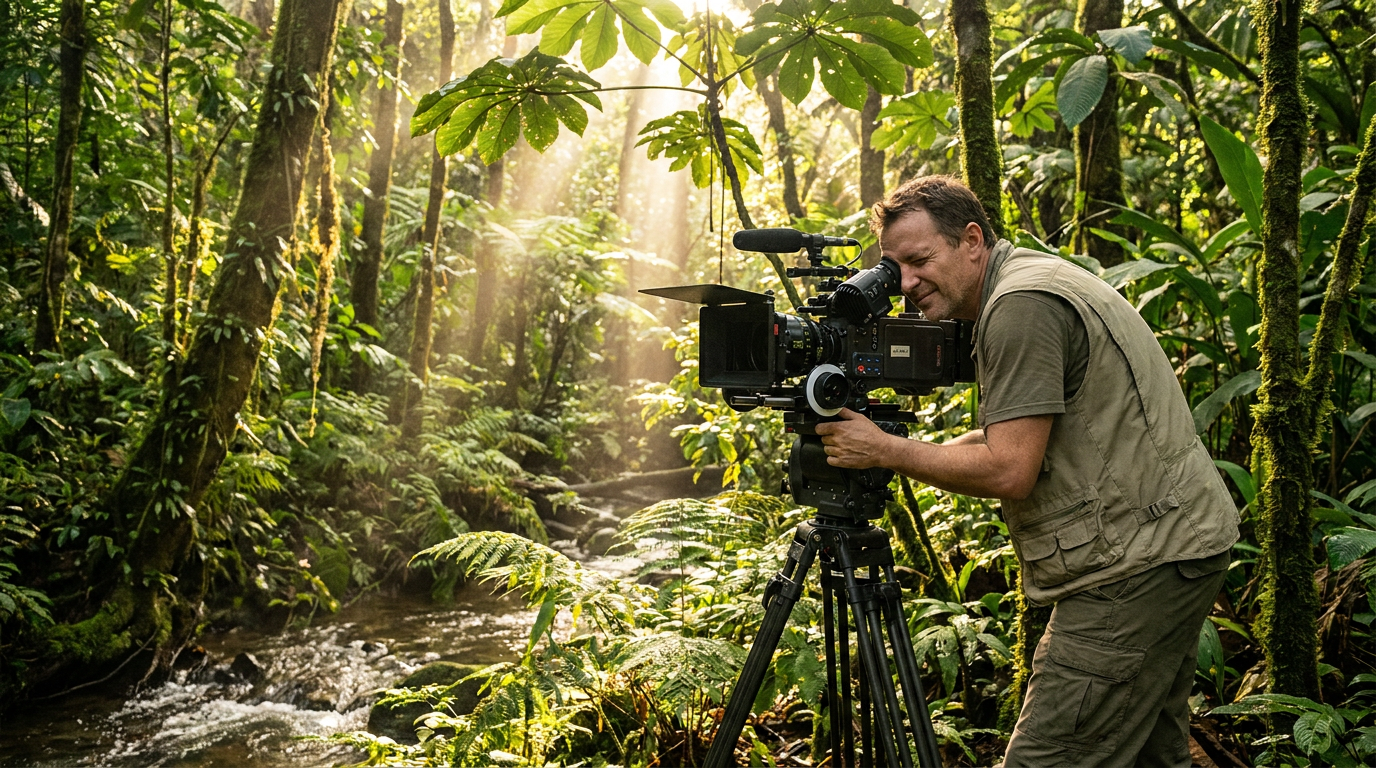
A prime example of this tonal shift is the PBS documentary series Wild Hope, produced by Tangled Bank Studios. The series explicitly aims to flip the environmental narrative on its head by highlighting bold interventions, unexpected alliances, and the inherent resilience of nature when given a chance to recover. Across its eight episodes, the series bypasses the standard global climate summits and political gridlock to focus entirely on grassroots action. By doing so, it demonstrates that meaningful ecological restoration often begins at the community level, proving that massive budgets and international treaties are not the only avenues for securing biodiversity.[2]
Rather than focusing solely on the tragedy of deforestation or the horrors of poaching, Wild Hope dedicates its runtime to tangible, hard-won victories. Episodes explore how local communities in East Lombok successfully transitioned from shark hunting to a sustainable ecotourism venture, fundamentally altering their local economy while protecting a vital apex predator. Another installment details how farmers in Zanzibar began cultivating butterflies to halt forest clearing, providing a viable alternative income that directly incentivizes the preservation of their surrounding ecosystem.[2]

Rather than focusing solely on the tragedy of deforestation or the horrors of poaching, Wild Hope dedicates its runtime to tangible, hard-won victories.
A core tenet of this new documentary style is decentering the traditional "Western savior" narrative that has historically dominated the genre. Instead, the camera focuses heavily on Indigenous land management and local grassroots efforts. By giving agency to those living on the frontlines of the climate crisis, these films demonstrate that the most effective solutions are often hyper-local and deeply rooted in traditional ecological knowledge. This shift not only provides a more accurate picture of global conservation but also empowers communities that are disproportionately affected by environmental degradation.[1][5]
Rhett Ayers Butler, founder of the environmental news platform Mongabay, describes this approach as the practice of "informed optimism." He argues that hope, in the context of environmental reporting, is not a naive feeling or a form of toxic positivity; rather, it is a strict journalistic discipline. It requires reporters to actively seek out the individuals and organizations charting a path forward in the face of immense adversity, presenting a more complete picture of the world that includes both the crisis and the cure.[1][5]
However, a major challenge in solutions-oriented filmmaking is the ever-present risk of "greenwashing"—amplifying superficial corporate sustainability efforts that do little to address systemic ecological issues. To maintain credibility and avoid becoming mere public relations vehicles, filmmakers must anchor their optimism in hard, verifiable data. Documentaries must showcase measurable species rebound, documented carbon reduction, or verified habitat expansion, ensuring that the hope they are selling is based on actual substance rather than empty promises.[5][7]

The shift toward conservation optimism is also profoundly transforming the mental health of the creators themselves. Environmental journalists and wildlife filmmakers have long suffered from high rates of burnout and secondary trauma after spending years documenting humanity's decline. The relentless exposure to ecological devastation takes a heavy psychological toll. Focusing on solutions provides a necessary emotional buffer, allowing these professionals to witness recovery and resilience rather than serving solely as the archivists of extinction.[4]
The audience reception to this tonal shift has been overwhelmingly positive, validating the pivot away from pure tragedy. Surveys of environmental journalists indicate that solutions-focused reporting not only restores audience trust but also significantly increases engagement metrics. Viewers are far more likely to share content, discuss the issues with their peers, and participate in local conservation efforts when they are provided with a clear, actionable path forward rather than a paralyzing sense of doom.[3]
Despite its growing popularity and proven effectiveness in retaining viewership, conservation optimism is not without its critics within the broader scientific community. Some environmentalists and climate scientists worry that highlighting localized victories might inadvertently breed complacency among the general public. There is a legitimate fear that audiences might watch a successful coral restoration project or a localized species rebound and falsely conclude that the broader climate crisis is already solved. If viewers believe the planet is healing on its own, it could reduce the vital public pressure needed to force governments and multinational corporations to enact the sweeping systemic changes required to halt global warming.[3][7]

The challenge for future nature documentaries lies in walking a delicate razor's edge: acknowledging the severe, overarching threats to the biosphere while simultaneously proving that targeted action yields real, measurable results. Filmmakers must contextualize their success stories, making it clear that while local victories are crucial, they are part of a much larger, ongoing battle. The goal is not to replace the environmental alarm bell with a comforting lullaby, but to follow the alarm with a clear, actionable exit strategy.[4][7]
As the genre continues to evolve, the fundamental definition of a "great" nature documentary is changing. It is no longer enough to simply capture the breathtaking beauty of the natural world and mourn its inevitable passing in high definition. The new standard demands that filmmakers also capture the ingenuity, resilience, and determination of those fighting to save it. By offering audiences not just a warning, but a viable way forward, these documentaries are transforming from passive entertainment into active catalysts for global ecological change.[7]
How we got here
Late 20th Century
Nature documentaries primarily focus on pristine, untouched wilderness, largely ignoring human impact.
2000s–2010s
The genre shifts to urgent 'doom and gloom' narratives, ending films with dire warnings about climate change and extinction.
2019
The Solutions Journalism Network and similar organizations begin heavily advocating for evidence-based reporting on environmental successes.
2023
PBS launches Wild Hope, a flagship documentary series entirely dedicated to local conservation victories.
2026
Solutions-focused storytelling becomes a dominant framework in environmental media, aiming to combat widespread audience news avoidance.
Viewpoints in depth
Solutions-Focused Creators
Filmmakers and producers who believe highlighting success is essential for inspiring audience action.
This camp argues that the traditional 'doom and gloom' narrative has reached a point of diminishing returns. By showcasing tangible victories—such as community-led ecotourism or successful species reintroduction—they aim to restore a sense of agency to the viewer. They believe that providing a blueprint for success is the most effective way to mobilize public support for conservation, as fear alone often leads to paralysis.
Environmental Journalists
Reporters who treat 'informed optimism' as a rigorous, data-driven discipline rather than naive hope.
For these professionals, solutions journalism is not about sugarcoating reality or producing feel-good fluff. It requires the same investigative rigor as traditional reporting. They emphasize the need to critically evaluate conservation efforts, relying on hard data to separate genuine ecological progress from corporate greenwashing. Their goal is to document what actually works, providing a roadmap for scalability.
Media & Audience Researchers
Analysts studying the psychological impact of news consumption and the rise of news avoidance.
Researchers point to global data indicating that constant exposure to negative environmental news triggers anxiety and disengagement. They advocate for a balanced media diet, noting that audiences are far more likely to retain information and trust media outlets when problems are paired with actionable, evidence-based solutions. They view the tonal shift as a necessary survival mechanism for the journalism industry itself.
What we don't know
- Whether the shift toward solutions journalism will translate into long-term, sustained political action on climate change.
- How streaming algorithms will adapt to prioritize optimistic conservation content over high-engagement, fear-based media.
- The exact threshold where highlighting local conservation successes might begin to cause complacency regarding global systemic threats.
Key terms
- Solutions Journalism
- A reporting practice that focuses on responses to social and environmental issues as rigorously as the problems themselves.
- Conservation Optimism
- A movement within the environmental community that highlights ecological resilience and successful conservation efforts to inspire action.
- News Avoidance
- A documented psychological trend where audiences actively limit their exposure to news media to protect their mental health from negative stories.
- Greenwashing
- The practice of making misleading or unsubstantiated claims about the environmental benefits of a product, service, or corporate policy.
- Indigenous Land Management
- Conservation practices led by Indigenous communities that utilize traditional ecological knowledge to maintain biodiversity.
Frequently asked
Does solutions journalism ignore the reality of climate change?
No. It acknowledges the severity of environmental crises but focuses its reporting on the evidence-based interventions that are actively mitigating those problems.
Why are audiences turning away from traditional nature documentaries?
Many viewers experience 'news avoidance' and fatigue from constant 'doom and gloom' narratives, which can induce anxiety and a sense of helplessness.
What is an example of a solutions-based nature documentary?
PBS's Wild Hope is a prime example, dedicating its episodes to local changemakers who are successfully restoring ecosystems and protecting biodiversity.
How does this approach affect the filmmakers themselves?
Focusing on positive interventions provides a psychological buffer for environmental journalists, helping them avoid the burnout and secondary trauma associated with constantly documenting ecological decline.
Sources
Source coverage
7 outlets
4 viewpoints surfaced







[1]MongabayEnvironmental Journalists
Why Solutions Journalism Matters in Environmental Reporting
Read on Mongabay →[2]PBSSolutions-Focused Creators
WILD HOPE: A New Series Highlighting Intrepid Changemakers
Read on PBS →[3]InternewsMedia & Audience Researchers
Global Survey: The Need for Solutions in Climate and Environmental Journalism
Read on Internews →[4]Earth TimesEnvironmental Journalists
Solutions Journalism: Beyond Doom and Gloom Environmental Reporting
Read on Earth Times →[5]Forces for NatureSolutions-Focused Creators
Informed Optimism and the Future of Conservation Storytelling
Read on Forces for Nature →[6]Reuters InstituteMedia & Audience Researchers
Digital News Report: The Rise of Selective News Avoidance
Read on Reuters Institute →[7]Factlen Editorial TeamEditorial Synthesis
Synthesis by Factlen editorial team
Read on Factlen Editorial Team →

Every angle. Every day.
Get entertainment stories with full source coverage and perspective breakdowns delivered to your inbox.