
Climate Tech Startups Reach Commercial Scale as AI Energy Demands Surge
After years of pilot testing, a new wave of climate technology startups is achieving commercial-scale deployment in 2026, driven by corporate offtake agreements and the massive energy requirements of artificial intelligence data centers.

In short
- Climate tech startups are successfully transitioning from R&D pilots to commercial-scale infrastructure in 2026.
- The massive electricity demands of AI data centers are acting as the primary catalyst for clean energy deployment.
- Global venture and growth investment in climate tech rebounded to $40.5 billion in 2025.
The narrative surrounding climate technology startups has fundamentally shifted in 2026. Gone are the days when the sector was defined primarily by speculative lab experiments, distant promises, and software-as-a-service carbon accounting tools. Today, the industry is characterized by concrete pouring, steel in the ground, and massive commercial deployments. After years of rigorous research and development, a new generation of deep-tech founders is successfully crossing the "valley of death" that typically claims hardware startups.
They are moving from pilot projects to paid, utility-scale operations, proving that the technologies required to decarbonize the global economy are not just scientifically viable, but commercially ready. This transition marks a critical maturation point for the ecosystem, signaling to global markets that sustainable infrastructure is now a deployable asset class rather than a speculative venture.[2]
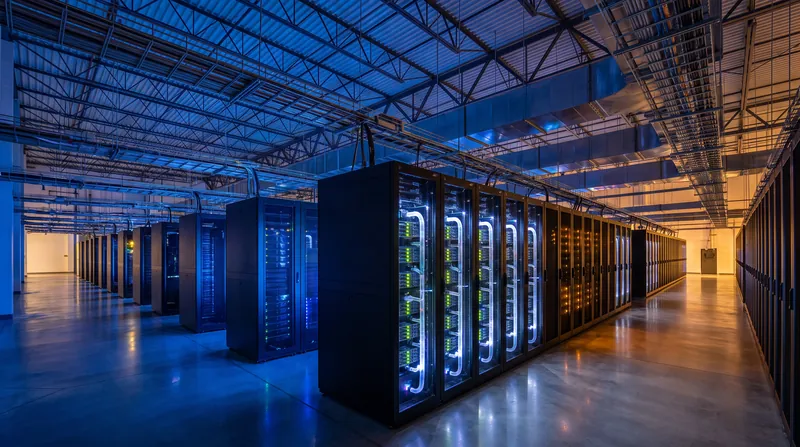
The unexpected catalyst accelerating this deployment is the explosive growth of artificial intelligence. As AI workloads become increasingly complex, global electricity demand tied to data centers is on track to quadruple within the next decade. This unprecedented energy hunger has forced hyperscalers—the massive tech companies operating global cloud infrastructure—to aggressively seek out new sources of clean, firm power to meet their ambitious net-zero commitments.
BloombergNEF estimates that data center investment reached approximately $500 billion in 2025, a figure large enough to tip capital flows and reshape the entire energy transition landscape. Consequently, the tech industry's need for reliable, round-the-clock clean electricity has become the strongest commercial demand signal in the climate tech market.[1]
This urgency is clearly reflected in the capital markets, where funding has rebounded after a period of macroeconomic cooling. According to data from Sightline Climate, global venture and growth investment in climate tech climbed 8 percent to $40.5 billion in 2025, breaking a two-year decline.
Furthermore, it was a record year for climate fund closures, with 179 funds raising $92 billion in new capital. However, venture capitalists are deploying this money with a drastically different thesis than in previous cycles. Capital is landing on fewer companies, concentrating heavily on later-stage rounds, and demanding rigorous proof of commercial traction.
Investors are no longer satisfied with theoretical efficiency gains; they require credible manufacturing progress and a specific answer to where a startup's revenue will originate. To bridge the massive capital gap between a working prototype and a full-scale commercial facility, corporate offtake agreements have become the ultimate currency.
When a major tech company or industrial buyer signs a binding contract to purchase a startup's future output—whether that is clean electricity, low-carbon materials, or removed carbon—it de-risks the venture. This guaranteed future revenue allows startups to secure the heavy project finance and debt required to actually build their factories.[2]
Form Energy exemplifies this maturation and the power of the hyperscaler alliance. The startup, which builds long-duration iron-air batteries designed to store grid-scale electricity for days rather than hours, has moved decisively from concept to commercial reality. In February 2026, Form Energy announced a massive 300-megawatt, 30-gigawatt-hour battery deployment in partnership with Xcel Energy.
This system, described as the largest battery energy storage project by capacity announced worldwide, is specifically designed to help power a new Google data center in Minnesota. By solving the hardest problem in renewable energy—storing power for multi-day stretches when the wind isn't blowing and the sun isn't shining—Form Energy is providing the firm clean power that AI infrastructure demands.
Beyond the electrical grid, startups are tackling the hardest-to-abate industrial sectors, which have historically been ignored by traditional venture capital. Sublime Systems, for instance, is commercializing an electrochemical process to manufacture low-carbon cement entirely without the use of fossil-fueled, high-temperature kilns.
Because traditional cement production is responsible for roughly 8 percent of global carbon dioxide emissions, decarbonizing this single material represents one of the highest-leverage climate interventions in the world. Sublime has transitioned from a promising lab concept to a credible industrial player, demonstrating that heavy manufacturing can be fundamentally re-engineered from the ground up.
Meanwhile, companies operating in the "carbon-to-value" space are moving the needle on the circular economy. Startups like Twelve are utilizing electrochemistry to convert captured carbon dioxide into essential chemicals, materials, and sustainable aviation fuels.
By signing procurement deals with major aviation and consumer brands, Twelve is proving that captured CO2 can be transformed from a hazardous waste product into a valuable industrial feedstock. If these processes can continue to scale economically, they offer a pathway to defossilize supply chains that cannot easily be electrified, such as long-haul aviation and plastics manufacturing.
Direct air capture (DAC) is also transitioning from a theoretical climate model necessity to physical infrastructure. Heirloom, a startup that builds DAC facilities using the accelerated mineralization of limestone, is operating its first commercial plant and has successfully signed offtake agreements with serious corporate buyers.
While the cost per ton of removed carbon remains high, the existence of operational facilities proves that the engineering works at an industrial scale. These early plants serve as the critical first step down the cost curve, mirroring the trajectory that solar and wind power followed over the past two decades.
Alongside emissions mitigation, climate adaptation has quietly emerged as the fastest-growing venture segment in the ecosystem. As investors and corporate buyers realize that a hotter planet presents immediate, unavoidable operational risks, funding for adaptation technologies surged 64 percent to $5.5 billion in 2025. Startups in this vertical are developing advanced climate risk analytics, extreme weather forecasting models, and nature-based water management systems. Their revenue is increasingly driven by pragmatic customers in the insurance, real estate, and agricultural sectors who need to price risk and protect physical assets in real time.
Despite these massive strides, building physical climate infrastructure remains one of the most difficult endeavors in the startup world. Hardware founders must navigate volatile policy environments, manage complex international supply chains for critical minerals, and endure brutally slow procurement cycles from highly regulated utility buyers. Unlike software companies that can iterate rapidly with minimal capital, climate tech startups must treat their commercial launch as a multi-year, capital-intensive build.
Despite these massive strides, building physical climate infrastructure remains one of the most difficult endeavors in the startup world.
Yet, as 2026 unfolds, the ecosystem has proven it is up to the task. By aligning environmental necessity with the massive economic engines of AI and heavy industry, these startups are demonstrating that sustainable infrastructure is not just a moral imperative, but the foundation of the next industrial revolution.[2]
Definitions
- Offtake Agreement
- A binding contract between a producer and a buyer to purchase future goods or services, often used to secure financing for new facilities.
- Hyperscaler
- Large cloud service providers, such as Google, Amazon, and Microsoft, that operate massive networks of data centers.
- Direct Air Capture (DAC)
- Technology that extracts carbon dioxide directly from the atmosphere for storage or industrial use.
- Iron-Air Battery
- A type of long-duration energy storage that uses the reversible rusting of iron to store and release electricity over multiple days.
- Circular Carbon Economy
- An industrial system where carbon emissions are captured and reused as raw materials rather than released into the atmosphere.
Questions & answers
Why are AI companies investing in climate tech?
AI data centers require massive amounts of electricity. To meet their net-zero emissions targets while expanding AI infrastructure, tech giants must fund and procure new sources of round-the-clock clean energy.
What makes hardware startups harder to fund than software?
Hardware startups require significant upfront capital to build physical factories and navigate complex supply chains, making them riskier and slower to scale than software companies.
How does low-carbon cement work?
Startups like Sublime Systems use an electrochemical process to produce cement at ambient temperatures, eliminating the need for fossil-fueled kilns that release massive amounts of carbon dioxide.
What is a corporate offtake agreement?
It is a binding contract where a large buyer agrees to purchase a startup's future output, which provides the guaranteed revenue needed to secure construction financing.
Analysis by camp
Climate Tech Founders
Founders emphasize the unique challenges of scaling hardware and the necessity of corporate partnerships.
For founders building physical climate infrastructure, the journey is fundamentally different from launching a software startup. They face the notorious 'valley of death'—the capital-intensive phase between a working prototype and a commercial-scale factory. Founders argue that surviving this phase requires treating the company as a multi-year industrial build rather than a rapid-iteration tech play. Securing binding offtake agreements from major corporations is their primary strategy, as these contracts provide the guaranteed future revenue needed to unlock heavy project debt and construction financing.
Corporate Buyers & Hyperscalers
Tech giants view climate tech as a critical bottleneck to their AI expansion and net-zero goals.
Hyperscalers like Google, Microsoft, and Amazon are facing a severe energy dilemma: the exponential growth of AI workloads requires massive amounts of round-the-clock electricity, but relying on fossil fuels would obliterate their corporate climate pledges. Consequently, these buyers view climate tech startups not just as sustainable alternatives, but as essential infrastructure partners. By signing massive offtake agreements for long-duration batteries and clean power, hyperscalers are effectively acting as the primary financiers of the energy transition, using their massive balance sheets to pull nascent technologies into commercial maturity.
Venture Capitalists
Investors are demanding rigorous commercial traction and shifting capital toward later-stage hardware.
The venture capital community has drastically shifted its thesis in 2026. Burned by the hype cycles of early-stage software and speculative carbon accounting tools, investors are now concentrating their capital on later-stage hardware companies that can demonstrate credible manufacturing progress. VCs are prioritizing startups that have already secured corporate offtake agreements and have a clear, de-risked path to revenue. This flight to quality means that while overall funding has rebounded, it is landing on a smaller, more mature cohort of companies capable of deploying real-world infrastructure.
- Climate Tech Founders
- Founders emphasize the unique challenges of scaling hardware and the necessity of corporate partnerships.
- Corporate Buyers & Hyperscalers
- Tech giants view climate tech as a critical bottleneck to their AI expansion and net-zero goals.
- Venture Capitalists
- Investors are demanding rigorous commercial traction and shifting capital toward later-stage hardware.
- Industry Analysts
- Analysts highlight the broader macroeconomic shift of climate tech from a niche sector to core industrial infrastructure.
Perspectives this story doesn't cover
- Local communities hosting new industrial climate facilities
- Traditional fossil fuel and utility incumbents facing disruption
Sources
Source coverage
2 outlets
4 viewpoints surfaced


- [1]BloombergNEFCorporate Buyers & Hyperscalers
Data Center Investment Reaches $500 Billion Amid AI Boom
Read on BloombergNEF → - [2]Factlen Editorial TeamIndustry Analysts
Synthesis by Factlen editorial team
Read on Factlen Editorial Team →
More in Business
See all →Open-Weight AI
River AI Secures $1.1 Billion Seed Round to Build Open-Weight Enterprise Models
8 sources
Equity Compensation
How Double-Trigger Acceleration Safeguards Startup Equity and Preserves Buyer Retention
5 sources

Venture Capital Contracting
Drag-Along Clauses Prevent Minority Shareholder Holdouts During Corporate Acquisitions, Paired with Tag-Along Rights Securing Equal Exit Terms
4 sources

AI Infrastructure
Anthropic Files IPO Prospectus Revealing $42 Billion Net Loss and $518 Billion in Infrastructure Commitments
6 sources

Comments
Every angle. Every day.
Get Business stories with full source coverage and perspective breakdowns, free every day.