
City Tax Incentives Push Office-to-Residential Conversion Pipeline to Record 90,000 Units Nationwide
Fueled by targeted municipal tax breaks and zoning reforms, the U.S. pipeline for converting empty office buildings into apartments has reached an all-time high of 90,000 units. The surge offers a structural solution to record-high commercial vacancy rates and persistent urban housing shortages.
By Derya Kaplan

- Urban Planners & City Officials
- View conversions as essential for saving downtown tax bases and revitalizing neighborhoods hollowed out by remote work.
- Commercial Developers
- Argue that conversions are financially impossible without significant municipal tax breaks and zoning flexibility.
- Housing Economists
- Focus on the data showing how adding supply, even at the luxury tier, impacts overall market affordability.
- Real Estate Analysts
- Caution that physical constraints mean only a small fraction of vacant offices can actually be converted.
Perspectives this story doesn't cover
- Existing downtown commercial tenants facing construction disruptions
- Suburban municipalities losing commuter tax revenue
Key points
- The U.S. pipeline for office-to-residential conversions has reached a record 90,000 units.
- Municipal tax breaks and zoning exemptions are the primary drivers making these projects financially viable.
- Architects are using light wells and raised floors to overcome physical constraints like deep floorplates and centralized plumbing.
- While mostly luxury-priced, city mandates ensure roughly 30% of subsidized units are reserved for affordable housing.
- Analysts warn that only 10% to 15% of all vacant office space is physically suitable for conversion.
The post-pandemic "doom loop" of empty downtowns and severe housing shortages is finally finding a concrete, structural solution. Across the United States, the pipeline of office-to-residential conversions has surged to a record 90,000 units, more than double the volume seen just three years ago. This wave of adaptive reuse is physically reshaping the skylines of major metropolitan areas, turning the obsolete infrastructure of the 20th-century commuter city into 24/7 residential neighborhoods.[1]
This transformation is not happening organically. It is the direct result of aggressive municipal intervention. Facing plummeting commercial property tax revenues as remote work solidified, city governments have rolled out targeted tax incentives, zoning exemptions, and fast-track permitting to make the complex mathematics of adaptive reuse viable for private developers.[2]
The evidence pack surrounding this trend reveals a fundamental shift in urban policy. For years, developers argued that converting deep, windowless office floorplates into code-compliant apartments was simply too expensive without public subsidy. Now, cities are providing exactly that, recognizing that subsidizing housing is cheaper than allowing downtown tax bases to collapse.[3][5]
Financial incentives are the primary catalyst driving the current boom. According to the Urban Institute, the cost of acquiring and retrofitting a Class B or C office building typically exceeds the projected residential rental income in high-interest-rate environments. Without intervention, these buildings would remain stranded assets—too empty to generate commercial revenue, but too expensive to convert.
To bridge this financial gap, municipalities have deployed an estimated $1.5 billion in tax abatements and direct subsidies nationwide. New York City's revamped tax incentive program, for example, offers up to a 35-year property tax break for conversions, provided the developers include a minimum threshold of affordable housing units. This policy alone has unlocked thousands of units in Lower Manhattan.
Similarly, Chicago's "LaSalle Street Reimagined" initiative has committed substantial Tax Increment Financing (TIF) funds to subsidize the conversion of historic, underutilized financial district buildings into mixed-income residential towers. The first of these units opened this summer, proving the concept's viability in a major Midwestern market.
Beyond the financial hurdles, architectural constraints are being solved through design innovation. The physical reality of office buildings—particularly those built in the 1970s and 1980s—presents significant engineering challenges. Large commercial floorplates mean the center of the building is too far from windows to legally serve as bedroom space under standard building codes.[4]
Architects are overcoming this geometry by carving massive "light wells" through the center of structures, effectively turning blocky towers into hollow doughnuts. While this sacrifices 15% to 20% of the building's total rentable square footage, it creates premium, light-filled apartments along the newly created interior perimeters, making the remaining space highly valuable.[3]
Architects are overcoming this geometry by carving massive "light wells" through the center of structures, effectively turning blocky towers into hollow doughnuts.
Plumbing and HVAC systems present another major retrofitting challenge. Commercial buildings typically centralize plumbing in a single core near the elevators, whereas residential buildings require distributed plumbing for individual kitchens and bathrooms spread across the entire floor.[4]
To solve this, developers are increasingly utilizing raised floors—originally designed for running IT cables in trading rooms and tech offices—to route new plumbing lines. This technique avoids the need to drill through thick, post-tensioned concrete slabs, significantly reducing construction time, noise, and overall project costs.[2]
The impact of this pipeline is highly concentrated but transformative for specific neighborhoods. The 90,000 units are not evenly distributed across the country; they are heavily clustered in older, transit-rich urban cores like Lower Manhattan, downtown Chicago, Washington D.C., and San Francisco, where the delta between office vacancy and housing demand is most extreme.[1]
In Washington D.C., where permanent federal telework policies left millions of square feet vacant, the city has aggressively courted conversions. The district now boasts one of the highest conversion rates per capita in the nation, fundamentally shifting the downtown from a 9-to-5 government hub to a mixed-use residential destination.[5]
A critical debate within the evidence pack centers on whether these conversions actually alleviate the broader housing affordability crisis. Because of the high cost of structural retrofitting, the vast majority of completed units are priced as luxury or Class A market-rate apartments, leading to criticism that public subsidies are primarily benefiting high-income renters.
However, housing economists counter that adding 90,000 units to the top of the market relieves pressure across the entire housing spectrum through the "filtering" effect, as wealthier renters vacate older stock. Furthermore, city-mandated inclusionary zoning tied to the new tax breaks ensures that roughly 30% of the subsidized pipeline is permanently reserved for low- and middle-income residents.[5]
Despite the record pipeline, commercial real estate analysts caution that adaptive reuse is not a panacea for the entire office market. CBRE estimates that only about 10% to 15% of the nation's vacant office inventory is physically and financially suitable for residential conversion.[4]
Buildings with excessively large floorplates, low ceiling heights, or complex structural columns remain economically unviable, even with maximum municipal subsidies. For these "stranded assets," demolition and rebuilding—or conversion to alternative uses like urban agriculture or data centers—may ultimately be the only path forward.[2][4]
Additionally, the pace of completions remains vulnerable to macroeconomic headwinds. High construction material costs and elevated interest rates continue to threaten the profit margins of projects that are currently in the planning phases, meaning not all 90,000 proposed units will necessarily reach the finish line.[3]
Nevertheless, crossing the 90,000-unit threshold marks a definitive turning point in urban planning. It proves that with the right alignment of public policy, tax incentives, and private capital, the built environment can adapt to massive macroeconomic shifts.[1]
As these projects deliver over the next 24 to 36 months, they will serve as live case studies for urban resilience. The successful transformation of these concrete monoliths into vibrant vertical neighborhoods offers a blueprint for post-pandemic recovery, proving that cities can reinvent themselves when forced by necessity.[5]
Why this matters
Transforming obsolete office space into housing addresses two of the most pressing urban crises simultaneously: the hollowing out of downtown tax bases and the severe shortage of residential units. For city residents, this shift promises more vibrant, mixed-use neighborhoods and a potential easing of rental market pressure.
- 90,000
- Units in the conversion pipeline
- $1.5B
- Estimated municipal tax incentives deployed
- 15–20%
- Typical floorplate lost to light wells
- 10–15%
- Share of vacant offices suitable for conversion
Viewpoints in depth
Urban Planners' View
Conversions are a necessary intervention to save city budgets and revitalize neighborhoods.
City officials and urban planners argue that doing nothing is the most expensive option. Empty office buildings generate significantly lower property tax revenues, which threatens municipal budgets and public services. By subsidizing conversions, cities are essentially buying a future tax base while simultaneously addressing the housing shortage. They view the transition from 9-to-5 business districts to 24/7 mixed-use neighborhoods as a necessary evolution for post-pandemic urban survival.
Commercial Developers' View
The math of adaptive reuse only works with substantial public subsidies.
Developers emphasize the extreme financial risk of gut-renovating commercial structures. Buying an empty office building, tearing out its core, reinforcing the structure, and installing hundreds of individual kitchens and bathrooms often costs as much as building from scratch. In an environment of elevated interest rates, developers argue that without 20- to 30-year tax abatements, the projected rental income simply cannot cover the debt service required to fund the construction.
Housing Economists' View
Adding supply at the top of the market still provides broad relief.
While critics point out that converted apartments are overwhelmingly priced as luxury units, housing economists focus on the macroeconomic 'filtering' effect. When 90,000 high-end units enter the market, wealthier renters move into them, freeing up older, slightly cheaper housing stock, which in turn frees up even cheaper stock down the line. Furthermore, economists note that tying tax breaks to inclusionary zoning is one of the most effective ways to force the private market to build subsidized affordable housing.
Sources
Source coverage
5 outlets
4 viewpoints surfaced





- [1]RentCafeCommercial Developers
Adaptive Reuse Pipeline Hits Record 90,000 Units as Office Conversions Accelerate
Read on RentCafe → - [2]BloombergUrban Planners & City Officials
The Math Finally Works for Office-to-Apartment Conversions, Thanks to City Hall
Read on Bloomberg → - [3]The Wall Street JournalCommercial Developers
Developers Crack the Code on Turning 1980s Office Towers Into Luxury Housing
Read on The Wall Street Journal → - [4]CBRE ResearchReal Estate Analysts
2026 U.S. Adaptive Reuse Outlook: Physical Constraints and Market Potential
Read on CBRE Research → - [5]National Bureau of Economic ResearchHousing Economists
The Economics of Commercial Real Estate Conversion in Post-Pandemic Urban Centers
Read on National Bureau of Economic Research →
Comments
More in Real Estate
See all →NYC Housing
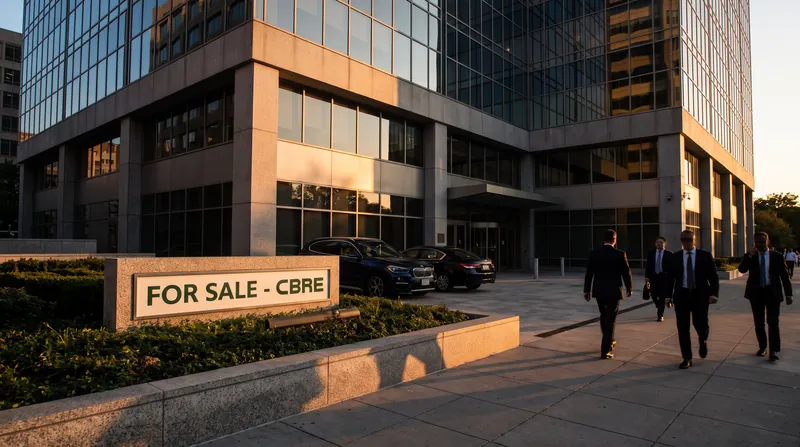
NYC Mayor Mamdani's Pro-Development Housing Plan Wins Over Skeptical Developers, Driving 250% Surge in Proposed Units
6 sources
Asian Markets
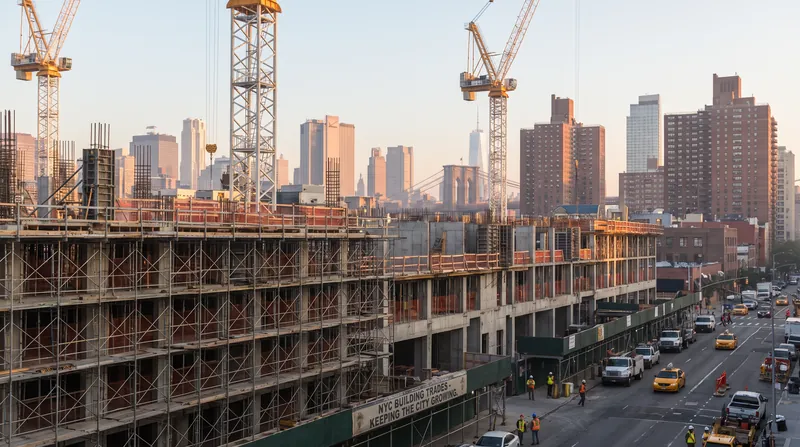
Asian REIT Market Valuation Hits $279 Billion as India Surpasses Hong Kong to Become Fourth-Largest Regional Market
5 sources
Fund Liquidity
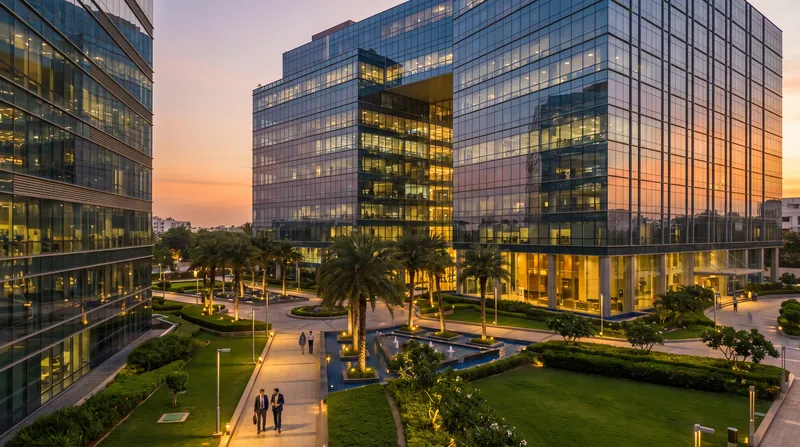
Blackstone Explores Secondary Sale for $11 Billion Real Estate Fund to Meet Investor Redemptions
4 sources
Recording Statutes
The Race, Notice, and Race-Notice Statutes That Determine the Legal Priority of Competing Property Claims
5 sources
Every angle. Every day.
Get Real Estate stories with full source coverage and perspective breakdowns delivered to your inbox.