
CATL Chairman Proposes Repurposing 40 Million EVs as Distributed AI Compute Infrastructure
Robin Zeng envisions transforming China's idle electric vehicle fleet into 'token factories' that process artificial intelligence workloads. The concept aims to solve the AI industry's massive power bottlenecks by utilizing onboard batteries and dormant silicon.
By Noor Saidi

Share this story
The artificial intelligence industry is facing a collision course with the physical world. As large language models scale, their appetite for electricity and silicon is rapidly outpacing the grid's ability to support centralized data centers. But the solution might not be building bigger server farms or laying thousands of miles of new high-voltage transmission lines.
According to the architect of the global electric vehicle battery market, the answer is already parked in driveways and parking garages across the globe. By rethinking the fundamental purpose of a car, the tech industry could unlock an entirely new paradigm for scaling digital infrastructure.
Speaking at the World Economic Forum's Summer Davos in Dalian in late June 2026, Robin Zeng, the billionaire founder and chairman of battery giant CATL, introduced a radical concept. He proposed that China's rapidly expanding fleet of 40 million electric vehicles could be repurposed as a massive, distributed artificial intelligence computing network. Rather than viewing cars simply as a means of getting from point A to point B, Zeng argued that the automotive fleet represents the most underutilized technological asset on the planet.[1]
Zeng described these idle vehicles as potential 'token factories.' Instead of just functioning as transportation, electric vehicles equipped with advanced onboard AI chips and massive battery packs could process data and generate AI tokens for large language models while parked.
This vision represents a profound shift in how the industry views the intersection of mobility and computing, transforming depreciating consumer hardware into active nodes within a global supercomputer. By tapping into the latent processing power of millions of vehicles, AI developers could theoretically bypass the physical constraints of traditional data centers and access a nearly limitless pool of decentralized compute.[2]
The mathematical logic behind the concept is highly compelling. The average passenger vehicle sits idle for roughly 23 hours a day, occupying space without generating any economic value. During that extensive downtime, a modern electric vehicle is essentially a high-capacity battery attached to a sophisticated computer.
By networking these idle resources through advanced software orchestration, the automotive fleet could become the most distributed artificial intelligence infrastructure ever assembled. This approach drastically reduces the need for centralized, energy-intensive server farms, leveraging hardware that consumers have already purchased and connected to the grid.
To understand how this distributed network would function, one must look at the architecture of modern electric vehicles. Today's EVs are increasingly designed as 'computers on wheels,' equipped with powerful neural processing units (NPUs) and advanced silicon designed to handle complex autonomous driving algorithms and real-time sensor fusion. When the car is parked, that expensive silicon sits entirely dormant. Repurposing this hardware for AI workloads simply requires a secure software layer capable of routing data to the vehicle, processing it locally, and returning the results to the broader network.[2]
At the same time, the artificial intelligence industry is desperate for inference compute—the processing power required to run AI models when users actively query them. While training a massive foundational AI model requires tightly coupled, centralized clusters of GPUs to minimize latency, inference workloads can be highly decentralized.
Generating a response to a user's prompt or processing a localized data stream does not require a monolithic supercomputer; it simply requires available silicon capable of running the model's parameters. By pushing these inference workloads to parked EVs, AI companies could tap into a vast reservoir of unused processing power, freeing up centralized data centers for more intensive training tasks.
A fleet of millions of networked cars could theoretically handle billions of AI queries simultaneously, functioning as a decentralized supercomputer that scales organically with vehicle sales. Because the hardware is distributed across millions of individual endpoints, the network would also be highly resilient to localized power outages or hardware failures. If one vehicle disconnects or drives away, the software simply reroutes the workload to another parked car in the network, ensuring continuous uptime for the AI applications relying on the infrastructure.[1]
But compute is only half of the equation; the other half is energy. The growth of artificial intelligence is increasingly constrained by power infrastructure, with modern AI data centers demanding sustained peak capacity that conventional electrical grids struggle to provide.
Utility companies are warning of severe power shortages as tech giants race to build gigawatt-scale facilities, prompting a desperate search for alternative energy solutions that do not destabilize local grids or require decades of new transmission line construction. CATL's leadership recognizes that the ultimate bottleneck for artificial intelligence is not the availability of silicon, but the availability of reliable, scalable electricity.
This is where the electric vehicle's primary component—the massive lithium-ion battery pack—becomes a strategic asset. An EV can draw power from the grid during off-peak hours when electricity is cheap and abundant, store it locally, and then use that stored energy to power its onboard AI chips for compute workloads. Because the vehicle relies on its own battery to run the processors, it does not place additional strain on the grid during peak demand hours, effectively decoupling the AI compute workload from real-time electricity generation.
This architecture elegantly bypasses the grid bottlenecks that are currently delaying traditional data center construction. Instead of requiring a massive new power plant to support a centralized server farm, the energy draw is distributed across millions of residential and commercial charging points.
The vehicles act as a buffer, absorbing excess renewable energy when the sun is shining or the wind is blowing, and converting that stored energy into valuable AI tokens without requiring dedicated, standalone battery storage facilities. It is a symbiotic relationship that maximizes the utility of both the electrical grid and the vehicle's hardware.
Zeng's vision aligns perfectly with CATL's broader strategic pivot. The company, which currently controls roughly 40 percent of the global EV battery market, is aggressively positioning itself as the foundational energy layer for the artificial intelligence era.
Recognizing that the explosive growth phase of electric vehicle adoption is beginning to mature, CATL is seeking new avenues for expansion by integrating its battery technology directly into the digital infrastructure that powers the modern economy. By framing the EV fleet as an extension of the data center, CATL ensures that its core product remains indispensable to the next wave of technological innovation.
Over the past few months, CATL has executed a series of targeted, high-profile investments across the AI energy stack to turn this vision into reality. The battery giant acquired a $600 million indirect stake in Zhongheng Electric, a primary provider of high-voltage direct-current power systems for AI data centers.
Shortly after, a CATL-affiliated fund committed nearly $1 billion to acquire a major stake in VNET Group, a prominent Nasdaq-listed Chinese data center operator, securing a captive customer for its energy storage solutions. These moves demonstrate a clear intent to control the critical infrastructure that bridges the gap between power generation and digital compute.
Most tellingly, CATL recently participated in a massive $7.4 billion funding round for DeepSeek, one of China's most consequential artificial intelligence laboratories. This vertically integrated approach—securing the power conversion equipment, the data center operations, and the AI workloads themselves—suggests that CATL views compute and energy storage as a single, unified market.
By aligning with a major AI developer, CATL can directly test and deploy its distributed compute theories using real-world models and massive datasets. It is a comprehensive strategy designed to capture value at every stage of the artificial intelligence supply chain, from the raw electricity to the final generated token.
Despite the visionary appeal of the 'token factory' concept, the technical and economic hurdles remain formidable. Orchestrating millions of distributed nodes requires ultra-low latency networking and highly sophisticated software to distribute workloads securely and efficiently.
Data privacy is also a major concern; consumers must trust that the AI workloads processing on their vehicle's hardware cannot access personal data, location history, or the car's critical safety systems. Building a secure, sandboxed environment for these operations is a massive software engineering challenge that will require unprecedented collaboration between automakers, battery suppliers, and cybersecurity experts.[2]
There is also the critical question of battery degradation. Running intensive compute workloads generates significant heat and continuously cycles the battery, potentially reducing the overall lifespan of the vehicle's primary power source.
Automakers and battery manufacturers will need to definitively prove that this secondary use does not void warranties, degrade the driving experience, or compromise the vehicle's range when the owner actually needs to commute. Advanced thermal management systems will be essential to ensure the hardware can handle the sustained stress of AI processing without accelerating the chemical degradation of the lithium-ion cells.
Finally, the economic model for the consumer remains entirely undefined. Vehicle owners would need to be financially compensated for leasing their car's compute power and absorbing the associated battery wear. This could take the form of micro-transactions paid out in digital currency, subsidized charging rates, or significant discounts on the initial purchase price of the vehicle.
For the system to scale, the financial incentives must be compelling enough to convince millions of drivers to opt into the network and keep their vehicles plugged in whenever they are parked. Without a seamless and transparent compensation mechanism, the distributed supercomputer will never materialize.
If these challenges can be overcome, the implications extend far beyond China's borders. The convergence of vehicle-to-grid (V2G) technology and distributed compute could fundamentally rewrite the economics of both the automotive and artificial intelligence industries. By turning depreciating consumer assets into revenue-generating infrastructure, the EV transition could accelerate dramatically, subsidized by the insatiable demand for AI processing power.
The car of the future may be valued not just for how fast it can drive, but for how many tokens it can generate while standing completely still, ushering in a new era of decentralized digital infrastructure.[2]
Key points
- CATL Chairman Robin Zeng proposed repurposing China's 40 million EVs into a distributed AI computing network.
- The concept leverages the 23 hours a day that average vehicles sit idle, utilizing their onboard batteries and AI chips.
- By processing AI inference workloads locally, the system bypasses the severe power bottlenecks constraining traditional data centers.
- CATL has made strategic investments in data center operators and AI labs to vertically integrate its energy infrastructure.
What we don’t know
- How automakers will handle battery warranties if vehicles are used for intensive AI compute.
- The exact financial compensation model required to incentivize vehicle owners to participate.
- Whether the ultra-low latency networking required to orchestrate millions of moving nodes can be achieved at scale.
How we got here
April 2026
CATL acquires a $600 million indirect stake in data center power supplier Zhongheng Electric.
May 2026
A CATL-affiliated fund commits nearly $1 billion to acquire a major stake in data center operator VNET Group.
June 2026
CATL participates in a $7.4 billion funding round for Chinese AI laboratory DeepSeek.
Late June 2026
CATL Chairman Robin Zeng publicly introduces the 'token factory' concept at the World Economic Forum in Dalian.
- Energy Infrastructure Strategists
- Viewing the EV fleet as an extension of the digital grid.
- Technology & AI Analysts
- Seeking decentralized solutions to the compute bottleneck.
- Automotive Industry Observers
- Highlighting the consumer and hardware hurdles.
Perspectives this story doesn't cover
- Cybersecurity Experts
- Automotive Warranty Providers
Sources
Source coverage
2 outlets
3 viewpoints surfaced


- [1]DigiTimesAutomotive Industry Observers
CATL chairman Robin Zeng said on June 23 at the World Economic Forum that many EVs could be turned into computing infrastructure
Read on DigiTimes → - [2]SmartkarmaTechnology & AI Analysts
CATL Chairman Zeng Sees EVs Becoming AI Token Factories
Read on Smartkarma →
More in Automotive & Transportation
See all →Battery Tech
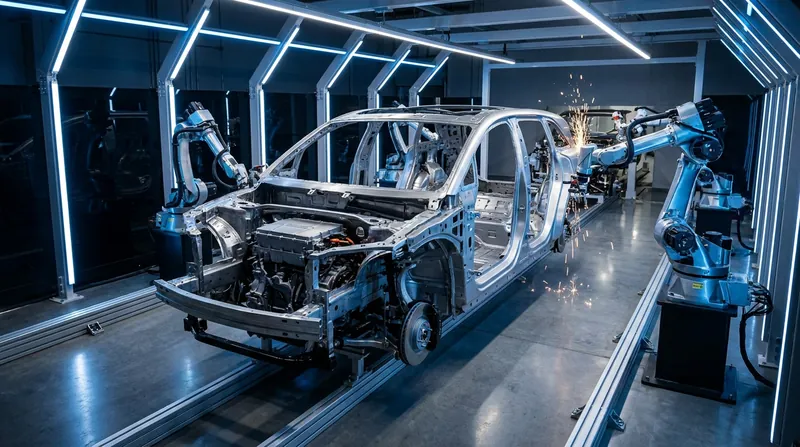
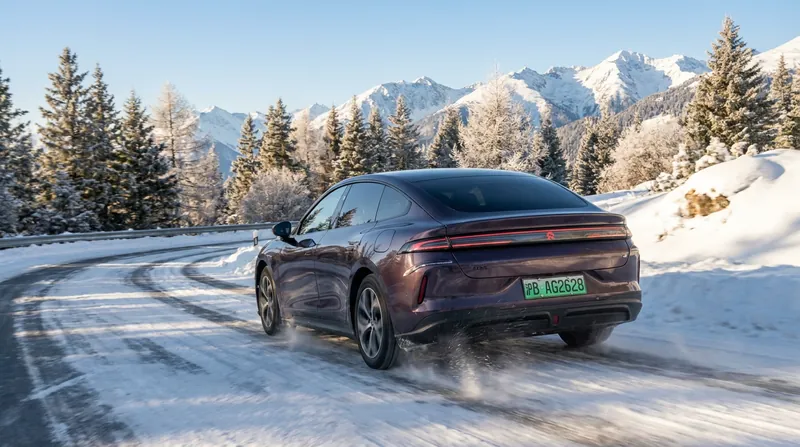
CATL and Changan Launch World's First Mass-Production Passenger EV Powered by Sodium-Ion Battery
2 sources
Hybrid Adoption
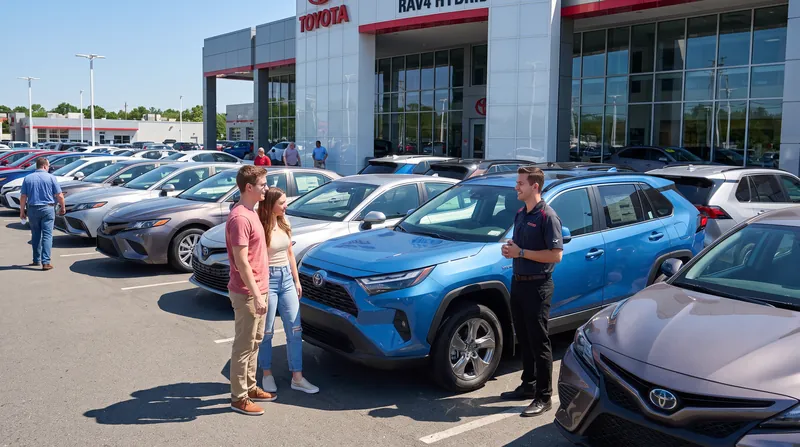
Toyota's Electrified Vehicles Surpass 50% of Quarterly Global Production Volume
5 sources
EV Mandate
EU Council Proposes Rollback of 2035 EV Mandate, Allowing 10% Emissions Offset
6 sources
Battery Chemistry
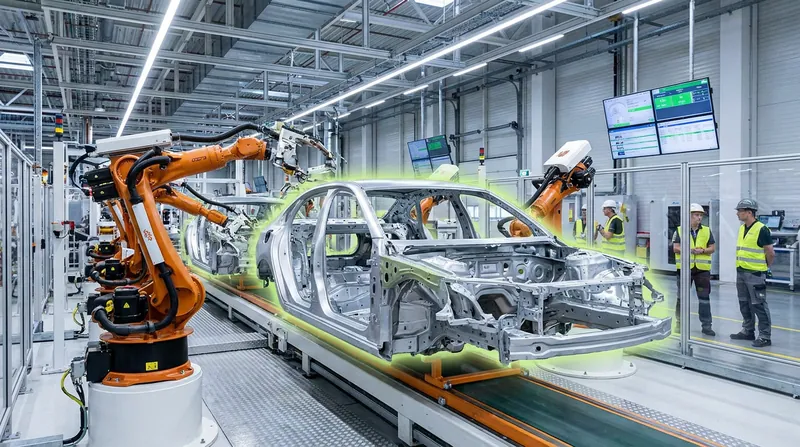
CATL Begins Mass Production of Sodium-Ion EV Batteries, Targeting Cost and Extreme Cold Performance
2 sources
Comments
Every angle. Every day.
Get Automotive & Transportation stories with full source coverage and perspective breakdowns, free every day.