
Australian Creatives Demand AI Copyright Law Over Training Data, Citing Indigenous Rights
A coalition of Australian artists and Indigenous leaders is pushing the federal government to strictly enforce copyright laws against AI developers. The movement seeks to prevent the unconsented scraping of cultural heritage and establish a pioneering framework for Indigenous intellectual property.
By Austin Blake

Share this story
Australian creatives, backed by a powerful coalition of Indigenous leaders and industry peak bodies, are mounting a coordinated defense against the unchecked use of their work to train generative artificial intelligence. At the heart of the movement is a demand for the Australian government to strictly enforce existing copyright laws and introduce new frameworks that protect cultural heritage.
The push comes as global tech companies increasingly rely on vast datasets of text, images, and audio to build their AI models, often scraping this material from public online spaces without the knowledge, consent, or compensation of the original creators.[2]
The stakes are uniquely high for Australia's First Nations communities, who are raising the alarm over what advocates term "digital colonialism." Indigenous leaders argue that the extraction of traditional knowledge and cultural expressions for commercial AI training represents a profound threat to cultural sovereignty. Unlike standard creative works, Indigenous art and storytelling carry deep obligations, connecting people to Country, kinship, and ancient law. When these cultural expressions are fed into machine learning algorithms, they are stripped of their sacred significance and reduced to mere training fodder.
The mechanics of this extraction rely on the fundamental architecture of generative AI. To produce coherent text or convincing images, AI models must analyze billions of data points to learn behavioral patterns and stylistic nuances. In Australia, this has meant the wholesale ingestion of digital galleries, media platforms, and online archives. Because AI systems do not inherently distinguish between a generic stock photo and a culturally sensitive Indigenous artwork, the resulting outputs can be highly problematic.[1]
Evidence of this harm materialized earlier this year when Adobe's Firefly AI platform generated fake images of Aboriginal people and artworks. The system produced outputs that mashed up cultural markings with no genuine significance, creating inaccurate and culturally offensive stereotypes. Indigenous rights experts pointed to the incident as a textbook example of "cultural flattening"—where rich, diverse traditions are homogenized by algorithms lacking any cultural context or authority.[1]
The controversy has exposed critical limitations in Australia's current legal framework. Under the existing Copyright Act, protection is strictly tied to individual human authorship and expires 70 years after the creator's death. This Western legal paradigm fundamentally fails to protect ancient traditional knowledge, languages, and cultural expressions that have been passed down communally for millennia. Because much of this heritage is technically in the public domain under standard copyright law, AI developers face few legal barriers to exploiting it.[1]
To address this gap, advocates are pushing for the formal recognition of Indigenous Cultural and Intellectual Property (ICIP). ICIP broadly refers to the rights of Indigenous people to protect their traditional knowledge and cultural material based on the principle of self-determination. Unlike standard copyright, ICIP is communal, perpetual, and requires free, prior, and informed consent before any material can be used. Integrating ICIP principles into national AI regulation would represent a global first in protecting marginalized cultures from algorithmic extraction.[1]
The tech industry, however, argues that overly restrictive copyright laws will stifle innovation and drive investment offshore. The Tech Council of Australia estimates that AI could add $115 billion to the national economy by 2030. Industry lobbyists have pushed for a "text and data mining" exception—similar to frameworks adopted in Japan and the European Union—which would allow developers to legally scrape copyrighted material for training purposes without seeking permission or paying royalties. They argue that requiring individual licenses for billions of data points is technologically and economically unfeasible.
This tension reached a boiling point when the Productivity Commission released an interim report proposing exactly such an exception. The backlash from the creative sector was immediate and unified. A coalition comprising the Media, Entertainment & Arts Alliance (MEAA), the National Association for the Visual Arts (NAVA), and major music rights organizations delivered an open letter to Parliament House with over 7,000 signatures. They argued that a data mining exception would effectively legalize the "greatest act of copyright theft in history."[2]
The creative sector's demands are anchored in three core principles: consent, control, and compensation. Organizations like APRA AMCOS argue that if tech companies, now valued in the hundreds of billions, want to use Australian labor and intellectual property to build their products, they must pay for it. Polling indicates strong public backing for this stance, with 61 percent of Australians supporting a government-run fund that would collect money from AI companies and distribute it to local creators whose work is used in training datasets.
Facing mounting pressure, the Australian government has drawn a line in the sand. Attorney-General Michelle Rowland and Arts Minister Tony Burke officially ruled out the introduction of a broad text and data mining exception, providing temporary relief to the arts sector. The government stated that tech developers will not receive a "free pass" to use creative works, affirming that Australia's existing copyright framework should continue to protect creators in the digital era.
Despite this victory for creatives, significant uncertainty remains regarding enforcement. While the law may technically require AI companies to obtain permission, the opacity of AI training datasets makes it nearly impossible for individual artists to prove their work was used. The power imbalance between independent creators and multinational tech giants means that, without mandatory transparency requirements, existing copyright laws are effectively unenforceable.[2]
To bridge this gap, the government has convened a reference group to explore fair and legal avenues for licensing copyright material to AI developers. Proposals include collective licensing agreements, where peak bodies negotiate blanket fees on behalf of their members, similar to how radio stations pay for music broadcasts. However, Indigenous advocates stress that any collective licensing model must include specific carve-outs for ICIP, ensuring that First Nations communities retain the right to completely opt out of AI training.
The Australian debate is playing out against a backdrop of global litigation, with major authors and media organizations suing AI developers in the United States and Europe. Yet, Australia's unique focus on integrating Indigenous rights into digital copyright reform sets it apart. The government has committed to introducing stand-alone legislation to protect First Nations traditional knowledge, a move outlined in the National Cultural Policy.
As these legislative efforts take shape, the outcome will have profound implications for the future of the creative economy. If successful, Australia could establish a pioneering regulatory model that balances the economic promise of artificial intelligence with the fundamental rights of creators. For Indigenous communities, the stakes are even higher: ensuring that the technological advancements of the future do not come at the expense of the oldest continuous living cultures on Earth.
Key points
- Australian creatives have delivered a 7,000-signature petition demanding strict copyright enforcement against AI developers.
- Indigenous leaders warn that AI scraping of cultural heritage amounts to 'digital colonialism' and cultural flattening.
- The Australian government has officially ruled out a broad 'text and data mining' exception for tech companies.
- Advocates are pushing for stand-alone legislation to protect Indigenous Cultural and Intellectual Property (ICIP) in perpetuity.
What we don’t know
- How the Australian government will practically enforce copyright against multinational AI companies that do not disclose their training data.
- Whether collective licensing agreements will be sufficient to compensate individual creators fairly.
- How stand-alone legislation for Indigenous Cultural and Intellectual Property will interact with existing international copyright treaties.
How we got here
Late 2023
Ministerial Copyright Roundtables are held to discuss the impact of AI on Australia's creative sectors.
June 2024
The Media, Entertainment & Arts Alliance warns a parliamentary inquiry about the systematic scraping of journalistic and creative work.
August 2025
The Productivity Commission proposes a copyright exception for AI data mining, sparking severe backlash from the arts sector.
October 2025
The Australian government officially rules out a broad text and data mining exception, siding with creators.
July 2026
A coalition of peak creative bodies delivers an open letter to Parliament demanding strict enforcement of existing copyright laws.
- Indigenous Rights Advocates
- Argues that AI data scraping without consent is a form of digital colonialism that threatens cultural sovereignty.
- Creative Industry Peak Bodies
- Focuses on the need for strict copyright enforcement, transparency, and fair compensation for all artists.
- AI Developers & Tech Industry
- Warns that overly restrictive copyright laws will stifle innovation and drive tech investment out of Australia.
- Australian Government
- Seeks to balance AI innovation with fair creator compensation, ruling out blanket exceptions while exploring licensing models.
Perspectives this story doesn't cover
- Independent AI Researchers
- Open-Source AI Communities
Sources
Source coverage
2 outlets
4 viewpoints surfaced


- [1]Arts Law Centre of AustraliaCreative Industry Peak Bodies
Artificial Intelligence (AI) and Copyright
Read on Arts Law Centre of Australia → - [2]Media, Entertainment & Arts AllianceCreative Industry Peak Bodies
New laws urgently needed to regulate AI and protect creative workers
Read on Media, Entertainment & Arts Alliance →
More in Culture
See all →Architectural Heritage
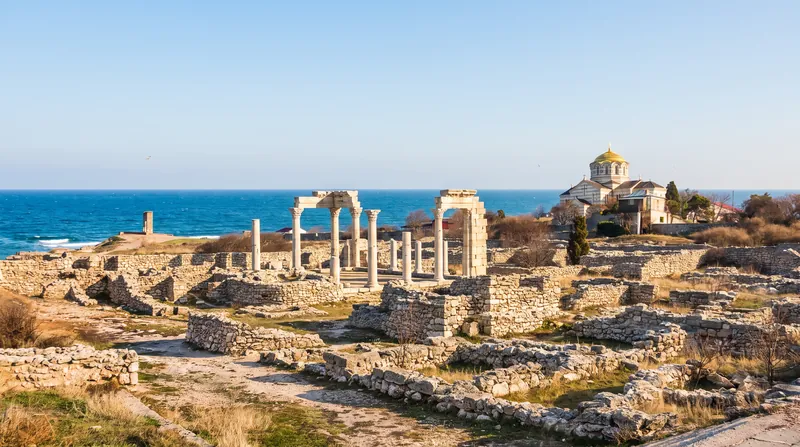
Tbilisi Approves Demolition of Studio Fuksas' Unopened Modernist Landmark, Sparking Architecture Preservation Debate
6 sources
Art Law
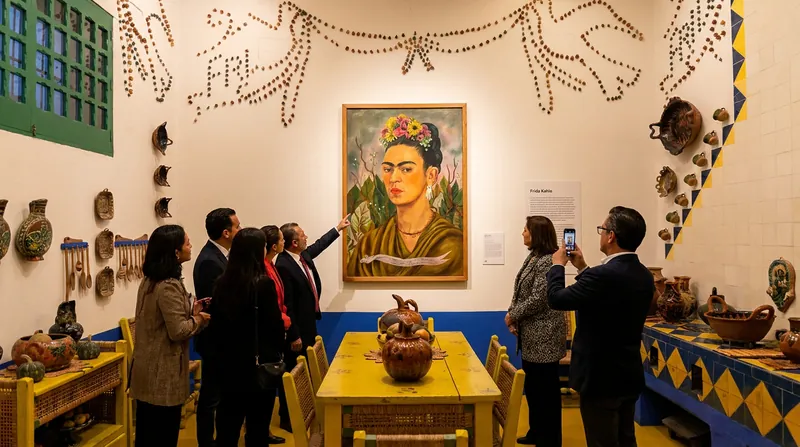
How a Legal Loophole Sparked a Battle Over Mexico's Frida Kahlo Heritage
1 sources
Architecture Laureate
Smiljan Radić Clarke Named 2026 Laureate of the Pritzker Architecture Prize
2 sources
Passive Cooling
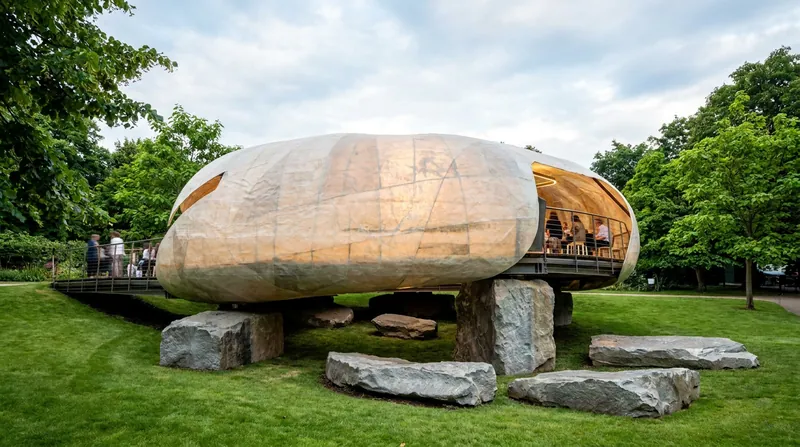
How Architects Are Using Fluid Dynamics to Resurrect Ancient Cooling Tech
4 sources
Comments
Every angle. Every day.
Get Culture stories with full source coverage and perspective breakdowns, free every day.