
Amazon, Walmart, and Target Collide in Unprecedented June Sales Showdown
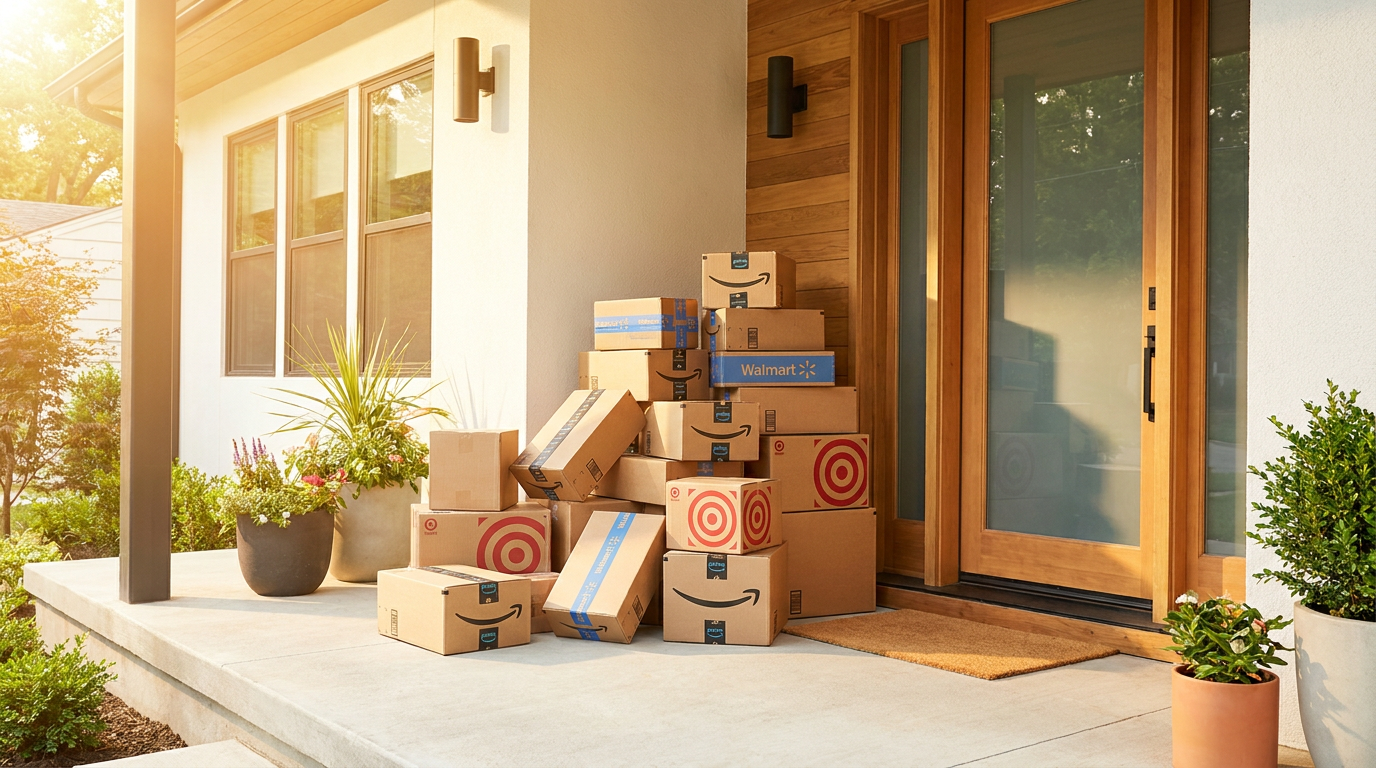
Amazon has moved its annual Prime Day to June, prompting Walmart and Target to shift their massive summer sales to the exact same week.
By Factlen Editorial Team
- Bargain Hunters
- Consumers and deal experts focused on maximizing savings through simultaneous price comparisons.
- Retail Strategists
- Industry analysts observing the battle for market share and the shift in the retail calendar.
- Big-Box Competitors
- Walmart and Target's strategy to undercut Amazon's Prime-exclusive model.
What's not represented
- · Small business owners who may struggle to compete with the massive discounts offered by retail giants during this week.
- · Warehouse and logistics workers facing a sudden, massive surge in order volume due to the overlapping events.
Why this matters
By scheduling their biggest sales of the year during the exact same week, major retailers are creating a rare price-war environment. Shoppers can cross-check discounts in real-time rather than waiting weeks between events, maximizing savings on electronics, home goods, and back-to-school supplies.
Key points
- Amazon Prime Day has moved from its traditional July slot to June 23–26.
- Walmart is running a seven-day 'Walmart Deals' event from June 22–28.
- Target Circle Deal Days will run concurrently with Amazon from June 23–26.
- Walmart+ and Target Circle 360 members get early access to deals starting June 22.
- The simultaneous sales allow consumers to cross-check prices across all three retailers in real-time.
The summer retail landscape is about to experience an unprecedented pile-up. In a major shift for the e-commerce calendar, Amazon, Walmart, and Target have all scheduled their massive summer sales events to collide in the exact same week, kicking off on Monday, June 22.[3][6]
The catalyst for the showdown is Amazon's decision to move Prime Day out of its traditional mid-July slot. For only the second time in the event's history—the first being the pandemic-disrupted year of 2021—Amazon has shifted the 96-hour shopping marathon to June, running from June 23 through June 26.[1][2]
Amazon's move immediately prompted its biggest physical and digital rivals to match the timing. Walmart announced its "Walmart Deals" event will run for a full seven days, from June 22 to June 28, intentionally overlapping and extending beyond Amazon's window. Target followed suit, aligning its Target Circle Deal Days to run concurrently with Amazon from June 23 to June 26.[1][5][6]

For consumers, this simultaneous scheduling creates a rare and highly advantageous price-war environment. When three of the largest retailers in the country compete head-to-head for the same shopping carts, prices generally get sharper. Shoppers can now compare prices across platforms in real-time, rather than buying an item on Prime Day and wondering if it might be cheaper at Walmart two weeks later.[6]
Accessing the deals requires navigating a web of loyalty programs. Amazon's event remains strictly gated behind its Prime membership. Target's sale requires a free Target Circle account, though early access on June 22 is reserved for paid Target Circle 360 members. Walmart is taking a more open approach: its week-long sale is available to everyone, but Walmart+ members get a 24-hour head start on high-demand "Deal Drops" starting at 12:01 a.m. ET on June 22.[3][5][6]
Accessing the deals requires navigating a web of loyalty programs.
The product focus for this week spans multiple categories, serving as both a mid-year clearance and an early kickoff to the back-to-school shopping season. Target is advertising up to 45% off kitchen appliances, floor care, and outdoor gear. Walmart is heavily promoting electronics, fashion, and toys.[3][5]

Amazon, meanwhile, is leveraging its ecosystem, offering steep discounts on Echo smart speakers and Fire TV devices, alongside millions of deals across 35 categories. The company is also rolling out AI-powered shopping tools to help users track price drops and build personalized deal guides.[4]
The competitive pressure has even pulled in other retailers. Kohl's announced its own Deal Days from June 23 to June 28, offering free shipping and Kohl's Cash incentives to keep shoppers from defecting entirely to the big three.[3]
Retail analysts note that moving these massive sales to June helps retailers capture consumer spending before summer vacations fully drain household budgets. It also provides a much-needed revenue boost at the end of the second quarter.[1]
How we got here
July 2015
Amazon launches the first Prime Day to celebrate its 20th anniversary.
June 2021
Amazon moves Prime Day to June for the first time as the retail industry recovers from pandemic supply chain issues.
July 2025
Amazon, Walmart, and Target all hold their summer sales events in mid-July.
June 11, 2026
Amazon officially announces Prime Day will move back to June, prompting immediate date announcements from competitors.
June 22, 2026
Early access deals begin for Walmart+ and Target Circle 360 members.
Viewpoints in depth
Bargain Hunters
Consumers and deal experts focused on maximizing savings through simultaneous price comparisons.
For deal-hunting communities, the overlapping schedule is a massive win. Instead of experiencing 'buyer's remorse' by purchasing an item on Amazon only to see it cheaper at Target weeks later, shoppers can now open multiple tabs and cross-check prices in real-time. Deal experts recommend building wishlists in advance and using browser extensions to track historical pricing, ensuring that the advertised discounts are genuine markdowns rather than artificially inflated retail prices.
Retail Strategists
Industry analysts observing the battle for market share and the shift in the retail calendar.
Analysts view Amazon's move to June as a strategic play to capture consumer spending earlier in the summer, before vacation expenses peak and while second-quarter earnings can still be boosted. By forcing Walmart and Target to match the June timing, Amazon has effectively shifted the entire U.S. retail calendar, pulling the lucrative back-to-school shopping season forward by nearly a full month.
Big-Box Competitors
Walmart and Target's strategy to undercut Amazon's Prime-exclusive model.
Walmart and Target are leveraging their physical store footprints and more accessible sales models to compete with Amazon's e-commerce dominance. By making their core sales available to the general public without a paid membership fee—and offering same-day in-store pickup—they aim to attract shoppers who are fatigued by subscription costs. Both retailers are using the event to heavily promote their own paid tiers (Walmart+ and Target Circle 360) by offering exclusive 24-hour early access.
What we don't know
- Whether Amazon will hold a second 'Fall Prime Day' in October, as it has in recent years.
- Which retailer will ultimately offer the deepest discounts on high-ticket items like televisions and laptops.
Key terms
- Target Circle 360
- Target's paid membership program that offers unlimited same-day delivery and early access to major sales events.
- Walmart+
- Walmart's subscription service offering free shipping, grocery delivery, gas discounts, and early access to product drops.
- Deal Drops
- Limited-time, high-demand product discounts released at specific hours to drive immediate traffic and sales.
Frequently asked
Do I need a membership to shop these sales?
Amazon Prime Day requires a Prime membership. Target's sale requires a free Target Circle account, though early access requires the paid 360 tier. Walmart Deals is open to everyone, but Walmart+ members get early access.
When do the sales officially start?
Walmart's early access begins at 12:01 a.m. ET on June 22. Target's early access begins June 22. Amazon's Prime Day officially kicks off at 12:01 a.m. PDT on June 23.
Why did Amazon move Prime Day to June?
While Amazon hasn't explicitly stated the reason, retail analysts suggest it helps capture consumer spending earlier in the summer and boosts the company's second-quarter earnings.
Sources
Source coverage
6 outlets
3 viewpoints surfaced






[1]Digital Commerce 360Retail Strategists
Amazon moves Prime Day 2026 event to June
Read on Digital Commerce 360 →[2]TODAYBig-Box Competitors
Amazon Prime Day 2026 is 1 Week Away! Here's What You Should Know
Read on TODAY →[3]WRALBargain Hunters
The biggest summer shopping week from top retailers is coming June 22-26
Read on WRAL →[4]AmazonBig-Box Competitors
Prime Day 2026 runs June 23-26
Read on Amazon →[5]NBC NewsBig-Box Competitors
When is Target Circle Week 2026?
Read on NBC News →[6]Fabulessly FrugalBargain Hunters
The Biggest Shopping Week of Summer Is Here — All Three Retailers at Once
Read on Fabulessly Frugal →

More in shopping
See all 6 stories →Wearable Tech
The Rise of Open-Ear Audio: Air Conduction vs. Bone Conduction Explained
7 sources

Laptop Hardware
How to Choose a Laptop in 2026: ARM, x86, and the Rise of the NPU
9 sources
Display Tech
OLED vs. Mini-LED: The 2026 Gaming Monitor Trade-Off
6 sources

Consumer Deals
Amazon Sets Prime Day 2026 for Mid-July as Rival Retailers Launch Competing Summer Sales
7 sources

Every angle. Every day.
Get shopping stories with full source coverage and perspective breakdowns delivered to your inbox.