
AI Data Centers Projected to Consume 15% of US Power by 2030, Triggering Grid Policy Overhaul
Federal regulators have ordered major US grid operators to rewrite interconnection rules as artificial intelligence workloads drive unprecedented electricity demand. The surge is forcing utilities to pioneer new pricing models and behind-the-meter energy solutions to protect residential ratepayers.
By Aarav Khanna

Share this story
The artificial intelligence boom is no longer just a software phenomenon; it is rapidly becoming the largest physical infrastructure buildout of the 21st century. Behind every generative AI query and enterprise model lies a massive cluster of graphics processing units (GPUs) drawing unprecedented amounts of electricity. By 2030, data centers are projected to consume up to 15% of all electricity generated in the United States, a staggering increase from roughly 4% today.[1]
This exponential growth is forcing a long-overdue reckoning for the American electrical grid. The transmission systems, generation queues, and planning rules that govern the power sector were designed for steady, predictable load growth—not gigawatt-scale technology campuses appearing in a matter of months. Rather than a crisis, however, this demand shock is catalyzing a rapid modernization of how electricity is generated, priced, and distributed.[2]
The core of the challenge lies in the fundamental mechanics of AI workloads. Traditional cloud computing data centers typically require 5 to 10 kilowatts of power per server rack, handling cyclical workloads with predictable peaks and valleys. In contrast, modern AI training facilities require 50 to 150 kilowatts per rack, driven by dense GPU clusters that operate continuously at maximum capacity.[1][4]
This extreme power density means a single AI data center can demand 200 megawatts or more—equivalent to the power draw of a mid-sized city. Globally, the International Energy Agency projects that data center electricity consumption will double to approximately 945 terawatt-hours by 2030, growing at a rate of 15% annually.[4]
Recognizing that energy has become the primary bottleneck for AI deployment, federal regulators have intervened. On June 18, 2026, the Federal Energy Regulatory Commission (FERC) issued an unprecedented set of orders to the six regional transmission organizations that manage most of the contiguous US grid, including major operators like PJM, MISO, and CAISO.[2][3]
FERC gave the grid operators exactly 60 days to either justify their existing interconnection rules or propose comprehensive reforms for how massive new electricity users connect to the system. The mandate requires operators to develop streamlined processes for handling gigawatt-scale load requests and evaluating data centers that bring their own co-located power generation.[2][3]
The federal push for speed is balanced by a strict mandate to protect existing consumers. FERC explicitly directed grid operators to ensure that the massive infrastructure upgrades required for AI facilities do not result in cost-shifting onto residential ratepayers, a growing concern among consumer advocates.[2]
Meanwhile, environmental oversight is shifting to the states. In early June 2026, the Environmental Protection Agency announced it would not pursue nationwide environmental standards specifically targeting AI data centers. The decision removes a layer of federal regulatory complexity, leaving state and local governments to manage the air and water permitting for these massive facilities.
For utility companies, the AI boom presents a complex capital allocation dilemma. A June 2026 report by the Capgemini Research Institute revealed that 77% of utility executives are struggling to accurately forecast the energy demand created by the rapid expansion of AI data centers.
A major driver of this uncertainty is the phenomenon of "phantom load." Nearly 20% of the massive power requests submitted by data center developers never actually materialize into built projects. If a utility builds hundreds of millions of dollars in transmission infrastructure for a hyperscale campus that gets canceled, residential customers could be left holding the bill.
To solve this, state utility commissions are pioneering new financial structures. In North Carolina, Duke Energy and state regulators are advancing a mandatory "large load tariff." Under this specialized rate class, hyperscale customers would be required to pay minimum monthly bills, commit to using a specific percentage of their requested power, and pay steep exit fees if they abandon a project.
Tech companies are also taking matters into their own hands through "bring your own capacity" models. Rather than waiting five to seven years in a grid interconnection queue, data center developers are increasingly building "energy campuses." These facilities utilize behind-the-meter generation—combining solar, battery storage, and natural gas turbines—to operate largely independent of the broader grid.
The physical supply chain remains a significant hurdle to both utility upgrades and off-grid campuses. The electrical equipment market is experiencing a massive boom, with industry analysts projecting the sector will surge to $65 billion by 2030. Demand for large-scale power transformers is expected to multiply sixfold, stretching lead times to several years.
In a fitting twist, the technology causing the grid strain is also emerging as its primary solution. Over 60% of utility executives expect advanced AI analytics to deliver double-digit improvements in grid efficiency. By analyzing real-time data on energy generation, weather patterns, and consumption, AI is enabling utilities to optimize power flows, predict equipment failures, and seamlessly integrate intermittent renewable energy sources.
The collision of artificial intelligence and the electrical grid marks a turning point for American infrastructure. By forcing regulators, utilities, and tech giants to collaborate on novel pricing models and localized generation, the AI power reckoning is accelerating the transition toward a more resilient, intelligent, and flexible energy system.[1][2][3]
Key points
- AI data centers are projected to consume up to 15% of total US electricity by 2030, driven by power-dense GPU clusters.
- FERC has ordered the six largest US grid operators to rewrite their interconnection rules for massive loads within 60 days.
- Utilities are struggling with 'phantom loads,' where up to 20% of massive power requests from developers never materialize.
- State regulators are pioneering 'large load tariffs' to ensure tech companies, rather than residential ratepayers, fund necessary grid upgrades.
Open questions
- Whether the physical supply chain for high-voltage transformers can scale fast enough to meet the 2030 demand projections.
- How state-level environmental regulations will evolve now that the EPA has declined to set nationwide standards for AI data centers.
- The exact degree to which AI-driven grid optimization software will offset the massive physical power demands of the hardware.
Timeline
Oct 2025
The Department of Energy directs FERC to consider reforms for the timely interconnection of massive new electrical loads.
Jan 2026
The EPA convenes a roundtable with the Data Center Coalition to discuss managing the rapid growth of AI infrastructure.
Jun 10, 2026
The EPA announces it will not pursue nationwide environmental requirements targeting the AI industry, leaving regulation to the states.
Jun 18, 2026
FERC issues orders to six regional grid operators to rewrite large-load interconnection rules within 60 days.
Jun 25, 2026
Capgemini releases a report highlighting that 77% of utilities are struggling to accurately forecast AI energy demand.
- Utilities & Grid Operators
- Argues that grid reliability and residential ratepayer protection must take precedence over the rapid deployment of tech infrastructure.
- AI Infrastructure Developers
- Prioritizes speed-to-market and regulatory flexibility, advocating for fast-tracked grid connections and the right to build independent power generation.
- Energy Policy Analysts
- Focuses on balancing national competitiveness in AI with environmental compliance and fair cost allocation across the energy system.
Perspectives this story doesn't cover
- Residential Ratepayers
- Environmental Advocacy Groups
Sources
Source coverage
4 outlets
3 viewpoints surfaced




- [1]Electric Power Research InstituteEnergy Policy Analysts
Powering Intelligence: Analyzing Artificial Intelligence and Data Center Energy Consumption
Read on Electric Power Research Institute → - [2]Data Center KnowledgeAI Infrastructure Developers
FERC Orders Grid Operators to Defend Large-Load Rules
Read on Data Center Knowledge → - [3]American Action ForumEnergy Policy Analysts
FERC Data Center Orders Accelerate Grid Connection
Read on American Action Forum → - [4]International Energy AgencyEnergy Policy Analysts
Electricity 2024 - Analysis and forecast to 2026
Read on International Energy Agency →
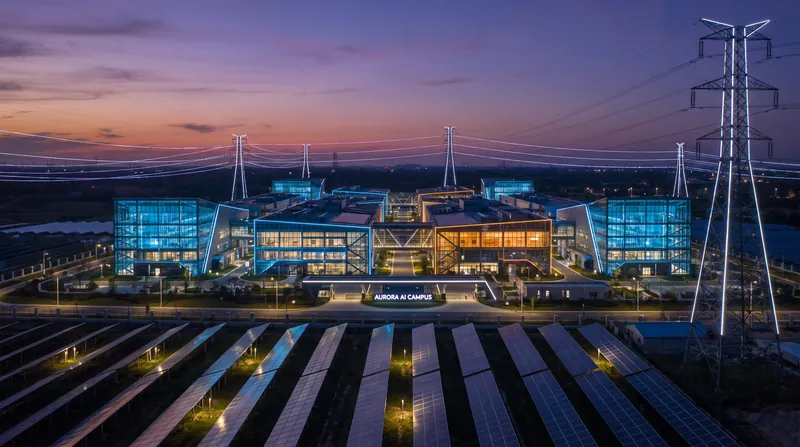
More in Energy
See all →Grid Infrastructure
White House Expands Ratepayer Pledge, Bringing Utilities Into Data Center Grid Cost Framework
8 sources
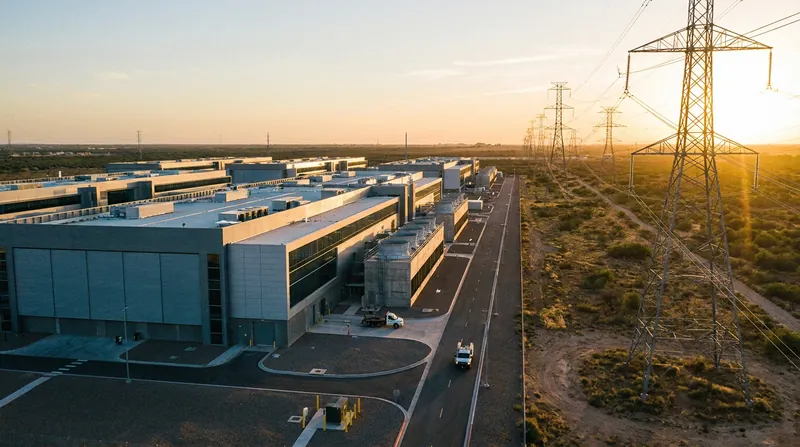
Power Grid Physics
Transformer Saturation and Corona Losses Impose an Absolute Voltage Ceiling on Terrestrial Power Transmission
6 sources
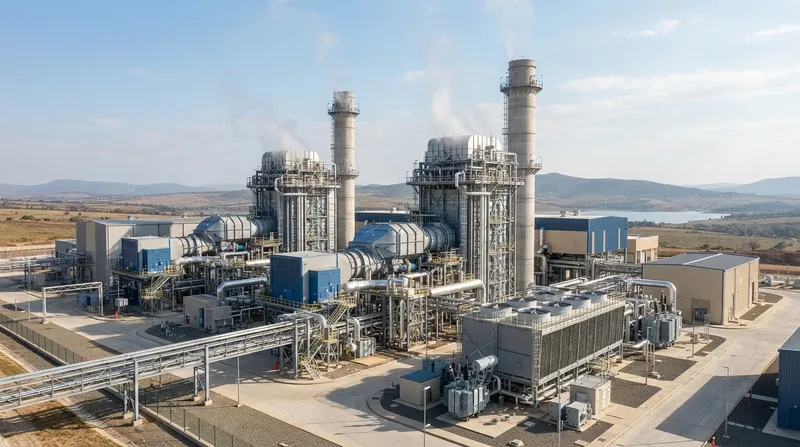
Thermodynamics
Cascading 600°C Exhaust Pushes Combined-Cycle Power Plant Efficiency Past 60 Percent
4 sources
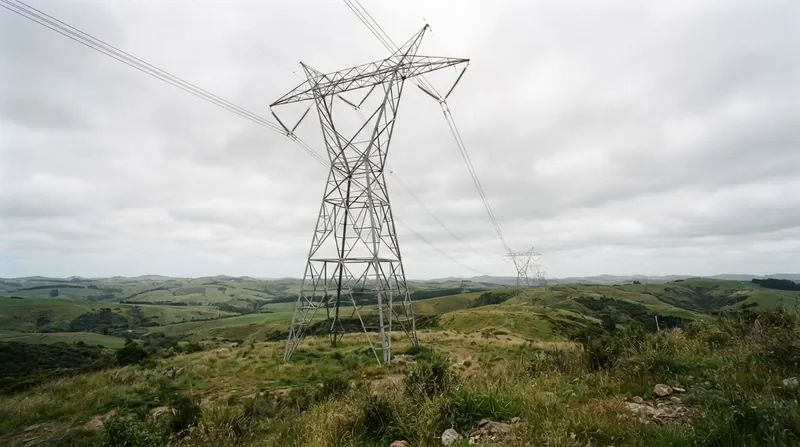
Grid Infrastructure
Why Overhead Power Lines Run as Bare Metal Without Insulation
3 sources
Comments
Every angle. Every day.
Get Energy stories with full source coverage and perspective breakdowns, free every day.