
Why the Internet's Biggest Creators Are Building Their Own Streaming Platforms
Top internet creators are increasingly abandoning the algorithmic treadmill of YouTube and TikTok to launch their own direct-to-consumer streaming services.
By Factlen Editorial Team
- Independent Creators
- Argue that direct-to-consumer subscriptions are essential for creative freedom, stable revenue, and escaping algorithmic burnout.
- Casual Audiences
- Express frustration over subscription fatigue and the paywalling of content they are accustomed to watching for free.
- Industry Analysts
- View the shift as a natural maturation of the creator economy, where influencers evolve into diversified media businesses.
What's not represented
- · YouTube and TikTok platform executives
- · Advertisers and brand sponsors
Why this matters
The shift toward creator-owned platforms is fundamentally changing how digital media is funded and consumed. By paying creators directly, audiences are enabling a new wave of high-quality, independent 'slow content' that prioritizes storytelling over algorithmic clickbait.
Key points
- Top internet creators are increasingly launching their own direct-to-consumer streaming platforms to escape algorithmic burnout.
- The shift allows creators to produce 'slow content' like documentaries and serialized shows that algorithms often penalize.
- Platforms like Nebula and Dropout have proven the financial viability of ad-free, creator-owned subscription models.
- To avoid alienating casual fans, many creators are adopting a 'windowing' strategy, releasing content early to subscribers before YouTube.
- YouTube is transitioning from the final destination for content to a top-of-funnel discovery engine for creator businesses.
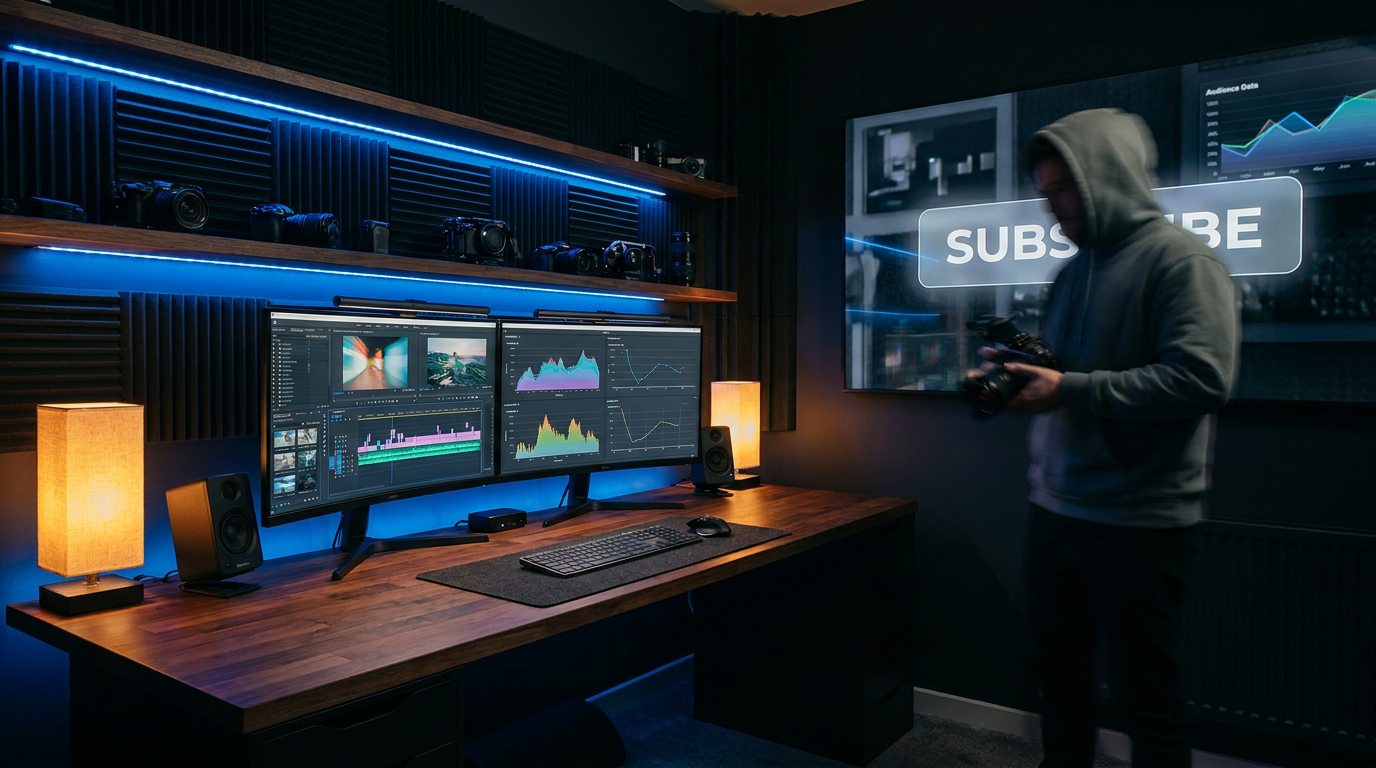
The creator economy is undergoing a structural maturation. For the better part of a decade, the ultimate goal for internet talent was straightforward: amass millions of subscribers on YouTube, satisfy the algorithm, and live off the resulting advertising revenue and brand sponsorships. Today, however, the industry's most successful figures are realizing that building a business entirely on rented digital land is a profound liability.[1][3]
Enter the era of the creator-owned streaming platform. From educational video essayists to unscripted comedy troupes, top-tier internet talent is increasingly pivoting toward direct-to-consumer (D2C) subscription models. Rather than relying on third-party platforms to dictate their reach and revenue, creators are building their own paywalled ecosystems, fundamentally altering how digital media is funded and consumed.[1][5]
The catalyst for this exodus is a growing friction between what creators want to make and what algorithms demand. Platforms like YouTube and TikTok optimize for watch time, retention, and rapid engagement, effectively forcing creators onto a treadmill of fast-paced, highly clickable uploads. This environment breeds burnout, subjects creators to arbitrary demonetization, and heavily penalizes those who want to experiment outside their established niches.[1][5]
In response, a "slow content" renaissance is taking hold. Creators are increasingly eager to produce high-budget documentaries, serialized shows, and deeply researched video essays. While these formats often fail the rapid-fire retention metrics required to go viral on ad-supported feeds, they are deeply valued by dedicated superfans who crave substance over sensationalism.[6][7]

The pioneer of this model at scale is Nebula. Launched in 2019 by CEO Dave Wiskus and a collective of educational creators, Nebula was built specifically as an algorithm-free sanctuary. The platform now boasts over 680,000 paying subscribers and has achieved a reported valuation of over $150 million, proving that audiences will happily pay for premium, ad-free independent media.[4][7]
Nebula operates on a watch-time revenue-sharing model that completely decouples creator income from ad impressions and sponsor reads. By pooling their audiences, the platform's creators have built a sustainable ecosystem that funds ambitious projects—including an in-house film studio—that would be financially ruinous to attempt on YouTube alone.[4]
Nebula operates on a watch-time revenue-sharing model that completely decouples creator income from ad impressions and sponsor reads.
A similar success story is Dropout, the subscription service launched by the former CollegeHumor team. After years of producing punchy, algorithm-friendly sketch comedy, the team pivoted to a paid model focused on long-form, unscripted tabletop roleplaying and game shows like Dimension 20 and Game Changer. The gamble paid off, resulting in a thriving, highly profitable business sustained entirely by a loyal fanbase.[5]
The underlying economics of the D2C shift are compelling. A creator with three million casual YouTube subscribers might struggle with fluctuating ad rates, but converting just 50,000 of those viewers into superfans paying $5.99 a month generates a highly predictable, multi-million dollar annual revenue stream. This financial stability allows creators to hire full-time production teams and invest in long-term creative vision.[1][6]

However, the transition to paid platforms has not been without significant growing pains. In April 2024, Watcher Entertainment—a wildly popular studio founded by former Buzzfeed stars Ryan Bergara, Shane Madej, and Steven Lim—announced they were leaving YouTube entirely to launch their own $5.99-per-month streaming service.[2][8]
The announcement triggered immediate and overwhelming backlash. In an era defined by widespread subscription fatigue, casual viewers felt betrayed by the sudden paywalling of content they had supported for years. Fellow creators also criticized the abruptness of the move, noting that completely abandoning a massive free audience was a dangerous miscalculation.[2][8]
Facing a public relations crisis, Watcher quickly pivoted to a "windowing" strategy. Under this revised model, paying subscribers receive the content first and ad-free, while free viewers can still access the videos on YouTube 30 days later. This compromise salvaged their community goodwill while still driving core fans to the paid platform.[2]

The windowing model has since become the gold standard for creator independence. When The Try Guys launched their own subscription platform, 2nd Try, in June 2024, they implemented the windowing strategy from day one. The launch was a resounding success; within three months, direct subscriptions accounted for roughly 20% of the company's total revenue, proving the viability of the hybrid approach.[1]
This shift does not mean YouTube is dying, but rather that its role in the media landscape is evolving. For top-tier creators, YouTube is no longer the final product. Instead, it serves as the ultimate top-of-funnel marketing engine—a massive, free discovery network used to funnel the most dedicated viewers into their owned, monetized ecosystems.[1][5]
Ultimately, the rise of creator-owned platforms represents a massive victory for creative autonomy. By answering directly to their audiences rather than an opaque, ever-changing algorithm, digital creators are ushering in a golden age of independent, television-caliber internet media that prioritizes craft over clicks.[3][6]
How we got here
May 2019
Nebula launches as a creator-owned streaming platform, pioneering the algorithm-free model.
2021–2023
Dropout proves the viability of long-form, unscripted comedy behind a paywall.
April 2024
Watcher Entertainment announces a full pivot to a paid streaming service, facing intense fan backlash.
May 2024
Watcher backtracks to a 'windowing' model, keeping YouTube alive while prioritizing their paid platform.
June 2024
The Try Guys launch '2nd Try', successfully implementing the windowing model from day one.
Viewpoints in depth
Independent Creators' View
Direct-to-consumer platforms are the only way to achieve true creative freedom and financial stability.
For creators who have spent years on the algorithmic treadmill, the shift to owned platforms is a matter of survival. They argue that YouTube's reliance on watch-time and rapid engagement actively punishes high-quality, deeply researched 'slow content.' By transitioning to a subscription model, creators can decouple their income from unpredictable ad rates and arbitrary demonetization, allowing them to answer directly to their audience rather than a black-box algorithm.
Casual Audiences' View
The proliferation of creator subscriptions is exacerbating digital paywall fatigue.
From the perspective of everyday viewers, the sudden pivot to paid platforms feels like a betrayal of the open internet. Audiences are already burdened by a fragmented streaming landscape of Netflix, Hulu, and Disney+, making an additional $5.99 monthly charge for a single creator's channel difficult to justify. When creators attempt to hard-paywall their content, fans often push back, arguing that the community built the creator's success and shouldn't be priced out of the final product.
Industry Analysts' View
The creator economy is maturing into a landscape of diversified media businesses.
Business analysts view the rise of creator-owned platforms not as a rejection of YouTube, but as a natural evolution of digital media. They point out that relying on a single distribution channel is a fundamental business risk. By adopting a 'windowing' strategy—using YouTube for top-of-funnel discovery and owned platforms for core monetization—creators are transitioning from mere influencers into sophisticated, resilient media executives.
What we don't know
- Whether casual audiences will eventually hit a hard ceiling on the number of $5.99 creator subscriptions they are willing to maintain.
- How YouTube and TikTok might alter their monetization algorithms to incentivize top creators to keep exclusive content on their platforms.
- If smaller, niche creators can successfully replicate the direct-to-consumer model without a massive existing top-of-funnel audience.
Key terms
- Direct-to-Consumer (D2C)
- Selling products or subscriptions directly to an audience without a middleman platform controlling the transaction.
- Windowing
- A release strategy where content is available exclusively on a paid platform for a set period before being released for free elsewhere.
- Slow Content
- High-production, deeply researched, or long-form media that prioritizes quality and storytelling over algorithmic virality.
- Demonetization
- When a platform like YouTube removes advertisements from a video, stripping the creator of revenue for that specific upload.
Frequently asked
Why are creators leaving YouTube?
Most creators aren't abandoning YouTube entirely. Instead, they are using it as a discovery engine while moving their core, highly-produced content to their own subscription platforms to escape algorithmic pressure and unpredictable ad revenue.
How much do creator-owned streaming platforms cost?
Most independent creator platforms, such as Watcher TV or Nebula, charge around $5 to $6 per month, or offer discounted annual plans, for ad-free and exclusive access.
What is windowing in the creator economy?
Windowing is a release strategy where creators publish videos early on their paid platform, then upload them to free platforms like YouTube 30 days later, balancing revenue with audience growth.
Sources
Source coverage
8 outlets
3 viewpoints surfaced






[1]Streaming MediaIndependent Creators
Life Beyond YouTube - The Shift to Creator-Owned Platforms
Read on Streaming Media →[2]The Publish PressCasual Audiences
Watcher Shuts Down Its Patreon
Read on The Publish Press →[3]ForbesIndustry Analysts
The Richest Content Creators in the World in 2026
Read on Forbes →[4]WikipediaIndependent Creators
Nebula (streaming service)
Read on Wikipedia →[5]SpyrosoftIndependent Creators
Why YouTube creators are launching their own streaming platforms
Read on Spyrosoft →[6]Stan StoreIndustry Analysts
Creator Economy 2024 in Review: Key Stats & Trends
Read on Stan Store →[7]VireIndustry Analysts
Top 10 companies powering the creator economy
Read on Vire →[8]MediumCasual Audiences
YouTubers Backtrack on Paywall After Outrage
Read on Medium →
Every angle. Every day.
Get entertainment stories with full source coverage and perspective breakdowns delivered to your inbox.