
Why Millions of Travelers Are Chasing the Dark: The Rise of Astrotourism
As light pollution erases the stars for 99% of Americans and Europeans, a booming 'astrotourism' industry is turning pristine night skies into a multi-billion-dollar economic engine for rural communities.
By Factlen Editorial Team
- Rural Economic Developers
- View astrotourism as a sustainable way to create jobs and generate off-season revenue without building heavy infrastructure.
- Ecological Conservationists
- Focus on mitigating light pollution to protect nocturnal wildlife, migratory birds, and natural habitats.
- Luxury Hospitality Sector
- Focus on monetizing pristine environments and natural darkness as a premium, highly sought-after guest amenity.
- Astrotourism Analysts
- Highlight the broader cultural and psychological shift driving modern travelers to seek out the stillness of the night sky.
What's not represented
- · Urban Planners
- · Lighting Manufacturers
Why this matters
The push to protect the night sky is creating a rare environmental win-win. By reducing light pollution, communities are not only restoring vital ecosystems and saving energy, but they are also unlocking a massive new tourism economy that doesn't require building heavy infrastructure.
Key points
- Astrotourism has become a multi-billion-dollar travel trend as light pollution erases the stars in urban areas.
- DarkSky International has certified over 220 locations globally that enforce strict lighting ordinances.
- The trend provides rural communities with sustainable economic growth without requiring heavy infrastructure.
- Reducing artificial light also protects nocturnal wildlife and restores natural ecosystems.
- The 2026 solar maximum is further accelerating the trend by bringing auroras to lower latitudes.
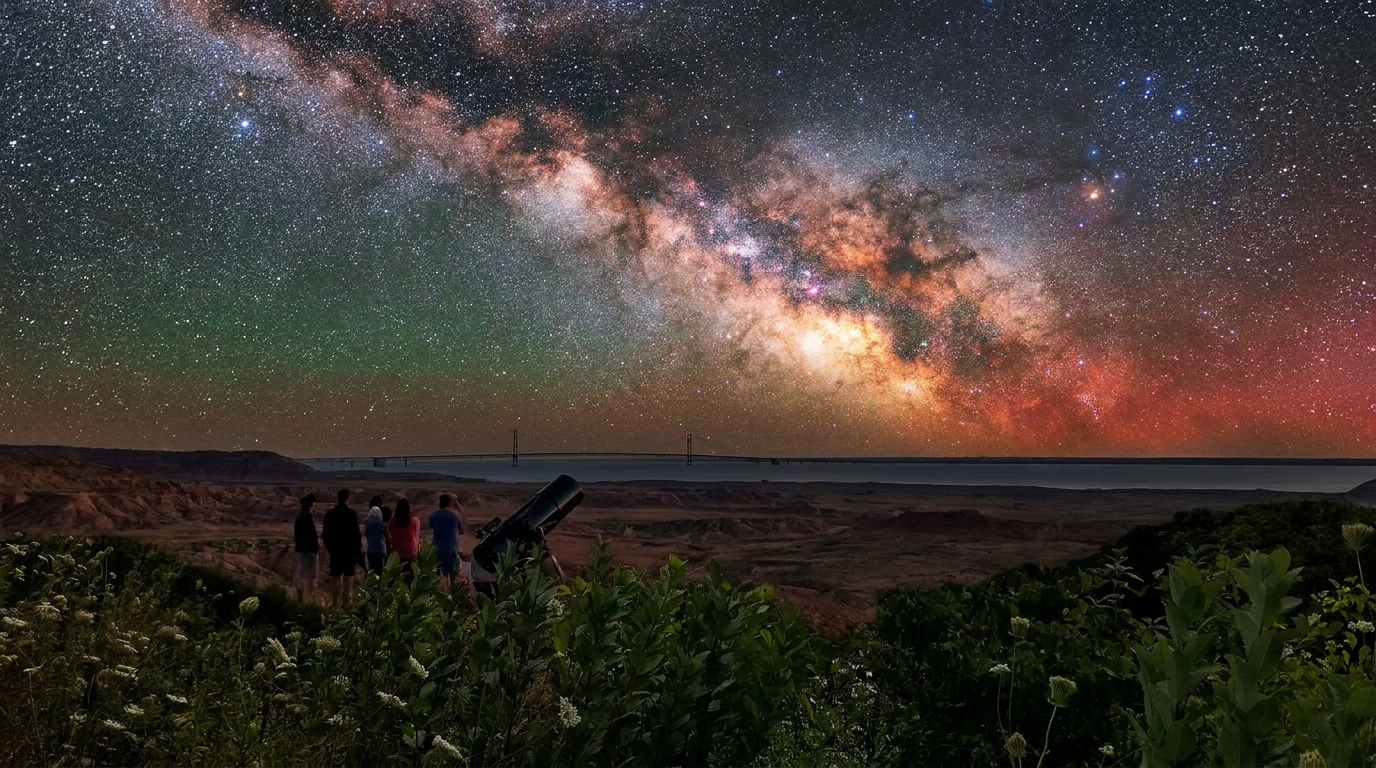
For decades, the global travel industry has been defined by what visitors can see when the sun is shining. But as we move through 2026, one of the most powerful forces in global tourism is entirely dependent on the dark. Astrotourism—travel centered around experiencing pristine night skies, stargazing, and celestial events—has rapidly evolved from a niche hobby for amateur astronomers into a mainstream travel phenomenon.[4][7]
The shift is measurable and massive. Recent industry data indicates that 62% of travelers are now actively seeking out "darker-sky" destinations and noctourism experiences. This surge in interest has transformed the night sky into a highly coveted natural resource, prompting destinations worldwide to rethink how they manage their lighting and market their after-dark appeal.[1][7]
The root cause of this trend is a profound modern scarcity. For the vast majority of human history, a brilliant canopy of stars was a universal nightly experience. Today, the rapid expansion of urban infrastructure and unregulated artificial light has quietly erased the cosmos for most of the developed world.[3]
The statistics are stark: an estimated 99% of people living in the United States and Europe now reside under skies polluted by artificial light. For 80% of North Americans, the Milky Way is no longer visible from their own backyards. As the stars have disappeared from daily life, people are increasingly willing to travel great distances to find them.[3][7]

In a world dominated by glowing screens and relentless connectivity, a truly dark sky offers a rare psychological reset. The vastness of the cosmos provides a sense of perspective and stillness that travelers find increasingly difficult to replicate in densely populated urban environments.[1]
Protecting these vanishing vistas is a complex logistical challenge. At the forefront of this effort is DarkSky International, a nonprofit organization that has formalized the preservation of the night sky through its rigorous certification programs. To date, the organization has designated over 220 International Dark Sky Places across more than 20 countries.[1][3]
Achieving this certification is not simply a matter of being located in a remote area. It requires rigorous, community-wide commitments to overhauling local infrastructure. Municipalities and park managers must adopt strict lighting ordinances designed to eliminate the three main components of light pollution: glare, skyglow, and light trespass.[2][5]
The technical requirements for an official Dark Sky Park are highly specific. Communities must transition to fully shielded lighting fixtures that direct illumination exclusively downward, preventing light from spilling uselessly into the atmosphere. Furthermore, they must utilize low-intensity bulbs with warm color temperatures, strictly capped at a maximum of 2700 Kelvin, to minimize the scattering of harsh blue light.[2][5]

These infrastructure upgrades require upfront investment, but the economic returns have proven to be extraordinary. The global stargazing tourism market was valued at $1.82 billion in 2025 and is projected to skyrocket to $4.57 billion by 2034, driven by travelers willing to pay a premium for pristine celestial viewing conditions.[4]
These infrastructure upgrades require upfront investment, but the economic returns have proven to be extraordinary.
Rural communities are uniquely positioned to capture this revenue. Unlike traditional tourism development, which often requires the construction of massive hotels, theme parks, or transit hubs, astrotourism relies on an asset these communities already possess: natural darkness.[5]
The economic impact on these regions is transformative. A comprehensive study of the Colorado Plateau—a region encompassing parts of Utah, Arizona, Colorado, and New Mexico—forecasted that astrotourists will spend $5.8 billion over a ten-year period. This influx of capital is expected to generate $2.4 billion in wages and support over 10,000 jobs annually.[5]

State governments are beginning to recognize dark skies as critical economic infrastructure. In June 2026, Colorado officially launched the "Colorado Stargazing Trail," a statewide map of certified parks and communities designed to promote responsible night-sky tourism. The initiative explicitly links environmental conservation with economic development, signaling that dark-sky-friendly lighting is now a statewide priority.[2]
The luxury hospitality sector has also aggressively pivoted to meet this demand. High-end resorts in locations like Chile's Atacama Desert, southern Iceland, and the American West are turning darkness into their most premium amenity. Properties are hiring resident astronomers, constructing private observatories, and even installing glass ceilings over beds to allow guests to stargaze from under the covers.[1]
Beyond the economic windfall, astrotourism is being championed as a model for sustainable travel. The global tourism industry has long struggled with overtourism—the concentration of too many visitors in a few famous locations during the peak summer months, which strains local resources.[6][7]

Astrotourism naturally disperses visitors geographically, drawing them away from crowded urban centers and coastal hotspots toward lesser-known rural and desert environments that benefit from the economic injection.[5]
It also disperses visitors seasonally. Because the clearest, darkest skies often occur during the colder, less humid months of autumn and winter, astrotourism provides a vital stream of off-season revenue for local businesses that would otherwise struggle outside of the summer peak.[5][7]
The environmental benefits of reducing light pollution extend far beyond human enjoyment. Artificial light wreaks havoc on nocturnal ecosystems, disrupting the navigation of migratory birds, the breeding cycles of amphibians, and the foraging behaviors of countless nocturnal mammals. By dimming the lights to attract tourists, communities are simultaneously restoring critical habitats.[3][5]
There is also a profound cultural preservation aspect to the trend. Many astrotourism programs are moving beyond purely scientific explanations of the cosmos to incorporate indigenous astronomy. By sharing traditional sky stories and historical navigational techniques, these programs celebrate cultural heritage and ensure that local communities are actively involved in the tourism narrative.[6]
The momentum behind astrotourism is currently being accelerated by a series of spectacular celestial events. The sun is currently moving through its "solar maximum" phase in 2026, producing intense auroras that are visible at unusually low latitudes, while upcoming total solar eclipses continue to drive massive global travel.[1][7]
Ultimately, the rise of astrotourism represents a rare alignment of interests. By looking up, travelers are finding the awe they seek, rural communities are finding sustainable economic growth, and conservationists are finding a powerful financial incentive to protect the natural world. Reclaiming the night sky is proving to be one of the most uplifting environmental victories of the decade.[7]
How we got here
1988
The International Dark-Sky Association (now DarkSky International) is founded in Arizona to combat light pollution.
2001
The International Dark Sky Places Program is officially established to certify locations with pristine darkness.
2024
A total solar eclipse across North America triggers a massive surge in mainstream celestial tourism.
2025
The global stargazing tourism market reaches $1.82 billion amid growing awareness of light pollution.
June 2026
Colorado launches the statewide 'Colorado Stargazing Trail' to capitalize on the booming astrotourism economy.
Viewpoints in depth
Rural Economic Developers
Astrotourism is viewed as a vital tool for sustainable job creation and off-season revenue.
For rural municipalities, the night sky represents an untapped natural resource that requires very little hard infrastructure to monetize. Unlike ski resorts or theme parks, dark sky tourism relies on preserving what is already there. Economic developers emphasize that astrotourists tend to stay longer, spend more, and visit during the colder off-season months, providing a crucial economic lifeline to small towns that typically struggle when summer crowds depart.
Ecological Conservationists
The primary benefit of dark sky certification is the restoration of nocturnal habitats.
Conservationists argue that light pollution is one of the most pervasive but easily reversible environmental crises. Artificial light disrupts the circadian rhythms of wildlife, throws off the navigation of migratory birds, and alters the predator-prey dynamics of nocturnal mammals. By using the economic incentive of tourism to convince towns to install shielded, low-temperature lighting, conservationists are successfully restoring thousands of square miles of critical habitat.
Luxury Hospitality Sector
Pristine darkness is being monetized as the ultimate premium guest amenity.
In the luxury travel market, exclusivity is paramount. Because true darkness is now inaccessible to 99% of the developed world, high-end resorts are marketing the cosmos as a luxury good. Hospitality brands are investing heavily in permanent observatories, hiring resident astronomers, and designing architecture that integrates the night sky into the guest room, proving that sustainability and high-end luxury can be highly complementary.
What we don't know
- Whether the rapid influx of tourists to remote dark sky parks will eventually create the same overtourism and infrastructure strain seen in traditional national parks.
- How quickly urban centers will adopt dark-sky-friendly lighting ordinances, given the upfront costs of retrofitting citywide streetlights.
Key terms
- Astrotourism
- Travel motivated by the desire to observe the night sky, celestial events, and pristine natural darkness.
- Skyglow
- The brightening of the night sky over inhabited areas caused by artificial light scattering in the atmosphere.
- Light trespass
- Artificial light that falls unintentionally outside its intended area, such as a streetlamp illuminating a bedroom window or a natural habitat.
- Color temperature
- A measurement (in Kelvin) of how warm or cool a light appears; dark sky standards require warm, amber-toned lights (under 2700K).
- Solar maximum
- The period of greatest solar activity in the sun's 11-year cycle, which increases the frequency and intensity of auroras.
Frequently asked
Do I need expensive equipment to participate in astrotourism?
No. While some travelers use telescopes, the primary appeal of a Dark Sky Park is the ability to see the Milky Way and thousands of stars clearly with the naked eye.
What makes an official International Dark Sky Park different from any rural area?
Certified parks have enacted strict, legally binding lighting ordinances to eliminate light pollution and commit to ongoing public education about the night sky.
Why is blue light considered worse for light pollution?
Blue-rich white light scatters more easily in the atmosphere, creating worse skyglow, and is more disruptive to the circadian rhythms of both humans and nocturnal wildlife.
When is the best time of year to visit a dark sky destination?
While summer is popular for vacations, the colder, less humid months of autumn and winter often provide the clearest and crispest views of the night sky.
Sources
Source coverage
7 outlets
4 viewpoints surfaced







[1]ForbesLuxury Hospitality Sector
The Rise Of Astrotourism: 25 Hotels Leading The Stargazing Trend
Read on Forbes →[2]AccessFixturesRural Economic Developers
Colorado Unveils Stargazing Trail, Setting New Standards for Dark Sky Lighting
Read on AccessFixtures →[3]DarkSky InternationalEcological Conservationists
Protecting the night for generations to come
Read on DarkSky International →[4]MarketInteloLuxury Hospitality Sector
Stargazing Tourism Market Outlook 2025-2034
Read on MarketIntelo →[5]Utah Office of TourismRural Economic Developers
Astrotourism and Dark Sky Tourism Economic Impacts
Read on Utah Office of Tourism →[6]Open UniversityEcological Conservationists
Astrotourism: Reimagining the Night Sky for Sustainable Tourism
Read on Open University →[7]Factlen Editorial TeamAstrotourism Analysts
Synthesis by Factlen editorial team
Read on Factlen Editorial Team →
Every angle. Every day.
Get travel stories with full source coverage and perspective breakdowns delivered to your inbox.