
The Science of Rucking: Why Weighted Walking is 2026's Most Practical Longevity Trend
Walking with a weighted backpack is moving from military training to mainstream fitness. By combining cardiovascular conditioning with load-bearing resistance, it offers a low-impact way to build strength and preserve bone density.
By Factlen Editorial Team
- Longevity & Aging Experts
- Focuses on the metabolic and cardiovascular efficiency of the practice for long-term health.
- Physical Therapists & Biomechanists
- Focuses on joint preservation, posture correction, and progressive loading.
- Tactical Fitness Advocates
- Emphasizes functional strength, operational readiness, and mental resilience.
What's not represented
- · Orthopedic surgeons treating load-bearing spinal injuries
- · Ultralight backpacking advocates who argue against unnecessary joint wear
Why this matters
As the fitness industry shifts toward longevity and sustainable health, rucking offers a highly accessible, low-impact way to build cardiovascular health, preserve bone density, and strengthen the body without the injury risks of running.
Key points
- Rucking, or walking with a weighted backpack, has evolved from a military requirement to a mainstream longevity trend in 2026.
- Adding 10 to 30 percent of body weight to a walk roughly doubles the caloric burn and efficiently pushes the heart into Zone 2 cardio.
- Unlike running, which places up to eight times a person's body weight in force on the knees, rucking remains a low-impact exercise.
- The mechanical load of the backpack stimulates bone-forming cells, though recent trials show it may not prevent bone loss during a caloric deficit.
- The weight naturally pulls the shoulders back, engaging deep core stabilizers and improving everyday posture.
In the evolving landscape of 2026 fitness trends, the pendulum has swung away from complex gym machinery and hyper-intense interval training toward something radically simple: walking outside with a heavy backpack.[2][3]
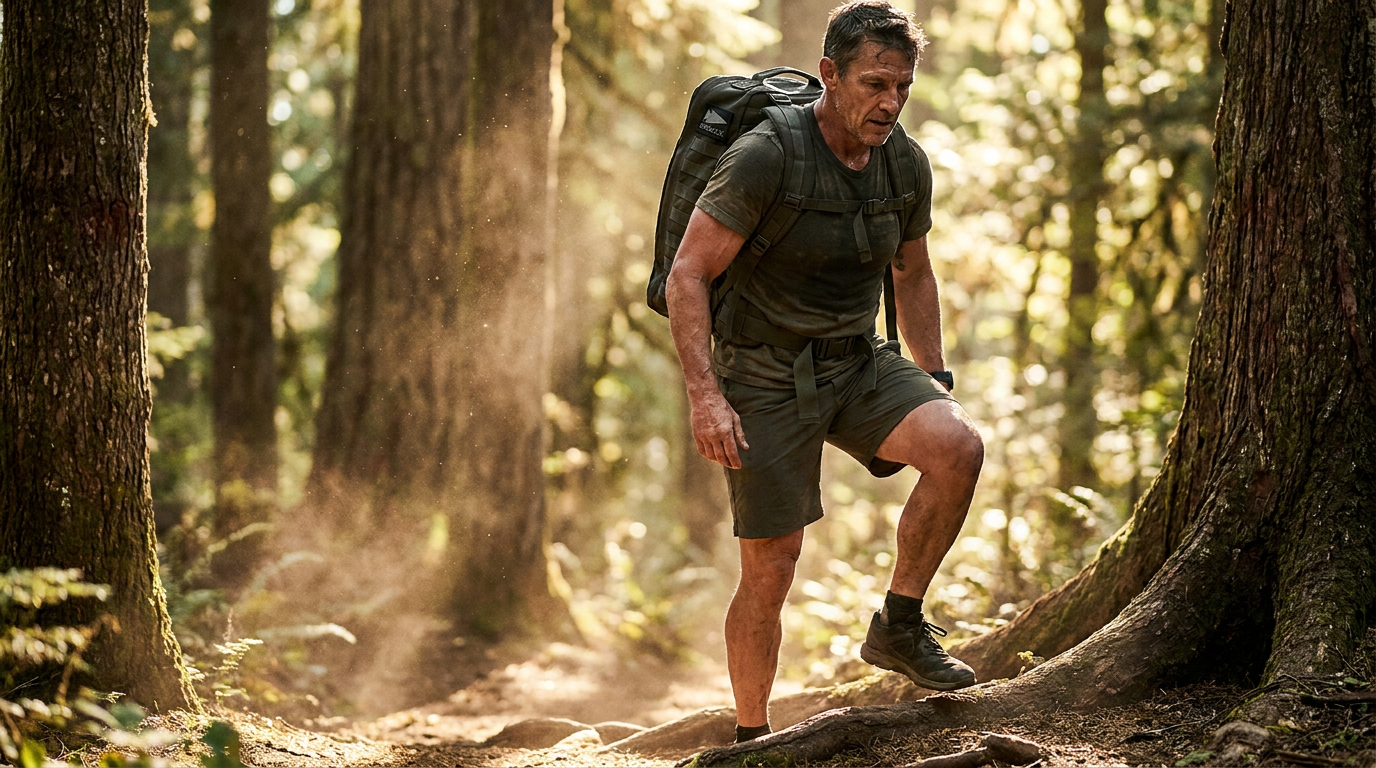
Known as "rucking," this practice involves loading a specialized rucksack or a standard backpack with weights—typically 10 to 30 percent of the user's body weight—and walking at a brisk pace.[1]
While the concept traces its origins to military load-carriage training, where soldiers march long distances with heavy gear to build operational readiness, it has recently been embraced by the civilian longevity and wellness communities.[2]
The primary mechanism behind rucking's rise is its unique cardiovascular profile. Adding weight to a standard walk increases the metabolic demand on the body, forcing the heart and lungs to work harder to move the same distance.[1]
This elevated effort reliably pushes the practitioner into "Zone 2" cardio—an aerobic intensity range of roughly 60 to 70 percent of maximum heart rate. Longevity researchers prize Zone 2 for its ability to build mitochondrial density and improve fat oxidation without requiring extensive recovery time.[1]

Empirical evidence supports these aerobic claims. A landmark study published in the Journal of Strength and Conditioning Research tracked healthy men through a 10-week load-carriage program, finding significant increases in VO2 max, the gold-standard metric for cardiovascular fitness and a strong predictor of lifespan.[4]
Beyond aerobic capacity, the caloric expenditure of rucking is substantial. Depending on the load and pace, carrying a weighted pack can roughly double the oxygen consumption and calorie burn of an unloaded walk, rivaling the energy expenditure of a slow jog.[1][2]
Crucially, rucking achieves this metabolic output without the severe joint impact associated with running. Biomechanical analyses show that running can place up to eight times a person's body weight in peak force on the knee joints with every stride.[1]
In contrast, walking—even with a heavy pack—keeps one foot on the ground at all times, eliminating the high-impact flight phase of running. The peak forces on the knees remain closer to three times the body weight, making it a highly sustainable option for aging athletes.[1][3]

In contrast, walking—even with a heavy pack—keeps one foot on the ground at all times, eliminating the high-impact flight phase of running.
The most heavily debated benefit of rucking centers on bone mineral density. Weight-bearing exercises are known to create mechanical load on the skeletal system, which stimulates bone-forming cells to fortify the skeleton against osteoporosis.[8]
Short-term metabolic data supports this osteogenic effect. Research from the U.S. Army Research Institute of Environmental Medicine demonstrated that a single 60-minute bout of load-carriage exercise elicited transient increases in biochemical markers of bone formation and calcium absorption.[7]
Long-term preservation data is also promising, though highly specific. A five-year study in the Journals of Gerontology found that postmenopausal women who combined weighted-vest exercises with light jumping preserved their hip bone mineral density significantly better than control groups.[5]
However, the bone density claims have limits. The 2025 INVEST in Bone Health trial, published in JAMA Network Open, revealed that wearing a weighted vest did not prevent the bone loss typically associated with caloric deficits and dietary weight loss in older adults.[6]
Beyond the skeleton, rucking forces a biomechanical adaptation in the muscular system. The weight of the pack shifts the body's center of mass backward, requiring the deep abdominal stabilizers and posterior chain muscles to engage continuously to maintain an upright posture.[1]

This constant engagement builds eccentric strength—the ability of a muscle to lengthen under tension. Eccentric strength in the hips and legs is critical for fall prevention, allowing older adults to safely navigate stairs and uneven terrain.[1]
The mental health benefits of the practice act as a powerful multiplier. By moving the workout outdoors, rucking stacks the physiological benefits of aerobic exercise with the stress-reducing, cortisol-lowering effects of nature exposure.[3]
The barrier to entry remains remarkably low. While specialized fitness brands sell dedicated rucksacks and cast-iron plates, the physiological benefits can be achieved with a standard hiking backpack loaded with books, water bottles, or wrapped dumbbells.[2][3]
Clinical guidelines suggest starting conservatively. Physical therapists recommend beginning with 10 to 15 pounds for a 15-to-30-minute walk, allowing the joints, ligaments, and stabilizer muscles to adapt before progressively increasing the load or distance.[1]

How we got here
1950s–Present
Military organizations globally standardize load-carriage marches as a core metric of infantry operational readiness.
2008
Former Special Forces soldiers found civilian rucking brands, beginning the translation of the practice to the general public.
2019
Key sports science studies confirm that structured load-carriage programs significantly improve civilian VO2 max and aerobic capacity.
2025–2026
Rucking surges in mainstream popularity as longevity experts champion it as a sustainable, low-impact alternative to running.
Viewpoints in depth
Longevity Researchers' View
Focuses on the metabolic and cardiovascular efficiency of the practice.
For longevity experts, the appeal of rucking lies in its ability to reliably induce Zone 2 cardiovascular training while simultaneously providing a resistance stimulus. They view it as a highly efficient, time-saving intervention that builds mitochondrial health and preserves lean muscle mass without the systemic inflammation or joint wear associated with high-intensity interval training.
Tactical Fitness Trainers' View
Emphasizes functional strength, operational readiness, and mental resilience.
Originating from military load-carriage standards, tactical trainers view rucking as the ultimate test of functional, real-world fitness. They argue that the human body evolved to carry heavy loads over long distances, and that modern sedentary lifestyles have weakened the posterior chain. For this camp, the mental fortitude required to carry weight is just as important as the physical adaptations.
Physical Therapists' View
Focuses on biomechanics, posture correction, and progressive loading.
Clinical biomechanists and physical therapists appreciate rucking for its low-impact nature and its ability to naturally correct the forward-head posture caused by desk work. However, they emphasize strict adherence to progressive overload. They caution that jumping straight to heavy weights can strain the lower back, advocating instead for a slow, structured progression starting at just 10 percent of body weight.
What we don't know
- The exact long-term effects of heavy, repetitive spinal compression from rucking on civilian populations over multiple decades.
- The precise optimal ratio of weight-to-distance that maximizes bone mineral density gains without accelerating joint wear.
- Whether the cardiovascular adaptations from rucking translate identically across all age groups and baseline fitness levels.
Key terms
- Zone 2 Cardio
- An aerobic exercise intensity at roughly 60 to 70 percent of maximum heart rate, prized for building endurance and burning fat without requiring long recovery times.
- VO2 Max
- The maximum amount of oxygen the body can utilize during intense exercise, considered the gold-standard measurement of cardiovascular fitness and longevity.
- Mechanical Loading
- The physical stress placed on bones and muscles during weight-bearing activities, which stimulates the body to build stronger tissues.
- Eccentric Strength
- The ability of a muscle to generate force while lengthening, crucial for absorbing impact, walking downhill, and preventing falls.
- Posterior Chain
- The group of muscles on the back of the body, including the calves, hamstrings, glutes, and spinal erectors, which are heavily engaged during load carriage.
Frequently asked
Do I need to buy a specialized rucksack to start?
No. While specialized brands sell durable rucksacks and flat cast-iron plates, you can begin by placing books, water bottles, or wrapped dumbbells into a standard, sturdy hiking backpack.
How much weight should a beginner use?
Physical therapists recommend starting with 10 to 15 pounds, or roughly 5 to 10 percent of your body weight, for a 15-to-30-minute walk to allow your joints and stabilizer muscles to adapt.
Is rucking better for my knees than running?
Yes. Because rucking is essentially walking, one foot is always on the ground. This eliminates the high-impact 'flight phase' of running, significantly reducing the peak forces absorbed by the knee joints.
Can rucking replace my normal strength training?
While rucking builds excellent eccentric strength in the legs and core, experts recommend using it alongside a dedicated resistance training program rather than as a complete replacement.
Sources
Source coverage
8 outlets
3 viewpoints surfaced








[1]Factlen Editorial TeamLongevity & Aging Experts
Synthesis by Factlen editorial team
Read on Factlen Editorial Team →[2]ForbesTactical Fitness Advocates
Rucking Is The Hottest New Fitness Craze
Read on Forbes →[3]WBURPhysical Therapists & Biomechanists
A beginners guide to rucking, the latest practical fitness trend
Read on WBUR →[4]Journal of Strength and Conditioning ResearchPhysical Therapists & Biomechanists
Load Carriage Conditioning and VO2 Max Adaptations
Read on Journal of Strength and Conditioning Research →[5]Journals of GerontologyLongevity & Aging Experts
Long-term Exercise Using Weighted Vests Prevents Hip Bone Loss in Postmenopausal Women
Read on Journals of Gerontology →[6]JAMA Network OpenLongevity & Aging Experts
Effect of Weighted Vest Use on Bone Loss During Dietary Weight Loss: The INVEST Trial
Read on JAMA Network Open →[7]U.S. Army Research Institute of Environmental MedicineTactical Fitness Advocates
Load carriage aerobic exercise stimulates a transient rise in biochemical markers of bone formation
Read on U.S. Army Research Institute of Environmental Medicine →[8]Mayo ClinicPhysical Therapists & Biomechanists
Aerobic walking and bone health
Read on Mayo Clinic →

Every angle. Every day.
Get fitness stories with full source coverage and perspective breakdowns delivered to your inbox.