
The Science of No-Dig Gardening: Why Leaving Soil Alone Makes Plants Thrive
A growing movement of regenerative gardeners is abandoning the spade in favor of "no-dig" methods. By leaving the earth undisturbed, they are unlocking a powerful microscopic ecosystem that reduces labor while dramatically improving plant health and climate resilience.
By Factlen Editorial Team
- Regenerative Gardeners
- Focus on the practical benefits of no-dig methods, such as drastically reduced labor, fewer weeds, and improved plant resilience through top-dressing with organic matter.
- Soil Ecologists
- Emphasize the microscopic mechanisms at play, particularly the preservation of mycorrhizal fungal networks and the role of undisturbed soil in carbon sequestration.
- Traditional Horticulturists
- Acknowledge the vast benefits of minimal disturbance but note that occasional targeted digging—such as planting trees or harvesting root crops—is a natural and manageable part of gardening.
What's not represented
- · Commercial fertilizer manufacturers
- · Large-scale conventional farmers
Why this matters
Traditional gardening advice often centers on labor-intensive tilling and chemical fertilizers. Understanding the science of soil biology allows home gardeners to save time, reduce their carbon footprint, and grow significantly healthier plants simply by working with nature rather than against it.
Key points
- No-dig gardening avoids tilling to preserve the soil's natural structure and microscopic ecosystems.
- Mycorrhizal fungi act as an extended root system, trading soil nutrients for plant sugars.
- Tilling destroys these fungal networks and releases sequestered carbon into the atmosphere.
- Gardeners can start no-dig beds by layering cardboard and compost directly over existing grass.
- The method drastically reduces weeding because dormant weed seeds are never brought to the surface.
- Undisturbed soil acts like a sponge, improving both drainage during heavy rains and moisture retention during droughts.
The traditional image of a dedicated gardener—sweating over a spade, turning the earth each spring to prepare for a new season—is deeply ingrained in our agricultural culture. For generations, tilling was considered an absolute necessity to loosen compacted dirt, aerate the ground, and kill off persistent weeds. But a quiet, science-backed revolution is taking root in backyards and market farms worldwide, challenging everything we thought we knew about cultivation.[7]
It is known as "no-dig" or regenerative gardening, and it operates on a highly counterintuitive premise: the less you mess with the dirt, the better your garden will grow. Rather than viewing soil as an inert medium that merely holds roots and requires constant mechanical intervention, the regenerative approach treats the ground as a living, breathing super-organism.[1][2]
Modern soil science reveals that turning the earth actually destroys its delicate structural integrity. When a gardener thrusts a spade into a bed or runs a rototiller through a plot, they are effectively leveling a microscopic metropolis. The goal of no-dig gardening is to leave this subterranean architecture completely intact, allowing nature's invisible workforce to handle the heavy lifting of soil aeration and nutrient delivery.[2][6]
At the heart of the no-dig philosophy is the soil microbiome. The sheer density of life beneath our feet is staggering; a single teaspoon of healthy, undisturbed soil can contain more individual microorganisms than there are humans on the planet. This complex web of bacteria, nematodes, earthworms, and fungi works in constant concert to break down organic matter and cycle essential nutrients.[1][7]
The true stars of this underground ecosystem are mycorrhizal fungi. These ancient organisms have existed for over 500 million years, evolving alongside the very first land plants to help them survive in harsh, nutrient-poor environments. Today, over 90 percent of all terrestrial plant species still rely on these fungal associations to thrive.[3][4]

Mycorrhizal fungi attach themselves directly to plant roots and extend microscopic, thread-like filaments called hyphae far into the surrounding earth. These hyphae act as an expansive secondary root system, reaching areas the plant could never access on its own. In a brilliant biological trade, the plant feeds the fungi carbon-rich sugars produced through photosynthesis, and in return, the fungi mine the soil for water, phosphorus, and nitrogen to feed the plant.[4][5]
This symbiotic exchange creates a vast, invisible transportation network. The fungal hyphae can actually connect multiple plants across a garden, allowing them to share resources. A deeply rooted perennial might pull up water from deep underground and, via the mycorrhizal network, share it with a shallower-rooted vegetable growing nearby. When soil is tilled, this delicate, life-sustaining lace is shredded, forcing plants to fend entirely for themselves.[3][5]
This symbiotic exchange creates a vast, invisible transportation network.
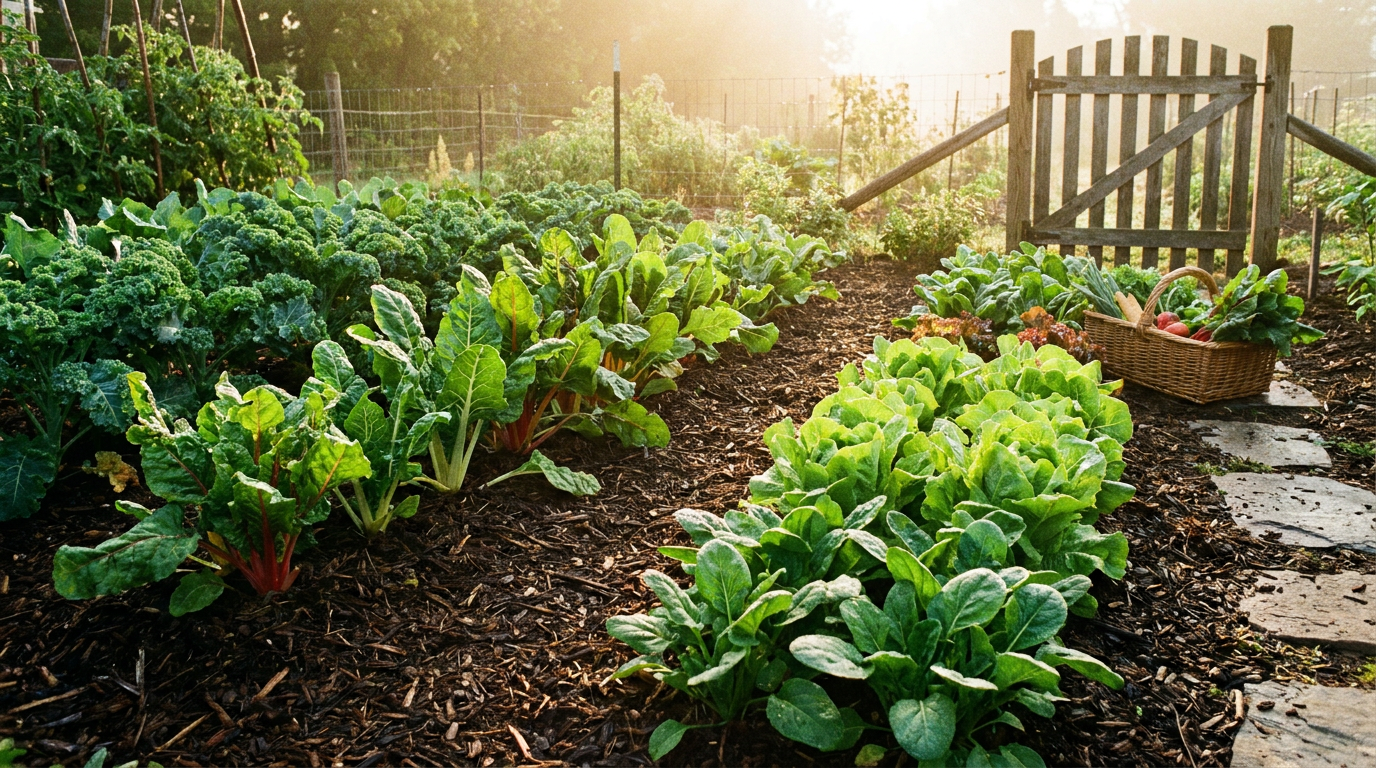
Instead of digging, regenerative gardeners build their soil from the top down, mimicking the natural accumulation of organic matter found on a forest floor. The process often begins with a technique known as "sheet composting" or "lasagna gardening," which allows a gardener to establish a new bed directly over existing grass or weeds without ever lifting a sod cutter.[1][6]
To start a no-dig bed, gardeners lay down a biodegradable weed barrier—typically overlapping sheets of plain, unwaxed cardboard—directly over the area they wish to plant. This layer blocks sunlight, naturally smothering the vegetation below. As the grass and weeds die back, they decompose in place, adding their stored nutrients right back into the soil profile.[6][7]

Over the cardboard, a thick layer of organic matter is applied. This is usually two to four inches of high-quality compost, though it can also include aged manure, leaf mold, or straw. This top layer becomes the immediate growing medium for new plants, while also serving as a slow-release buffet for the earthworms and microbes living below.[1][6]
Planting in a no-dig system is remarkably straightforward. To introduce a new seedling, a gardener simply makes a small hole in the compost layer and drops the plant in. As the plant grows, its roots will eventually push through the softening, decaying cardboard and integrate seamlessly into the native soil beneath, guided by the undisturbed fungal networks.[1][7]
One of the most celebrated and immediate benefits of no-dig gardening is the dramatic reduction in weeding. Traditional digging constantly brings dormant weed seeds from deep within the soil profile up to the surface, where exposure to light triggers their germination. Because a no-dig bed is never turned, those seeds remain buried, and the thick compost mulch makes it difficult for wind-blown seeds to establish a foothold.[1][6]
Beyond the backyard, the widespread adoption of no-dig practices offers profound environmental benefits, particularly concerning climate change. Tilling exposes deeply sequestered soil carbon to oxygen, causing it to oxidize and release into the atmosphere as carbon dioxide. Research indicates that tilled soil produces a 31 percent greater global warming potential than non-tilled soil.[2][7]

The undisturbed, fungi-rich soil also acts like a massive sponge, offering vital resilience against extreme weather. The sticky glycoproteins exuded by mycorrhizal hyphae bind soil particles together into stable aggregates. This improves aeration and drainage during heavy rains, while simultaneously allowing the soil to hold onto moisture far longer during extended dry spells.[2][4][5]
The transition to no-dig gardening ultimately requires a fundamental shift in mindset—moving away from the idea of feeding the plant with synthetic fertilizers, and toward the philosophy of feeding the soil ecosystem. By putting down the spade and letting nature's microscopic workforce take the lead, gardeners are discovering that doing significantly less physical labor can yield remarkably more abundant results.[1][2][7]

Viewpoints in depth
Regenerative Gardeners
Focus on the practical benefits of no-dig methods, such as drastically reduced labor, fewer weeds, and improved plant resilience through top-dressing with organic matter.
For everyday gardeners, the appeal of the no-dig method is largely practical. Traditional gardening is backbreaking work, requiring hours of double-digging and constant weeding. Regenerative advocates point out that by simply layering compost on top of the soil, gardeners can let earthworms and microbes do the heavy lifting of aeration. Furthermore, because the soil is never inverted, the vast seed bank of dormant weeds remains buried, turning weeding from a daily chore into an occasional light task. The focus shifts from constantly fighting the garden to simply feeding the top layer and letting nature handle the rest.
Soil Ecologists
Emphasize the microscopic mechanisms at play, particularly the preservation of mycorrhizal fungal networks and the role of undisturbed soil in carbon sequestration.
From a scientific perspective, the soil is not just dirt; it is a highly structured biological matrix. Soil ecologists emphasize that tilling is akin to an earthquake for the microbiome, shredding the delicate hyphae of mycorrhizal fungi that plants rely on for nutrient uptake and drought resistance. Beyond plant health, ecologists highlight the critical climate implications of soil management. Undisturbed soil is one of the planet's largest carbon sinks. When soil is tilled, oxygen is introduced to sequestered carbon, which is then consumed by bacteria and exhaled as carbon dioxide, directly contributing to global warming.
Traditional Horticulturists
Acknowledge the vast benefits of minimal disturbance but note that occasional targeted digging is a natural and manageable part of gardening.
While many traditional horticulturists have embraced the core tenets of the no-dig movement, they caution against treating the "never dig" rule as an absolute dogma. They note that certain gardening activities inherently require soil disturbance—such as planting a bare-root tree, harvesting root vegetables like potatoes and carrots, or initially breaking up heavily compacted, lifeless urban clay. The traditional view maintains that while routine, whole-bed tilling is unnecessary and harmful, targeted and occasional digging is a normal part of the agricultural process from which healthy soil can easily recover.
What we don't know
- Exactly how long it takes for a severely degraded, heavily tilled plot of land to fully re-establish its native mycorrhizal networks once no-dig practices are implemented.
- The full extent to which different plant species communicate and share specific defense signals through underground fungal networks.
Key terms
- Mycorrhizal fungi
- Beneficial fungi that form a symbiotic relationship with plant roots, helping them absorb water and nutrients in exchange for plant sugars.
- Hyphae
- Microscopic, thread-like filaments created by fungi that extend through the soil, acting as a secondary root system for plants.
- Sheet composting
- A no-dig method of building a garden bed by layering biodegradable materials, like cardboard and compost, directly over grass or weeds.
- Regenerative agriculture
- A holistic land management practice that focuses on restoring soil health, increasing biodiversity, and sequestering carbon.
- Soil microbiome
- The complex community of microorganisms, including bacteria, fungi, and nematodes, that live in the soil and support plant life.
Frequently asked
Do I still need to weed in a no-dig garden?
Yes, but significantly less. Because the soil isn't turned, dormant weed seeds aren't brought to the surface. The few weeds that do appear from wind-blown seeds are easily pulled from the loose compost layer.
How do I start a no-dig bed on existing grass?
You can use a method called sheet mulching. Lay down overlapping sheets of plain cardboard directly over the grass, wet it down, and cover it with 2 to 4 inches of compost. The grass will die and decompose beneath the cardboard.
Can I plant seeds directly into the compost layer?
Yes. Most vegetable and flower seeds will germinate perfectly in a top layer of fine compost. As they grow, their roots will push down into the native soil below.
Does the no-dig method work for potted plants?
While potted plants don't have native soil to protect, the principles of regenerative gardening still apply. Using high-quality, compost-rich potting soil and avoiding synthetic chemicals helps foster a healthy microbiome even in containers.
Sources
Source coverage
7 outlets
3 viewpoints surfaced







[1]Royal Horticultural SocietyTraditional Horticulturists
The crucial role of healthy soil and debunking no-dig myths
Read on Royal Horticultural Society →[2]UC Agriculture and Natural ResourcesSoil Ecologists
Regenerative Agriculture in the Home Garden
Read on UC Agriculture and Natural Resources →[3]The Natural GardenerSoil Ecologists
What is Mycorrhizal Fungi? A Complete Guide
Read on The Natural Gardener →[4]Grow OrganicSoil Ecologists
What Are Mycorrhizae and Why Are They Important?
Read on Grow Organic →[5]Dr. EarthSoil Ecologists
Mycorrhizae: The Bridge for Life
Read on Dr. Earth →[6]Organic IndiaRegenerative Gardeners
Tips for Regenerative Gardening at Home
Read on Organic India →[7]Factlen Editorial TeamRegenerative Gardeners
Synthesis by Factlen editorial team
Read on Factlen Editorial Team →

Every angle. Every day.
Get home stories with full source coverage and perspective breakdowns delivered to your inbox.