
The Chemistry of the Perfect Chocolate Chip Cookie: An Explainer on Baking Science
Baking is applied chemistry, and every ingredient in a chocolate chip cookie plays a precise molecular role. From the Maillard reaction to gluten development, understanding the science allows home bakers to engineer their ideal dessert.
By Factlen Editorial Team
- Culinary Scientists
- Focus on manipulating variables like temperature, hydration, and protein structures to achieve precise textures.
- Traditional Bakers
- Emphasize ingredient quality, reliable ratios, and the tactile experience of baking.
- Science Educators
- Use baking as an accessible gateway to teach fundamental chemistry concepts to the public.
What's not represented
- · Commercial Cookie Manufacturers
- · Gluten-Free and Vegan Bakers
Why this matters
Understanding the chemical reactions in your oven transforms baking from a game of chance into a predictable science. By mastering how fats, sugars, and proteins interact, you can stop relying on rigid recipes and start customizing your baked goods to achieve your exact preferred texture and flavor.
Key points
- Butter acts as an emulsion; its water content evaporates into steam in the oven, creating air pockets for a tender crumb.
- Brown sugar contains acidic molasses, which reacts with baking soda to provide lift and retains moisture for a chewier texture.
- The protein content of flour dictates gluten development, with bread flour yielding a significantly chewier cookie than all-purpose flour.
- Resting dough for 24 to 72 hours allows enzymes to break down proteins, dramatically enhancing browning and flavor complexity.
The chocolate chip cookie is universally beloved, a staple of childhood memories and late-night cravings alike. But beneath its comforting, unassuming exterior lies a remarkably complex web of chemical reactions. Every time a home baker measures out ingredients and slides a tray of dough into the hot oven, they are stepping into a laboratory and initiating a precise sequence of thermal and chemical events. Understanding the science behind these reactions transforms baking from a game of chance—where cookies might inexplicably emerge flat, tough, or burnt—into a predictable, customizable craft. By learning how each ingredient functions on a molecular level, anyone can engineer their ideal texture and flavor.[1]
Science educators and culinary professionals frequently use the chocolate chip cookie to demonstrate fundamental chemistry concepts to students and the general public. It serves as the perfect edible experiment. By changing just a single variable in a classic recipe—such as the type of fat used, the ratio of sugars, or the length of the resting time—bakers can radically alter the final product's texture, spread, and flavor profile. This hands-on approach demystifies the scientific method, proving that chemical reactions are not just abstract concepts confined to textbooks, but practical tools that govern the food we eat every day. It is a delicious manifestation of applied science in action.[4][5]
The foundation of any cookie's texture and structural integrity begins with the fat. In most traditional recipes, standard American butter is the fat of choice. Butter is technically an emulsion—a delicate, temporary mixture of two substances that typically repel each other, specifically water and fat. A standard stick of butter consists of roughly 80 to 83 percent butterfat, 15 percent water, and a small percentage of milk proteins and solids. This specific ratio of water to fat is the primary reason butter-based cookies behave the way they do in the oven, dictating both the spread of the dough and the crispness of the final edges.[2][6]
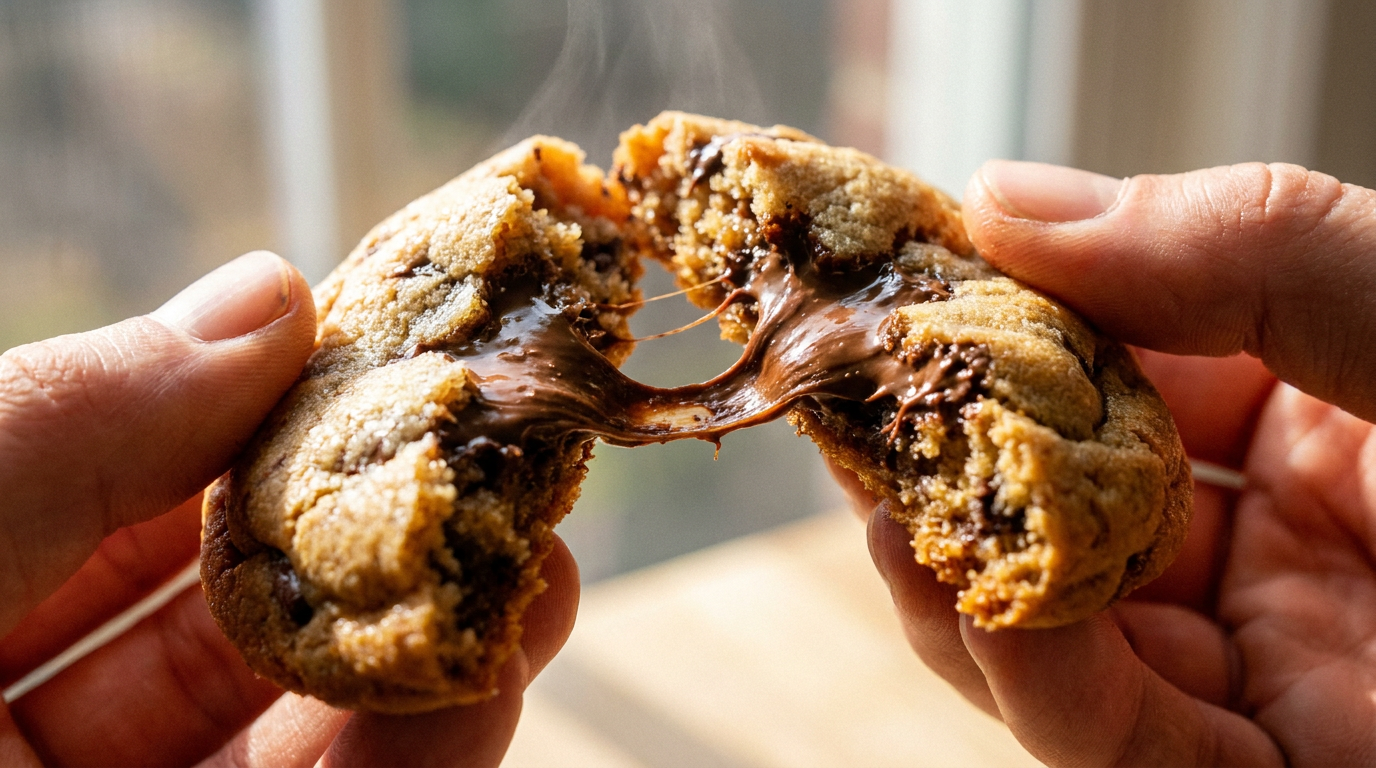
When butter enters the hot environment of an oven, it melts rapidly, causing the dough to lose its structural integrity and spread outward across the baking sheet. Simultaneously, the 15 percent water trapped within the butter's emulsion heats up and evaporates into steam. This expanding steam pushes upward against the heavy dough, creating microscopic air pockets throughout the cookie. These pockets are eventually locked into place as the flour and egg proteins set, contributing to a lighter, more tender crumb that contrasts perfectly with the crisp, caramelized edges.[3]

Substituting butter with vegetable shortening completely changes this thermal dynamic. Shortening is 100 percent pure fat with zero water content, and it boasts a significantly higher melting point than dairy butter. Because it takes much longer to melt in the ambient heat of the oven, shortening-based cookies have time to set their protein structure before the fat liquefies and spreads outward. The result is a taller, softer, and more cake-like cookie that retains its shape perfectly, though it sacrifices the rich, complex dairy flavors that butter provides.[3][5]
For those seeking to maximize flavor without sacrificing the structural benefits of butter, culinary scientists strongly advocate for the brown butter technique. By melting butter in a saucepan before mixing the dough, bakers intentionally evaporate the water content and toast the suspended milk proteins until they reach a rich hazelnut color. This process, known as beurre noisette in classical French cooking, introduces deep, nutty, butterscotch notes to the dough before it even reaches the oven. Because the water has been removed, dough made with brown butter requires a slight adjustment in liquid—often an extra splash of milk or an ice cube—to maintain the proper hydration for gluten development.[2]
The sweeteners used in a recipe dictate far more than just the overall sugar content; they are primary drivers of the cookie's physical texture. White granulated sugar is pure crystallized sucrose. When it melts in the heat of the oven, it liquefies and encourages the dough to spread outward into a thinner disc. More importantly, as the cookie is removed from the oven and begins to cool, the liquefied sucrose recrystallizes into a hard, brittle structure, providing the characteristic snap and crispness found at the very edges of a classic chocolate chip cookie.[6]
Brown sugar, on the other hand, behaves entirely differently due to its composition. It is essentially sucrose coated in a thin layer of molasses. Molasses is naturally acidic and highly hygroscopic, meaning it actively attracts and retains moisture from the surrounding environment. A higher ratio of brown sugar to white sugar will consistently yield a thicker, softer, and significantly chewier cookie, as the molasses holds onto water tightly during the baking process and prevents the sucrose from fully recrystallizing upon cooling.[3][6]

The inherent acidity of brown sugar also plays a crucial, often overlooked role in the dough's leavening process. Baking soda, scientifically known as sodium bicarbonate, is a purely alkaline powder that requires an acidic counterpart to activate. When the baking soda dissolves and reacts with the acidic molasses in the brown sugar, it immediately produces carbon dioxide gas. This chemical reaction inflates the dough from the inside out, providing the necessary lift to keep the cookie from turning into a dense, heavy puck.[6]
The inherent acidity of brown sugar also plays a crucial, often overlooked role in the dough's leavening process.
If a recipe relies primarily on white sugar, which lacks any natural acidity, bakers cannot rely on baking soda alone for lift. Instead, they must use baking powder. Baking powder is a complete, self-contained leavening agent containing both sodium bicarbonate and a powdered acid, separated by a buffer like cornstarch. It activates in two stages: first when it is exposed to the liquid in the dough, and again when it is exposed to the high heat of the oven, ensuring the cookie puffs upward regardless of the sugar profile.[6]
While fats and sugars dictate spread and tenderness, the actual physical structure of the cookie is provided by flour, specifically through the formation of gluten. Gluten is a resilient, elastic network of proteins that develops when two specific proteins found in wheat—glutenin and gliadin—come into contact with water and are physically agitated through mixing. This microscopic network acts as a flexible web, trapping the expanding steam and carbon dioxide gases, and ultimately giving the baked cookie its satisfying chew.[6]
The protein content of the chosen flour directly correlates to the strength of this gluten network and the chewiness of the final cookie. Standard all-purpose flour sits in the middle of the protein spectrum, providing a balanced, middle-of-the-road texture. Swapping it entirely for bread flour, which boasts a higher protein content, creates a denser, more elastic gluten network and a significantly chewier, bakery-style cookie. Conversely, utilizing low-protein cake flour yields a highly delicate, tender crumb that crumbles easily, mimicking the texture of a soft muffin top.[2][6]

The mechanical process of mixing the ingredients is just as critical to the final outcome as the chemical composition of the ingredients themselves. The very first step of most traditional recipes—creaming the softened butter and sugar together—is actually a physical leavening process. As the mixer beats the ingredients, the sharp, jagged crystals of sugar carve microscopic air bubbles into the solid fat. These tiny bubbles serve as the foundational chambers that will later be expanded by steam and carbon dioxide in the oven.[6]
Once the flour is introduced to the wet ingredients, the baker must exercise extreme restraint. Overmixing the dough at this critical stage overworks the gluten network, transforming what should be a tender, melt-in-your-mouth cookie into a tough, bread-like disk. Culinary scientists and professional pastry chefs universally recommend mixing the dough only until the very last streaks of dry white flour disappear into the mass, ensuring the gluten is developed just enough to hold the cookie together, but no further.[6]
Perhaps the most transformative, yet frequently skipped, step in the science of cookie baking is the resting period. Allowing the fully prepared dough to chill in the refrigerator for 24 to 72 hours fundamentally alters its chemistry and elevates the final product. During this extended rest, the flour has ample time to fully hydrate, absorbing the free water from the eggs and butter. This results in a thicker, more concentrated dough that spreads less aggressively when it finally hits the hot oven.[2][5]
More importantly, the extended chill time allows naturally occurring enzymes in the flour to begin breaking down complex carbohydrates into simple sugars, and complex proteins into individual amino acids. This slow enzymatic breakdown provides a massive boost of available chemical building blocks for the browning reactions that will occur later in the oven. The result is a vastly superior depth of flavor, transforming a one-dimensional sweet cookie into a deeply complex treat with pronounced, lingering notes of toffee, butterscotch, and roasted nuts that cannot be achieved by baking the dough immediately.[2]

The climax of the cookie's chemical journey occurs in the oven, driven primarily by the Maillard reaction. This incredibly complex chemical process occurs when amino acids and reducing sugars are subjected to high heat, typically beginning around 300 degrees Fahrenheit. The reaction produces hundreds of entirely new flavor compounds, responsible for the savory, roasted, and complex notes that distinguish a beautifully baked cookie from a ball of raw dough. It is the exact same reaction that gives a seared steak its crust and a loaf of bread its golden exterior.[4][6]
As the internal temperature of the cookie climbs even higher, crossing the 356-degree Fahrenheit threshold, caramelization begins to take place. Unlike the Maillard reaction, which requires proteins, caramelization is the pure thermal decomposition of the sugars themselves. The intense heat breaks the sucrose and glucose molecules down into sweet, nutty, and slightly bitter compounds that give the cookie its dark, golden-brown edges. Balancing the oven temperature to maximize both the Maillard reaction and caramelization without burning the bottom of the cookie is the ultimate test of a baker's precision.[4]

The final, crucial texture is achieved during the cooling process outside of the oven. As the cookie drops in temperature, the melted sugars begin to recrystallize, and the gelatinized starches in the flour retrograde, or firm up into their final structure. Leaving the cookies on the hot baking sheet for three to five minutes after removal from the oven allows the edges to set completely, while the residual heat gently finishes cooking the center, ensuring the coveted contrast between a crispy exterior and a gooey interior.[3]
Ultimately, mastering the chocolate chip cookie is about understanding and manipulating the fundamental levers of chemistry. By carefully adjusting fat ratios, sugar types, flour proteins, and resting times, any home baker can engineer their perfect dessert from the ground up, tailoring the exact level of chewiness, crispness, and flavor depth to their personal preference. The kitchen is a fully equipped laboratory, and every batch of dough is an opportunity to test a new hypothesis. With a solid grasp of food science, the experimental results are not only predictable, but consistently and undeniably delicious.[1]
How we got here
Minute 1-3
The dough begins to heat up; the butter melts, causing the cookie to spread outward.
Minute 4-6
Water in the butter turns to steam, and leavening agents release carbon dioxide, puffing the dough.
Minute 7-9
Egg and flour proteins begin to set, locking the expanded air pockets into place.
Minute 10-12
The Maillard reaction and caramelization occur, browning the edges and developing complex flavors.
Post-Bake
Sugars recrystallize and starches firm up as the cookie cools, finalizing its texture.
Viewpoints in depth
Culinary Scientists
Focus on manipulating variables like temperature, hydration, and protein structures to achieve precise textures.
Food scientists and culinary researchers view baking as applied chemistry. By isolating variables—such as browning the butter to remove water content, or utilizing bread flour to increase gluten density—they engineer recipes to achieve specific outcomes. They advocate for extended dough resting times to maximize enzymatic breakdown, prioritizing complex flavor development and structural integrity over immediate gratification.
Traditional Bakers
Emphasize ingredient quality, reliable ratios, and the tactile experience of baking.
Traditional and home bakers often rely on generational knowledge and the tactile feel of the dough rather than strict chemical analysis. They emphasize the importance of high-quality ingredients, such as premium vanilla and European butter, and trust established ratios like the classic Toll House formula. For this camp, the joy of baking lies in the sensory experience and the comforting reliability of a well-worn recipe.
Science Educators
Use baking as an accessible gateway to teach fundamental chemistry concepts to the public.
Educators and science communicators utilize the universal appeal of the chocolate chip cookie to demystify complex scientific principles. By explaining how an emulsion breaks down or how sodium bicarbonate reacts with molasses, they make abstract concepts like the Maillard reaction and protein denaturation accessible and engaging. The kitchen becomes a classroom where the scientific method is tested and tasted.
What we don't know
- How variations in local humidity and altitude precisely alter the hydration rate of flour during the dough's resting period.
- The exact threshold at which extended dough chilling (beyond 72 hours) begins to degrade the leavening power of baking soda before baking.
Key terms
- Maillard reaction
- A chemical reaction between amino acids and reducing sugars under high heat that creates complex, savory, and roasted flavors.
- Emulsion
- A temporary mixture of two liquids that normally do not combine smoothly, such as the water and fat found in butter.
- Gluten
- A network of proteins found in wheat flour that provides structure, elasticity, and chewiness to baked goods.
- Caramelization
- The thermal decomposition of sugars at high temperatures, resulting in nutty flavors and a golden-brown color.
- Leavening agent
- A substance, such as baking soda or baking powder, that causes dough to expand and rise by releasing gases.
Frequently asked
Why do my chocolate chip cookies spread too much?
Cookies spread excessively when the butter is too warm before baking, or if the dough lacks enough flour to provide structure. Chilling the dough solidifies the fat, slowing the spread.
Can I substitute baking powder for baking soda?
Not directly. Baking soda requires an acidic ingredient like brown sugar to react, while baking powder contains its own acid. Swapping them alters both the lift and the flavor profile.
What does chilling the cookie dough actually do?
Chilling allows the flour to fully hydrate and gives enzymes time to break down proteins and carbohydrates. This enhances browning in the oven and deepens the overall flavor.
Why should I use bread flour instead of all-purpose flour?
Bread flour has a higher protein content, which creates a stronger gluten network when mixed. This results in a denser, significantly chewier cookie compared to all-purpose flour.
Sources
Source coverage
6 outlets
3 viewpoints surfaced






[1]Factlen Editorial TeamCulinary Scientists
Synthesis by Factlen editorial team
Read on Factlen Editorial Team →[2]Serious EatsCulinary Scientists
The Science of the Best Chocolate Chip Cookies
Read on Serious Eats →[3]King Arthur BakingTraditional Bakers
Cookie chemistry: The interaction between sugar, fat, and flour
Read on King Arthur Baking →[4]NPRScience Educators
When baking chocolate chip cookies, a little chemistry can go a long way
Read on NPR →[5]PhillyVoiceScience Educators
The Science of Chocolate Chip Cookies
Read on PhillyVoice →[6]Cravings of a Food ScientistCulinary Scientists
The (Food) Science of Chocolate Chip Cookies
Read on Cravings of a Food Scientist →

Every angle. Every day.
Get lifestyle stories with full source coverage and perspective breakdowns delivered to your inbox.