
US-Iran Peace Talks in Switzerland Postponed as Lebanon Fighting Escalates
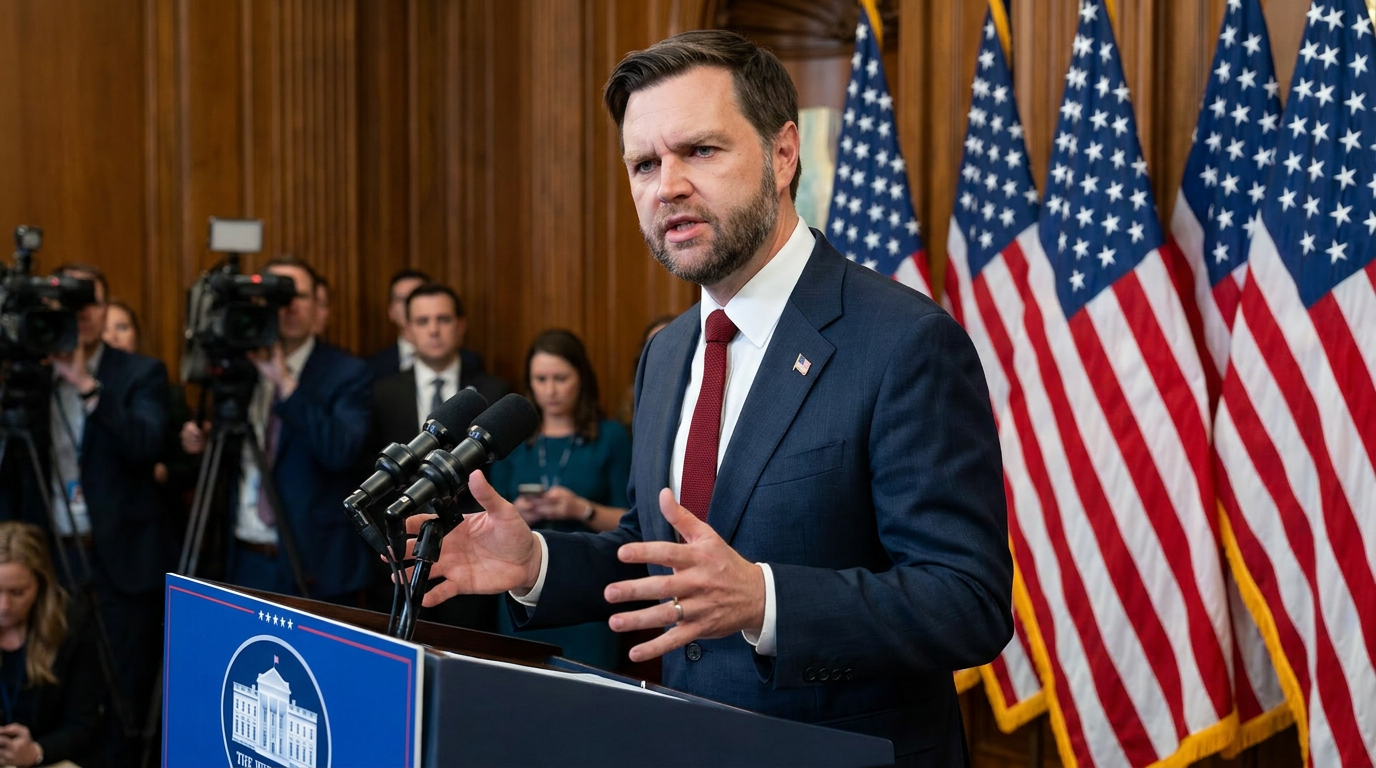
A planned summit in Switzerland to implement a US-Iran peace agreement was abruptly canceled after renewed clashes between Israel and Hezbollah. The delay prompted Vice President JD Vance to issue a rare public rebuke of Israeli officials, warning that military force alone cannot resolve regional security threats.
By Factlen Editorial Team
- US Administration
- Argues the peace deal is essential for regional stability and that military force cannot solve every security challenge.
- Israeli Officials
- Maintains that the deal ignores proxy threats and that military operations in Lebanon are necessary for national defense.
- Iranian Leadership
- Insists that a complete halt to Israeli operations in Lebanon is a prerequisite for any nuclear negotiations.
- Global Mediators
- Focuses on salvaging the diplomatic framework and preventing the collapse of the 60-day ceasefire.
What's not represented
- · Lebanese civilians displaced by the ongoing cross-border strikes.
- · European energy markets dependent on the stabilization of the Strait of Hormuz.
Why this matters
The cancellation of the Switzerland summit threatens the fragile 60-day ceasefire designed to end the US-Iran war and stabilize global energy markets. Vice President JD Vance's sharp criticism of Israel also marks one of the most significant public rifts between Washington and Jerusalem in recent history.
Key points
- Planned US-Iran technical talks in Switzerland were canceled due to escalating violence in Lebanon.
- Hezbollah attacks killed four Israeli soldiers, prompting Israeli airstrikes that killed at least 18 people in Lebanon.
- Iran refused to attend the summit, demanding guarantees that Israel would halt its Lebanese offensive.
- Vice President JD Vance canceled his trip to lead the US delegation and sharply criticized Israeli officials for opposing the peace deal.
- Israel maintains it is not bound by the US-Iran agreement and will continue operations to secure its northern border.
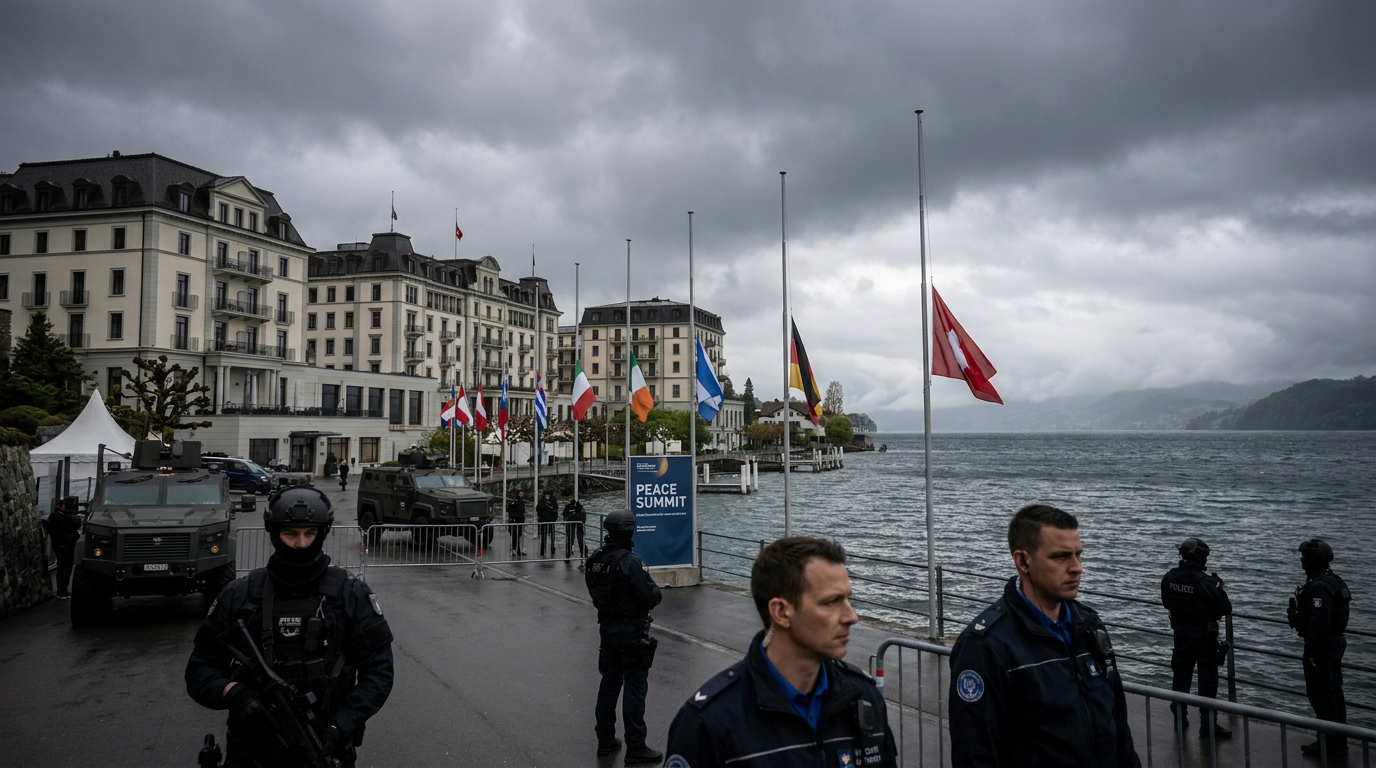
The highly anticipated technical talks between the United States and Iran, scheduled to take place in Switzerland this week, have been abruptly postponed amid a sudden flare-up of regional violence. The summit at the picturesque Bürgenstock resort was intended to be the crucial first step in implementing a newly signed memorandum of understanding aimed at ending the months-long war between Washington and Tehran. The agreement, signed digitally by US President Donald Trump and Iranian President Masoud Pezeshkian, established a fragile 60-day window to negotiate a permanent resolution to the conflict, which began in late February. However, the diplomatic momentum ground to a halt when the realities of the interconnected Middle Eastern battlefield intruded on the peace process, forcing both sides to abandon their travel plans at the eleventh hour.[1][4]
The immediate catalyst for the diplomatic collapse was a severe escalation of violence in southern Lebanon, a theater that has become inextricably linked to the broader US-Iran negotiations. Despite the memorandum of understanding explicitly calling for a comprehensive cessation of hostilities across all regional fronts, heavy fighting erupted between Israeli defense forces and the Iran-backed militant group Hezbollah. The clashes shattered the tentative calm that had settled over the region following the signing of the US-Iran pact. For Tehran, the continuation of Israeli military operations in Lebanon represents a direct violation of the ceasefire's spirit, prompting Iranian leadership to adopt a rigid stance that no further diplomatic progress can be made while their primary regional proxy remains under fire.[3][6]
The scale of the recent violence in Lebanon underscores the volatility of the situation and the immense challenge of disentangling the various proxy conflicts from the central US-Iran dispute. Over the past forty-eight hours, Hezbollah launched a series of coordinated drone and rocket attacks that killed four Israeli soldiers, marking one of the deadliest single incidents for the Israeli military since the broader regional conflict began. In swift response, Israel conducted a massive wave of retaliatory airstrikes across southern Lebanon and the Bekaa Valley. Lebanese health officials reported that the bombardment killed at least eighteen people and wounded dozens more, leveling infrastructure and further displacing civilian populations who had hoped the US-Iran deal would bring an end to the cross-border shelling.[1][7]

Following the devastating exchange of fire, Iranian negotiators abruptly refused to dispatch their delegation to Geneva. Tehran communicated through international mediators that it required concrete, enforceable guarantees that Israel would halt its military operations in Lebanon before any technical discussions regarding Iran's nuclear program could proceed. Iranian officials emphasized a "no Lebanon, no deal" philosophy, arguing that the United States must demonstrate its ability to restrain its closest Middle Eastern ally if the peace framework is to have any credibility. The Iranian withdrawal highlighted the inherent fragility of the memorandum of understanding, which relies on the compliance of regional actors who were not directly involved in drafting the agreement.[2][6]
The sudden diplomatic deadlock forced the White House to ground Vice President JD Vance, who was slated to lead the American delegation and serve as the face of the administration's peace efforts. The cancellation occurred so late in the process that Vance's staff, advance teams, and a contingent of accompanying journalists had already gathered at Joint Base Andrews in Maryland, fully expecting to board a flight to Europe. Late Thursday night, the administration officially scrapped the trip, releasing a statement that cited the unpredictable logistical hurdles of Middle Eastern diplomacy. The abrupt reversal served as a stark public acknowledgment that the administration's landmark foreign policy achievement was teetering on the edge of collapse just days after it was announced.[3][5]
Late Thursday night, the administration officially scrapped the trip, releasing a statement that cited the unpredictable logistical hurdles of Middle Eastern diplomacy.
The breakdown in the Switzerland talks prompted an extraordinarily blunt and public rebuke of Israel from the Vice President, exposing a deepening rift between Washington and Jerusalem. Addressing reporters at the White House, Vance specifically targeted hardline Israeli cabinet ministers, including Finance Minister Bezalel Smotrich and National Security Minister Itamar Ben-Gvir, who have fiercely and vocally criticized the US-Iran pact. The Israeli officials had previously denounced the agreement as a dangerous capitulation that provides Tehran with economic relief while failing to dismantle the immediate military threats posed by Iranian proxies on Israel's borders. Vance's decision to call out allied ministers by name marked a significant departure from standard diplomatic protocol and underscored the administration's intense frustration with Israeli resistance to the peace plan.[3][8]

During his White House briefing, Vance delivered a stark warning to the Israeli government regarding the limits of military power and the necessity of diplomatic compromise. "What is your exact proposal? You're a country of nine million people. You can't just kill your way out of solving every single national security problem that you have," Vance stated, challenging the feasibility of Israel's ongoing military campaigns. He further urged Israeli leaders to "wake up and smell the reality" of their geopolitical isolation, pointedly reminding them that the Trump administration remains their most powerful—and perhaps only—sympathetic global ally. The Vice President's remarks signaled a clear shift in US policy, indicating that Washington is increasingly unwilling to let Israeli security objectives dictate the pace of broader regional peace initiatives.[3][8]
Despite the intense pressure from Washington, Israeli officials maintain that they are not a party to the US-Iran memorandum of understanding and are therefore not bound by its terms or its call for a regional ceasefire. Prime Minister Benjamin Netanyahu has publicly vowed to maintain a robust security buffer zone in southern Lebanon, arguing that a permanent military presence is necessary to protect northern Israeli communities from the persistent threat of Hezbollah rocket fire. From the Israeli perspective, the US-brokered deal fundamentally fails to address the immediate, existential dangers posed by Iranian proxy groups, focusing instead on long-term nuclear negotiations while leaving Israel to manage the tactical fallout on its borders.[2][4]
The diplomatic stalemate leaves the sixty-day ceasefire window in a highly precarious position, threatening to unravel the economic and strategic gains achieved in the immediate aftermath of the signing. The initial announcement of the agreement had already begun to yield tangible global relief; the United States officially lifted its naval blockade on Iranian ports, and commercial oil tankers cautiously resumed transit through the vital Strait of Hormuz. This resumption of maritime traffic caused global energy prices to dip, providing a much-needed reprieve for international markets rattled by months of conflict. However, the cancellation of the Switzerland summit has reintroduced significant volatility, raising fears that the economic stabilization could be short-lived if the military conflict reignites.[1][4]

As the situation remains fluid, Swiss authorities have confirmed that preparatory work at the Bürgenstock resort is continuing in the hope that the summit can be rescheduled in the near future. International mediators from Qatar and Pakistan are actively working behind the scenes to salvage the negotiations, attempting to broker a localized truce in Lebanon that would satisfy Iran's preconditions for attending the talks. However, until the cross-border violence between Israel and Hezbollah can be definitively halted, the broader diplomatic framework designed to dismantle Iran's nuclear infrastructure and permanently end the regional war remains entirely frozen, leaving the Middle East suspended between a fragile peace and a return to devastating conflict.[5][7]
How we got here
Feb 28, 2026
The US and Israel launched joint strikes on Iran, initiating the broader conflict.
June 17, 2026
The US and Iran signed a memorandum of understanding, establishing a 60-day ceasefire.
June 18, 2026
Heavy fighting erupted between Israel and Hezbollah in southern Lebanon.
June 19, 2026
The planned US-Iran technical talks in Switzerland were officially postponed.
Viewpoints in depth
US Administration
The White House views the MoU as a historic off-ramp to war and insists diplomacy must take precedence.
The Trump administration, spearheaded by Vice President JD Vance, argues that the 60-day ceasefire is the most viable path to neutralizing Iran's nuclear ambitions and stabilizing the Middle East. US officials have expressed deep frustration with Israeli military actions in Lebanon, viewing them as a direct threat to the broader peace framework. Vance's public comments reflect a growing consensus in Washington that military force has reached its strategic limits, and that allied nations must allow diplomatic negotiations to play out rather than actively undermining them.
Israeli Government
Israeli leaders argue the deal ignores proxy threats and leaves their northern border vulnerable.
From Jerusalem's perspective, the US-Iran memorandum of understanding is a flawed agreement that provides Tehran with premature economic relief while failing to dismantle its network of proxy militias. Israeli officials emphasize that they never signed the pact and cannot be expected to halt operations against Hezbollah while Israeli citizens remain displaced from the north. Hardline cabinet ministers view the US pressure to stop fighting in Lebanon as an unacceptable infringement on Israel's right to self-defense.
Iranian Negotiators
Tehran insists that a comprehensive ceasefire in Lebanon is a non-negotiable prerequisite for talks.
Iran's leadership has adopted a 'no Lebanon, no deal' stance, utilizing the recent Israeli airstrikes as leverage to delay the technical talks. Iranian diplomats argue that the US must prove it can restrain its allies before Tehran makes concessions on its nuclear program. By refusing to send their delegation to Switzerland, Iranian officials are testing the strength of the MoU and demanding that the cessation of hostilities be universally applied across all regional fronts.
What we don't know
- When, or if, the technical talks in Switzerland will be rescheduled.
- Whether the US can successfully pressure Israel to halt its military operations in southern Lebanon.
- How the delay will impact the 60-day timeline established by the memorandum of understanding.
Key terms
- Memorandum of Understanding (MoU)
- A formal agreement between two or more parties outlining the terms and details of an understanding, serving as the foundation for a future binding treaty.
- Hezbollah
- A heavily armed, Iran-backed Shia Islamist political party and militant group based in Lebanon.
- Strait of Hormuz
- A vital maritime chokepoint between the Persian Gulf and the Gulf of Oman, through which a significant portion of the world's oil supply passes.
Frequently asked
Why were the Switzerland talks canceled?
The talks were postponed because Iran refused to send its delegation following a surge in fighting between Israel and Hezbollah in Lebanon.
What did JD Vance say to Israel?
Vice President Vance criticized Israeli officials who oppose the US-Iran deal, stating that a nation of nine million people cannot 'kill its way out' of every national security problem.
Is Israel part of the US-Iran peace deal?
No. Israel was not included in the negotiations and maintains that it is not bound by the agreement's call for a cessation of hostilities in Lebanon.
Sources
Source coverage
8 outlets
4 viewpoints surfaced








[1]The GuardianGlobal Mediators
US-Iran talks in Switzerland cancelled as Hezbollah kills four Israeli soldiers
Read on The Guardian →[2]Times of IsraelIsraeli Officials
US-Iran talks in Switzerland postponed amid Lebanon fighting
Read on Times of Israel →[3]Al JazeeraIranian Leadership
JD Vance tells Israel 'you can't kill your way out' of security problems
Read on Al Jazeera →[4]Fox NewsUS Administration
Vice President JD Vance cancels planned trip to Switzerland for US-Iran negotiations
Read on Fox News →[5]CBS NewsUS Administration
Vance no longer traveling to Switzerland for talks with Iran tonight, White House says
Read on CBS News →[6]The Straits TimesGlobal Mediators
US-Iran meeting in Switzerland scrapped as fighting flares in Lebanon
Read on The Straits Times →[7]El PaísGlobal Mediators
Iran-US talks in Switzerland are canceled in the middle of new Israeli attack on Lebanon
Read on El País →[8]Business StandardGlobal Mediators
'You can't kill your way to security': JD Vance's blunt warning to Israel
Read on Business Standard →

More in news politics
See all 5 stories →Immigration Enforcement
Memo Reveals Secretary of State Marco Rubio Approved ICE Detention of Colombian Activist
7 sources
US-Iran Relations
US-Iran Peace Talks Postponed as Israel and Hezbollah Renew Fragile Ceasefire
6 sources
Immigration Law
State Department Memo Authorizes Detention of Colombian Activist Over Political Speech
7 sources
Every angle. Every day.
Get news politics stories with full source coverage and perspective breakdowns delivered to your inbox.