
Why 2026 is the Year the Smart Home Finally Went Local
Driven by Apple Intelligence and Google's new Gemini hardware, smart home platforms are shifting processing from the cloud to local devices, prioritizing speed and privacy.
By Factlen Editorial Team
- Ecosystem Loyalists
- Consumers and analysts who prefer the seamless, integrated solutions provided by major tech giants.
- Local-First Purists
- Advocates for open-source, subscription-free smart homes that process all data locally.
- Hardware Manufacturers
- Industry groups focused on standardizing protocols to reduce development costs and improve interoperability.
What's not represented
- · Renters who are unable to install hardwired local smart infrastructure
- · Budget-conscious consumers who may be priced out of expensive local AI hardware
Why this matters
For years, smart homes meant sending your voice recordings and camera feeds to remote servers, risking privacy and adding latency. The shift to local AI means your home can be intelligent without your personal data ever leaving the building.
Key points
- Smart home platforms are rapidly shifting from cloud-dependent processing to local 'Edge AI'.
- Apple introduced on-device Apple Intelligence to HomeKit, enabling 4K video and local event summaries.
- Google launched a $99 Gemini-powered Home Speaker with local mic processing, but gated advanced AI behind a $10/mo subscription.
- Open-source hubs are surging as users seek to run local LLMs and avoid recurring cloud fees.
- Matter 1.4 and Thread 1.4 have standardized network credentials, finally creating unified local meshes across different brands.
For the first decade of the smart home, convenience came with a quiet compromise. Every time a user asked a voice assistant to turn off the kitchen lights, that audio recording was shipped to a remote data center, processed by a cloud server, and beamed back to the house. Security cameras uploaded intimate household footage to third-party servers just to identify a package on the porch. The home was "smart," but it was entirely dependent on someone else's computer.[6]
In 2026, the architecture of the smart home is fundamentally flipping. Driven by advances in mobile silicon and a growing consumer backlash against subscription fees, the industry is embracing "Edge AI"—moving the intelligence off the cloud and directly onto local hubs and speakers inside the house.[6][7]
The benefits of this local-first approach are immediate. Cloud-dependent systems inherently suffer from latency, often taking several seconds to process a command or send a camera alert. By running Large Language Models (LLMs) and computer vision locally, Edge AI reduces response times to mere milliseconds, while ensuring that personal data never leaves the local network.[6][7]

Apple planted its flag firmly in the local-processing camp during its Worldwide Developers Conference (WWDC) on June 8. The company announced the deepest integration of Apple Intelligence into Apple Home to date, fundamentally upgrading how the ecosystem handles security and automation.[1]
The standout feature is a massive overhaul to HomeKit Secure Video. After years of limiting users to 1080p, Apple finally unlocked 4K recording. But the true breakthrough is the application of local AI: the Home app can now analyze recorded clips on-device and automatically generate natural-language summaries of events—such as "a person walks up the driveway carrying a package"—without sending the video to a cloud server for processing.[1]
This privacy-first approach is powered by Apple's third-generation Foundation Models (AFM). By utilizing sparse architectures that activate only the necessary parameters for a given task, Apple can run complex natural language searches across a user's camera history entirely on their local Apple silicon, keeping the data isolated from web-scraping and external training sets.[1][2]

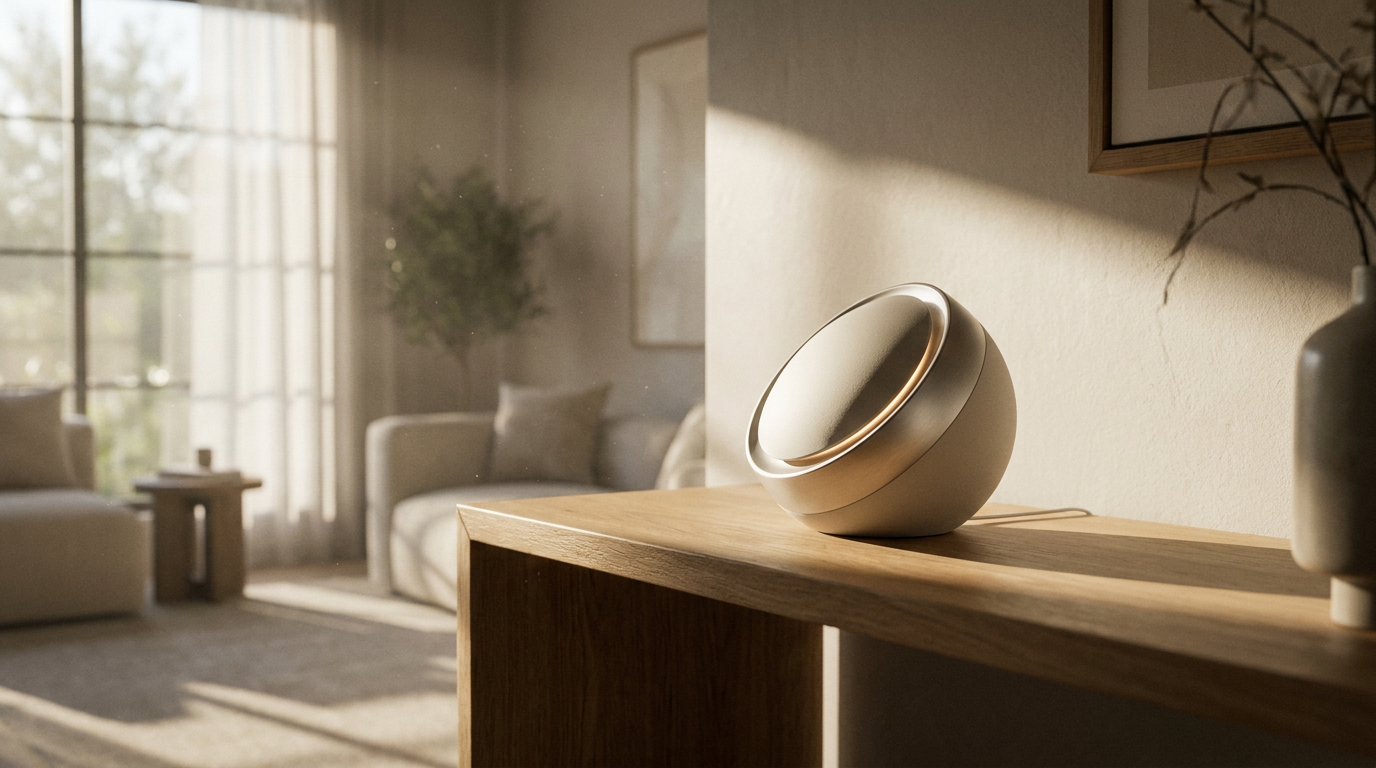
Google, meanwhile, is taking a hybrid approach to the local AI revolution. On June 17, the company unveiled the $99.99 Google Home Speaker, its first new standalone audio device in six years. Built specifically to house the Gemini for Home assistant, the spherical speaker represents a major leap over the aging Google Assistant.[3]
Google, meanwhile, is taking a hybrid approach to the local AI revolution.
The new hardware features advanced microphone processing and local AI models designed to isolate voice commands from background noise. This allows Gemini to hear requests more accurately in busy environments and process basic smart home commands without a round-trip to the cloud.[3]
However, Google is still heavily reliant on cloud monetization. While the $99 speaker handles quick answers and local device control, the company's most advanced AI features—including "Gemini Live" for free-flowing, wake-word-free conversations and intelligent camera history search—are gated behind a $10-per-month Google Home Premium subscription.[4]

This paywall highlights a growing divide in the industry. While Google attempts to sell subscriptions for cloud-based AI, a massive open-source and indie hardware movement is capitalizing on consumer fatigue with recurring fees. Platforms like Home Assistant and dedicated Edge AI hubs like OVAL are surging in popularity precisely because they eliminate the cloud entirely.[4][6][7]
These local-first systems allow users to run their own private LLMs—such as Ollama—on their home network. This grants the home the same natural-language conversational abilities as an Alexa or Google Home, but with zero risk of audio recordings being retained by a tech giant or exposed in a data breach.[6]
None of this local orchestration would be possible without a unified networking layer, which has finally arrived in the form of Matter 1.4 and Thread 1.4. For years, the smart home was plagued by fragmented networks; an Apple HomePod and an Amazon Echo in the same house would create competing, isolated Thread meshes, leading to dropped connections and high latency.[5][8]
Thread 1.4, which became a mandatory certification standard in early 2026, solves this by standardizing credential sharing. When a new border router joins the home, it now merges into the existing mesh rather than creating a new one. This creates a single, robust local network that all devices can use to communicate instantly, regardless of the manufacturer.[5]

Furthermore, the Connectivity Standards Alliance's Matter 1.4 update introduced vital battery optimizations for "sleeping" devices like motion sensors and wireless buttons. By allowing these devices to check in less frequently without dropping off the network, local-first automations become vastly more reliable.[8]
The transition to local AI is not without friction. Running advanced models on-device requires expensive Neural Processing Units (NPUs) and more RAM, shifting the hardware cost from the cloud provider's data center directly onto the consumer's initial purchase price.[2][6]
Despite the upfront costs, the trajectory of the industry is clear. By severing the tether to the cloud, the smart home of 2026 is finally delivering on its original promise: a house that is intelligent, responsive, and, most importantly, entirely private.
How we got here
Fall 2024
The Connectivity Standards Alliance releases Matter 1.4, introducing vital battery optimizations and network infrastructure standards.
Early 2026
Thread 1.4 becomes the mandatory certification standard, forcing border routers to share credentials and unify fragmented networks.
June 8, 2026
Apple announces deep Apple Intelligence integration for Apple Home at WWDC, focusing on local video processing.
June 17, 2026
Google unveils the $99 Google Home Speaker, its first new standalone audio device in six years, powered by Gemini.
Viewpoints in depth
Local-First Purists
Advocates for open-source platforms who reject cloud dependency entirely.
This camp, heavily populated by Home Assistant users and privacy advocates, argues that a smart home isn't truly yours if it relies on a remote server. They prioritize Edge AI and local Large Language Models (LLMs) to ensure that voice recordings, camera feeds, and daily routines are never monetized or exposed to data breaches. For them, the upfront cost of building a local server is a necessary investment to escape the cycle of rising monthly subscription fees imposed by tech giants.
Apple's Ecosystem Approach
Leverages proprietary on-device silicon to offer privacy without the DIY complexity.
Apple's strategy bridges the gap between consumer convenience and strict privacy. By utilizing the Neural Engine inside iPhones, iPads, and Apple TVs, Apple Intelligence processes complex tasks—like 4K video analysis and natural language search—directly on the user's hardware. This camp believes that mass-market privacy can only be achieved when local AI is seamlessly integrated into the devices consumers already own, rather than requiring them to set up dedicated open-source servers.
Google's Hybrid Cloud Model
Combines local processing for speed with cloud subscriptions for heavy-lifting AI.
Google acknowledges the need for speed, equipping its new Home Speaker with local models to handle basic commands and noise cancellation instantly. However, they maintain that the most powerful generative AI features—like Gemini Live's conversational fluidity—still require the massive compute power of cloud data centers. This camp argues that a $10/month subscription is a fair trade-off for accessing cutting-edge AI that would be impossible to run on a $99 countertop speaker.
What we don't know
- Whether mainstream consumers will be willing to pay $10 a month for Google's premium Gemini smart home features.
- How quickly legacy smart home devices will be updated to support the unified Thread 1.4 standard.
- If the increased hardware costs of local Neural Processing Units (NPUs) will price budget consumers out of the smart home market.
Key terms
- Edge AI
- Artificial intelligence processing that occurs directly on a local device (like a hub or speaker) rather than on a remote cloud server.
- Large Language Model (LLM)
- A type of AI program trained on vast amounts of text, capable of understanding and generating natural human language.
- Thread Border Router
- A device that connects a low-power Thread smart home network to a standard Wi-Fi network, allowing devices to communicate with the internet and each other.
- Matter 1.4
- The latest version of the universal smart home interoperability standard, designed to make devices from different brands work together seamlessly.
- HomeKit Secure Video
- Apple's encrypted platform for smart home cameras, which analyzes and stores video footage using the user's iCloud account and local Apple hubs.
Frequently asked
Does a local smart home still need the internet?
While initial setup and remote access outside the home typically require an internet connection, a truly local smart home can execute automations, control devices, and process voice commands even during an internet outage.
Why is local AI better for privacy?
Cloud-based assistants send your voice recordings and camera footage to remote servers for processing. Local AI analyzes that data entirely on the hardware inside your house, meaning your personal information never leaves your network.
Do I have to pay a subscription for Google's new speaker?
No, the basic smart home controls and quick answers are free. However, advanced features like Gemini Live's conversational chat and camera history search require a $10/month Google Home Premium subscription.
Will my old smart devices work with Matter 1.4?
Many existing devices can be updated to support Matter via software updates from the manufacturer, or they can be integrated into a Matter network using a compatible bridge device.
Sources
Source coverage
8 outlets
3 viewpoints surfaced






[1]AppleHome AuthorityEcosystem Loyalists
Apple Home Gets Its Biggest Update in Years at WWDC 2026
Read on AppleHome Authority →[2]9to5MacEcosystem Loyalists
Apple's new Foundation Models explained: on-device AI, cloud AI, and everything in between
Read on 9to5Mac →[3]ForbesEcosystem Loyalists
The new Google Home Speaker
Read on Forbes →[4]The Next WebEcosystem Loyalists
Google's first speaker in six years is really a $10-a-month Gemini subscription
Read on The Next Web →[5]DataWire SolutionsHardware Manufacturers
Matter & Thread Explained (2026): Smart Home Guide
Read on DataWire Solutions →[6]PromptQuorumLocal-First Purists
The Complete Guide to a Local Smart Home
Read on PromptQuorum →[7]Hello OVALLocal-First Purists
What is an AI Home Hub?
Read on Hello OVAL →[8]Connectivity Standards AllianceHardware Manufacturers
Matter 1.4 Enables More Capable Smart Homes
Read on Connectivity Standards Alliance →


Every angle. Every day.
Get home stories with full source coverage and perspective breakdowns delivered to your inbox.