
When Geopolitics Becomes Systemic Risk: Why the ECB's Stress Test Signals the End of the 'Peace Dividend' for Global Banks
For decades, global banks operated under the assumption that geopolitical conflicts were isolated events. Now, the European Central Bank and global regulators are officially treating geoeconomic fragmentation as a systemic threat, forcing financial institutions to price in a new era of permanent instability.

- Systemic Risk Regulators
- Central banks and supervisory bodies arguing that geopolitical fragmentation is a permanent, quantifiable threat.
- Global Financial Institutions
- Banks and industry advocates warning about the complexities and unintended consequences of modeling unpredictable geopolitical events.
- Market & Risk Analysts
- Researchers and analysts focusing on the historical data and transmission mechanisms of geopolitical shocks.
- Factlen Editorial
- Synthesizes the tension between regulatory demands and the practical limits of forecasting global conflict.
Perspectives this story doesn't cover
- Corporate borrowers facing higher capital costs
- Emerging market economies reliant on cross-border lending
Summary
- The European Central Bank and global regulators are officially classifying geoeconomic fragmentation as a quantifiable systemic risk.
- For decades, the global financial system relied on a 'peace dividend' that treated geopolitical conflicts as localized, temporary disruptions.
- Regulators are now demanding that banks explicitly map their exposure to supply chain concentration, sanctions, and cyber warfare.
- The banking sector warns that forcing institutions to hold capital against unpredictable geopolitical events could stifle legitimate economic growth.
- The shift from globalization to a 'resilience premium' means the cost of international trade and cross-border lending will structurally increase.
For thirty years, the global financial system operated on a simple, highly lucrative premise known as the "peace dividend." Following the end of the Cold War, borders were opened, supply chains were ruthlessly optimized for cost rather than security, and geopolitical flare-ups were treated as localized, temporary disruptions that rarely threatened the core of international banking. Financial institutions built their models on the assumption that global trade would continue to expand unimpeded, allowing capital to flow freely to wherever it could generate the highest return. This era of unprecedented stability allowed banks to maintain relatively lean capital buffers against international shocks, confident that diplomatic resolutions or market mean-reversion would swiftly correct any temporary imbalances. The peace dividend was not just a political concept; it was a foundational mathematical input in the risk models that governed trillions of dollars in cross-border lending and investment.[1][4][7]
But a fundamental disagreement has now emerged between the banks that finance global trade and the regulators who oversee them. While many financial institutions still attempt to model geopolitical events as transient, mean-reverting shocks that can be managed through standard diversification, central banks are increasingly viewing them as permanent, structural features of the global economy. Regulators argue that the interconnected nature of modern commerce means that a conflict in one region can instantly sever critical supply chains, strand billions in assets, and trigger cascading defaults across multiple continents. This tension represents a profound philosophical shift: regulators are demanding that banks stop treating international relations as an external variable and start recognizing it as a core driver of financial instability that requires hard, quantifiable capital buffers to absorb inevitable shocks.[7]
This tension reached a breaking point with the European Central Bank's recent supervisory priorities for 2026–2028 and its joint report with the European Systemic Risk Board. The message from Frankfurt was unequivocal: geoeconomic fragmentation is no longer an abstract political problem for diplomats to solve; it is a quantifiable systemic risk that banks must price into their daily operations. The joint report detailed how rising geopolitical risks and policy uncertainty have structurally altered the macroeconomic landscape, leading to tighter financial conditions, heightened market stress, and reduced loan growth. By formally integrating geopolitical indicators into their financial stability analysis, European regulators have signaled that the era of treating international conflict as an unmodellable "black swan" event is officially over.[1][2]
The European Central Bank has moved aggressively to operationalize this new philosophy, making geopolitical risk the primary focus of its adverse scenarios in recent stress tests. Furthermore, the ECB has announced that it will explicitly assess banks on their geopolitical risk management frameworks in the upcoming 2026 reverse stress test. This marks a paradigm shift in financial regulation, moving geopolitics from the periphery of risk management to its absolute center. Banks are no longer simply asked to consider how a hypothetical war might affect their portfolio; they are required to demonstrate exactly how their balance sheets would survive a sudden, severe fracturing of the global economic order, complete with immediate sanctions, asset seizures, and the collapse of critical cross-border payment corridors.[1][2]
To understand the mechanism of this regulatory shift, one must look at how risk is traditionally capitalized within the banking sector. Historically, financial institutions held specific capital buffers against credit risk—the probability of borrowers defaulting—as well as market risk from falling asset prices and operational risk from system failures or internal fraud. Geopolitics was generally absorbed into these existing categories indirectly, usually only after a crisis had already materialized and the damage was done. If a regional conflict caused a spike in energy prices, banks would adjust their credit risk models for energy-intensive corporate borrowers after the fact, rather than holding preemptive capital against the possibility of the conflict occurring in the first place.[7]
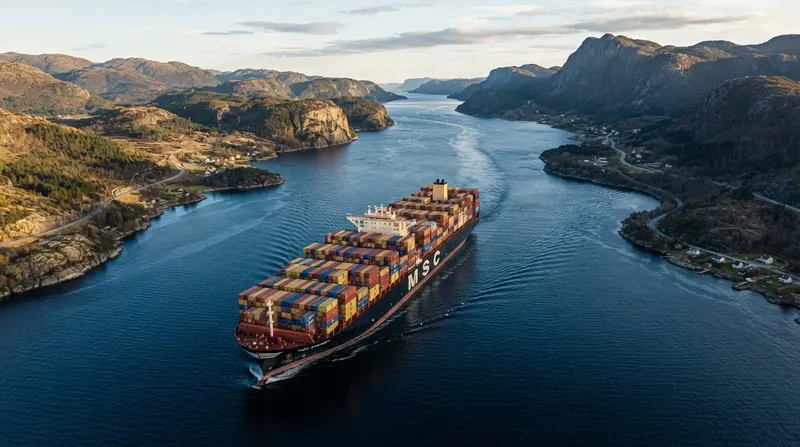
Now, regulators are demanding that banks explicitly map their exposure to geopolitical fragmentation before the shock occurs. This means identifying deep concentration risk in specific regional supply chains, uncovering hidden vulnerabilities in cross-border lending syndicates, and modeling the potential for sudden sanctions or retaliatory tariffs to strand assets overnight. A bank lending to a European manufacturer must now understand where that manufacturer sources its critical components, and whether those source countries are at risk of geopolitical isolation. This requires financial institutions to develop entirely new capabilities, effectively forcing them to build in-house intelligence agencies capable of translating complex international relations into actionable financial metrics and capital allocation strategies.[2][4]
The empirical evidence supporting this aggressive regulatory pivot is substantial. An ECB-backed academic study examining 120 years of data across 17 countries found that major geopolitical-risk events trigger non-linear, outsized contractions in bank capitalization. The research demonstrated that the financial system's solvency is far more sensitive to international conflict than previously modeled by standard risk frameworks. During periods of heightened geopolitical tension, the uncertainty exacerbates information asymmetry between banks and borrowers, drastically reducing banks' willingness to lend and leading to inefficient capital allocation. This historical data provides regulators with the ammunition they need to justify demanding higher capital buffers, proving that geopolitical shocks are not just political tragedies, but direct threats to the survival of the banking system.[3]
The empirical evidence supporting this aggressive regulatory pivot is substantial.
Furthermore, the rapid digitalization of the global financial system has exponentially expanded the attack surface, intertwining geopolitics with day-to-day operational stability. The Reserve Bank of Australia and other central banks have noted that state-sponsored cyber warfare and severe concentration risk in cloud computing amplify third-party dependencies. This turns distant geopolitical tensions into immediate, localized operational threats. A diplomatic dispute thousands of miles away can now manifest as a targeted ransomware attack on a domestic clearinghouse or a disruption of critical cloud infrastructure. Consequently, regulators are forcing banks to view their IT architecture and cybersecurity defenses not just as technical issues, but as frontline vulnerabilities in an increasingly hostile geoeconomic landscape.[5]
The strongest counter-argument to this aggressive regulatory push comes from the banking sector itself. Industry advocates argue that quantifying geopolitical risk is inherently speculative and fundamentally different from traditional financial modeling. While banks have decades of robust data on how interest rate movements affect mortgage defaults, or how unemployment spikes impact credit card delinquencies, they lack reliable historical models for predicting the outbreak of a war or the sudden imposition of a trade embargo. Financial executives argue that forcing risk departments to assign precise probabilities to the unpredictable actions of foreign governments is an exercise in false precision that will ultimately distort capital allocation.[7]
Unlike traditional economic cycles, geopolitical events are driven by human psychology, political ambition, and diplomatic miscalculations—factors that cannot be reliably captured by algorithmic risk models. Critics warn that forcing banks to hold hard capital against these unquantifiable scenarios could lead to an arbitrary "resilience premium" that stifles legitimate economic growth. If a bank is required to hold significantly more capital to finance a cross-border trade deal simply because the countries involved have a complex political history, the cost of that financing will skyrocket. This could price smaller businesses out of international markets entirely, reducing global trade and slowing economic development in emerging markets that rely on foreign capital.[7]
Moreover, industry analysts warn of a dangerous unintended consequence: if banks retreat from cross-border lending to satisfy regulators' demands for geopolitical de-risking, they may inadvertently accelerate the very geoeconomic fragmentation the European Central Bank is warning about. By pulling capital from emerging markets or complex international supply chains to retreat to perceived domestic safe havens, banks could create the economic isolation that breeds further political conflict. This dynamic creates a self-fulfilling prophecy where the fear of geopolitical instability causes financial institutions to sever the economic ties that historically served as a deterrent to international conflict, ultimately making the world more dangerous and less prosperous.[7]
Yet, despite these valid industry concerns, the regulatory consensus is hardening, and the broader market is already adapting to the new reality. Major financial institutions like J.P. Morgan have noted that governments, corporations, and markets are fundamentally shifting away from the globalization model of the 1990s toward this new "resilience premium." Across the global economy, decision-makers are prioritizing reliable, secure access to energy, critical technology, and capital over pure cost efficiency. Supply chains are being re-shored or "friend-shored," and corporate boards are increasingly willing to accept lower profit margins in exchange for greater operational security. The banking sector's regulatory shift is simply catching up to a transformation that is already well underway in the real economy.[6]
The primary uncertainty now lies in how this new paradigm will be standardized globally. While the European Central Bank is leading the charge in Europe with explicit stress tests and supervisory priorities, other jurisdictions may adopt different frameworks, definitions, or timelines for capitalizing geopolitical risk. This lack of global coordination creates the potential for massive regulatory arbitrage, where risky cross-border lending simply migrates from heavily regulated European banks to less scrutinized shadow banking sectors or institutions in jurisdictions with looser rules. Without a unified approach from global standard-setters like the Basel Committee, the effort to ring-fence the financial system from geopolitical shocks could end up merely shifting the risk into darker corners of the market.[7]
Ultimately, the definitive end of the peace dividend means that the fundamental cost of doing business globally is going up. Financial institutions can no longer rely on the assumption of a stable, rules-based international order to protect their investments. They must now act as sophisticated geopolitical analysts, integrating the messy, unpredictable reality of international relations directly into their balance sheets and daily lending decisions. The era of separating global finance from global politics has closed, replaced by an environment where every cross-border transaction carries a quantifiable geopolitical premium that must be priced, managed, and capitalized.[4][7]
This transition will undoubtedly be turbulent for the banking sector, but the European Central Bank's transparent, proactive approach to stress testing provides a necessary, if painful, roadmap for the future. By forcing the financial system to confront these risks explicitly before a crisis hits, regulators are attempting to ensure that the next major geopolitical shock does not trigger a cascading global financial meltdown. While the resilience premium will make global trade more expensive, it is a necessary insurance policy for a world where geoeconomic fragmentation is no longer a tail risk, but the baseline reality.[1][7]
Definitions
- Peace Dividend
- The economic benefit and reduction in defense spending that followed the end of the Cold War, leading to decades of rapid globalization and interconnected supply chains.
- Geoeconomic Fragmentation
- The reversal of globalization, characterized by the division of the world economy into competing blocs through tariffs, sanctions, and restricted trade.
- Systemic Risk
- The risk that the collapse of a single entity or market could trigger a cascading failure across the entire global financial system.
- Stress Test
- A simulation conducted by regulators to determine whether a bank has enough capital to withstand a severe economic or geopolitical shock.
- Resilience Premium
- The additional cost that businesses and banks must pay to ensure their supply chains and operations can survive geopolitical disruptions, prioritizing security over cost efficiency.
Sources
Source coverage
7 outlets
4 viewpoints surfaced







- [1]European Central BankSystemic Risk Regulators
Financial stability risks from geoeconomic fragmentation
Read on European Central Bank → - [2]Forvis MazarsGlobal Financial Institutions
ECB supervisory priorities 2026-28: banks face heightened scrutiny on geopolitical risks
Read on Forvis Mazars → - [3]International BankerMarket & Risk Analysts
120 years of insight: Geopolitical risk and bank solvency
Read on International Banker → - [4]Moody'sMarket & Risk Analysts
The Era of Exponential Risk
Read on Moody's → - [5]Reserve Bank of AustraliaSystemic Risk Regulators
Navigating the New Resilience Premium
Read on Reserve Bank of Australia → - [6]J.P. MorganGlobal Financial Institutions
Innovation and strategic resilience
Read on J.P. Morgan → - [7]Factlen Editorial TeamFactlen Editorial
Synthesis by Factlen editorial team
Read on Factlen Editorial Team →
Comments
More in Opinion
See all →Seismology
The Gutenberg-Richter Law: Why Small Earthquakes Are Exponentially More Common Than Large Ones
7 sources
Stellar Physics
The Eddington Limit: Why Radiation Pressure, Not Fuel, Sets the Maximum Mass of a Star
8 sources

Tribology
The Archard Equation: Why Wear Volume Is Proportional to Load, Not Contact Area
3 sources

Wind Energy Physics
The 400 TW Geophysical Limit: Why Atmospheric Drag, Not the Betz Formula, Sets the Ceiling for Global Wind Energy
7 sources
Every angle. Every day.
Get Opinion stories with full source coverage and perspective breakdowns delivered to your inbox.