
US Senate Committee Advances Bill to Ban Chinese Connected Vehicles and Components
A bipartisan Senate committee has advanced legislation to permanently ban Chinese-linked connected vehicles, software, and hardware from the US market by 2030. The move aims to neutralize national security risks but forces a massive restructuring of the global automotive supply chain.
By Tao Yang

- National Security Advocates
- Argue that connected cars are surveillance tools that must be blocked to protect American data and infrastructure.
- Domestic Auto Industry & Labor
- Support the ban to prevent heavily subsidized foreign vehicles from undercutting American manufacturing jobs.
- Global Supply Chain Analysts
- Warn that strict ownership thresholds will force costly restructuring for legacy automakers and increase vehicle prices.
- Chinese Regulatory Authorities
- Maintain that continuous data connectivity is a necessary safety standard for modern intelligent vehicles.
Perspectives this story doesn't cover
- Consumer advocacy groups focused on EV affordability
- Independent auto repair shops reliant on cheap imported diagnostic hardware
Why this matters
This legislation marks the end of the borderless global auto supply chain. By effectively banning Chinese technology from American roads, the bill forces a massive restructuring of how cars are built, which will reshape vehicle prices, limit EV brand choices, and fundamentally alter automotive data privacy for the next decade.
Key points
- The Senate Commerce Committee advanced a bipartisan bill to permanently ban Chinese connected vehicles and components from the US market.
- The legislation phases in restrictions, banning connected software by 2027 and all specified foreign automotive hardware by 2030.
- A strict 15% foreign ownership threshold could impact global automakers that rely on Chinese joint ventures or supply chains.
- Mexico recently raised tariffs on Chinese autos to 50% to protect its USMCA trade status amid the US legislative push.
On Wednesday, the US Senate Commerce Committee advanced a bipartisan legislative package that could permanently alter the trajectory of the global automotive industry and redefine how cars are built for the American market. The Connected Vehicle Security Act of 2026 aims to categorically ban Chinese-made connected vehicles, software, and hardware from the United States. Moving out of committee with strong bipartisan momentum, the bill represents a decisive step in the ongoing technological decoupling between Washington and Beijing, targeting the complex digital nervous systems that power modern transportation.[2]
Introduced by Senators Bernie Moreno (R-OH) and Elissa Slotkin (D-MI), the legislation represents a rare moment of unified congressional action on trade, technology, and national security. It seeks to codify and significantly expand upon administrative rules finalized by the Biden administration in early 2025. By writing these restrictions into federal law, lawmakers intend to ensure that future administrations cannot easily reverse the policies without an act of Congress, providing permanent regulatory insulation against foreign technology threats in the automotive sector.[3]
To prevent a sudden collapse of the domestic auto industry's supply chain, the legislation is structured around a phased, multi-year rollout. Restrictions on fully assembled vehicle imports and connected software systems are slated to take effect on January 1, 2027. This will be followed by a comprehensive, sweeping ban on specified foreign automotive hardware components by 2030, giving American and allied manufacturers a narrow window to source alternative components and rebuild their manufacturing networks.[2][3]
At the heart of this aggressive legislative push is a profound, bipartisan concern over data privacy and national security infrastructure. Modern vehicles are no longer just mechanical machines; they are essentially rolling computers, equipped with sophisticated arrays of sensors, external cameras, microphones, and always-on internet-connected telematics systems. Lawmakers argue that if these foundational systems are controlled by entities linked to foreign adversaries, they could be easily exploited to gather highly sensitive geolocation data, monitor critical US infrastructure, or even execute remote takeovers of vehicles operating on American roads.[2]
"Chinese cars are surveillance packages on wheels, with the ability to collect on American citizens and sensitive sites," Senator Slotkin noted during the legislative rollout, emphasizing that the threat extends far beyond traditional economic competition or trade imbalances. The intelligence community has repeatedly warned that under China's national intelligence laws, domestic companies can be compelled to hand over data to the state, making any Chinese-linked vehicle a potential mobile espionage platform.
The scope of the proposed ban is notably broad and deliberately aggressive. It does not merely target fully assembled vehicles bearing recognizable Chinese badges, such as those produced by BYD, Nio, or Geely. Instead, the legislation establishes a strict 15 percent foreign ownership threshold. This critical metric could easily ensnare global, non-Chinese manufacturers that rely heavily on Chinese investment partnerships, joint ventures, or deep supply chain integration for their electric vehicle platforms.[1]
The scope of the proposed ban is notably broad and deliberately aggressive.
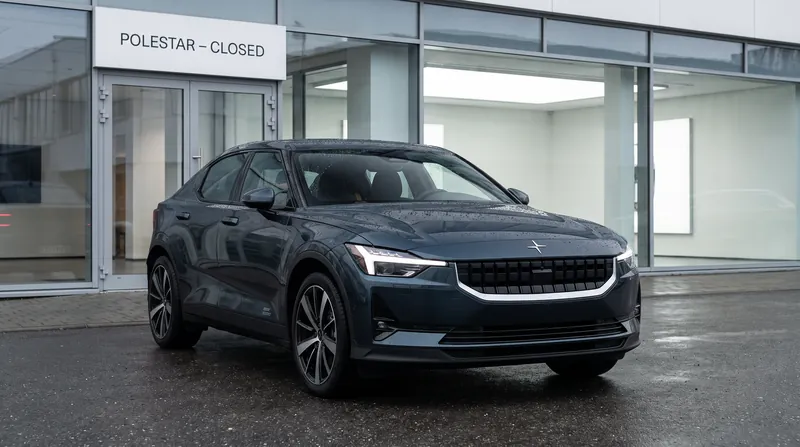
This expansive legal definition is already reshaping the North American market landscape and forcing immediate corporate action. Polestar, the premium electric vehicle brand backed by China's Geely and Sweden's Volvo, has already been forced to halt sales of new models in the United States starting with the 2027 model year. The company failed to secure authorization under the existing Commerce Department rules, serving as a high-profile warning to other global automakers with similar ownership structures.
The ripple effects of the United States' legislative push are being felt acutely across the border in Mexico, which serves as a critical manufacturing hub for the North American auto industry. In recent years, Chinese automotive manufacturers had aggressively expanded their footprint south of the border, capturing a remarkable 17 percent market share across dozens of distinct brands and utilizing the country as a potential backdoor into the US market under the United States-Mexico-Canada Agreement (USMCA).[1]
In response to mounting political pressure from Washington and the looming threat of the Connected Vehicle Security Act, Mexico has implemented its own structural trade barriers to protect its privileged USMCA status. On January 1, 2026, the Mexican government dramatically increased tariffs to as high as 50 percent on over 1,400 product lines from nations lacking free trade agreements. This move directly targeted Chinese vehicles and auto parts, signaling a unified North American front against subsidized automotive imports.[1]
Concurrently, legacy automakers are rapidly restructuring their manufacturing footprints and capital investments to ensure long-term compliance with the new legal reality. General Motors, for instance, has initiated a massive $1 billion strategic shift to move production of certain vehicle models from China to Mexico by 2027. This pivot aims to meet the USMCA's stringent 75 percent regional content requirements while simultaneously avoiding the impending 2030 hardware bans outlined in the Senate bill.[1]
The geopolitical friction driving the US legislation is further amplified by parallel, contrasting regulatory moves currently unfolding in Beijing. On July 2, 2026, China's Ministry of Industry and Information Technology released a sweeping, mandatory national standard for automotive safety. The new framework requires all new vehicles equipped with intelligent driver assistance systems to support continuous safety monitoring, extensive data recording, and remote management capabilities.
This Chinese regulatory mandate, which officially takes effect in January 2027, effectively requires the exact type of continuous data collection and remote access capabilities that United States lawmakers cite as a primary national security threat. The stark contrast between Washington's push to ban connected data flows and Beijing's mandate to require them makes a regulatory collision between the two economic superpowers entirely inevitable, forcing global automakers to choose sides.
For American consumers and the broader automotive aftermarket, the legislation presents a complex, multi-layered trade-off. While powerful industry groups like the CAR Coalition and the United Auto Workers (UAW) have strongly praised the bill for protecting domestic manufacturing jobs and securing the aftermarket supply chain, the restrictions come with a cost. The ban will likely reduce the availability of lower-cost electric vehicle options in the US and force automakers to source significantly more expensive, non-Chinese software and hardware components.[2]
As the Connected Vehicle Security Act moves out of committee and toward a full Senate floor vote, the global automotive industry faces a stark new reality. The decades-long era of a truly globalized, borderless supply chain for vehicle technology is rapidly coming to an end. In its place, a bifurcated, highly regulated market is emerging—one where national security imperatives, rather than pure economic efficiency, dictate the software code and silicon chips embedded in every dashboard.[3]
Viewpoints in depth
National Security & Labor
Lawmakers and unions view the ban as essential protection against espionage and subsidized competition.
Proponents of the legislation argue that the modern automobile is an unparalleled intelligence-gathering tool. With constant internet connectivity, exterior cameras, and interior microphones, a compromised vehicle fleet could map critical infrastructure or track the movements of government personnel. Labor unions like the UAW parallel this security argument with an economic one, asserting that heavily subsidized Chinese automakers are using artificially low prices to decimate the American manufacturing base, making a total ban the only viable defense.
Global Automakers & Supply Chains
Manufacturers face the costly reality of untangling deeply integrated global supply networks.
For legacy automakers, the legislation presents a logistical nightmare. The global auto industry has spent two decades optimizing its supply chains around Chinese electronics and battery technology. The bill's strict 15 percent foreign ownership threshold means that even non-Chinese brands utilizing joint ventures or specific imported telematics modules will be forced to redesign their vehicle architectures. Industry analysts warn that this forced decoupling will inevitably lead to higher production costs, which will be passed down to consumers in the form of more expensive electric vehicles.
Beijing's Connectivity Push
Chinese regulators are moving in the opposite direction, mandating the very data collection the US fears.
While Washington seeks to sever data links, Beijing is actively mandating them. China's Ministry of Industry and Information Technology recently issued standards requiring all new intelligent vehicles to support continuous safety monitoring and remote data recording by 2027. Chinese authorities argue these measures are essential for the safe deployment of autonomous driving technologies and traffic management. This fundamental regulatory divergence means automakers can no longer build a single, globally compliant vehicle platform, forcing them to develop entirely separate technological ecosystems for the East and the West.
Sources
Source coverage
3 outlets
4 viewpoints surfaced



- [1]Mexico Business NewsGlobal Supply Chain Analysts
US Senate Proposes Permanent Ban on Chinese Connected Vehicles
Read on Mexico Business News → - [2]U.S. SenateNational Security Advocates
Moreno, Slotkin Introduce Bipartisan Bill to Ban Chinese Vehicles and Connected Components from U.S. Market
Read on U.S. Senate → - [3]Vital LawGlobal Supply Chain Analysts
Bill to Ban Chinese Connected Cars Set for Senate Markup
Read on Vital Law →
Comments
More in Automotive & Transportation
See all →Brake Architecture
Fixed vs. Floating Brake Calipers: How Hardware Choices Dictate Maintenance Costs and Stopping Power
4 sources
Crash Structures
Sacrificial Metal: How Crush Cans and Load Paths Dictate Vehicle Survival and Repair Costs
8 sources
Marine Battery Tech
Coulomb Counting, Voltage Measurement, and Kalman Filtering: How Battery Management Systems Estimate State of Charge and State of Health
5 sources
Suspension Architecture
MacPherson Strut vs. Double Wishbone: The Trade-Offs in Cost, Packaging, and Dynamic Camber Control
4 sources
Every angle. Every day.
Get Automotive & Transportation stories with full source coverage and perspective breakdowns delivered to your inbox.