
US Justice Department Clears Paramount-Warner Bros. Discovery Merger
The US Department of Justice has officially approved the landmark merger between Paramount Global and Warner Bros. Discovery, removing the final major regulatory hurdle for the creation of a new entertainment behemoth.

- Corporate & Financial Analysts
- Argue that massive scale is an economic necessity to survive the streaming wars and compete with tech giants.
- Labor & Guilds
- Express concern over inevitable job redundancies and a shrinking marketplace for creative pitches.
- Consumer Advocates
- Warn that industry consolidation will ultimately lead to higher subscription prices and less diverse content.
Perspectives this story doesn't cover
- Independent theater owners
- International regulatory bodies
At a glance
- The DOJ has cleared the Paramount-WBD merger, ending months of antitrust scrutiny.
- The approval requires the divestiture of some linear TV and regional sports assets.
- The combined company will merge Max and Paramount+ into a single streaming platform.
- The new entity will boast roughly 180 million global streaming subscribers.
- Hollywood guilds and consumer advocates remain concerned about job cuts and price hikes.
Why it matters now
The consolidation of two of Hollywood's oldest studios will fundamentally reshape the streaming landscape, potentially leading to bundled subscription services, a massive combined library of film and television IP, and a significant shift in how creative talent negotiates contracts.
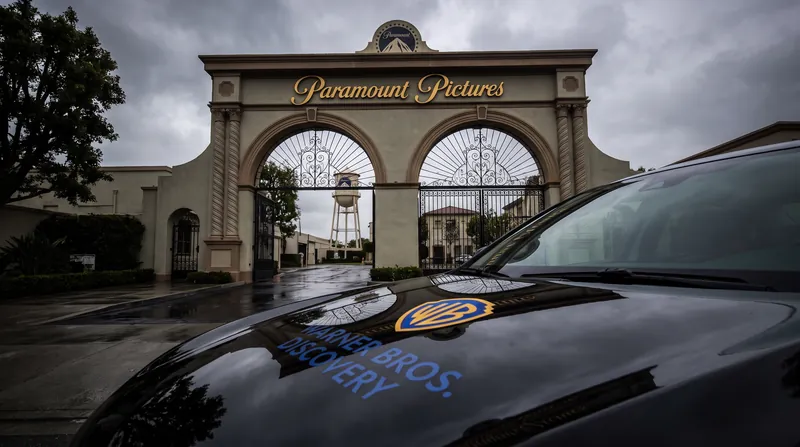
The United States Department of Justice has officially cleared the landmark merger between Paramount Global and Warner Bros. Discovery, removing the final and most significant federal regulatory hurdle blocking the creation of a new global entertainment behemoth. Announced late Thursday afternoon, the antitrust division's decision ends months of intense government scrutiny and averts a highly anticipated court battle that had previously delayed the deal's closing. The clearance marks a pivotal moment in modern media history, effectively greenlighting the consolidation of two of Hollywood's oldest and most storied legacy studios into a single corporate entity designed to compete head-to-head with Silicon Valley tech giants in the streaming era.[1]
The Justice Department's approval did not come without strings attached. According to federal filings and statements from the regulatory body, the antitrust division cleared the transaction only after both companies agreed to a series of binding concessions aimed at preserving market competition. These stipulations reportedly include the mandatory divestiture of several overlapping linear television networks and regional sports broadcasting assets, which regulators feared would give the combined company disproportionate leverage over cable providers and advertisers. Furthermore, the studios have agreed to maintain specific quotas for independent production acquisitions over the next five years, ensuring that third-party creators still have viable avenues to sell their content outside the newly merged ecosystem.[3][4]
The sheer scale of the newly formed conglomerate is unprecedented in the modern entertainment landscape, bringing an astonishing array of intellectual property under one roof. The merger unites Warner Bros. Pictures, HBO, CNN, and the DC Comics universe with Paramount Pictures, the CBS television network, MTV, Nickelodeon, and the Star Trek franchise. Industry analysts note that this combination creates a library of film and television content that rivals, and in some metrics surpasses, the historical catalog of The Walt Disney Company. For executives at both Paramount and Warner Bros. Discovery, this massive pooling of resources was viewed as an existential necessity to survive the rapid decline of traditional linear television viewership and the escalating costs of premium content production.
A primary driver for this massive corporate marriage is the ongoing evolution of the global streaming wars. Executives from both companies have explicitly outlined their intention to merge their respective flagship platforms, Max and Paramount+, into a single, comprehensive "super-service." By combining their subscriber bases, the new entity will immediately boast approximately 180 million global streaming customers, instantly vaulting it into the top tier of streaming platforms alongside industry leaders Netflix and Disney+. This consolidated platform is expected to offer a formidable mix of prestige Sunday-night HBO dramas, live CBS sports broadcasts, 24-hour CNN news coverage, and a deep bench of children's programming, creating a highly sticky subscription designed to drastically reduce customer churn.[2]
A primary driver for this massive corporate marriage is the ongoing evolution of the global streaming wars.
Wall Street reacted with immediate and overwhelming enthusiasm to the news of the regulatory clearance. Shares of both Warner Bros. Discovery and Paramount Global surged in late afternoon trading, reflecting investor confidence that the merger will unlock billions of dollars in operational synergies and cost savings. Financial analysts have long argued that the mid-tier streaming model was economically unsustainable, and that consolidation was the only viable path forward for legacy media companies burdened by high debt loads and shrinking cable carriage fees. The combined company's estimated valuation of roughly $60 billion provides it with the financial scale necessary to bid competitively for top-tier live sports rights, which remain the most lucrative and reliable audience draw in the current media ecosystem.[4]
Within the creative community, the reaction to the merger's approval has been decidedly more mixed. Hollywood labor guilds, including the Writers Guild of America and SAG-AFTRA—both of which recently secured hard-fought new contracts following historic strikes—have expressed cautious optimism regarding the financial stability of the new entity, but remain deeply vigilant. Guild leaders have publicly voiced concerns about the inevitable wave of corporate redundancies and job cuts that follow mega-mergers of this scale. More broadly, writers, directors, and producers worry that the consolidation removes a major buyer from the marketplace, reducing competition for original pitches and potentially driving down compensation for creative talent who now have fewer competing studios to leverage during contract negotiations.
Consumer advocacy groups have also sounded the alarm regarding the long-term implications of the Justice Department's decision. Organizations focused on media consolidation warn that reducing the number of major Hollywood studios from five to four will inevitably lead to higher subscription prices for consumers and a less diverse array of programming. These groups argue that as the new Paramount-Warner Bros. Discovery entity gains market dominance, it will have unchecked power to raise the monthly cost of its combined streaming service without fear of losing customers to a fractured market. In response, corporate executives maintain that the combined service will actually offer unprecedented value, providing subscribers with a vastly expanded library of premium content for a single monthly fee.[3]
With the most significant federal hurdle now cleared, the companies are moving aggressively to finalize the transaction. Leadership teams expect to officially close the merger by the end of the fourth quarter of 2026, pending final sign-offs from international regulatory bodies, primarily the Competition and Markets Authority in the United Kingdom and the European Commission. Transition teams have already begun the complex process of integrating the two massive corporate structures, with announcements regarding the new executive hierarchy and the specific timeline for the streaming platform integration expected in the coming weeks. For Hollywood, the approval marks the definitive end of one era and the beginning of a radically consolidated future.[1]
Different angles
Corporate & Financial Analysts
Argue that massive scale is an economic necessity to survive the streaming wars and compete with tech giants.
From a purely financial perspective, Wall Street views the merger as a necessary survival tactic. Legacy media companies are currently burdened by the dual pressures of declining cable television revenues and the exorbitant costs associated with producing premium streaming content. Analysts argue that without the scale provided by this merger, neither Paramount nor Warner Bros. Discovery could generate the free cash flow required to compete long-term against tech behemoths like Apple and Amazon, who treat entertainment as a loss leader for their broader ecosystems. The combined company's ability to pool resources, slash redundant operational costs, and offer a comprehensive streaming bundle is seen as the only viable path to sustainable profitability.
Labor & Guilds
Express concern over inevitable job redundancies and a shrinking marketplace for creative pitches.
For the writers, directors, actors, and crew members who physically produce Hollywood's content, the merger represents a significant contraction of the marketplace. Guild leaders point out that every major studio consolidation in history has been followed by aggressive corporate restructuring and widespread layoffs. Beyond immediate job losses, the creative community is deeply concerned about the reduction in potential buyers for new projects. With one less major studio in town, creators have less leverage to bid up the price of their pitches or negotiate favorable backend compensation, fundamentally shifting the balance of power further toward corporate management.
Consumer Advocates
Warn that industry consolidation will ultimately lead to higher subscription prices and less diverse content.
Consumer protection organizations view the DOJ's clearance as a blow to market competition that will ultimately be paid for by the viewing public. These advocates argue that reducing the number of major legacy studios from five to four removes critical competitive pressure that keeps subscription prices in check. They warn that once Max and Paramount+ are combined into a single service, the new entity will have the market power to aggressively raise monthly fees, knowing consumers have fewer alternative platforms to turn to. Additionally, there are concerns that a consolidated corporate mandate will lead to less risk-taking in programming, resulting in a homogenization of film and television content.
Questions readers ask
Will Max and Paramount+ merge into one app?
Yes, executives have confirmed plans to combine Max and Paramount+ into a single 'super-service' to better compete with Netflix and Disney+.
When will the merger officially close?
The companies expect to finalize the transaction by the end of the fourth quarter of 2026, pending international regulatory approvals.
Did the DOJ force the companies to sell anything?
Yes, the approval includes concessions requiring the divestiture of certain overlapping linear television networks and regional sports assets.
Sources
Source coverage
4 outlets
3 viewpoints surfaced




- [1]ReutersCorporate & Financial Analysts
U.S. Justice Department clears Paramount-Warner Bros Discovery merger
Read on Reuters → - [2]BloombergCorporate & Financial Analysts
Paramount-WBD Deal Clears DOJ, Paving Way for New Streaming Giant
Read on Bloomberg → - [3]The New York TimesConsumer Advocates
Justice Department Approves Paramount and Warner Bros. Discovery Merger With Concessions
Read on The New York Times → - [4]The Wall Street JournalCorporate & Financial Analysts
Paramount-Warner Bros. Discovery Deal Clears Antitrust Review
Read on The Wall Street Journal →
Comments
More in Entertainment
See all →True Crime Cinema
Robert Pattinson Draws Oscar Buzz for A24's 'Primetime' as Chris Hansen Condemns the Film
7 sources
Comic Industry
Marvel 'X-Force' and 'Stormbreaker' Artist Joshua Cassara Dies at 46
5 sources

Production Incentives
Bipartisan Bill Introduced in Congress to Create 20% Federal Film Production Tax Credit
4 sources

Benefit Concerts
Macklemore Announces Headlining 'Free Palestine Tour' Across Europe to Fund Humanitarian Aid
7 sources

Every angle. Every day.
Get Entertainment stories with full source coverage and perspective breakdowns delivered to your inbox.