
The K-Shaped Concert Economy: Why Live Music is Betting Everything on Superfans
The concert industry is increasingly relying on wealthy consumers and dedicated 'superfans' to drive record profits, creating a bifurcated market. This shift is widening the financial gap between blockbuster stadium acts and mid-tier artists who are struggling to fill venues amidst rising touring costs.
By Jana Rami

Share this story
The modern concert experience has transformed from a simple general admission ticket into a highly segmented, tiered luxury economy. At major stadium tours across the globe in 2026, the most lucrative real estate is no longer just the front row of the floor section. Instead, the true financial engine of live music is the sprawling ecosystem of VIP lounges, early-access merchandise tents, exclusive soundcheck viewing areas, and commemorative laminates.
For the industry's biggest acts, the standard concert ticket has become merely the baseline entry fee, with the real profit margins generated by upselling dedicated fans on proximity, exclusivity, and status. This shift represents a fundamental rewiring of live music economics, moving the industry away from a volume-based model toward a value-extraction model designed to cater to the highest bidders.
According to a recent comprehensive analysis by Bernstein, the concert industry is increasingly living and dying by the spending habits of "superfans" and high-income consumers. The analysts describe a "K-shaped" live entertainment market, a term that mirrors broader macroeconomic trends where the wealthiest consumers partake in unapologetic luxury while others struggle with the rising cost of living.
In this bifurcated landscape, a concentrated, high-spending upper echelon of fans is rapidly pulling away from a softening middle and bottom tier of casual concertgoers. The numbers behind this divergence are stark: the wealthiest income bracket now outspends the lowest by roughly four times overall, but by a staggering 12 times when it comes to entertainment fees and admissions.[1]
Consequently, the financial gap between blockbuster stadium acts and everyone else is widening at an unprecedented rate. Last year, the top one percent of live shows accounted for approximately a third of all live gross sales in the United States. This represents a significant jump from the 25 percent share that the top one percent held just prior to the pandemic in 2019.
The top ten headlining acts have grabbed an increasingly outsized share of total industry revenue, leveraging massive demand and limited venue capacity to command premium pricing. For the industry's biggest corporate players, catering to this concentrated premium demand has become the primary growth engine, fundamentally altering how tours are routed, marketed, and priced.[1]
Companies like Live Nation and streaming giant Spotify are actively restructuring their business models to identify, target, and monetize an artist's most devoted followers. Some major arenas have even begun altering their floor plans and operational strategies, shifting away from sprawling general admission pits to devote nearly a third of their business to premium seats and high-end services.
The driving force behind this architectural and economic shift is the "superfan." Bernstein analysts estimate that 20 percent of U.S. music fans now qualify as superfans, up from 18 percent the previous year. These highly engaged listeners are a financial juggernaut, spending an average of 66 percent more on live shows than casual attendees.[1]
Live Nation executives have consistently defended the rising costs of premium tickets and VIP packages, arguing that they simply reflect true market demand. In a recent earnings call, CEO Michael Rapino noted that concerts remain "underpriced" relative to the value attendees place on live experiences, especially when compared to major professional sporting events.
Dan Wall, Live Nation's executive vice president, has publicly pushed back against the narrative that ticketing platforms artificially inflate prices. He maintains that artists and their management teams set the prices, utilizing dynamic pricing models to capture revenue that would otherwise flow to secondary market scalpers on platforms like StubHub.[2]
This market-based approach has yielded record profits at the top of the marquee. Live Nation recently reported a 16 percent year-over-year increase in second-quarter revenue, driven by a 14 percent bump in global attendance. More notably, the company's concert adjusted operating income surged by an impressive 33 percent.
This profitability proves that even in a challenging macroeconomic environment, a specific subset of fans is more than willing to pay top dollar for the most popular shows. The success of dynamic pricing—which shifts ticket costs in real-time based on demand, much like airline tickets—ensures that the industry keeps more of the economic upside.
However, the concentration of capital at the top of the industry is creating severe headwinds for mid-tier and emerging artists. As casual fans face higher costs of living, many are choosing to allocate their limited annual entertainment budgets to one or two massive stadium shows rather than attending a dozen smaller club gigs.
Industry trackers like Pollstar have noted a slight contraction in overall global ticket sales, which fell by roughly 3.7 percent recently, with North American sales dropping by 5 percent. This softening demand in the middle of the market has led to a phenomenon industry insiders call "blue dot fever"—a reference to the sea of unsold blue seats on ticketing maps for mid-level arena and theater tours.
For artists operating outside the top one percent, the economics of touring have become increasingly precarious. Post-pandemic inflation has drastically driven up the costs of tour buses, crew labor, venue cuts, and equipment rentals. Because profit margins for mid-tier tours are razor-thin, a mere 5 percent drop in ticket sales can easily erase a tour's entire profit, leaving artists operating at a loss.
To survive, many of these smaller acts are attempting to replicate the superfan model on a micro-scale. They are offering their own VIP meet-and-greets, exclusive vinyl variants, and subscription-based fan clubs to extract more value from their most dedicated local supporters.
Ultimately, the live music industry of 2026 is defined by scarcity and premium access. As artificial intelligence and streaming platforms continue to commoditize recorded music, the irreplaceable nature of the live, in-person experience has become the ultimate luxury good. Whether this K-shaped trajectory is sustainable remains a heavily debated question within the industry.
While the upper echelon of the business enjoys unprecedented financial success, the long-term health of the music ecosystem relies on a robust middle class of artists who can afford to tour, build audiences, and eventually become the stadium-filling superfan magnets of tomorrow.[1]
Consumer advocates warn that this financialization of fandom risks pricing average listeners out of live music entirely. By paywalling basic concert experiences—such as standing near the stage or buying merchandise without enduring a massive line—ticketing companies are fundamentally altering the cultural role of live music.
What was once an accessible communal gathering is increasingly resembling an exclusionary luxury service, where proximity to art is dictated strictly by income bracket. As the industry continues to refine its ability to monetize devotion, the gap between the fans who can afford the full experience and those left watching through a screen will only continue to grow.[1]
Key points
- The live music industry is evolving into a 'K-shaped' market, with top acts seeing record revenues while mid-tier artists struggle.
- The wealthiest income bracket now outspends the lowest by 12 times on entertainment and admissions.
- The top 1% of live shows captured roughly a third of all U.S. live gross sales last year.
- Superfans, who make up 20% of the market, spend 66% more on live shows than average attendees.
What we don’t know
- Whether the softening demand for mid-tier acts will eventually lead to a collapse of the touring middle class.
- How upcoming regulatory scrutiny of Live Nation and Ticketmaster might impact dynamic pricing models.
- If casual fans will permanently abandon live music or simply shift their spending to local, independent venues.
How we got here
Pre-2020
The top 1% of concert tours account for roughly 25% of all U.S. live gross sales.
2022-2023
Post-pandemic touring resumes, leading to record-breaking stadium runs but severe inflation in transportation and crew costs.
Late 2023
Live Nation rolls out 'all-in pricing' to display total ticket costs upfront amidst growing regulatory scrutiny over hidden fees.
2025
The top 1% of shows capture 33% of total U.S. live gross sales, highlighting a rapidly widening gap in the industry.
July 2026
Financial analysts officially dub the live music sector a 'K-shaped market' driven by wealthy consumers and superfans.
- Industry Executives & Promoters
- Focused on maximizing tour revenue through dynamic pricing and premium VIP experiences.
- Music Superfans
- Highly dedicated listeners willing to pay significant premiums for exclusive access and status.
- Mid-Tier Artists & Casual Fans
- Feeling the financial squeeze of rising touring costs and concentrated spending at the top.
Perspectives this story doesn't cover
- Venue staff and touring crew members whose wages are impacted by the shifting economics of mid-tier tours.
- Independent venue owners struggling to book profitable shows amidst softer casual demand.
Sources
Source coverage
2 outlets
3 viewpoints surfaced


- [1]MarketWatchMusic Superfans
Concerts Are Increasingly for Superfans and the Rich, Analysts Say
Read on MarketWatch → - [2]Live NationIndustry Executives & Promoters
The Truth About Ticket Prices
Read on Live Nation →

More in Entertainment
See all →Live Music
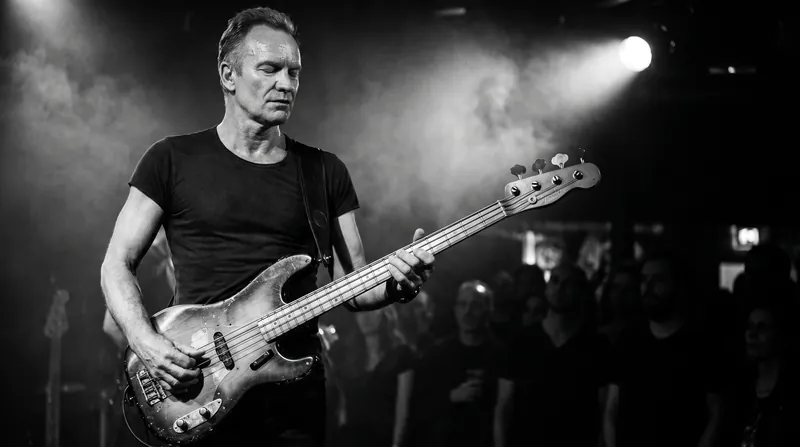
Sting Announces Massive 90-Date 'Sting 3.0' World Tour for 2026
6 sources
Venue Infrastructure
Live Nation and OVG Form Joint Venture with Saudi PIF to Manage Kingdom's New Stadiums
7 sources

Biometric Privacy
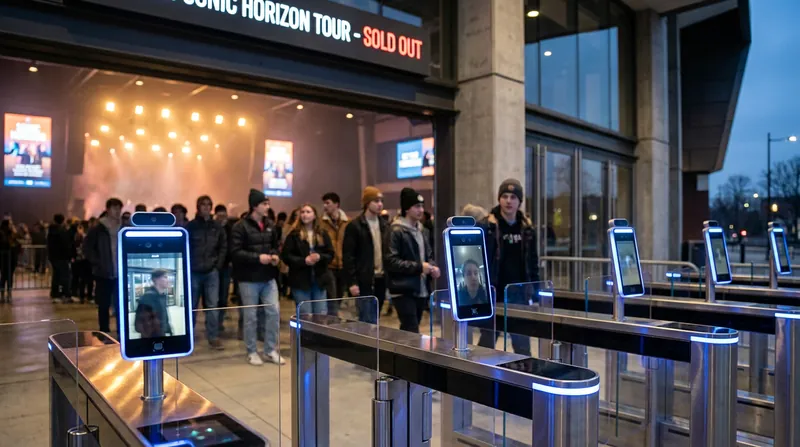
K-Pop Giant HYBE Faces Legislative Ban on Facial Recognition Concert Entry Over Privacy Concerns
2 sources
Ticketing Monopoly
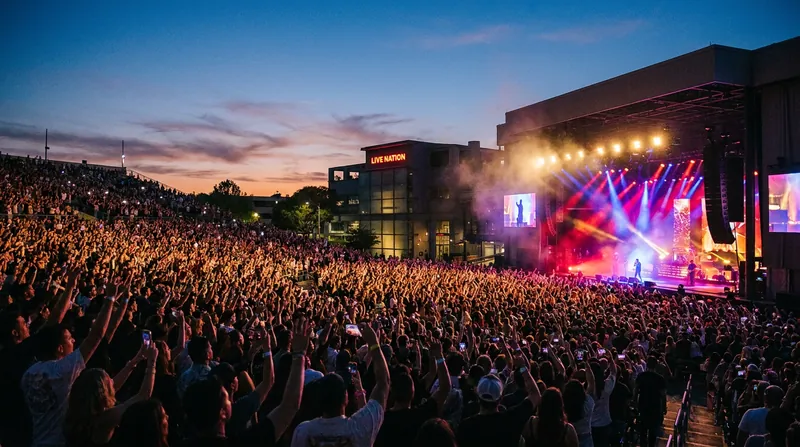
The Imminent Breakup of Live Nation and Ticketmaster: What a Forced Divestiture Means for Concertgoers
3 sources
Comments
Every angle. Every day.
Get Entertainment stories with full source coverage and perspective breakdowns, free every day.