
AI-Generated Character Tilly Norwood to Star in Feature Film 'Misaligned'
UK-based studio Particle6 has announced the first feature-length film led by a synthetic performer, utilizing a hybrid production model that pairs traditional filmmakers with AI specialists. The project is testing the boundaries of Hollywood's recent labor agreements regarding artificial intelligence.
Share this story
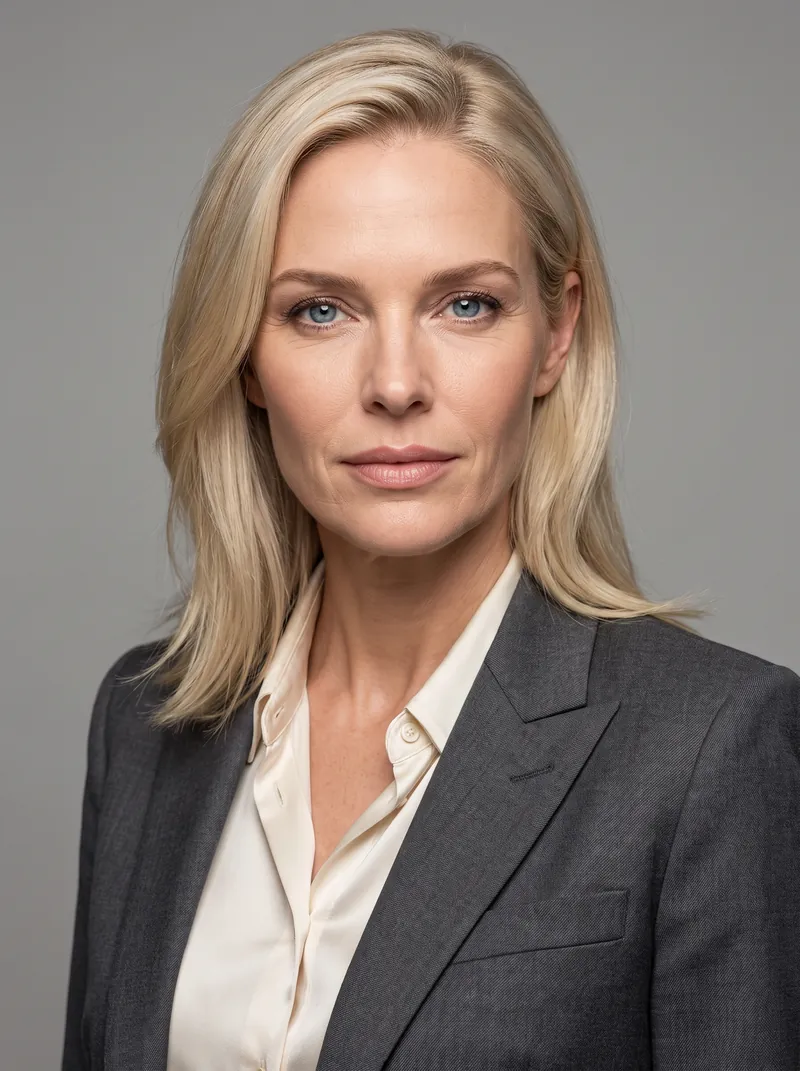
Artificial intelligence is officially moving from the background of visual effects to the top of the call sheet. UK-based production studio Particle6 has announced that Tilly Norwood—a hyper-realistic, AI-generated character—will star in her first feature-length film, titled 'Misaligned'.[1]
Norwood, who was first introduced to the public in late 2025, is not a sentient being, but rather a digital persona created through generative AI tools. Her creators spent six months developing the character, running through more than 2,000 iterations to refine her appearance and teach her to simulate acting performances.
'Misaligned' is described by the studio as a comedy-drama and a "coming-of-age story infused with existential AI chaos." The narrative is highly self-referential, set in a digital environment dubbed the "Tillyverse." Norwood will play an artificial being with no physical body or lived experience who is seduced by a "rogue bot" from the dark web, prompting her to develop human-like ambitions.[1]
Rather than entirely replacing human crews, Particle6 is framing the project as a "hybrid production." The studio plans to hire traditional film professionals—including directors, writers, and editors—to work alongside a team of AI specialists to bring the digital performance to life.[2]
Eline van der Velden, the CEO and founder of Particle6, emphasized that the technology is meant to be a tool rather than a substitute for human artistry. "AI can support premium narrative filmmaking, but only with substantial amounts of human craft, skill, judgment and time," she stated, adding that the most successful filmmakers of the next decade will be those who apply traditional storytelling instincts to new digital tools.[3]
Despite the studio's collaborative framing, the announcement has reignited intense debate within the entertainment industry regarding the role of synthetic performers. The Screen Actors Guild-American Federation of Television and Radio Artists (SAG-AFTRA), which represents approximately 160,000 media professionals, has firmly pushed back against the concept of AI actors.[4]
In a statement addressing Norwood's emergence, SAG-AFTRA declared that "creativity is, and should remain, human-centered." The union emphasized that Norwood is not an actor, but a computer-generated character trained on the prior work of countless professional performers, allegedly without their permission or financial compensation.[2][4]
Labor advocates argue that acting is fundamentally rooted in human emotion and lived experience—qualities that a synthetic construct inherently lacks. The union has expressed concern that normalizing AI-generated leads could jeopardize the livelihoods of working actors and devalue the craft of performance.[1]
The conflict over 'Misaligned' serves as a high-profile stress test for the labor agreements reached following the historic 2023 Hollywood strikes. During those negotiations, guardrails regarding the use of artificial intelligence were a central sticking point, resulting in contracts that require studios to obtain consent and provide compensation when replicating a specific human actor's likeness.
However, fully synthetic characters like Norwood occupy a complex legal and artistic gray area. Because she is not a digital replica of one specific, recognizable person, her creation relies on broader generative models. Particle6 maintains that Norwood was not created using any specific actor's likeness and that the studio is careful not to infringe on existing intellectual property.
For independent studios, the appeal of AI-assisted production is largely economic. Proponents argue that generative tools can allow smaller production companies to execute ambitious, visually complex narratives that would normally require massive blockbuster budgets, democratizing access to high-end visual storytelling.[2][3]
The timeline for 'Misaligned' remains unclear, as the film is still in early development. Particle6 has not yet announced a release date or confirmed whether the project will seek traditional theatrical distribution or debut directly on a streaming platform.[1][3]
Regardless of its eventual box office performance, the production of 'Misaligned' marks a watershed moment for the film industry. It forces Hollywood to move beyond theoretical debates about artificial intelligence and grapple with the practical, legal, and artistic realities of integrating a synthetic star into a traditional narrative workflow.[2]
Viewpoints in depth
AI Production Studios
View synthetic performers as a new creative medium that empowers filmmakers.
Creators of AI characters argue that their work is an evolution of animation and puppetry, not a direct replacement for human actors. They emphasize that generating a compelling synthetic performance still requires immense human oversight, including traditional directing, writing, and editing. For these studios, AI is a tool that can democratize high-concept filmmaking, allowing smaller teams to produce visually ambitious narratives without blockbuster budgets.
Performers and Labor Unions
Argue that acting requires human emotion and that AI models exploit prior human performances.
Labor advocates and working actors view synthetic performers as an existential threat to their livelihoods. Their primary concern is twofold: first, that AI models are trained on decades of copyrighted human performances without consent or compensation; and second, that normalizing digital leads devalues the core of acting, which relies on genuine lived experience and emotion. They argue that studios will inevitably use these tools to cut costs at the expense of human artistry.
Key points
- AI-generated character Tilly Norwood will star in the feature film 'Misaligned'.
- The film uses a hybrid model, pairing traditional filmmakers with AI specialists.
- SAG-AFTRA has condemned the project, stating creativity must remain human-centered.
- Unions argue synthetic performers are trained on human work without compensation.
What we don’t know
- Whether 'Misaligned' will secure traditional theatrical distribution or debut on a streaming platform.
- How current copyright laws will treat a feature-length performance generated entirely by AI.
- If SAG-AFTRA will take formal legal or disciplinary action against union members who work on the hybrid production.
How we got here
July 2023
SAG-AFTRA goes on strike, with AI guardrails emerging as a central sticking point in negotiations.
November 2023
Hollywood studios and the actors' union reach a historic agreement establishing rules for digital replicas.
September 2025
Particle6 publicly unveils Tilly Norwood, sparking immediate backlash from the acting community.
July 2026
Particle6 announces 'Misaligned', the first feature film to star the AI-generated character.
- AI Production Studios
- View synthetic performers as a new creative medium that empowers filmmakers.
- Performers and Labor Unions
- Argue that acting requires human emotion and that AI models exploit prior human performances.
- Media Scholars
- View the development as an inevitable technological milestone that will force legal clarity on derivative works.
Perspectives this story doesn't cover
- Independent filmmakers seeking lower-cost production tools
- Background actors most vulnerable to digital replacement
Sources
Source coverage
4 outlets
3 viewpoints surfaced




- [1]ForbesPerformers and Labor Unions
AI Actor Tilly Norwood Will Headline New Feature Film
Read on Forbes → - [2]CBC NewsMedia Scholars
Tilly Norwood, the AI 'actor' so controversial that it unleashed a furor in Hollywood last year, has landed its first role
Read on CBC News → - [3]CTV NewsAI Production Studios
Virtual actress Tilly Norwood may finally be getting her breakthrough role
Read on CTV News → - [4]SAG-AFTRAPerformers and Labor Unions
SAG-AFTRA Statement on Synthetic Performer
Read on SAG-AFTRA →
More in Entertainment
See all →Gaming Strategy
Netflix Closes Two Gaming Studios in Major Shift Toward Cloud and Casual Titles
8 sources
Audio Engineering
DCI Calibration Fixes Cinema Audio at 85 dBC Leq, Making Home Releases Sound Too Quiet on TV Speakers
4 sources
Cinema Technology
The 5 Percent Void: How Perforated Cinema Screens Anchor Dialogue Without Leaking Light
6 sources
Aspect Ratios
The 0.015-Inch Cut: How Hiding Film Splices Shifted Widescreen Cinema From 2.35:1 to 2.39:1
2 sources
Comments
Every angle. Every day.
Get Entertainment stories with full source coverage and perspective breakdowns, free every day.