
US Government Unveils 'Historic Reset' of Dietary Guidelines, Prioritizing Whole Foods
The USDA and HHS have released the 2025–2030 Dietary Guidelines for Americans, marking a fundamental shift by explicitly targeting ultra-processed foods and centering whole-food matrices for the first time.
By Maya Khalil


- Public Health Officials
- Argue the explicit cap on ultra-processed foods is a long-overdue, essential step for reversing the national crisis of diet-related chronic diseases.
- Clinical Nutritionists
- Praise the shift away from 'nutritionism' toward the food matrix, noting it provides a much more intuitive and biologically accurate framework for patient care.
- Food Technologists
- Warn that aggressive anti-processing language could inadvertently increase food costs and argue that certain processing techniques are vital for food safety and shelf life.
Why this matters
For decades, federal nutrition advice focused on isolated nutrients, inadvertently encouraging the consumption of highly engineered, low-fat processed foods. This sweeping policy change acknowledges that how food is processed matters just as much as its chemical breakdown, fundamentally altering how school lunches are sourced and how the multi-trillion-dollar food industry formulates its products.
Key points
- The 2025-2030 Dietary Guidelines explicitly advise capping ultra-processed food intake at 15% of daily calories.
- The policy shifts focus from isolated nutrients to the 'food matrix' and structural integrity of whole foods.
- Federal food programs, including school lunches, will be required to align with the new whole-food standards.
- The guidelines emphasize that frozen and canned whole foods are affordable, healthy alternatives to fresh produce.
- The FDA is concurrently rolling out front-of-package labels to highlight highly processed products.
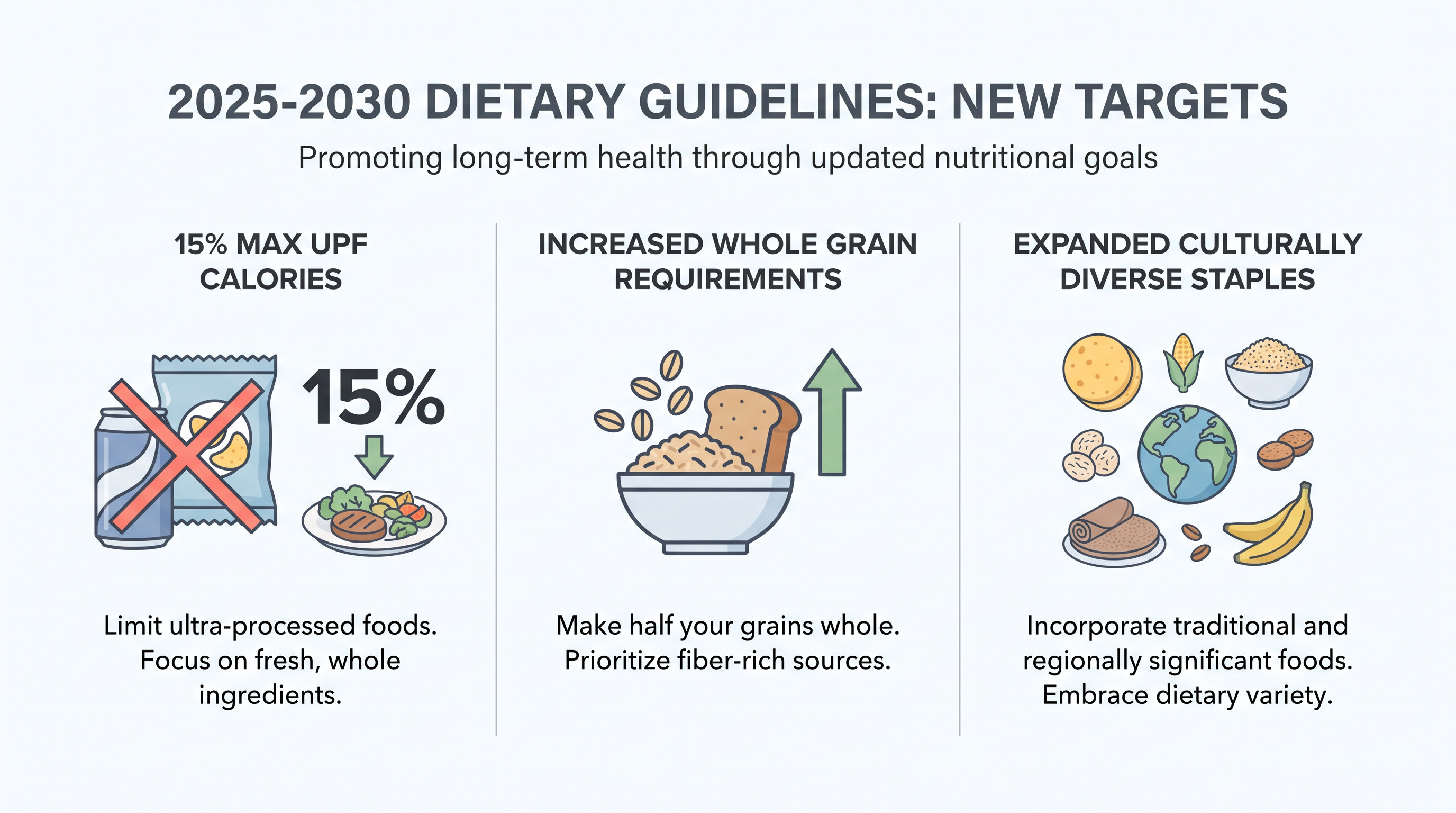
In a move that public health advocates are calling the most significant nutritional policy shift in half a century, the US Departments of Agriculture (USDA) and Health and Human Services (HHS) have officially released the 2025–2030 Dietary Guidelines for Americans. For the first time in the document's history, the federal government has explicitly warned against the consumption of ultra-processed foods (UPFs), pivoting away from decades of advice that focused almost exclusively on isolated nutrients like fats, carbohydrates, and vitamins. The new framework establishes a bold target: Americans should aim to consume no more than 15 percent of their daily calories from ultra-processed sources, a drastic reduction from the current national average of nearly 60 percent.[1][3]
The conceptual leap at the heart of the new guidelines is the embrace of the "food matrix"—the complex physical and chemical structure of whole foods that dictates how the human body digests and absorbs nutrients. Historically, federal guidelines operated under the paradigm of "nutritionism," treating a synthetic vitamin added to a sugary cereal as biologically equivalent to the same vitamin naturally occurring in an apple. The 2025–2030 update systematically dismantles this approach, declaring that the structural integrity of food is inextricably linked to metabolic health and satiety.[1]
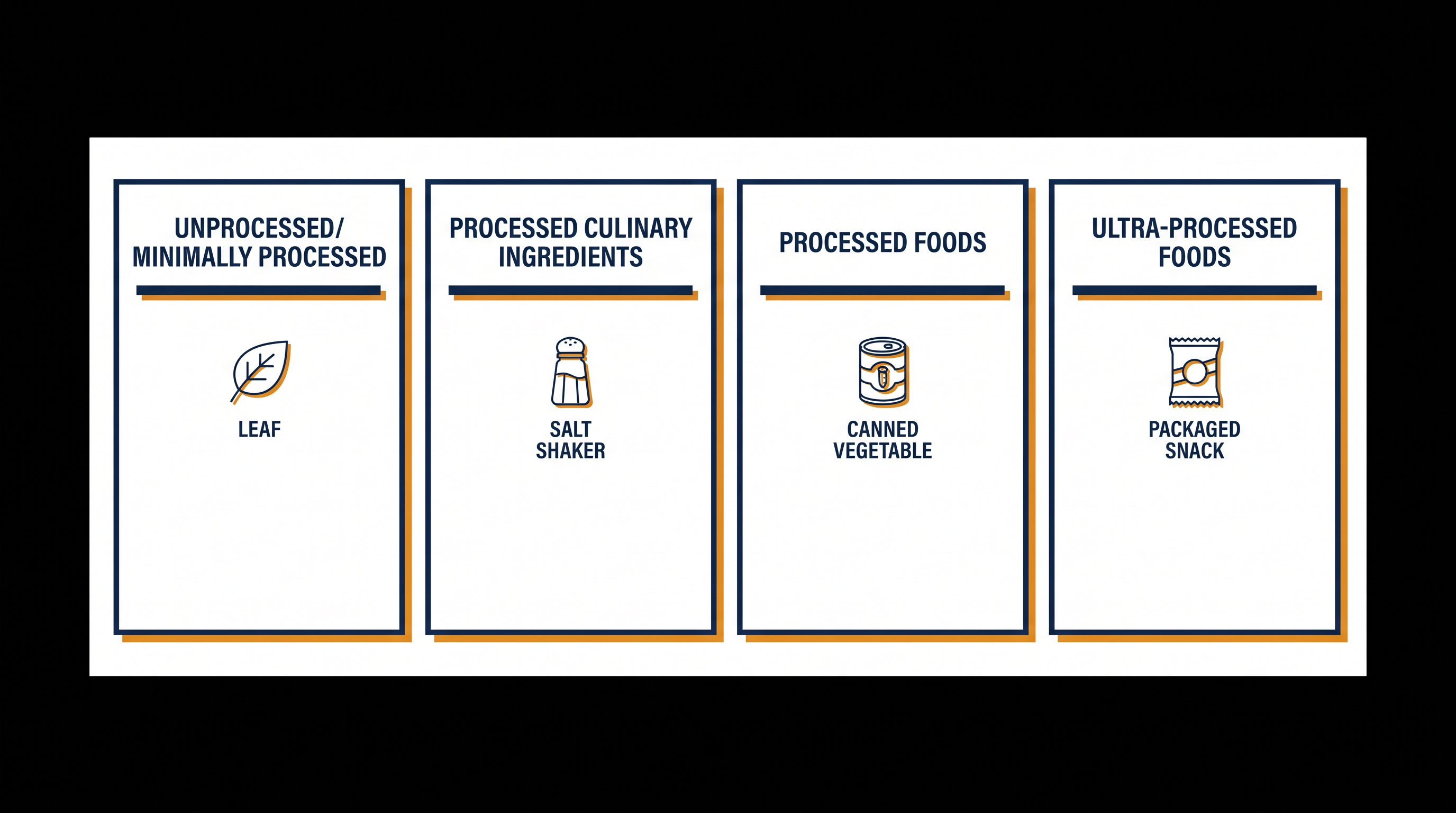
To operationalize this shift, the USDA has formally integrated the NOVA classification system into its recommendations. Developed by public health researchers, NOVA categorizes food not by its macronutrient profile, but by its level of industrial processing. The guidelines draw a sharp distinction between minimally processed foods—like frozen vegetables, canned beans, and pasteurized milk—and ultra-processed foods, which are defined as industrial formulations containing artificial flavors, emulsifiers, and preservatives rarely found in a home kitchen. By clarifying this boundary, the government aims to end the confusion that has long allowed heavily engineered snacks to masquerade as health foods.[1][3]
The evidentiary foundation for this historic reset has been building for years, culminating in a series of massive epidemiological reviews. A landmark umbrella review published in The BMJ analyzed data from nearly 10 million individuals, finding direct, highly credible links between high UPF consumption and 32 adverse health outcomes. These included a 50 percent increased risk of cardiovascular disease-related death, a 48 percent higher risk of anxiety, and a 22 percent increased risk of depression. The sheer volume and consistency of the data left federal advisory committees with little room to maintain the status quo.[2][3]
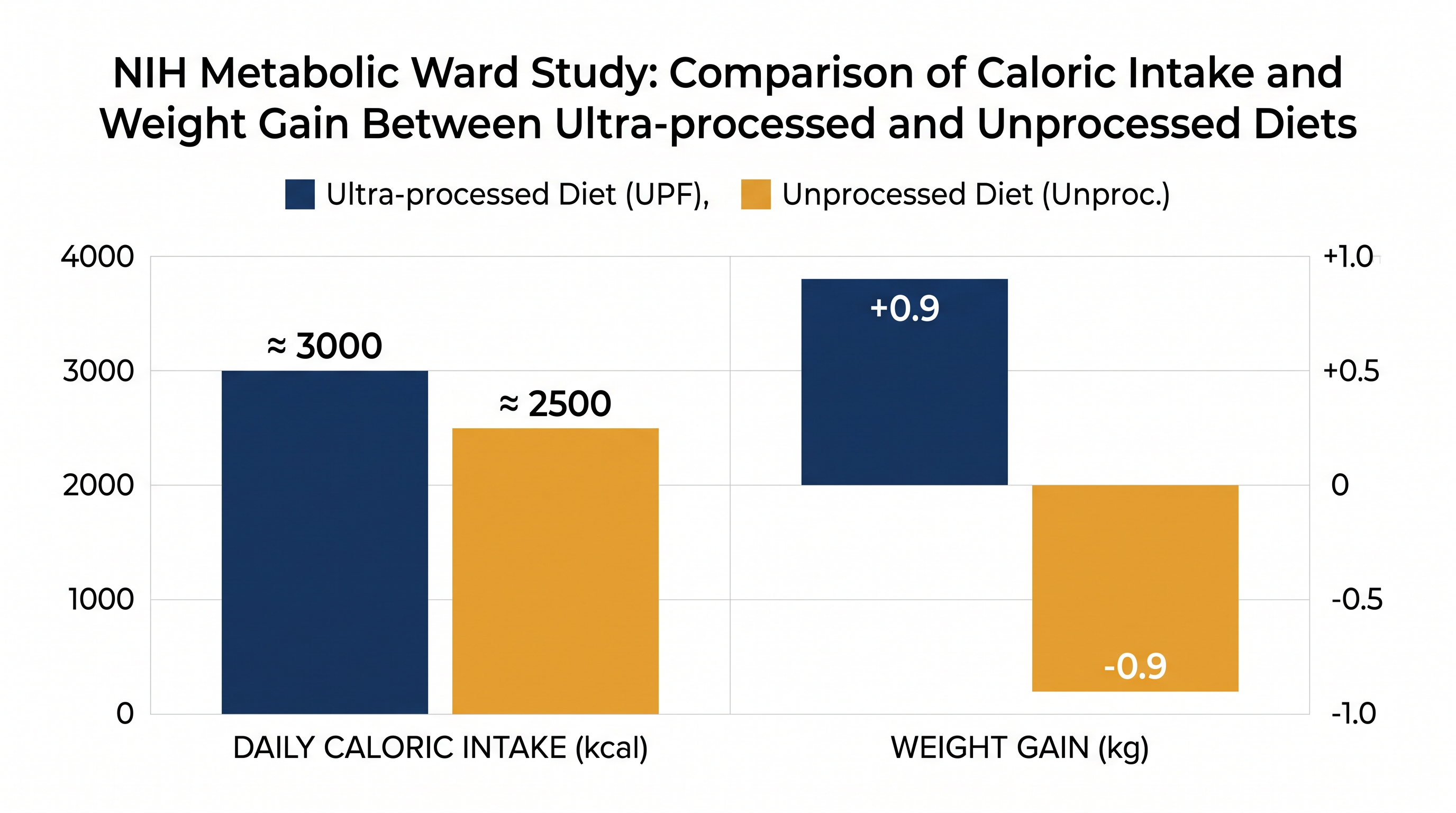
Beyond observational data, clinical trials have illuminated the exact biological mechanisms that make ultra-processed foods uniquely harmful. A watershed metabolic ward study conducted by the National Institutes of Health demonstrated that when participants were given unrestricted access to either an ultra-processed diet or a whole-food diet—matched perfectly for calories, sugar, fat, and fiber—those on the ultra-processed diet spontaneously consumed about 500 extra calories per day. The hyper-palatable nature of UPFs, combined with their rapid digestion rate, effectively short-circuits the brain's natural satiety signals, driving involuntary overeating.[4]
Emerging research highlighted in the new guidelines also points to the microbiome as a critical casualty of industrial processing. Common additives such as emulsifiers, which are used to improve the texture and shelf life of packaged breads and dairy substitutes, have been shown to degrade the protective mucus lining of the gut. This degradation alters the composition of the gut microbiome and triggers low-grade systemic inflammation, a known precursor to metabolic syndrome, type 2 diabetes, and certain autoimmune conditions. The USDA's explicit warning against these additives marks a profound departure from previous eras of food regulation.[2]
Emerging research highlighted in the new guidelines also points to the microbiome as a critical casualty of industrial processing.
The ripple effects of the 2025–2030 guidelines will be felt most immediately in the public sector. The Dietary Guidelines for Americans dictate the nutritional standards for the National School Lunch Program, the Special Supplemental Nutrition Program for Women, Infants, and Children (WIC), and military rations. With over $30 billion in annual federal food purchasing power now tied to these new whole-food standards, public schools across the country will be required to phase out ultra-processed staples like pre-packaged pizzas and extruded chicken nuggets in favor of scratch-cooked meals utilizing minimally processed ingredients.[1][3]
In tandem with the USDA's announcement, the Food and Drug Administration (FDA) is accelerating its rollout of mandatory front-of-package nutrition labeling. Designed to complement the new guidelines, these labels will visually flag products that contain high levels of added sugars, sodium, and industrial processing. By moving this information from the fine print on the back of the box to a prominent, standardized icon on the front, regulators hope to break the "health halo" effect that food marketers have long used to sell highly processed products to health-conscious consumers.[5]
The food industry's response to the impending regulations has been a mixture of public compliance and behind-the-scenes scrambling. Major food technologists and industry groups argue that processing is essential for global food security, extending shelf life, and reducing food waste. However, recognizing the shifting regulatory landscape, multinational food conglomerates are already investing billions in "clean label" reformulations, attempting to strip artificial emulsifiers and synthetic preservatives from their flagship products to fall under the newly acceptable "processed" rather than "ultra-processed" umbrella.[3]
One of the most persistent criticisms of whole-food advocacy is the perception of elitism—the idea that fresh produce is prohibitively expensive for low-income families. The new guidelines tackle this head-on by aggressively promoting affordable, shelf-stable whole foods. The document dedicates entire sections to the nutritional equivalence of frozen fruits, canned vegetables (rinsed of sodium), and dried legumes. By emphasizing that a healthy diet does not require expensive, out-of-season organic produce, the USDA is attempting to democratize access to the food matrix.[1]
Furthermore, the 2025–2030 update represents a massive leap forward in cultural competence. Previous iterations of the guidelines were frequently criticized for centering a Eurocentric dietary model, alienating communities whose traditional diets rely on different staples. The new framework explicitly validates a wide array of culturally diverse whole foods, from teff and amaranth to taro and cassava, ensuring that federal nutrition advice is relevant and actionable for the entirety of the American population.[1][3]
Despite the widespread praise from the medical community, experts acknowledge that implementation will be an uphill battle. The gap between federal guidelines and actual consumption patterns is vast, exacerbated by systemic issues like food deserts, agricultural subsidies that favor commodity crops over specialty produce, and the sheer ubiquity of ultra-processed convenience foods. Transforming the American food environment will require sustained, coordinated efforts across multiple government agencies, extending far beyond the publication of a single document.[3]
Nevertheless, clinical nutritionists and public health officials are celebrating the clarity of the new mandate. For decades, doctors have struggled to advise patients using convoluted metrics of macronutrient ratios, often watching as patients dutifully switched to "low-fat" snacks that were heavily processed and laden with sugar. The simplicity of the new message—prioritize foods in their natural state and minimize industrial formulations—provides a highly actionable, intuitive framework for patient education.[3]
Ultimately, the 2025–2030 Dietary Guidelines for Americans represent a generational course correction in public health policy. If the United States can successfully drive national consumption of ultra-processed foods down toward the 15 percent target, epidemiological models suggest a potential stabilization—and eventual decline—in the rates of diet-related chronic diseases that currently threaten to overwhelm the healthcare system. By finally acknowledging the profound impact of industrial processing on human biology, the federal government has taken a vital step toward healing the nation's relationship with food.[1][2][3]
How we got here
1980
The first Dietary Guidelines for Americans are published, focusing heavily on reducing total fat and cholesterol.
2016
The NOVA classification system gains international traction, introducing the concept of ultra-processed foods to mainstream nutrition science.
2019
A landmark NIH metabolic ward study proves that ultra-processed diets cause spontaneous overeating and weight gain compared to unprocessed diets.
2024
Major umbrella reviews link high UPF consumption to over 30 adverse health outcomes, increasing pressure on US regulators.
August 2026
The USDA and HHS release the 2025-2030 guidelines, officially prioritizing whole foods and capping UPF intake.
Viewpoints in depth
Public Health Officials
Argue the explicit cap on ultra-processed foods is a long-overdue, essential step for reversing the national crisis of diet-related chronic diseases.
Public health agencies and advocates view the new guidelines as a monumental victory over decades of industry lobbying. By explicitly naming ultra-processed foods as a primary driver of metabolic disease, regulators are finally addressing the root cause of the obesity and diabetes epidemics. Officials emphasize that the data linking UPFs to adverse health outcomes is now too overwhelming to ignore, and that leveraging federal purchasing power—like the $30 billion spent annually on school lunches and WIC—is the most effective way to force systemic change in the American food environment.
Clinical Nutritionists
Praise the shift away from 'nutritionism' toward the food matrix, noting it provides a much more intuitive and biologically accurate framework for patient care.
For years, dietitians and doctors have struggled with the unintended consequences of nutrient-based guidelines, which often led patients to consume highly engineered 'low-fat' or 'low-carb' products that were ultimately detrimental to their health. Clinical nutritionists argue that focusing on the 'food matrix'—the physical structure of the food—aligns much closer with human evolutionary biology. They point to evidence showing that intact cellular structures in whole foods slow digestion, promote satiety, and feed a healthy gut microbiome in ways that isolated, artificially added nutrients simply cannot replicate.
Food Technologists
Warn that aggressive anti-processing language could inadvertently increase food costs and argue that certain processing techniques are vital for food safety and shelf life.
Industry scientists and food technologists caution against demonizing all forms of food processing. They argue that industrial processing is the foundation of modern food security, allowing for the mass distribution of safe, shelf-stable, and fortified foods to populations that might otherwise face malnutrition. This camp warns that a strict adherence to the NOVA classification system could inadvertently penalize affordable staples and drive up grocery bills for vulnerable families. They advocate for a more nuanced approach that encourages the reformulation of products to improve their health profiles without discarding the benefits of food science.
What we don't know
- How strictly the USDA will enforce the new whole-food mandates in underfunded public school districts.
- Whether the food industry will successfully lobby to create loopholes for 'health-washed' ultra-processed products.
- The exact timeline for the FDA's rollout of front-of-package warning labels for highly processed items.
Key terms
- Food Matrix
- The complex physical and chemical structure of a food, which dictates how nutrients are digested and absorbed by the body.
- NOVA Classification
- A system that groups foods according to the extent and purpose of the industrial processing they undergo, rather than their nutrient content.
- Ultra-Processed Foods (UPFs)
- Industrial formulations containing multiple ingredients, typically including artificial additives, emulsifiers, and preservatives designed to enhance flavor and shelf life.
- Nutritionism
- The paradigm of viewing food primarily as a delivery system for isolated nutrients (like fats, carbs, or vitamins) rather than as a whole biological entity.
Frequently asked
What exactly is an ultra-processed food?
Ultra-processed foods (UPFs) are industrial formulations made mostly from substances extracted from foods, often containing additives like emulsifiers, artificial flavors, and preservatives not found in a standard home kitchen.
Does this mean I can't eat canned or frozen vegetables?
No. Canned beans and frozen vegetables are considered minimally processed and are highly recommended by the new guidelines as affordable, nutrient-dense options.
How will this affect school lunches?
The guidelines dictate federal nutrition programs. Schools will gradually be required to reduce ultra-processed items and increase scratch-cooked, whole-food meals to receive federal funding.
Are all processed foods considered bad?
The guidelines distinguish between basic processing (like milling flour, freezing peas, or pasteurizing milk) and ultra-processing. Basic processing is recognized as safe, necessary, and healthy.
Sources
Source coverage
5 outlets
3 viewpoints surfaced





[1]DietaryGuidelines.govPublic Health Officials
Dietary Guidelines for Americans, 2025-2030
Read on DietaryGuidelines.gov →[2]The BMJClinical Nutritionists
Ultra-processed food exposure and adverse health outcomes: umbrella review of epidemiological meta-analyses
Read on The BMJ →[3]Factlen Editorial TeamClinical Nutritionists
Synthesis by Factlen editorial team
Read on Factlen Editorial Team →[4]National Institutes of HealthPublic Health Officials
NIH study finds heavily processed foods cause overeating and weight gain
Read on National Institutes of Health →[5]Food and Drug AdministrationPublic Health Officials
Front-of-Package Nutrition Labeling Initiative
Read on Food and Drug Administration →
Comments


Every angle. Every day.
Get health stories with full source coverage and perspective breakdowns delivered to your inbox.