
FRA Announces $4.7 Billion Investment for Amtrak's Northeast Corridor Modernization
The Federal Railroad Administration has released $4.7 billion in infrastructure funding to revitalize Amtrak's Northeast Corridor, targeting major overhauls at New York Penn Station and Washington Union Station.
By Hao Li

The U.S. Department of Transportation has officially opened the spigot on a massive infusion of capital for America's busiest passenger rail line. In a major announcement, Transportation Secretary Sean P. Duffy and Federal Railroad Administration (FRA) Administrator David Fink revealed a $4.7 billion investment directed at Amtrak's Northeast Corridor.[1][6]
The Northeast Corridor is the undisputed heavyweight of American passenger rail, serving as the economic circulatory system for the Eastern Seaboard. However, much of its infrastructure—from tunnels to catenary wires—dates back over a century, leading to chronic bottlenecks and delays. This new tranche of funding is designed to break that cycle by upgrading station infrastructure, streamlining rail services, and rebuilding critical rail bridges.[1][6]
The mechanism powering this investment is the Federal-State Partnership for Intercity Passenger Rail grant program. This program was supercharged by the 2021 Infrastructure Investment and Jobs Act (IIJA), a bipartisan legislative package that guaranteed advance appropriations for major infrastructure overhauls. By drawing from these already-appropriated funds, the Department of Transportation is executing on a backlog of high-priority projects that have languished for decades.[2]
The crown jewel of this funding wave is the comprehensive overhaul of New York Penn Station, the busiest transit hub in the Western Hemisphere. Handling more than 600,000 daily commuters, the station has long been criticized for its cramped, subterranean layout and confusing navigation. In June 2026, the DOT and Amtrak unveiled ambitious design renderings for the station's transformation, selecting Penn Transformation Partners—a joint venture led by Halmar and Skanska—as the master developer.
The Penn Station redesign promises a radical departure from its current state. Plans include a classic New York art deco facade on 8th Avenue, replacing the existing Infosys Theater with a grand new entrance. The project aims to vastly improve accessibility with expanded sidewalk zones, new entry points, and optimized passenger pickup and drop-off locations, fundamentally altering how commuters interact with the street level. Groundbreaking for this 100 percent union-built project is slated for the end of 2027.
Beyond the stations, the $4.7 billion will address the less glamorous but equally vital connective tissue of the Northeast Corridor. Rebuilding aging rail bridges and upgrading track infrastructure are central to the FRA's strategy to streamline operations. These improvements are essential for accommodating Amtrak's forthcoming fleet upgrades and ensuring that the corridor can handle increased capacity in the coming decades.[1]
The NextGen Acela, recently showcased in a patriotic "Freedom250" livery to celebrate America's upcoming semiquincentennial, represents the future of the corridor's rolling stock. Designed and built in the United States, these trainsets are capable of reaching top speeds of 160 mph, making them the fastest trains in the Western Hemisphere. The infrastructure upgrades funded by the FRA are a prerequisite for these trains to operate safely and efficiently at higher speeds across more segments of the route.
However, this historic investment in the Northeast Corridor arrives at a moment of profound uncertainty for the broader American passenger rail network. Even as the Department of Transportation distributes billions in guaranteed IIJA funds, the Trump administration's proposed fiscal year 2027 budget outlines severe cuts to Amtrak's baseline annual appropriations.[3]
The administration's budget request proposes slashing Amtrak's funding to $2.1 billion, a steep drop from the $2.47 billion enacted in the previous year. More drastically, the budget seeks to completely zero out future funding for the very Federal-State Partnership for Intercity Passenger Rail program that is currently financing the Northeast Corridor upgrades. The proposal also includes an 82 percent decrease in overall passenger and freight rail funding.
Passenger rail advocates and transit organizations have raised alarms over the proposed cuts. The American Public Transportation Association and groups like All Aboard Minnesota warn that while the Northeast Corridor is receiving a windfall, the national network could face devastating reductions.[3][4]
Advocates caution that a drop in baseline funding could force the elimination of long-distance routes that serve as vital lifelines for rural communities across 23 states. Furthermore, zeroing out the Federal-State Partnership grants could halt planned expansions, such as new daytime services connecting the Twin Cities to Kansas City and Fargo, effectively freezing the map of American passenger rail.[4]
The tension between executing legacy infrastructure bills and shaping future budgets has set the stage for a legislative showdown. The White House budget is primarily a signaling document, and the final appropriations must be negotiated with Congress. Lawmakers on Capitol Hill are already pushing back against the proposed reductions, signaling strong bipartisan support for maintaining a robust national rail network.[5]
In May 2026, the House Transportation and Infrastructure Committee released a five-year surface transportation reauthorization bill that starkly contrasts with the administration's request. The bipartisan bill, championed by Committee Chairman Sam Graves and Ranking Member Rick Larson, proposes $5.85 billion for Amtrak operations in fiscal 2027—more than double the current funding levels and vastly exceeding the White House's $2.1 billion proposal.[5]
The House bill also seeks to create a new National Intercity Passenger Railroad Partnership Program, combining existing grant structures and authorizing $3.5 billion for 2027. This legislative counter-maneuver underscores the deep congressional appetite for continued rail investment, setting up a complex negotiation period ahead of the September funding deadline.[5]
For now, the $4.7 billion allocated to the Northeast Corridor remains secure, insulated by the advance appropriations of the 2021 infrastructure law. As Amtrak and its development partners prepare to break ground on generational projects like the Penn Station overhaul, the immediate future of the Eastern Seaboard's rail network looks brighter than it has in decades. The ultimate trajectory of America's broader rail renaissance, however, will depend on the outcome of the looming battles on Capitol Hill.[2][5]
Key points
- The FRA announced a $4.7 billion investment for Amtrak's Northeast Corridor, funded by the 2021 infrastructure law.
- The funding prioritizes major hub revitalizations, including a comprehensive overhaul of New York Penn Station.
- The investment will also rebuild aging bridges and upgrade track infrastructure to support new 160 mph NextGen Acela trains.
- The announcement coincides with a budget battle, as the administration proposes cutting Amtrak's FY 2027 funding to $2.1 billion.
Unanswered questions
- Whether Congress will adopt the administration's proposed cuts or the House committee's funding increases for FY 2027.
- How potential cuts to the Federal-State Partnership program might impact future phases of the Northeast Corridor modernization.
- The exact timeline for the completion of the New York Penn Station overhaul beyond the 2027 groundbreaking.
How we got here
Nov 2021
Congress passes the Bipartisan Infrastructure Law, securing advance appropriations for rail.
April 2026
FRA announces the availability of $4.7 billion in grants for Northeast Corridor projects.
May 2026
House T&I Committee releases a bill proposing $5.85 billion for Amtrak in 2027, countering proposed cuts.
June 2026
Amtrak and the DOT unveil design renderings and name the master developer for the New York Penn Station overhaul.
Late 2027
Scheduled groundbreaking for the comprehensive transformation of New York Penn Station.
- Federal Administration
- Focuses on delivering targeted infrastructure upgrades to major economic hubs while reducing overall federal spending on rail.
- Passenger Rail Advocates
- Welcomes the Northeast Corridor investment but warns that proposed budget cuts threaten the survival of the national rail network.
- Bipartisan Legislators
- Advocates for maintaining and expanding robust federal funding for both the Northeast Corridor and the national network.
- Rail Operators & Developers
- Focused on executing massive capital projects and modernizing the fleet to improve passenger experience.
Perspectives this story doesn't cover
- Commuters and daily riders experiencing current delays
- Freight rail operators sharing the Northeast Corridor tracks
Sources
Source coverage
6 outlets
4 viewpoints surfaced





- [1]U.S. Department of TransportationFederal Administration
Trump's Transportation Secretary Sean P. Duffy to Invest Nearly $5 Billion into Amtrak's Northeast Rail Corridor
Read on U.S. Department of Transportation → - [2]Smart Cities DiveBipartisan Legislators
USDOT opens applications for $4.7B in passenger rail grants
Read on Smart Cities Dive → - [3]American Public Transportation AssociationPassenger Rail Advocates
President Trump Proposes Significant Cuts to Public Transit and Passenger Rail Funding in FY 2027 Budget Request
Read on American Public Transportation Association → - [4]All Aboard MinnesotaPassenger Rail Advocates
Trump Administration Proposes Drastic Cuts to Amtrak
Read on All Aboard Minnesota → - [5]TrainsBipartisan Legislators
House transportation bill would double Amtrak operating funding
Read on Trains → - [6]Railway-NewsBipartisan Legislators
$4.7 Billion to Be Invested into Amtrak's Northeast Corridor
Read on Railway-News →
More in Transportation
See all →Transit Fleets
FTA Allocates $166 Million for New Rail Vehicles in Pittsburgh, Dallas, and Philadelphia
5 sources
Track Infrastructure
1,435 mm, 1,668 mm, and 1,067 mm: The Engineering Trade-offs Driving Global Rail Gauge Selection
6 sources
EU Rail Policy
European Parliament Committee Advances Single-Ticket Rail Package to Untangle Cross-Border Booking
4 sources
Maya Train
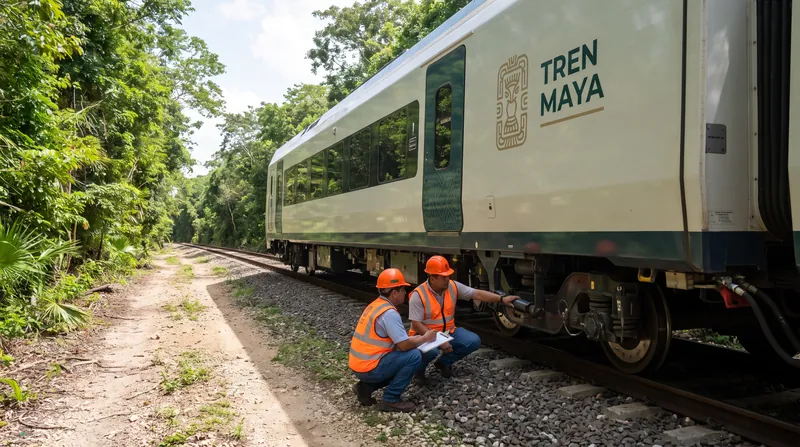
Tren Maya Train Derails Near Campeche Station, 123 Passengers Evacuated
5 sources
Comments
Every angle. Every day.
Get Transportation stories with full source coverage and perspective breakdowns, free every day.