
U.S. Lifts Naval Blockade on Iran as 60-Day Peace Negotiations Begin
The U.S. military has lifted its blockade of Iranian ports following a preliminary peace agreement, prompting Vice President JD Vance to fiercely defend the deal against Israeli and Republican critics.
By Factlen Editorial Team
- U.S. Administration
- Argues the MoU is a necessary diplomatic breakthrough that immediately stabilizes global energy markets and provides leverage for a permanent nuclear treaty.
- Israeli Government Critics
- Fears the deal leaves Tehran's nuclear infrastructure intact and prematurely rewards the regime with sanctions relief and maritime access.
- U.S. Republican Hawks
- Claims the agreement offers too much economic relief without securing firm, immediate commitments on uranium enrichment or proxy support.
- Iranian Leadership
- Views the 60-day window as a critical opportunity to permanently lift economic sanctions while maintaining its right to self-defense.
What's not represented
- · Global shipping companies relying on the Strait of Hormuz
- · European allies involved in previous nuclear negotiations
Why this matters
The lifting of the blockade and the reopening of the Strait of Hormuz immediately stabilizes global energy markets, but the fierce diplomatic rift between the U.S. and Israel signals deep geopolitical instability regarding Iran's nuclear future.
Key points
- The U.S. lifted its naval blockade on Iranian ports, allowing commercial ships to pass.
- A 60-day negotiation window has begun to finalize a permanent U.S.-Iran peace treaty.
- VP JD Vance sharply criticized Israeli cabinet members who opposed the agreement.
- Vance reminded Israel that U.S. taxpayers funded two-thirds of their recent defensive weapons.
- Republican hawks argue the deal gives Iran premature economic relief without nuclear concessions.
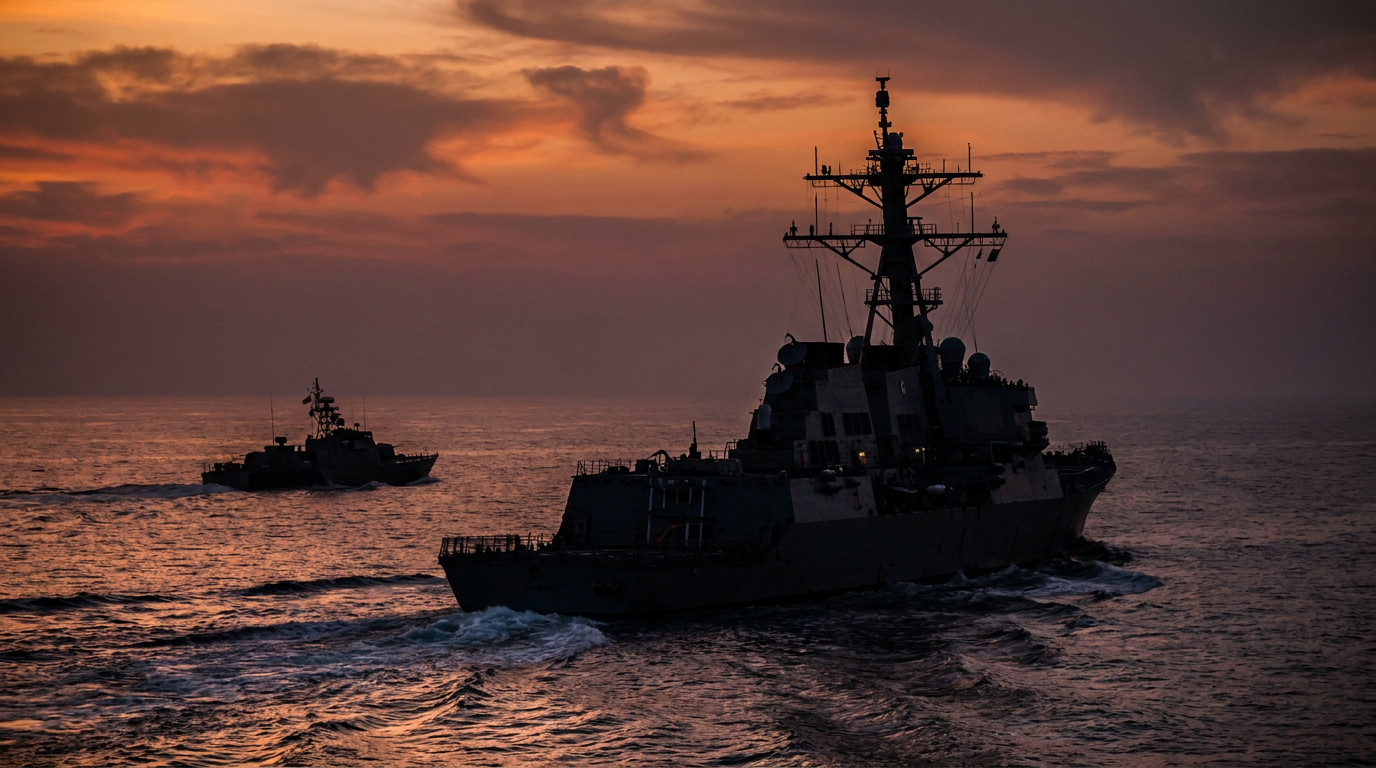
The United States has officially lifted its naval blockade on Iranian ports, marking the first major concession in a newly signed Memorandum of Understanding (MoU) aimed at ending the months-long war between Washington and Tehran. U.S. Central Command confirmed that over a dozen commercial ships have already been permitted to pass through the previously restricted zones.[2][6]
The lifting of the blockade triggers a 60-day negotiation window, during which American and Iranian diplomats will meet in Switzerland to hammer out a permanent peace treaty. In exchange for the U.S. standing down its naval forces, Iran has ceased firing on vessels in the Strait of Hormuz, allowing the critical global energy artery to reopen to commercial traffic.[6][8]
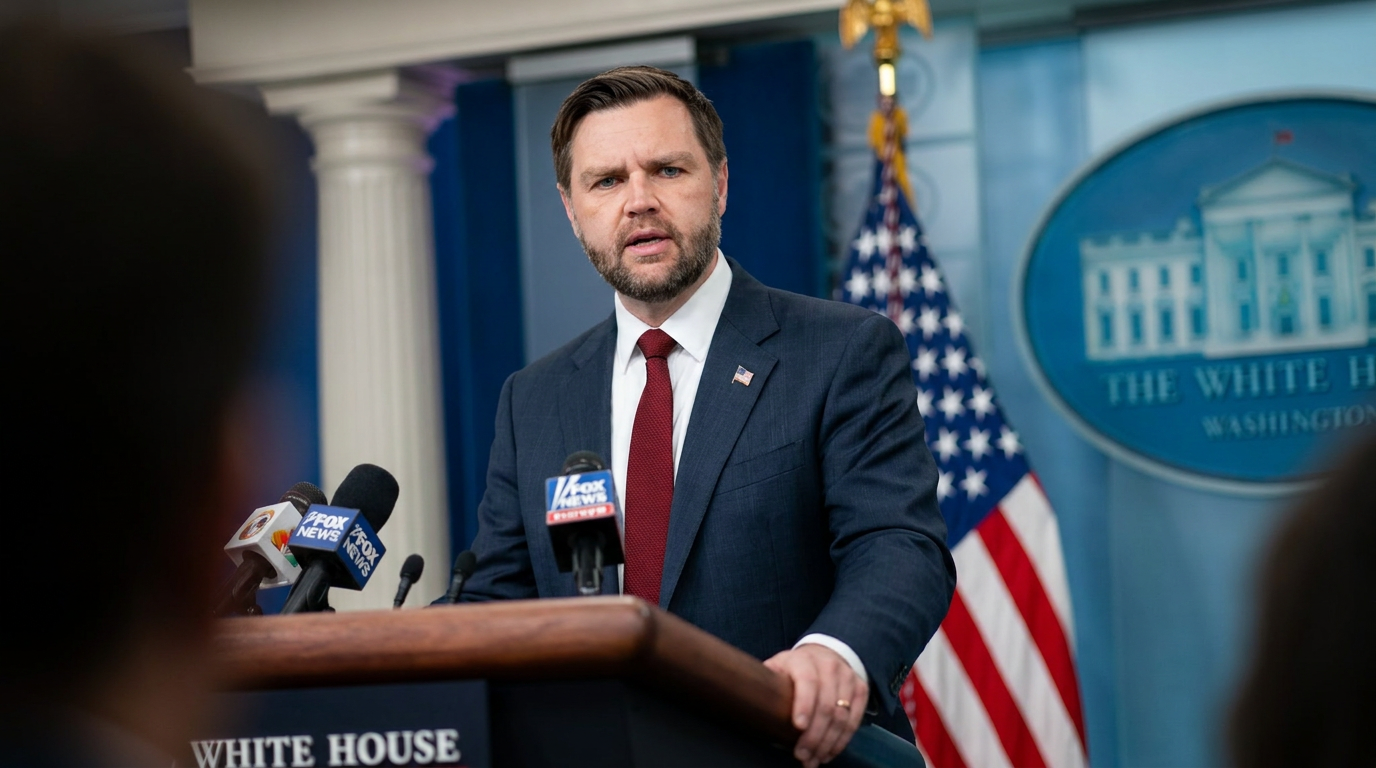
Vice President JD Vance confirmed the start of the 60-day window during a White House press briefing on Thursday, stating that both sides are currently honoring the early phases of the agreement. However, Vance spent the majority of his time at the podium fiercely defending the MoU against mounting criticism from U.S. allies and domestic lawmakers.[1][6]

The most severe pushback has come from Israel, where hardline members of Prime Minister Benjamin Netanyahu's cabinet have publicly condemned the deal. Israeli officials argue the agreement leaves Tehran's nuclear infrastructure intact and prematurely rewards the regime with sanctions relief and maritime access.[4][5]
In a sharp and unusually public rebuke of Washington's closest Middle Eastern ally, Vance lashed out at the Israeli cabinet members. He warned Israeli leaders that they are deeply isolated internationally and need to "wake up and smell the reality" of their geopolitical situation.[1][4]
In a sharp and unusually public rebuke of Washington's closest Middle Eastern ally, Vance lashed out at the Israeli cabinet members.
Vance asserted that President Donald Trump is the "only head of state in the entire world who is sympathetic to the nation of Israel at this moment in time." He further reminded the Israeli government that U.S. taxpayers had funded two-thirds of the defensive weapons used to protect Israel over the last three months of the conflict.[1][5]
While Netanyahu has refrained from openly criticizing Trump, National Security Minister Itamar Ben-Gvir and other ultranationalist Israeli leaders have declared that Israel is not bound by the U.S.-Iran agreement and will not cave to international pressure regarding its own security operations.[4][5]
Domestically, the Trump administration is also facing resistance from Republican hawks in the Senate. Critics argue the MoU grants Iran immediate economic relief—including waivers for crude oil exports—without forcing the immediate surrender of its highly enriched uranium stockpiles or dismantling its ballistic missile program.[7][8]

The administration's defense of the deal has also faced factual scrutiny. The New York Times reported that Vance's claims regarding the economic terms of the deal were misleading, noting that his assertion that Iran received no new benefits from the lifting of oil sanctions contradicts the immediate resumption of maritime traffic and oil sales outlined in the MoU.[3]
Iranian officials, meanwhile, have welcomed the start of the 60-day window. The Iranian Foreign Ministry stated that their primary goal is to finalize the lifting of what they termed "unjust sanctions" as quickly as possible, ideally within the first 30 days of the negotiation period.[2][8]
The coming weeks will test whether the fragile MoU can hold under immense political pressure. The U.S. delegation, which Vance plans to lead, will demand that the Strait of Hormuz remain toll-free permanently, while Iran has already signaled that its ballistic missile program is not up for negotiation.[6][7]
How we got here
February 2026
The U.S. and Israel launch coordinated military operations against Iran following the collapse of earlier peace talks.
April 2026
The U.S. imposes a strict naval blockade on Iranian ports, while Iran restricts access to the Strait of Hormuz.
June 17, 2026
President Trump and Iranian officials sign a Memorandum of Understanding to halt hostilities.
June 18, 2026
The U.S. officially lifts the naval blockade, triggering the start of a 60-day negotiation window.
Viewpoints in depth
U.S. Administration's View
The White House views the MoU as a necessary step to stabilize global markets and secure leverage.
The Trump administration, led in its defense by VP JD Vance, argues that the immediate reopening of the Strait of Hormuz is a massive victory for the global economy. By lifting the naval blockade, the U.S. has initiated a 60-day window where it can use the promise of permanent sanctions relief as leverage to force Iran into verifiable concessions regarding its nuclear program. The administration insists that no permanent economic relief will be granted until those nuclear benchmarks are met.
Israeli Security Establishment
Israeli officials fear the deal abandons the goal of dismantling Iran's nuclear capabilities.
Members of Prime Minister Benjamin Netanyahu's cabinet argue that the U.S. has capitulated to Tehran by lifting the naval blockade without securing the destruction of Iran's highly enriched uranium stockpiles. Hardliners like National Security Minister Itamar Ben-Gvir maintain that the MoU allows Iran to rebuild its economy and fund regional proxies while merely pausing its nuclear ambitions, prompting declarations that Israel will not be bound by Washington's diplomatic timeline.
Iranian Leadership
Tehran views the agreement as a victory that forces the U.S. to lift unjust sanctions.
Iranian officials have framed the lifting of the naval blockade and the 60-day negotiation window as a successful defense of their sovereignty. The Iranian Foreign Ministry has emphasized that their primary objective in the upcoming Swiss negotiations is the complete and permanent removal of U.S. economic sanctions. Furthermore, Tehran has drawn a firm red line, stating that its ballistic missile program is strictly for self-defense and will not be subject to American negotiation.
What we don't know
- Whether Iran will agree to dismantle its highly enriched uranium stockpiles during the 60-day window.
- How much of Iran's frozen assets will actually be released by the U.S. Treasury.
- Whether Israel will launch unilateral military action against Iran if it deems the final treaty insufficient.
Key terms
- Memorandum of Understanding (MoU)
- A formal agreement between two or more parties that establishes a framework for cooperation, often serving as a stepping stone to a binding legal treaty.
- Strait of Hormuz
- A critical maritime chokepoint between the Persian Gulf and the Gulf of Oman through which a significant portion of the world's oil supply passes.
- Naval Blockade
- A military operation in which ships are used to prevent vessels, personnel, or goods from entering or leaving a specific port or coastal area.
Frequently asked
What does the U.S.-Iran MoU actually do?
It implements an immediate ceasefire, lifts the U.S. naval blockade on Iranian ports, reopens the Strait of Hormuz to commercial traffic, and triggers a 60-day window to negotiate a permanent treaty.
Why is Israel criticizing the deal?
Israeli officials argue the agreement fails to dismantle Iran's nuclear facilities or curb its ballistic missile program, while granting Tehran immediate economic and maritime relief.
What happens after the 60-day window?
U.S. and Iranian diplomats aim to have a permanent agreement finalized regarding Iran's nuclear program and long-term sanctions relief. If talks fail, hostilities could resume.
Sources
Source coverage
8 outlets
4 viewpoints surfaced








[1]The GuardianU.S. Administration
JD Vance tells Iran deal critics in Israel: Trump is your only ally left in the world
Read on The Guardian →[2]Al JazeeraIranian Leadership
Iran war live: JD Vance defends Iran deal as US says naval blockade lifted
Read on Al Jazeera →[3]The New York TimesU.S. Republican Hawks
Vance’s Defense of Iran Deal Rests on Vague and Misleading Claims
Read on The New York Times →[4]The Washington PostIsraeli Government Critics
Vance lashes out at Israel over Iran deal criticism
Read on The Washington Post →[5]The Times of IsraelIsraeli Government Critics
VP lambasts Israeli ministers who called on Netanyahu to disregard accord, insists Iran won't get relief without final deal
Read on The Times of Israel →[6]The HinduU.S. Administration
U.S. military has allowed at least 12 ships to pass through its naval blockade of Iran's ports
Read on The Hindu →[7]SBS NewsU.S. Republican Hawks
US struggles to defend Iran deal as 60-day negotiation period begins
Read on SBS News →[8]The Japan TimesIranian Leadership
Draft US-Iran deal details reveal 60-day negotiation window and blockade lift
Read on The Japan Times →
More in news politics
See all 7 stories →Digital Trust
How Cryptographic 'Nutrition Labels' Are Solving the Political Deepfake Problem
7 sources

Iran Peace Deal
US Lifts Naval Blockade on Iran as 60-Day Peace Deal Takes Effect
8 sources

US-Iran Deal
US Lifts Naval Blockade on Iran as Peace Deal Sparks Bitter Rift with Israel
8 sources

UK By-Elections
UK By-Elections: Conservatives Seize Aberdeen South as Burnham Eyes Labour Leadership in Makerfield
6 sources

Every angle. Every day.
Get news politics stories with full source coverage and perspective breakdowns delivered to your inbox.